Notice Rent Increase With The Letter
Description

Get your form ready online
Our built-in tools help you complete, sign, share, and store your documents in one place.
Make edits, fill in missing information, and update formatting in US Legal Forms—just like you would in MS Word.
Download a copy, print it, send it by email, or mail it via USPS—whatever works best for your next step.
Sign and collect signatures with our SignNow integration. Send to multiple recipients, set reminders, and more. Go Premium to unlock E-Sign.
If this form requires notarization, complete it online through a secure video call—no need to meet a notary in person or wait for an appointment.
We protect your documents and personal data by following strict security and privacy standards.

Make edits, fill in missing information, and update formatting in US Legal Forms—just like you would in MS Word.

Download a copy, print it, send it by email, or mail it via USPS—whatever works best for your next step.

Sign and collect signatures with our SignNow integration. Send to multiple recipients, set reminders, and more. Go Premium to unlock E-Sign.

If this form requires notarization, complete it online through a secure video call—no need to meet a notary in person or wait for an appointment.

We protect your documents and personal data by following strict security and privacy standards.
Looking for another form?









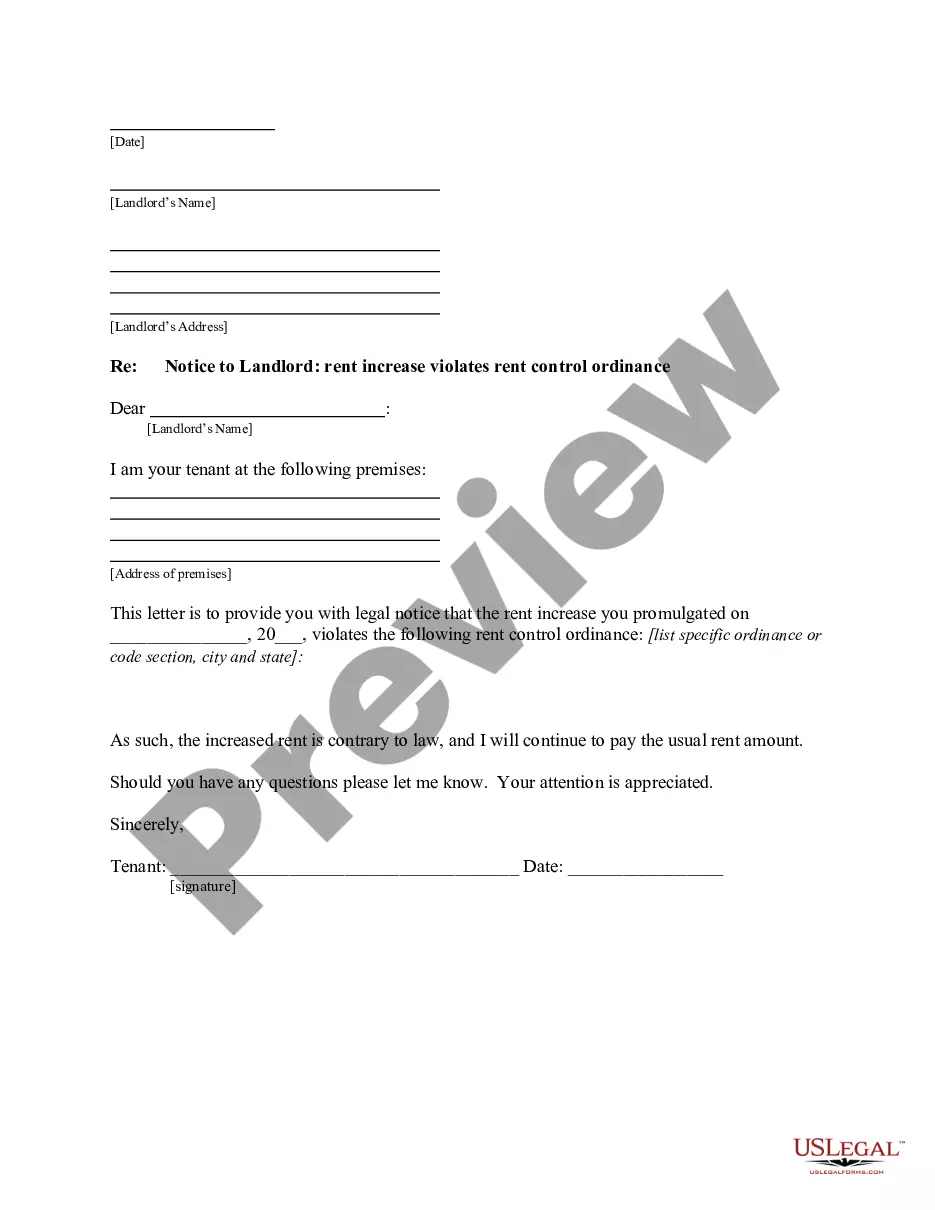
How to fill out Nevada Letter From Tenant To Landlord Containing Notice To Landlord To Withdraw Improper Rent Increase Due To Violation Of Rent Control Ordinance?
- Log into your US Legal Forms account. If you're a returning user, ensure your subscription is still valid before accessing the necessary forms.
- Familiarize yourself with the form options. Utilize the Preview mode to confirm that you have selected the correct notice that aligns with your jurisdiction's requirements.
- If adjustments are needed, navigate to the Search tab to find a different template that suits your purpose perfectly.
- Select and purchase the form. Click 'Buy Now' and choose your preferred subscription plan. You’ll need to create an account if you haven't yet.
- Complete your purchase. Enter your payment details or use a PayPal account to finalize your subscription.
- Download the completed form. Save it on your device and access it anytime from the 'My Forms' section of your profile.
By following these simple steps, you can ensure that your notice is legally sound and delivered efficiently. US Legal Forms provides a robust collection of over 85,000 forms, giving you access to the tools you need for successful legal communication.
Take charge of your landlord responsibilities today! Visit US Legal Forms to get started.
Form popularity
FAQ
The maximum rent increase you can implement typically depends on state and local laws. In many areas, there are regulations that limit how much you can increase rent annually. Before sending out a notice rent increase with the letter, check the specific rules that apply to your rental property to ensure you stay compliant. US Legal Forms can provide you with resources and information to help you understand these limits better.
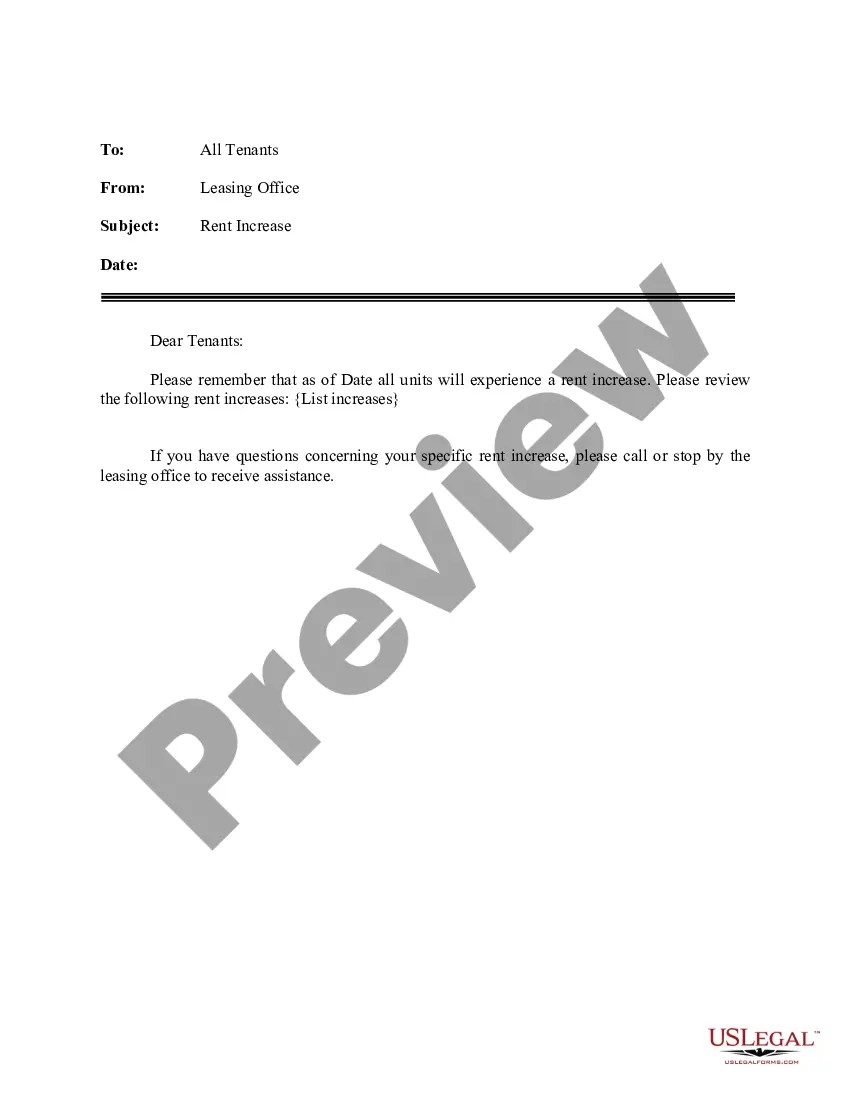
To write a notice rent increase with the letter, start by clearly identifying yourself as the landlord and mentioning the property address. Next, state the current rent amount and specify the new amount along with the effective date of the increase. Don't forget to include any necessary legal language required by your state, and make sure to sign the letter to add a personal touch. Consider using US Legal Forms for templates that can guide you in crafting a complete and compliant notice.
To write a rent receipt, begin with the date and tenant's name on it. Include the rental amount collected, the payment method used, and the rental period it covers. Finally, provide your signature as the landlord, and if desired, retain a copy for your records. This document serves as proof of payment for both parties.
To mail a rent increase notice, first, write the notice clearly, stating the new rent amount and effective date. Ensure that you include your landlord's name and address, and send it using certified mail for a record of delivery. This approach ensures your landlord receives the notice promptly and you have proof of sending it.
Writing to your landlord about a rent increase involves being direct and respectful. Begin with a warm greeting, then state your request for a rent increase. Clearly outline your reasons, such as market changes or increased property value. End the letter with your contact information for a follow-up.
When requesting a rent increase, draft a polite letter detailing your reasons. Highlight any improvements you have made to the property, along with comparable rental rates in the area. Be sure to cite your commitment as a tenant. This approach provides a foundation to negotiate confidently a reasonable rental rate.
To prove rent, write a clear and concise letter that outlines the rental agreement's details. Include your name, the property address, and the rental amount. You should mention the payment dates and method you used. Lastly, conclude the letter with your signature and the date to reinforce its authenticity.
When asking your landlord not to increase rent, communicate your request clearly and respectfully. Provide reasoning for your request, such as loyalty as a tenant or current financial constraints. Emphasize your commitment to maintaining the property and staying in good standing. This approach fosters goodwill and opens the door for further negotiation.
The term often used for rent reduction is 'concession.' A concession refers to a decrease in the rent amount, often granted by landlords to retain tenants or in response to market conditions. Understanding this term can be useful when negotiating with your landlord. You can use this jargon effectively when discussing rent matters.
When writing a letter to request a rent reduction, begin with a formal greeting before stating your request. Clearly outline your reasons for seeking a reduction, providing specific examples that support your position. Be concise and maintain a respectful tone throughout the letter. Consider using US Legal Forms to help structure your letter appropriately.