New Jersey Employment Verification Laws
Description
Get your form ready online
Our built-in tools help you complete, sign, share, and store your documents in one place.
Make edits, fill in missing information, and update formatting in US Legal Forms—just like you would in MS Word.
Download a copy, print it, send it by email, or mail it via USPS—whatever works best for your next step.
Sign and collect signatures with our SignNow integration. Send to multiple recipients, set reminders, and more. Go Premium to unlock E-Sign.
If this form requires notarization, complete it online through a secure video call—no need to meet a notary in person or wait for an appointment.
We protect your documents and personal data by following strict security and privacy standards.

Make edits, fill in missing information, and update formatting in US Legal Forms—just like you would in MS Word.

Download a copy, print it, send it by email, or mail it via USPS—whatever works best for your next step.

Sign and collect signatures with our SignNow integration. Send to multiple recipients, set reminders, and more. Go Premium to unlock E-Sign.

If this form requires notarization, complete it online through a secure video call—no need to meet a notary in person or wait for an appointment.

We protect your documents and personal data by following strict security and privacy standards.
Looking for another form?








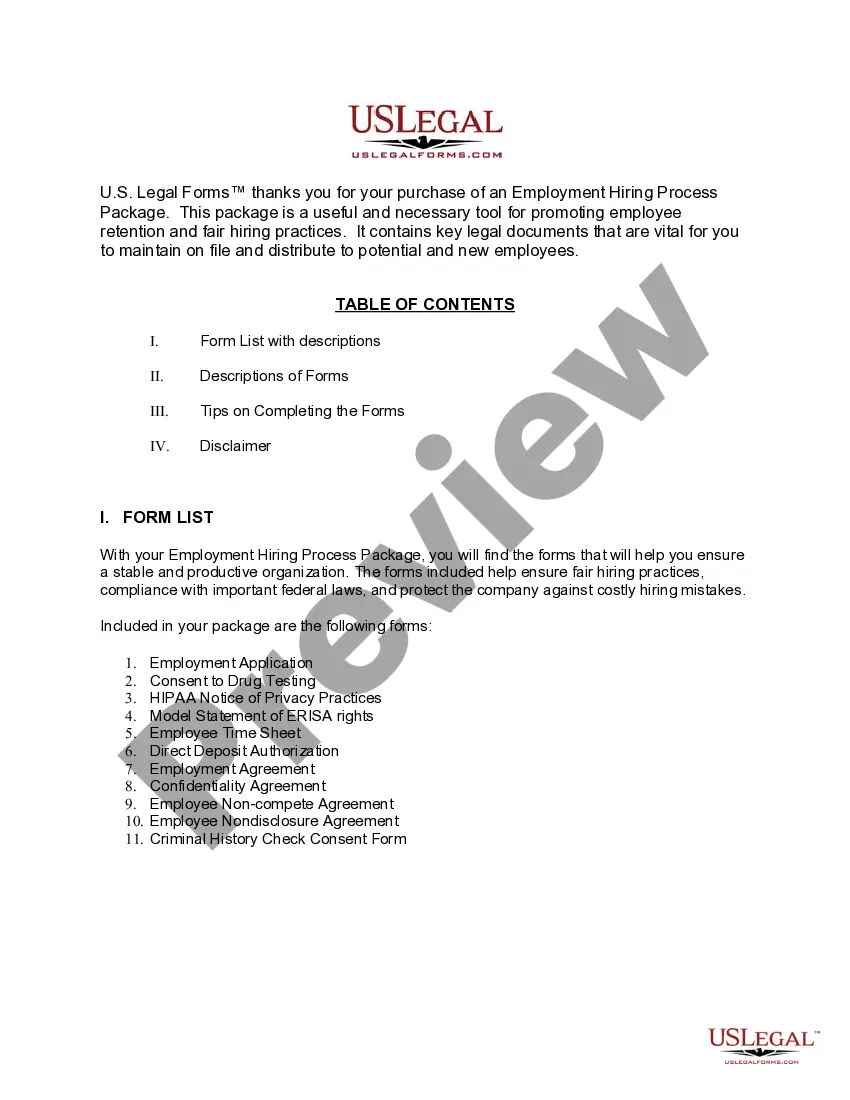
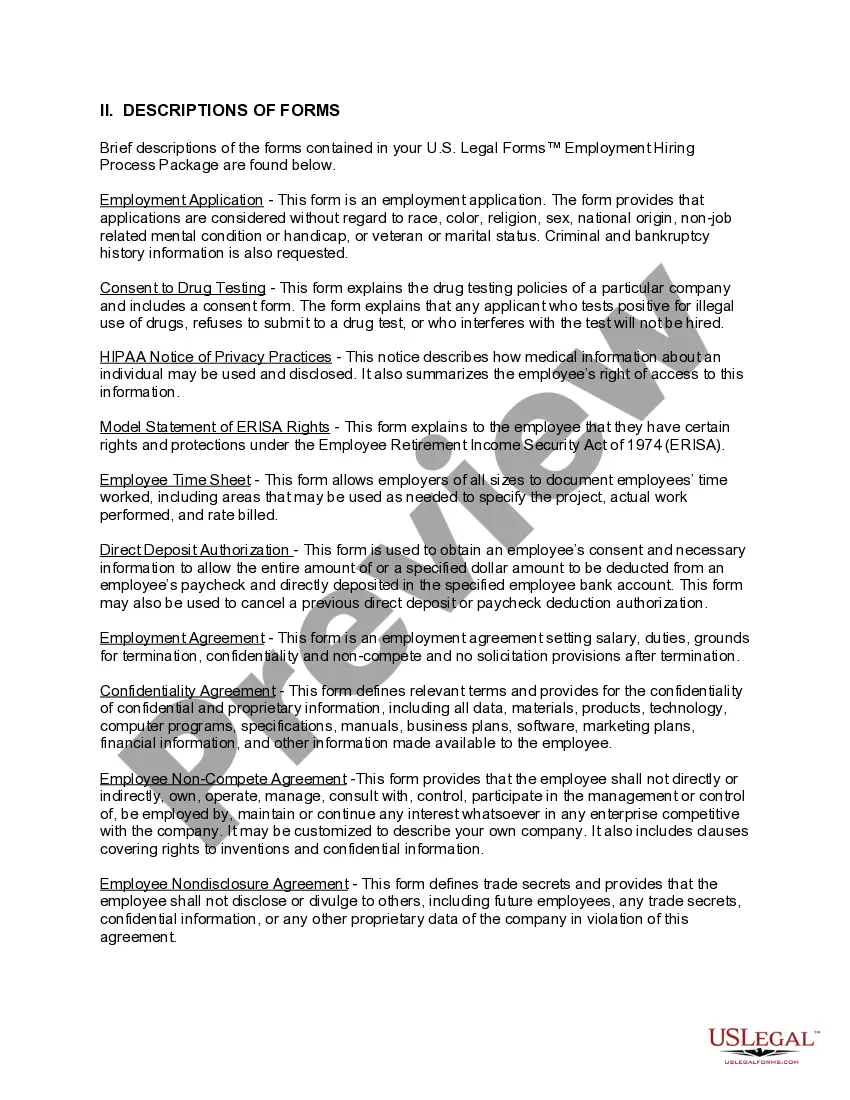
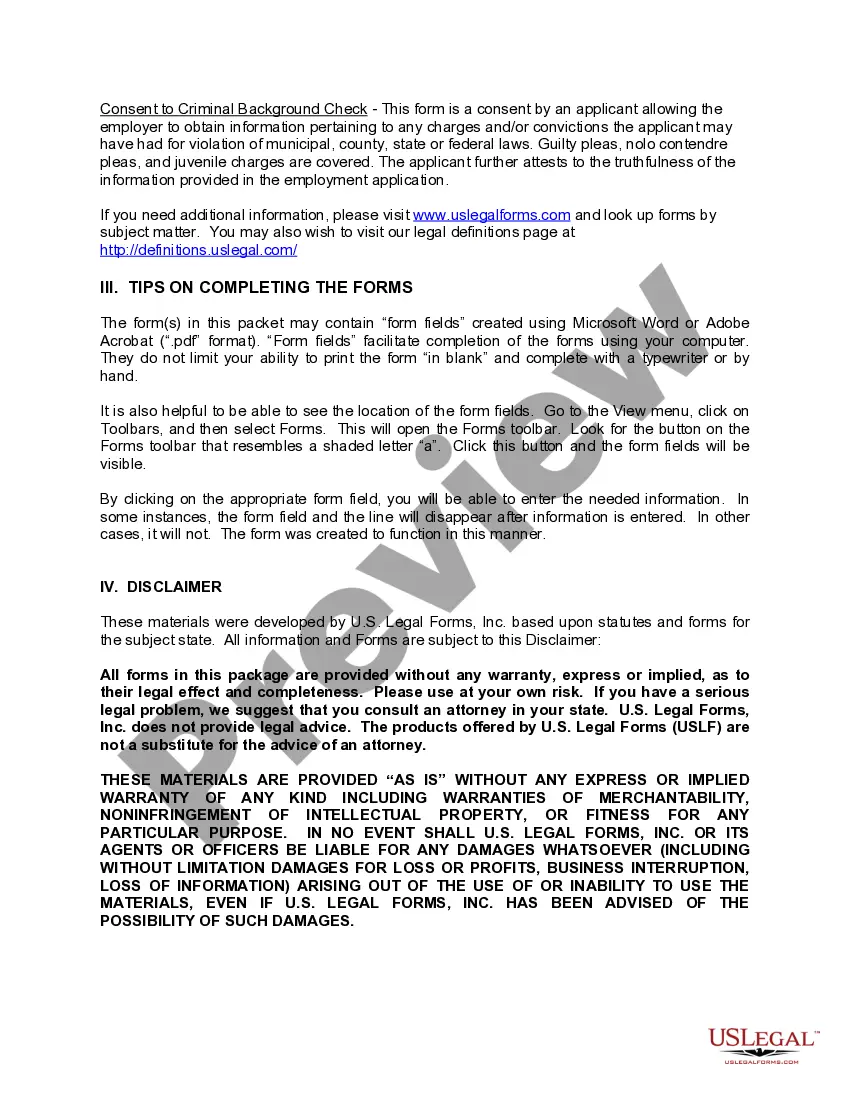
How to fill out New Jersey Employment Hiring Process Package?
Whether for commercial reasons or for individual matters, everyone must confront legal circumstances eventually in their lifetime.
Filling out legal paperwork requires meticulous attention, starting from choosing the correct form template.
With an extensive US Legal Forms catalog available, you do not need to waste time searching for the correct template online. Utilize the library’s user-friendly navigation to find the suitable template for any circumstance.
- Locate the form you require by using the search box or browsing through the catalog.
- Review the details of the form to confirm it aligns with your case, state, and locality.
- Click on the form’s preview to examine it.
- If it is the incorrect document, return to the search feature to find the New Jersey Employment Verification Laws sample you need.
- Download the template once it corresponds with your requirements.
- If you possess a US Legal Forms account, click Log in to access previously saved documents in My documents.
- If you do not yet have an account, you can download the form by clicking Buy now.
- Choose the suitable pricing option.
- Complete the account registration form.
- Select your payment method: either use a credit card or PayPal account.
- Choose the document format you wish and download the New Jersey Employment Verification Laws.
- Once it is saved, you can fill out the form with the assistance of editing software or print it and complete it by hand.
Form popularity
FAQ
To fill out the employment screening consent form, start by providing your personal details as requested, which may include your name, address, and Social Security number. Carefully read the consent section to ensure you understand what you are allowing your employer to check as part of the background screening process. Complying with New Jersey employment verification laws means providing accurate information to avoid any potential issues down the line. If needed, platforms like USLegalForms can guide you through the correct process.
A simple mortgage agreement will identify the following essential elements: Borrower: who is borrowing the money and pledging the property. Lender: who is lending the money and receiving a lien on the property. Principal Amount: the sum of money borrowed. Property: a legal description of the property pledged.
What's The Difference Between A Loan And A Mortgage? The term ?loan? can be used to describe any financial transaction where one party receives a lump sum and agrees to pay the money back. A mortgage is a type of loan that's used to finance property. Mortgages are ?secured? loans.
An assignment of mortgage documents the transfer of a mortgage from an original lender or borrower to another person or entity. Lenders regularly sell mortgages to other lenders. Less often, a borrower transfers the mortgage to someone else who assumes the mortgage.
What a personal loan agreement should include Legal names and address of both parties. Names and address of the loan cosigner (if applicable). Amount to be borrowed. Date the loan is to be provided. Repayment date. Interest rate to be charged (if applicable). Annual percentage rate (if applicable).
Although many contracts are enforceable whether written or oral, contracts that involve a transfer of real estate are deemed important enough that they are required, under the Statute of Frauds, to be in writing to be enforceable.
What is a Mortgage Agreement? A Mortgage Agreement is a contract between a borrower (called the mortgagor) and the lender (called the mortgagee) where a lien is created on the property in order to secure repayment of the loan.
The most common example of an Assignment of Mortgage is when a mortgage lender transfers/sells the mortgage to another lender. This can be done more than once until the balance is paid. The lender does not have to inform the borrower that the mortgage is being assigned to another party.
The purpose of the mortgage or deed of trust is to provide security for the loan that's evidenced by a promissory note. Loan Transfers. Banks often sell and buy mortgages from each other. An "assignment" is the document that is the legal record of this transfer from one mortgagee to another.