Nj Theft By Extortion
Description
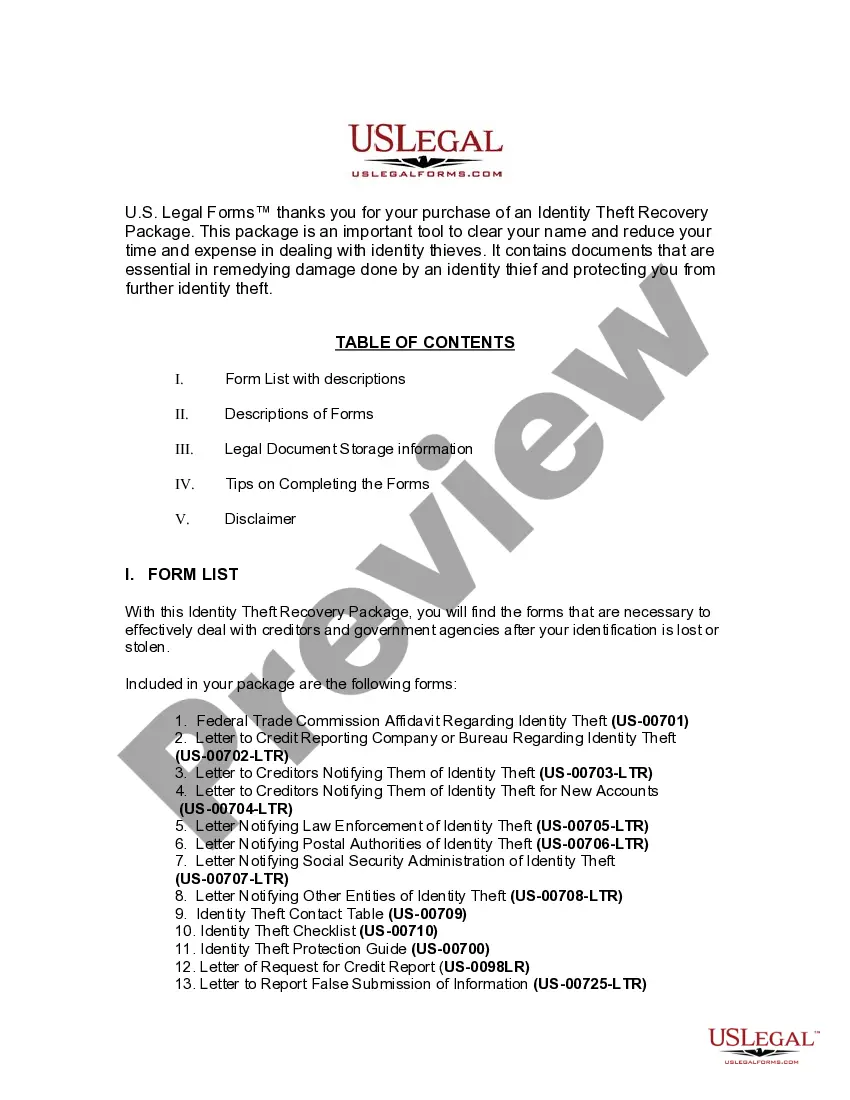
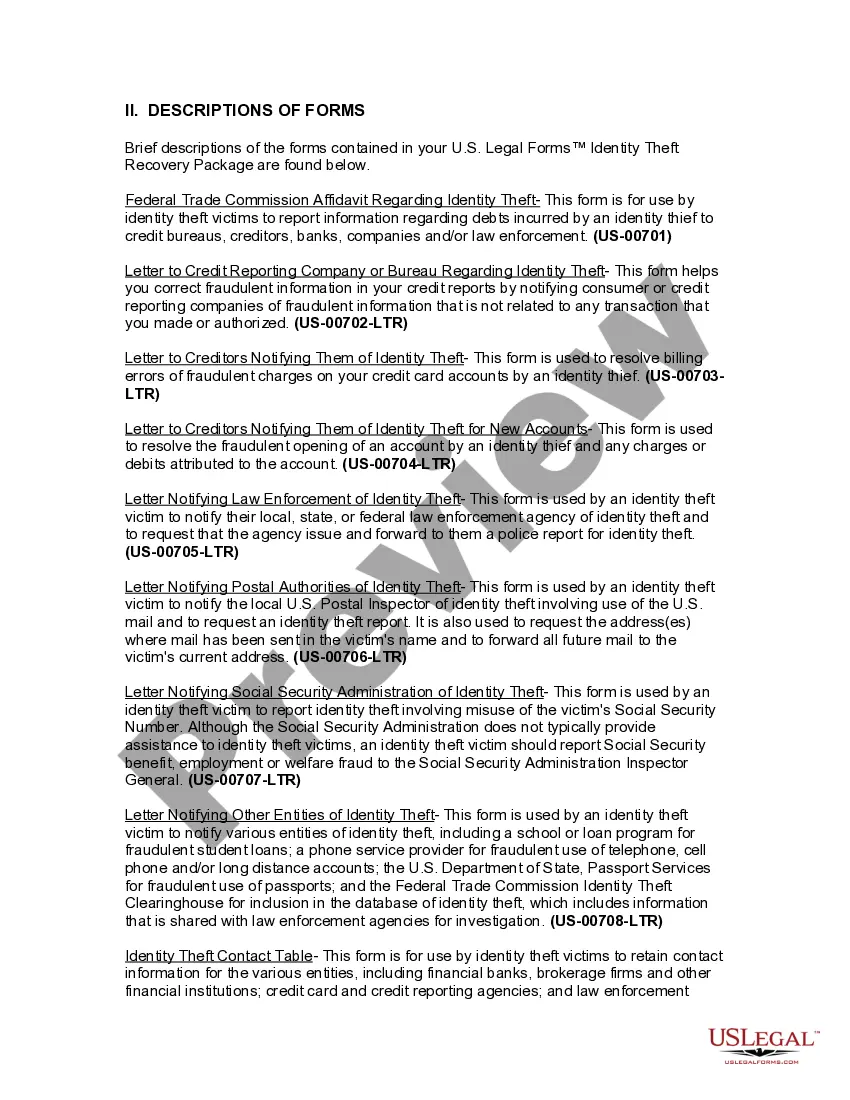
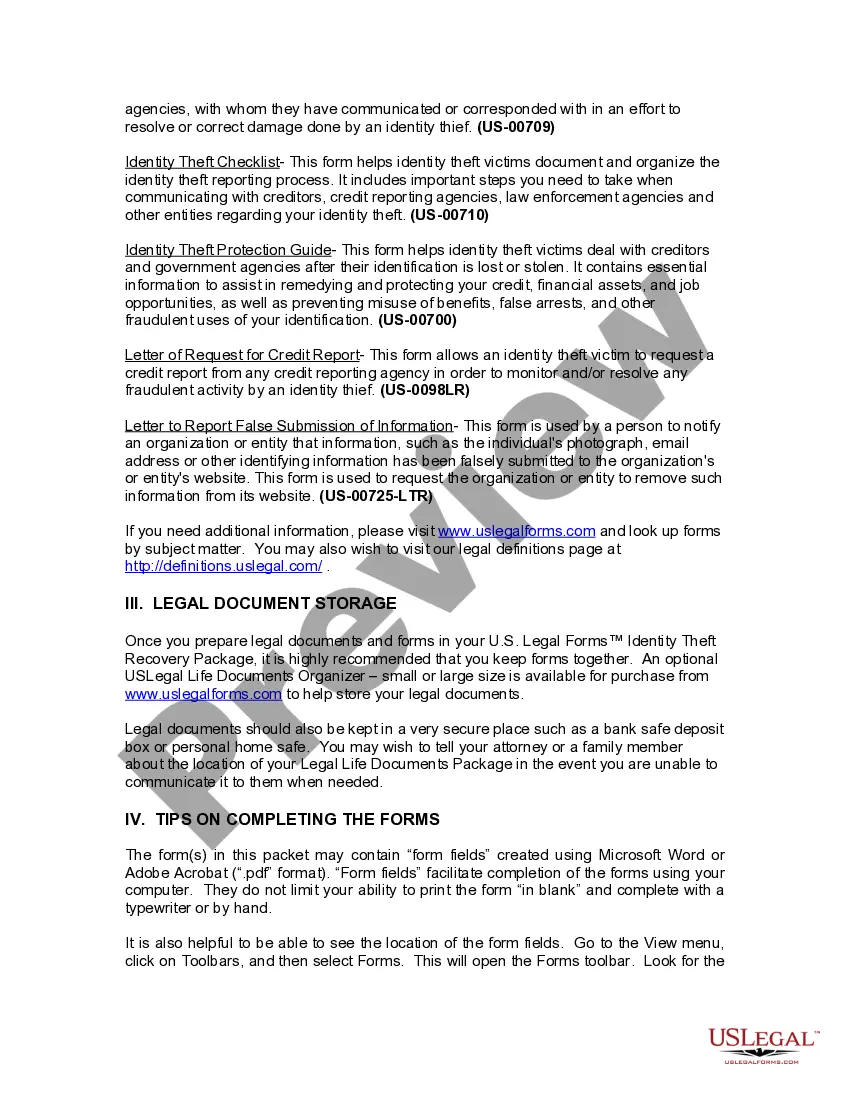





How to fill out New Jersey Identity Theft Recovery Package?
Regardless of whether it's for commercial reasons or personal issues, everyone must handle legal matters at some point in their life.
Completing legal documents requires meticulous care, starting with choosing the appropriate form template.
Once it’s saved, you can fill out the form using editing software or print it and complete it manually. With a comprehensive US Legal Forms catalog available, you will never need to waste time searching for the correct template online. Use the library’s user-friendly navigation to find the right form for any circumstance.
- For example, if you select an incorrect version of the Nj Theft By Extortion, it will be denied upon submission.
- Thus, it's crucial to have a reliable source of legal documents like US Legal Forms.
- If you need to obtain a Nj Theft By Extortion template, follow these straightforward steps.
- Search for the template you require using the search bar or catalog navigation.
- Review the form’s details to confirm it fits your situation, state, and county.
- Click on the form’s preview to examine it.
- If it’s the incorrect form, return to the search feature to find the Nj Theft By Extortion template you require.
- Acquire the template if it aligns with your needs.
- If you have a US Legal Forms account, simply click Log in to access previously saved documents in My documents.
- If you don’t have an account yet, you can obtain the form by clicking Buy now.
- Select the appropriate pricing option.
- Complete the profile registration form.
- Choose your payment method: use a credit card or PayPal account.
- Select the document format you wish and download the Nj Theft By Extortion.
Form popularity
FAQ
Theft involves dishonestly taking movable property without the owner's consent, while extortion entails obtaining property, money or services through coercion and threats. The intent, presence of fear, delivery of property, involvement of force and the element of consent differ between the two offences.
The CPC also contains felony offenses related to Extortion: Bribery (§§67-68), Kidnapping (§§207, 209-210), Robbery (§211), Carjacking (§215) and Burglary (§459).
A prosecutor must prove that you made a threat to another person to secure their property or monetary gain. There must be more than a threat present to face a criminal charge. The intent is the key to proving extortion. Additionally, the party who faced a threat will have to comply with the requests.
There are four elements to extortion: The defendant received property or money from the victim, the property was received as result of one of the previous threats mentioned, the threat was made in order to receive money or property, and the demand for property or money is illegitimate.
Penalty for Extortion Unlike other Theft Crimes, the seriousness of the charge does not depend on the value threatened or received. Extortion, under N.J.S. 2C:20-5, is a Crime of the Second Degree, punishable by 5 to 10 years in prison, and up to a $100,000 fine. Prosecutors take extortion charges seriously.