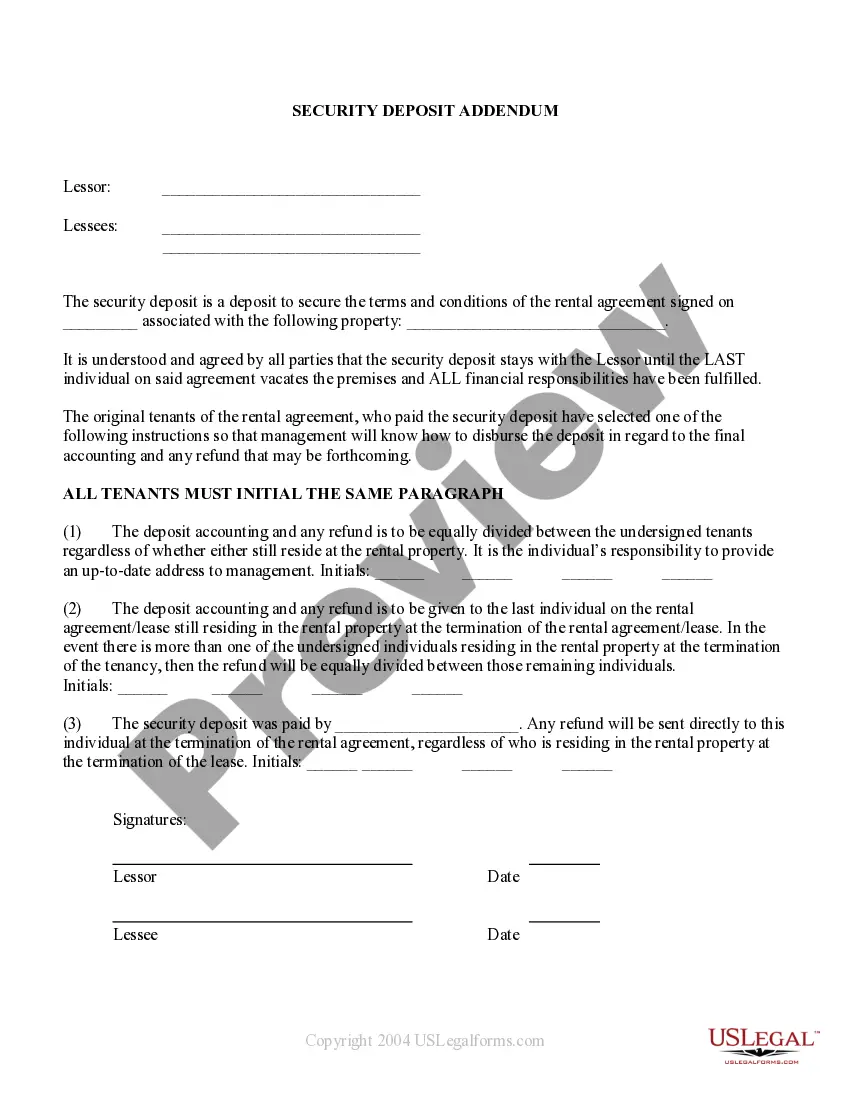
Deposit With Landlord
Description
Get your form ready online
Our built-in tools help you complete, sign, share, and store your documents in one place.
Make edits, fill in missing information, and update formatting in US Legal Forms—just like you would in MS Word.
Download a copy, print it, send it by email, or mail it via USPS—whatever works best for your next step.
Sign and collect signatures with our SignNow integration. Send to multiple recipients, set reminders, and more. Go Premium to unlock E-Sign.
If this form requires notarization, complete it online through a secure video call—no need to meet a notary in person or wait for an appointment.
We protect your documents and personal data by following strict security and privacy standards.

Make edits, fill in missing information, and update formatting in US Legal Forms—just like you would in MS Word.

Download a copy, print it, send it by email, or mail it via USPS—whatever works best for your next step.

Sign and collect signatures with our SignNow integration. Send to multiple recipients, set reminders, and more. Go Premium to unlock E-Sign.

If this form requires notarization, complete it online through a secure video call—no need to meet a notary in person or wait for an appointment.

We protect your documents and personal data by following strict security and privacy standards.
Looking for another form?









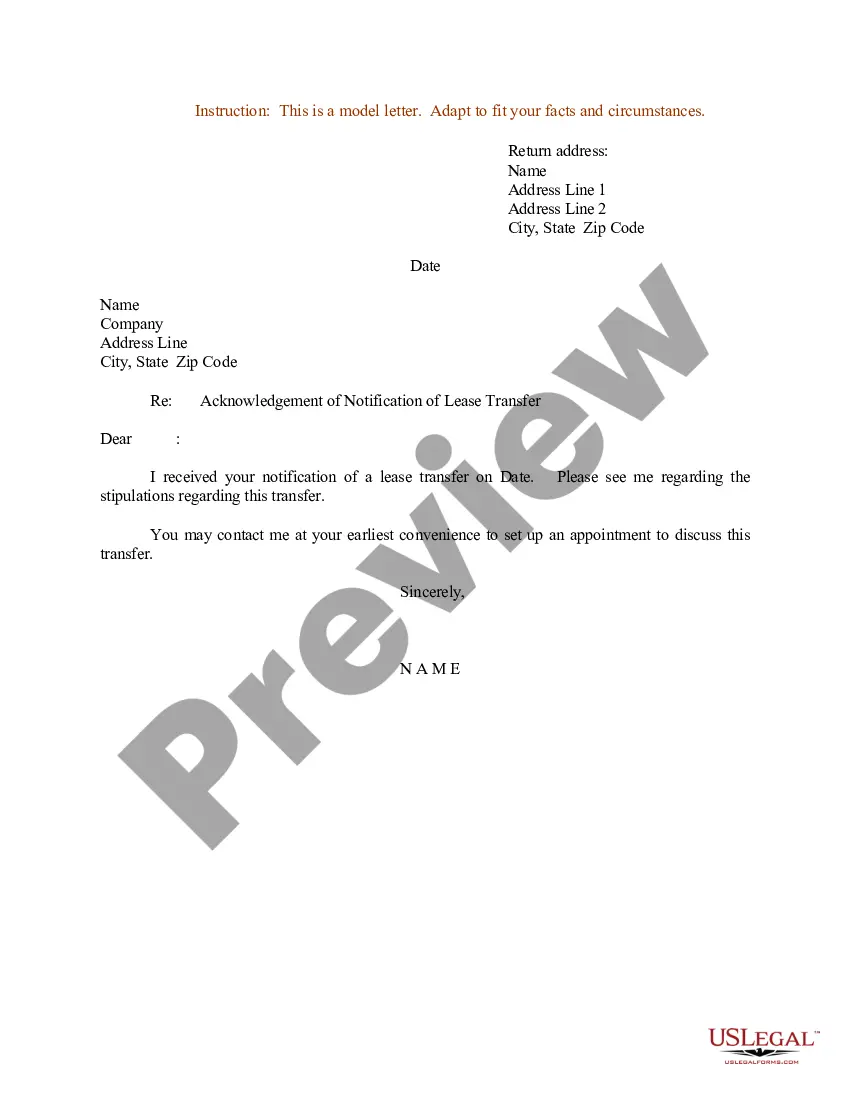
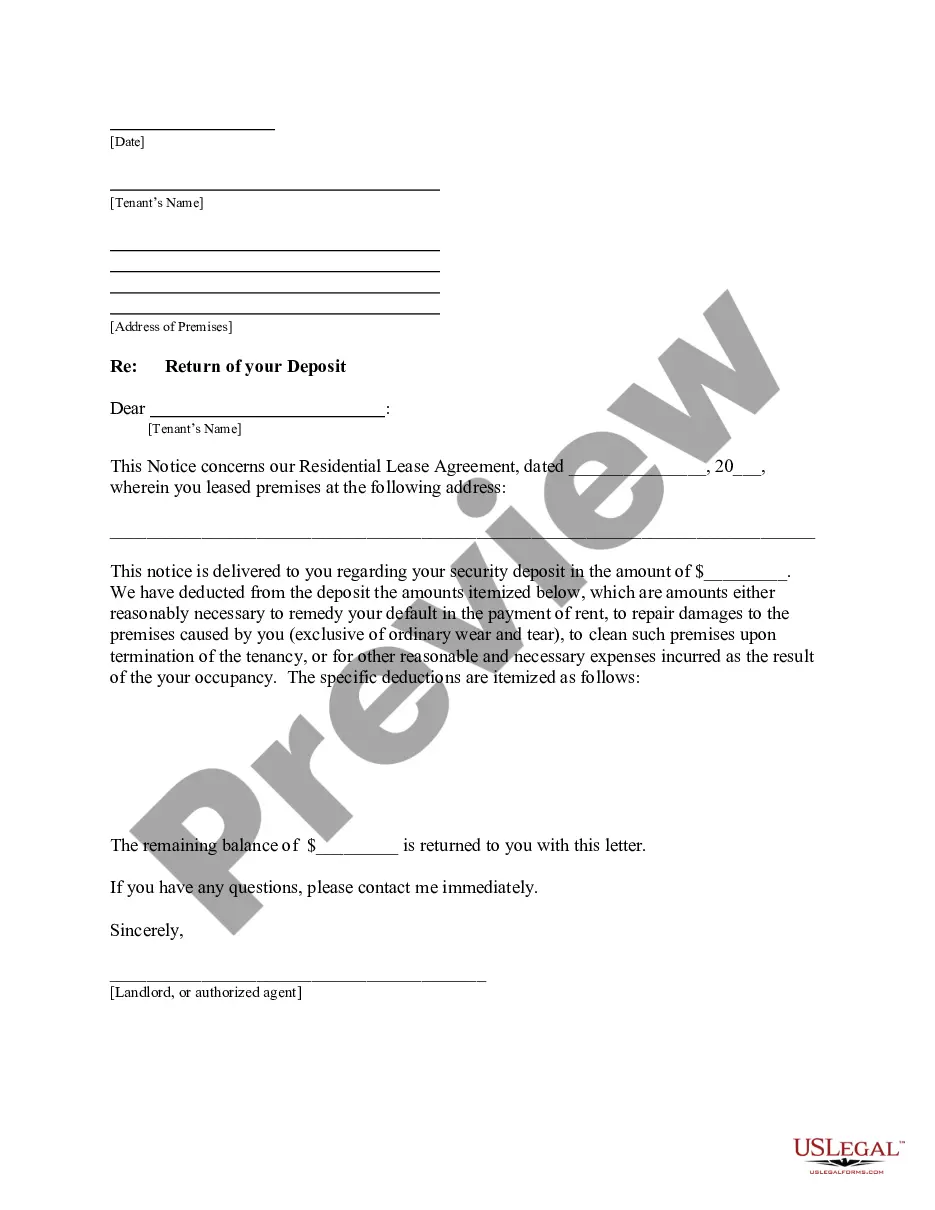
How to fill out New Jersey Letter From Landlord To Tenant Returning Security Deposit Less Deductions?
Acquiring legal template examples that adhere to federal and local regulations is essential, and the web presents a multitude of choices to select from.
However, what’s the purpose of spending time searching for the accurately composed Deposit With Landlord specimen online if the US Legal Forms digital library has already collated such templates in one location.
US Legal Forms is the largest online legal repository featuring over 85,000 fillable documents prepared by attorneys for any business and personal situation.
Review the template using the Preview function or through the text description to confirm it fulfills your needs.
- They are easy to navigate with all files categorized by state and intended use.
- Our experts stay informed about legislative updates, ensuring your documents are current and compliant when obtaining a Deposit With Landlord from our platform.
- Acquiring a Deposit With Landlord is straightforward and quick for both existing and new users.
- If you already possess an account with an active subscription, Log In and download the document template you need in the appropriate format.
- If you are new to our site, follow the steps listed below.
Form popularity
FAQ
The Application/Cross Application to Modify a Court Order is a written request in which you ask the court to change or enforce an existing court order. The court will change an order only if important facts or circumstances have changed from the time the order was issued.
A Judgment Lien is Good for 20 Years There are, however, limits on what can be used for collection purposes, and time limits as to the same. ing to N.J.S.A. 2A:14-5, a judgment lien in New Jersey is valid for 20 years.
If the defendant does not answer the complaint or fails to appear at a required court hearing, the defendant is ?in default.? Before the person who filed the complaint can attempt to collect any amount of money after defendant's default, the court must also have a record that proves what amount the defendant must pay.
Proposed Form of Order - A proposed order is a form that the judge can use to either grant or deny the relief sought in the motion. Every motion must be accompanied by a proposed form of order. Return date - The return date is the date on which the court will consider the motion.
The creditor can often place a lien on your property, such as a house or car. The lien must usually be paid off before you can sell the property. Seize assets. Sometimes, a creditor can get a court order to seize other assets or personal property you own, such as a vehicle or real estate, to satisfy the debt.
If your account is in default, a judgment will be entered in Superior Court. A lien may be placed upon your assets by the Division of Employer Accounts.
Under New Jersey law, each debtor is entitled to an exemption protecting $1,000 of personal property from collection to satisfy a judgment. In addition, welfare, social security and unemployment benefits are protected from judgment levy.
The creditor will likely try to collect the amount of the judgment from you. This can happen in several ways. If you are employed, the creditor may obtain a court order to garnish you wages which will mean a certain amount of money will be deducted from your paychecks until the full amount of the judgment is paid.