North Carolina Quit Claim Deed With Life Estate
Description
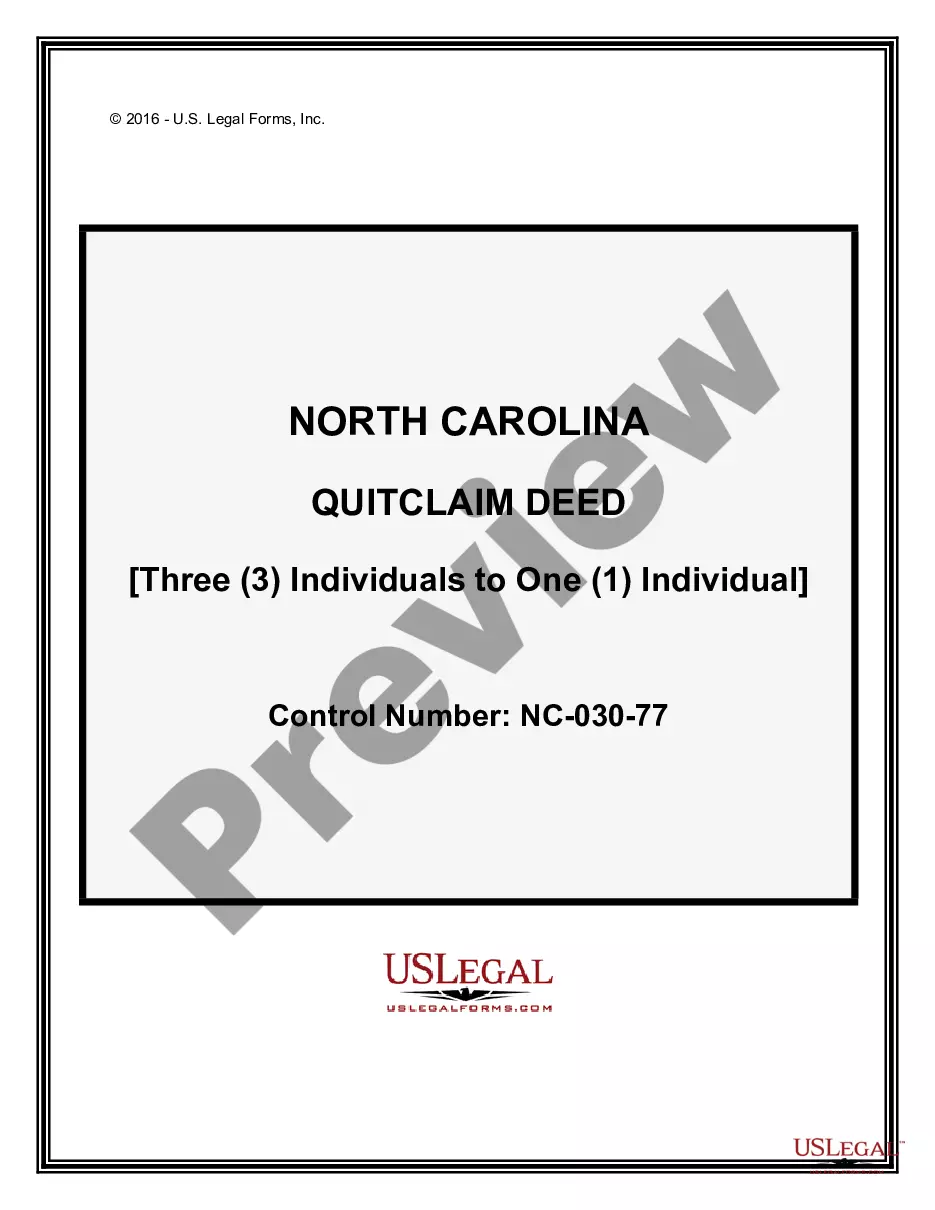
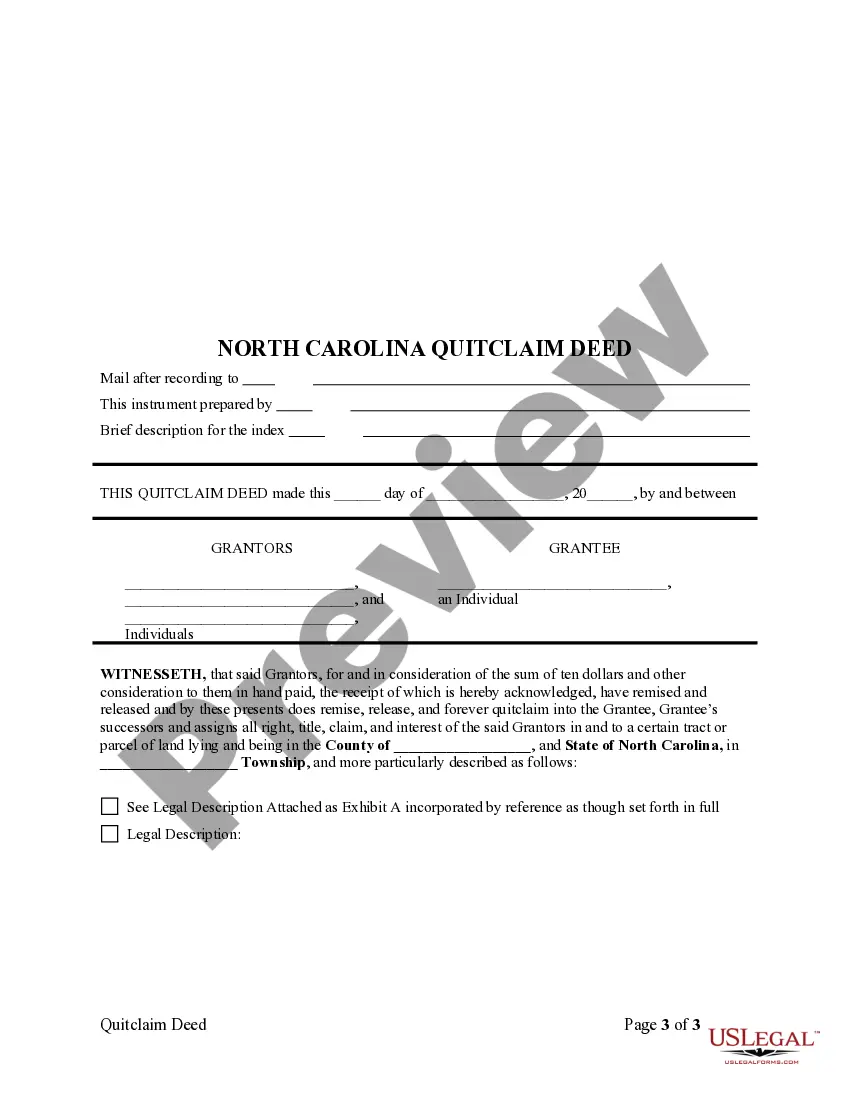
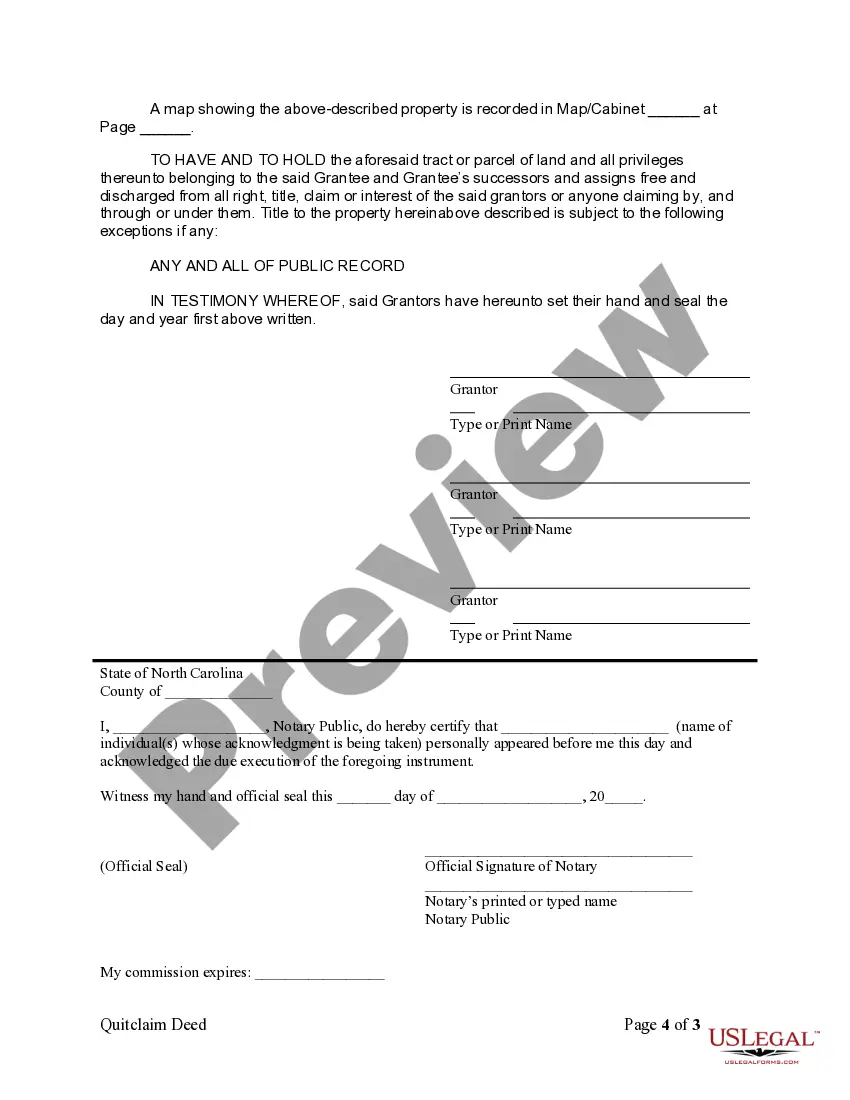
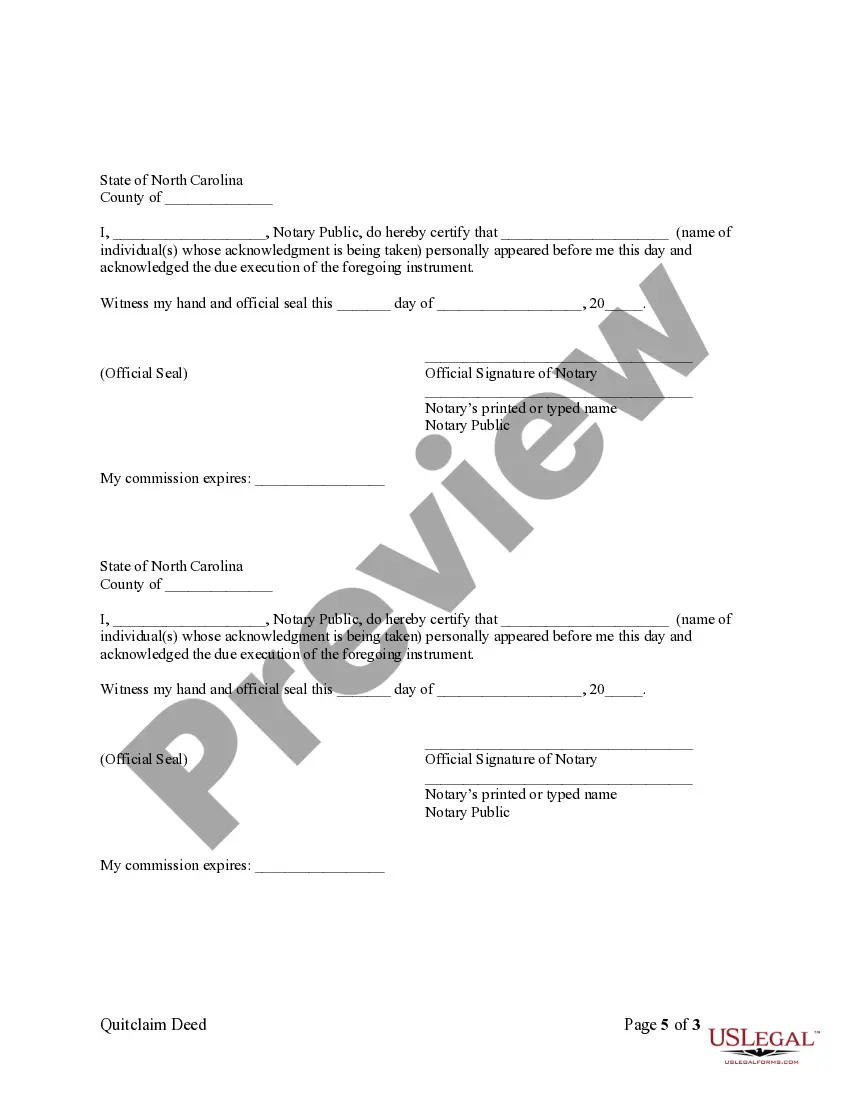

Get your form ready online
Our built-in tools help you complete, sign, share, and store your documents in one place.
Make edits, fill in missing information, and update formatting in US Legal Forms—just like you would in MS Word.
Download a copy, print it, send it by email, or mail it via USPS—whatever works best for your next step.
Sign and collect signatures with our SignNow integration. Send to multiple recipients, set reminders, and more. Go Premium to unlock E-Sign.
If this form requires notarization, complete it online through a secure video call—no need to meet a notary in person or wait for an appointment.
We protect your documents and personal data by following strict security and privacy standards.

Make edits, fill in missing information, and update formatting in US Legal Forms—just like you would in MS Word.

Download a copy, print it, send it by email, or mail it via USPS—whatever works best for your next step.

Sign and collect signatures with our SignNow integration. Send to multiple recipients, set reminders, and more. Go Premium to unlock E-Sign.

If this form requires notarization, complete it online through a secure video call—no need to meet a notary in person or wait for an appointment.

We protect your documents and personal data by following strict security and privacy standards.
Looking for another form?


How to fill out North Carolina Quitclaim Deed From Three Individuals To One Individual?
When you must submit the North Carolina Quit Claim Deed With Life Estate following your local state's guidelines, there can be many choices available.
There's no requirement to review every document to ensure it meets all the legal standards if you are a US Legal Forms member.
It is a trustworthy service that can assist you in obtaining a reusable and current template on any topic.
Acquiring properly drafted legal documents becomes effortless with US Legal Forms. Additionally, Premium users can also take advantage of the powerful integrated features for online document editing and signing. Experience it today!
- US Legal Forms boasts the largest online directory with a selection of over 85,000 ready-to-use documents for both business and personal legal situations.
- All templates are verified to comply with each state's regulations.
- Consequently, when you download the North Carolina Quit Claim Deed With Life Estate from our platform, you can be confident that you possess a valid and current document.
- Obtaining the necessary form from our platform is exceptionally simple.
- If you already have an account, just Log In to the system, confirm your subscription is active, and save the selected document.
- In the future, you can navigate to the My documents section in your profile and maintain access to the North Carolina Quit Claim Deed With Life Estate at any moment.
- If this is your first visit to our website, please follow the instructions below.
- Browse the recommended page and verify it meets your needs.
Form popularity
FAQ
A quitclaim deed with reservation of life estate allows a property owner to transfer ownership while retaining the right to live in the property for their lifetime. In North Carolina, this means the grantor gives up their rights to the property but continues to occupy it until death. This arrangement can benefit families by providing security and clarity over property rights. For a streamlined process, consider using platforms like US Legal Forms to draft your deed correctly.
Yes, you can sell a property that includes a North Carolina quit claim deed with life estate. However, it's essential to understand that the seller retains a life estate, which means they can live in the property until their death. The new owner receives the title subject to this life estate, which impacts their ability to fully control the property until the seller passes away. Consulting a legal expert can provide clarity on your specific situation.
In North Carolina, a deed generally takes precedence over a will regarding property ownership. This means that if a property is held through a deed, the disposition detailed in the deed will apply, regardless of the will's instructions. It’s crucial to clearly identify how you wish to transfer property, which is where a North Carolina quit claim deed with life estate can play a pivotal role.
Yes, North Carolina allows for life estate deeds, which enable property owners to retain rights to their property during their lifetime while transferring ownership interest to others upon their passing. This arrangement can effectively minimize probate issues and provide clarity in property transitions. Considering a North Carolina quit claim deed with life estate can enhance your estate planning strategy.
Generally, a will cannot override a deed in North Carolina. The deed itself dictates the terms of ownership and transfer upon death, regardless of what a will states. This emphasizes the importance of understanding your estate planning tools, including the North Carolina quit claim deed with life estate, to ensure your wishes are honored.
A quit claim deed in North Carolina must include essential elements such as the names of the grantor and grantee, a description of the property, and the grantor's signature. Additionally, the deed must be properly notarized and recorded at the county register of deeds. Utilizing a North Carolina quit claim deed with life estate can provide you with a clear method of property transfer while retaining certain rights.
Yes, North Carolina recognizes transfer on death deeds, allowing individuals to transfer real property to beneficiaries outside of probate. This deed remains revocable until the owner's death, offering flexibility in estate planning. By incorporating a North Carolina quit claim deed with life estate, you can further tailor your property transfer strategies.
In North Carolina, several factors can invalidate a will. These include lack of proper execution, absence of testamentary capacity, or evidence of undue influence. Additionally, if the will is a product of fraud, it also cannot stand. Knowing how to structure your estate with tools like the North Carolina quit claim deed with life estate can help avoid complications.
While North Carolina law does not require a lawyer to transfer a deed, seeking legal advice can help ensure that the process goes smoothly. Using a North Carolina quit claim deed with life estate may involve complex considerations, especially regarding ownership rights and potential tax implications. Platforms like UsLegalForms provide valuable resources and forms, making the deed transfer process easier, but consulting a lawyer can provide extra peace of mind.
Yes, North Carolina recognizes a life estate deed. This type of deed allows a property owner to designate themselves or another individual as the life tenant, who retains full use and possession of the property during their lifetime. After the death of the life tenant, the property automatically transfers to the designated remainderman. This arrangement can effectively be implemented using a North Carolina quit claim deed with life estate.