Life Estate Deed Montana With Remainder

Description

Get your form ready online
Our built-in tools help you complete, sign, share, and store your documents in one place.
Make edits, fill in missing information, and update formatting in US Legal Forms—just like you would in MS Word.
Download a copy, print it, send it by email, or mail it via USPS—whatever works best for your next step.
Sign and collect signatures with our SignNow integration. Send to multiple recipients, set reminders, and more. Go Premium to unlock E-Sign.
If this form requires notarization, complete it online through a secure video call—no need to meet a notary in person or wait for an appointment.
We protect your documents and personal data by following strict security and privacy standards.

Make edits, fill in missing information, and update formatting in US Legal Forms—just like you would in MS Word.

Download a copy, print it, send it by email, or mail it via USPS—whatever works best for your next step.

Sign and collect signatures with our SignNow integration. Send to multiple recipients, set reminders, and more. Go Premium to unlock E-Sign.

If this form requires notarization, complete it online through a secure video call—no need to meet a notary in person or wait for an appointment.

We protect your documents and personal data by following strict security and privacy standards.
Looking for another form?

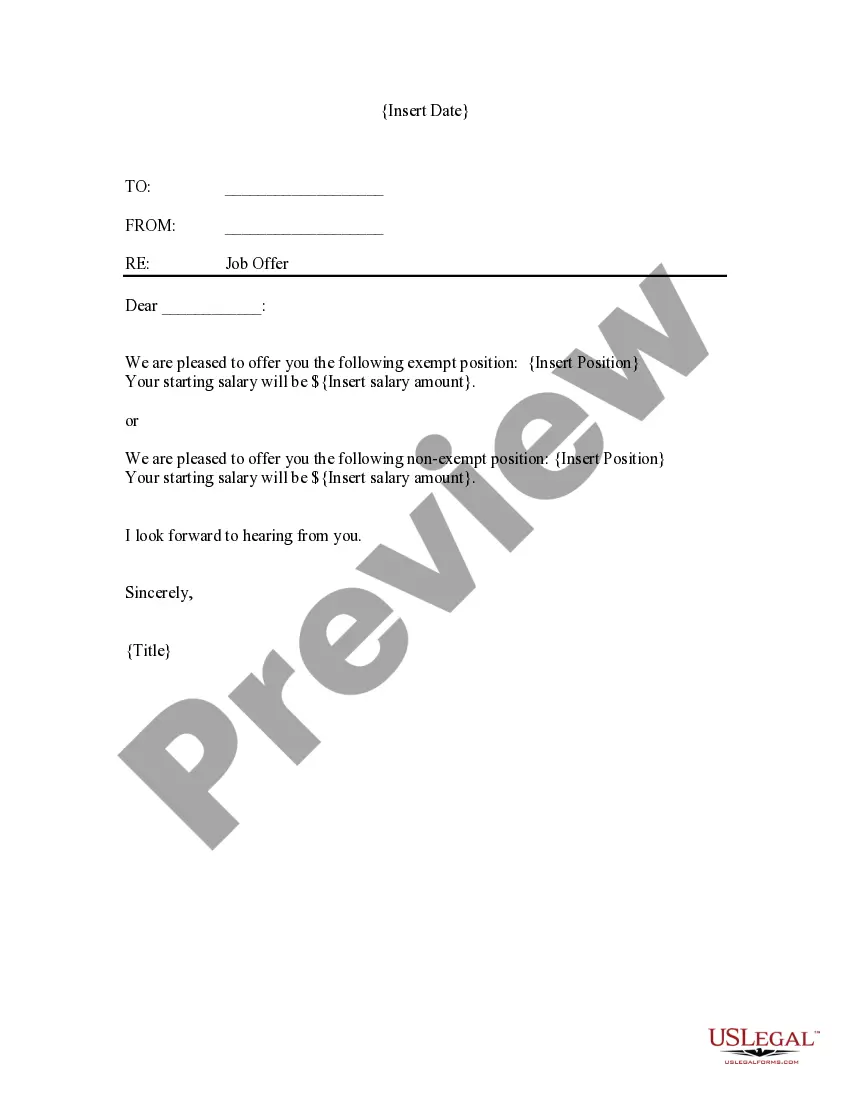
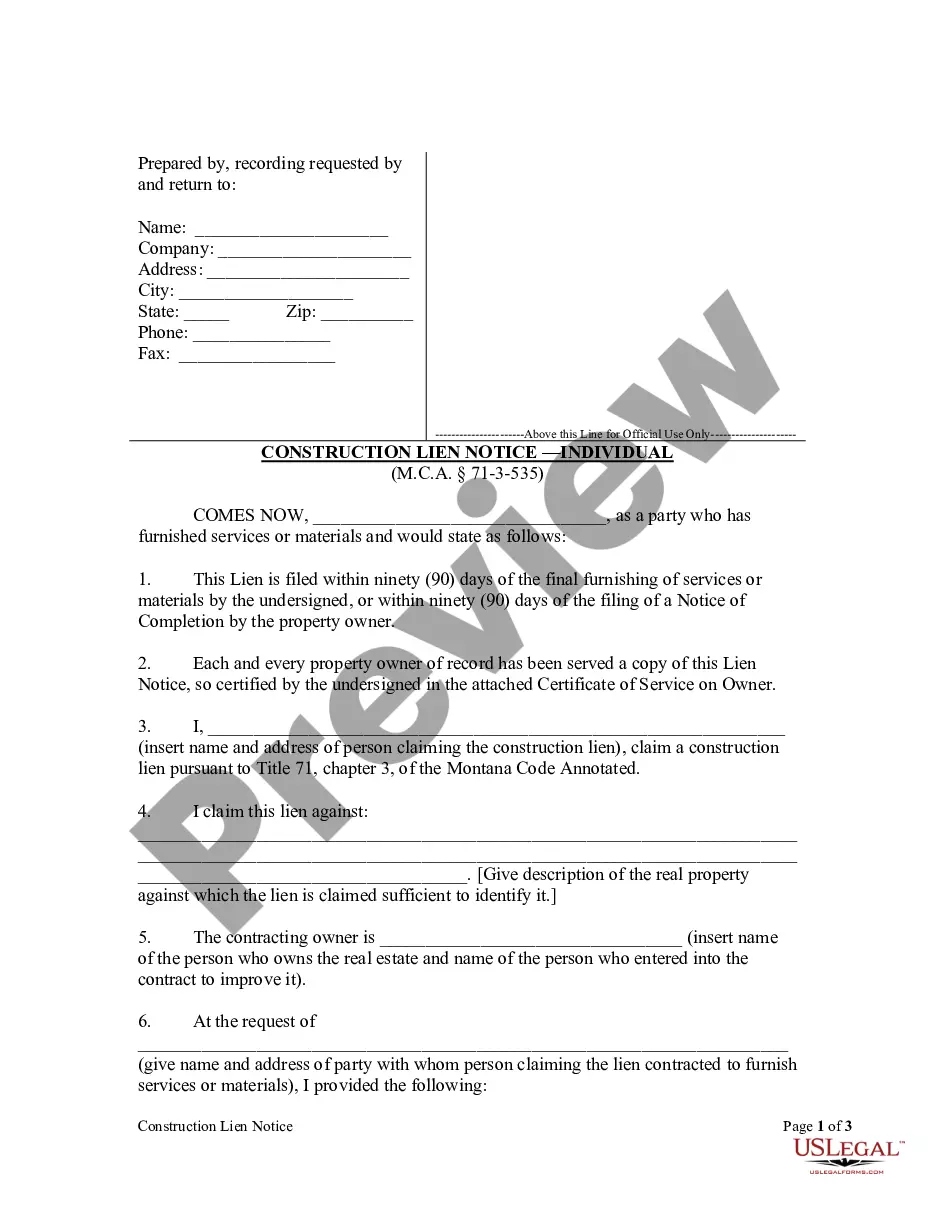
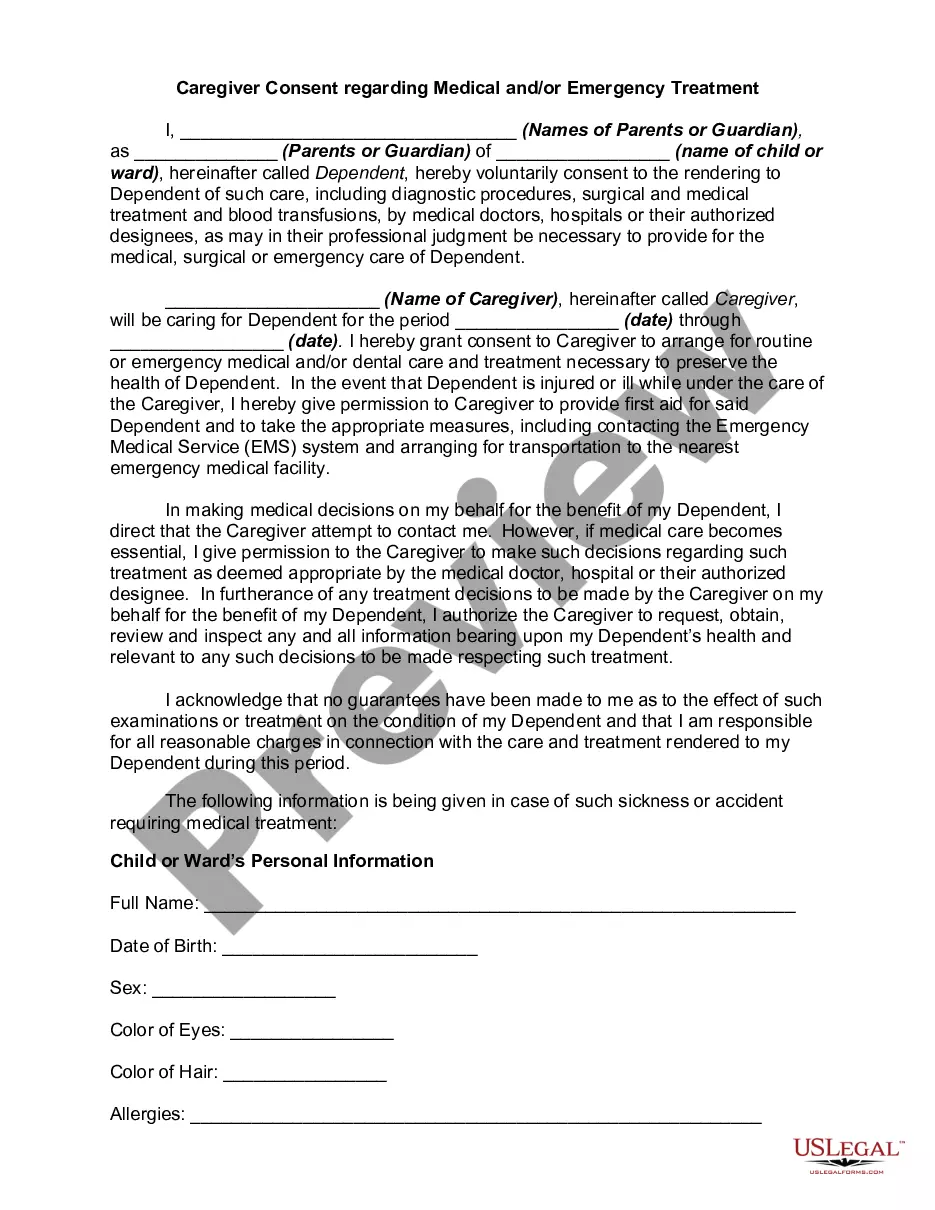
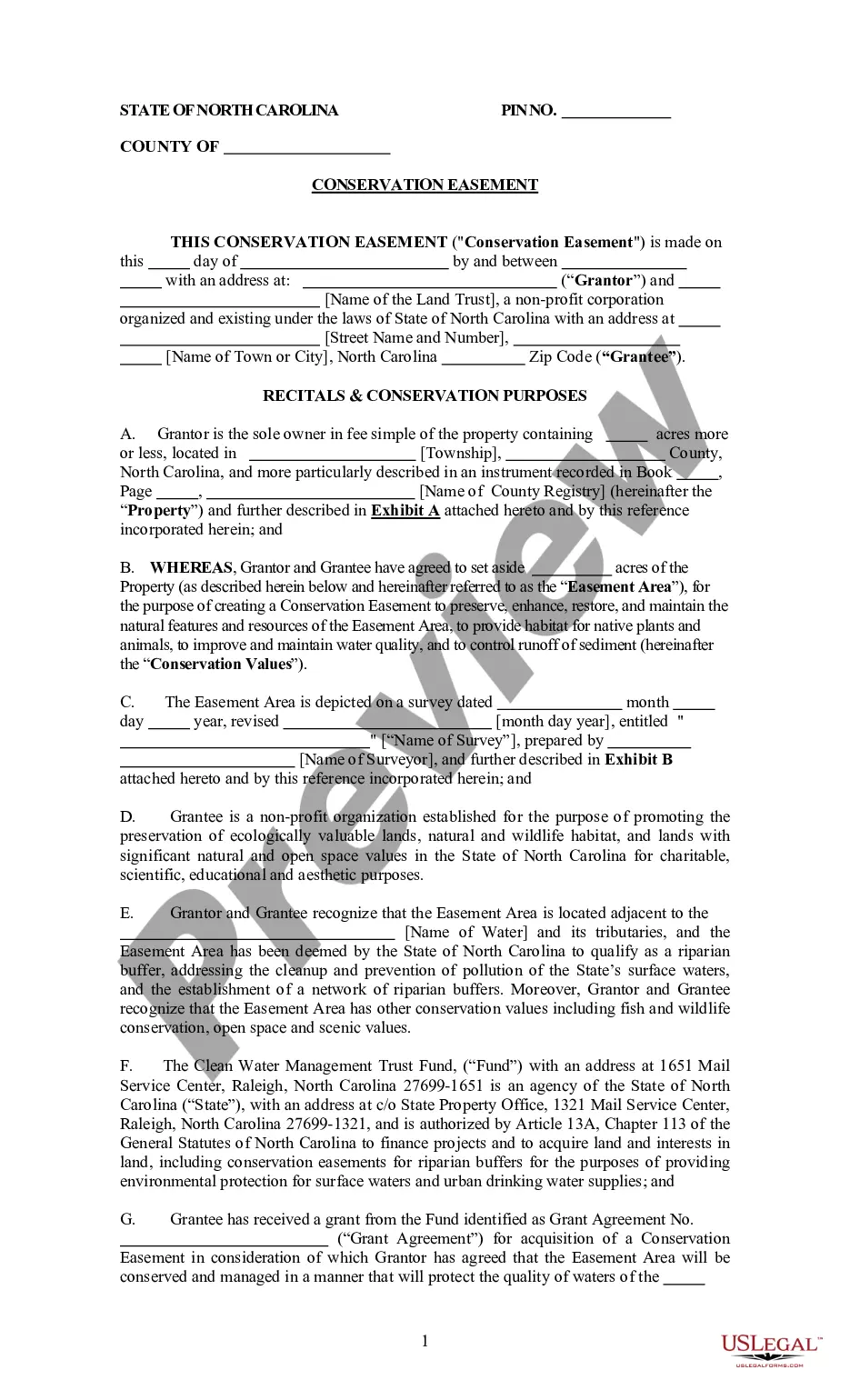
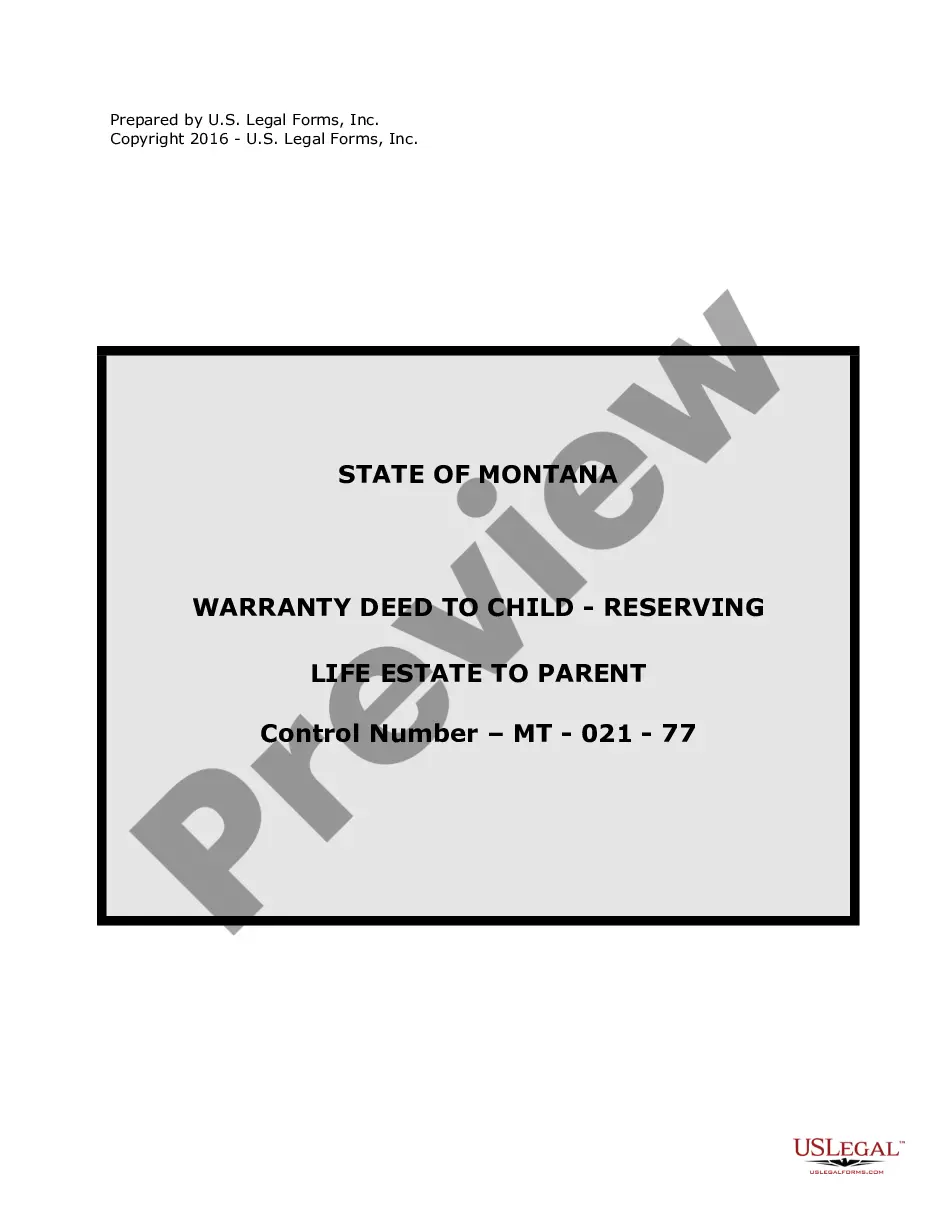
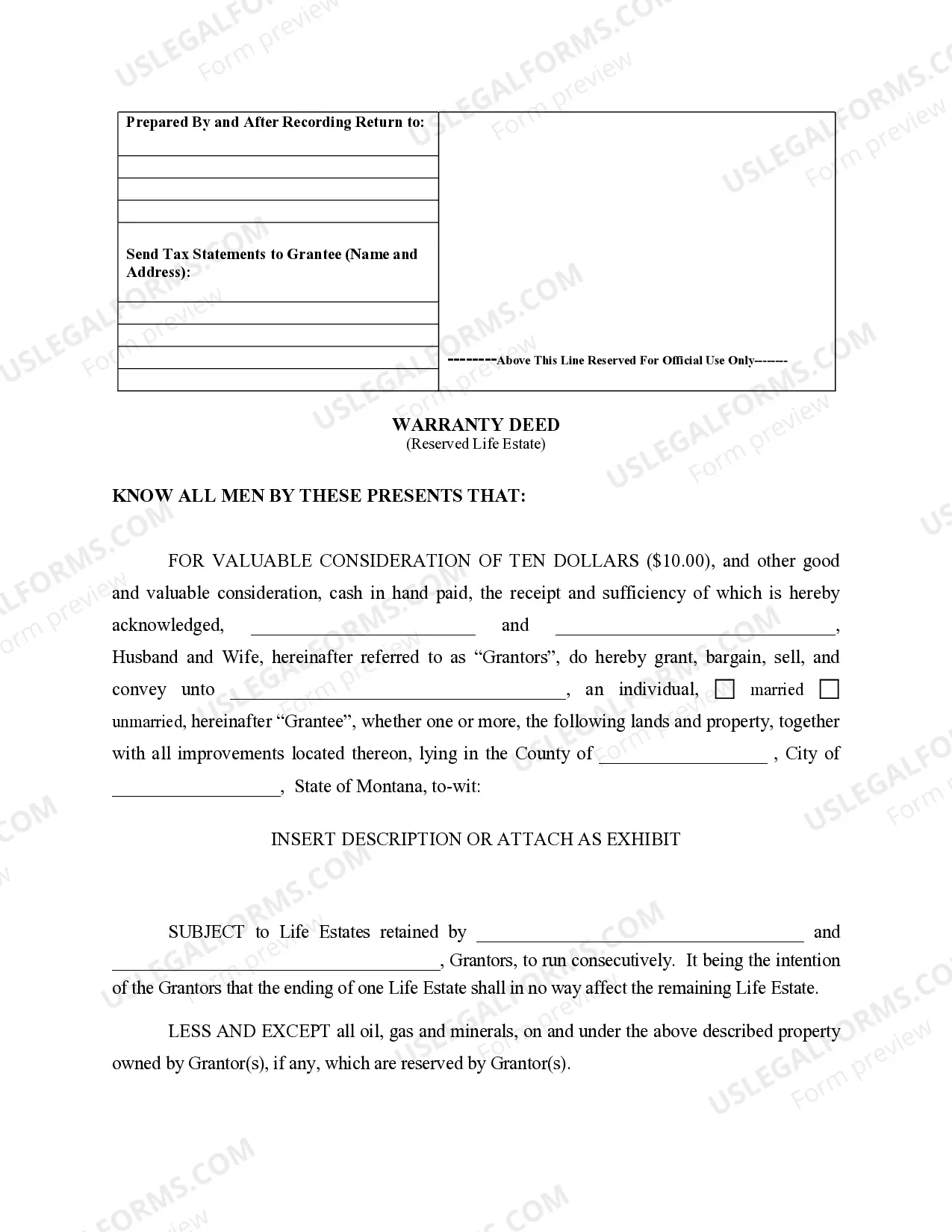
How to fill out Montana Warranty Deed To Child Reserving A Life Estate In The Parents?
Individuals frequently link legal documentation with a complex task that only an expert can handle.
In a certain sense, this is valid, as creating a Life Estate Deed Montana With Remainder requires a significant grasp of the subject matter, including state and local laws.
Nevertheless, with the US Legal Forms, everything has become easier: pre-designed legal templates for any life and business scenario, tailored to state regulations, are gathered in a comprehensive online directory and are now accessible to everyone.
All templates in our collection are reusable: once obtained, they remain saved in your profile. You can access them at any time through the My documents tab. Discover all the benefits of using the US Legal Forms platform. Subscribe today!
- US Legal Forms offers over 85,000 current documents organized by state and purpose, so searching for Life Estate Deed Montana With Remainder or any other specific template takes just minutes.
- Previously registered users with an active subscription must Log In to their account and click Download to obtain the form.
- New users on the platform are required to create an account and subscribe before they can download any documentation.
- Here is a step-by-step guide on how to acquire the Life Estate Deed Montana With Remainder.
- Review the page content thoroughly to ensure it meets your requirements.
- Read the form description or check it using the Preview feature.
- If the initial sample doesn’t meet your needs, search for another template using the Search bar in the header.
- Once you find the appropriate Life Estate Deed Montana With Remainder, click Buy Now.
- Select a pricing plan that aligns with your needs and budget.
- Create an account or Log In to proceed to the payment section.
- Complete your subscription payment via PayPal or with a credit card.
- Choose the format for your document and click Download.
- Print your document or upload it to an online editor for a faster completion.
Form popularity
FAQ
While a life estate deed in Montana with remainder can be beneficial, it also has disadvantages. The life tenant's control over the property is limited, as they cannot make significant changes or sell without permission from remainder beneficiaries. Additionally, if the life tenant wills or transfers other assets, confusion may arise regarding property ownership. It's wise to consider potential challenges before finalizing a deed.
A remainder interest on a life estate deed is the right to receive property after the death of the life tenant. In Montana with remainder deeds, this means the designated beneficiaries will gain full ownership once the life tenant passes away. Understanding this concept is important for both the life tenant and the beneficiaries, as it affects future planning and property management. You can find helpful resources on this topic through US Legal Forms.
In Texas, the life estate is held by the life tenant, who has the right to use and enjoy the property for their lifetime. The remainder beneficiaries will gain ownership of the property after the life tenant's death. This arrangement creates a clear division of interests. If you're considering establishing a life estate deed in Montana with remainder, legal assistance can help clarify ownership and responsibilities.
In Massachusetts, the property in a life estate is owned by the life tenant during their lifetime. The remainder beneficiaries hold a future interest in the property, meaning they will receive full ownership once the life tenant passes away. Understanding these ownership dynamics is crucial for both life tenants and remainder beneficiaries. If you have questions about creating such a deed, consider using US Legal Forms for proper guidance.
The life estate deed in Montana with remainder can have several disadvantages. One main concern is that the life tenant cannot sell the property without the consent of the remainder beneficiaries. Additionally, the life tenant remains responsible for property taxes and maintenance, which can become a financial burden. It’s important to consider these factors when creating a life estate.
Yes, you can sell a property that has a life estate deed in Montana with remainder. However, the life tenant—the individual holding the life estate—only owns the right to use the property during their lifetime. When they pass away, the property reverts to the remainder beneficiary. It's essential to consult with a legal professional to understand the implications of such a sale.
Another name for a life estate is a 'life tenancy.' This legal concept allows an individual the right to use and occupy a property for their lifetime, with the remainder interest passing to another party after their death. Understanding life estates is vital when arranging your estate, particularly if you are exploring a life estate deed in Montana with remainder.
Yes, a handwritten will, also known as a holographic will, is legal in Montana as long as it meets specific criteria. The will must be written entirely in the testator's handwriting and signed by them. However, ensure that this document aligns with your estate planning goals, especially when considering a life estate deed in Montana with remainder, as clarity is crucial in such matters.
Filling out a quit claim deed in Montana involves several steps. Start by identifying the parties involved, including the grantor and grantee. Next, accurately describe the property, then sign and date the document before a notary. It can be helpful to use resources like uslegalforms to ensure your quit claim deed meets legal requirements, especially if planning to create a life estate deed in Montana with remainder.
In Montana, you typically have up to one year to settle an estate after the individual's death. This time frame allows for the collection of debts, distribution of assets, and handling of any legal matters. It’s important to manage this process efficiently, especially if a life estate deed in Montana with remainder is involved, which may have specific stipulations.