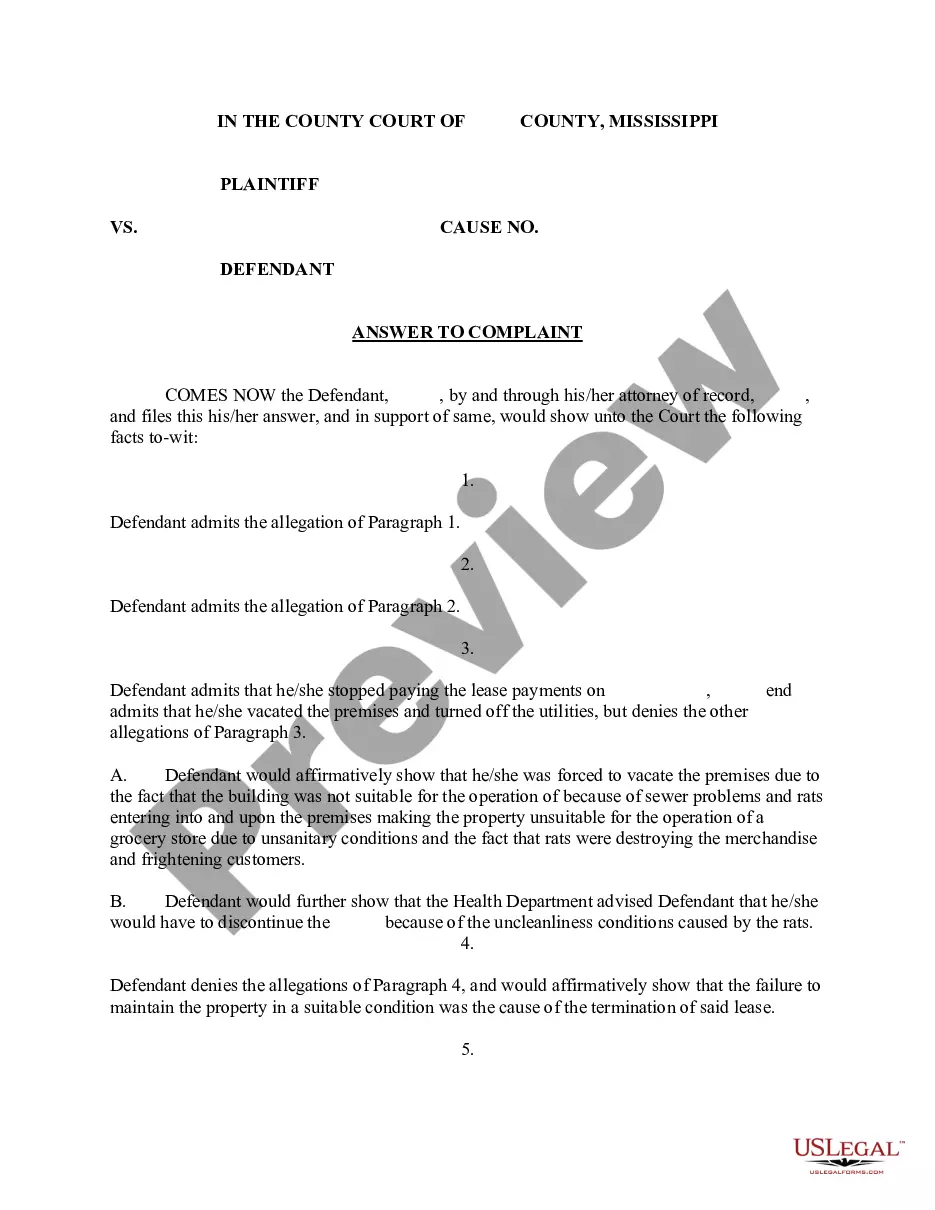
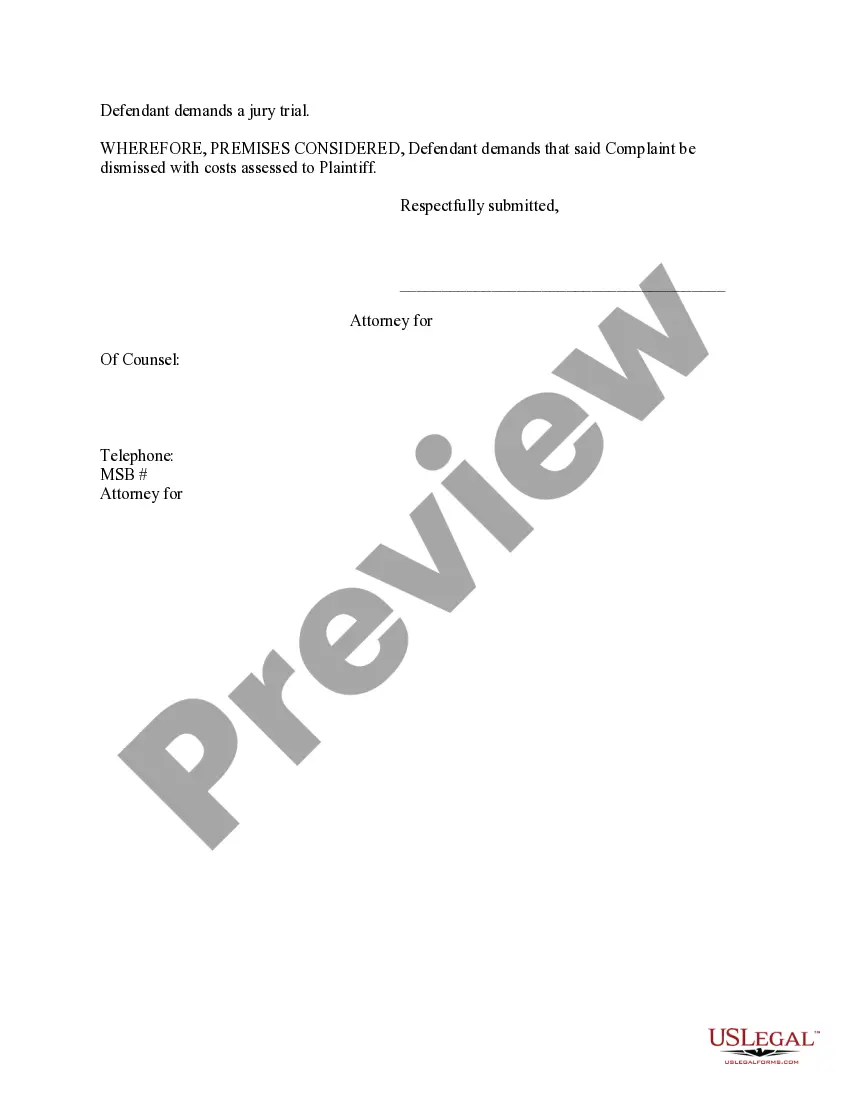
Answer To The Complaint
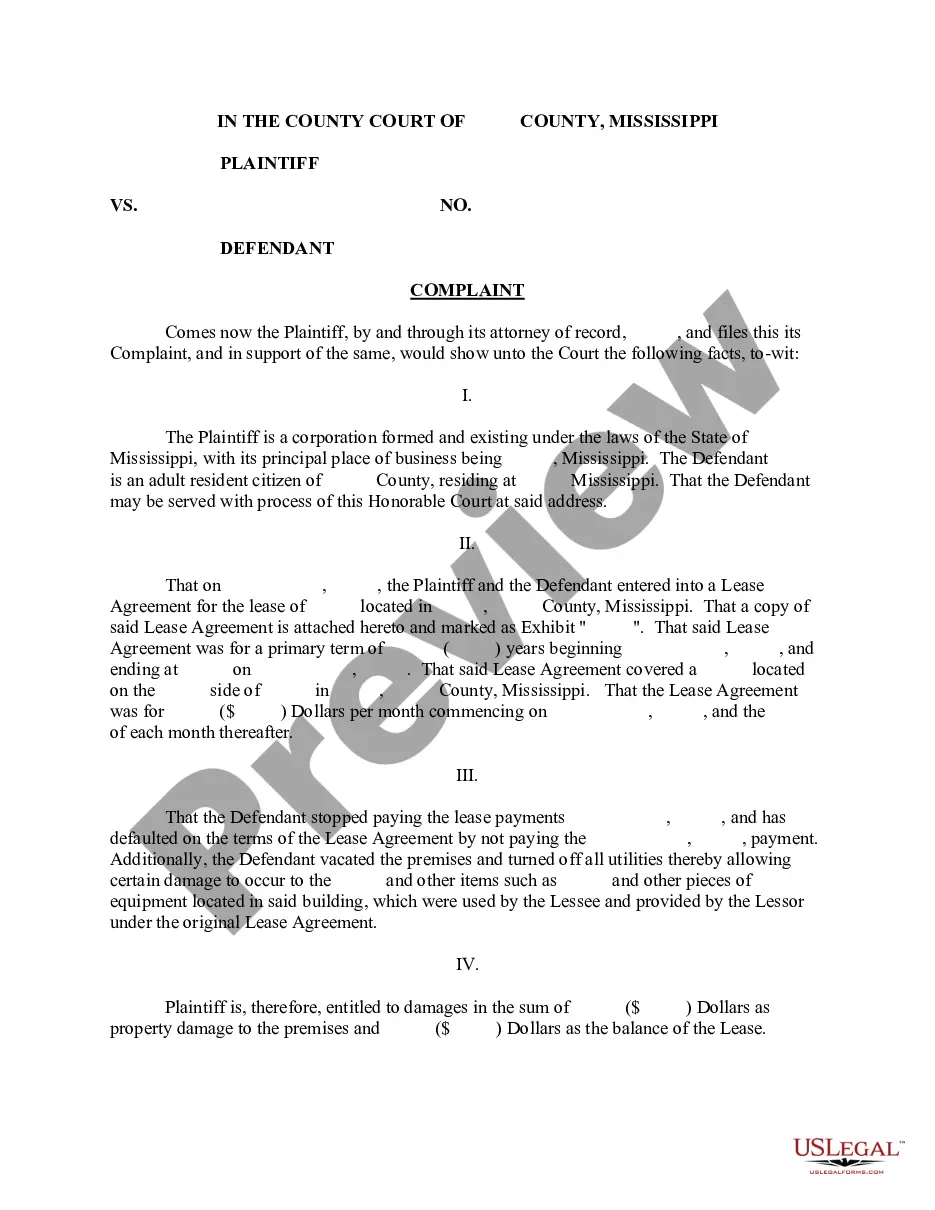
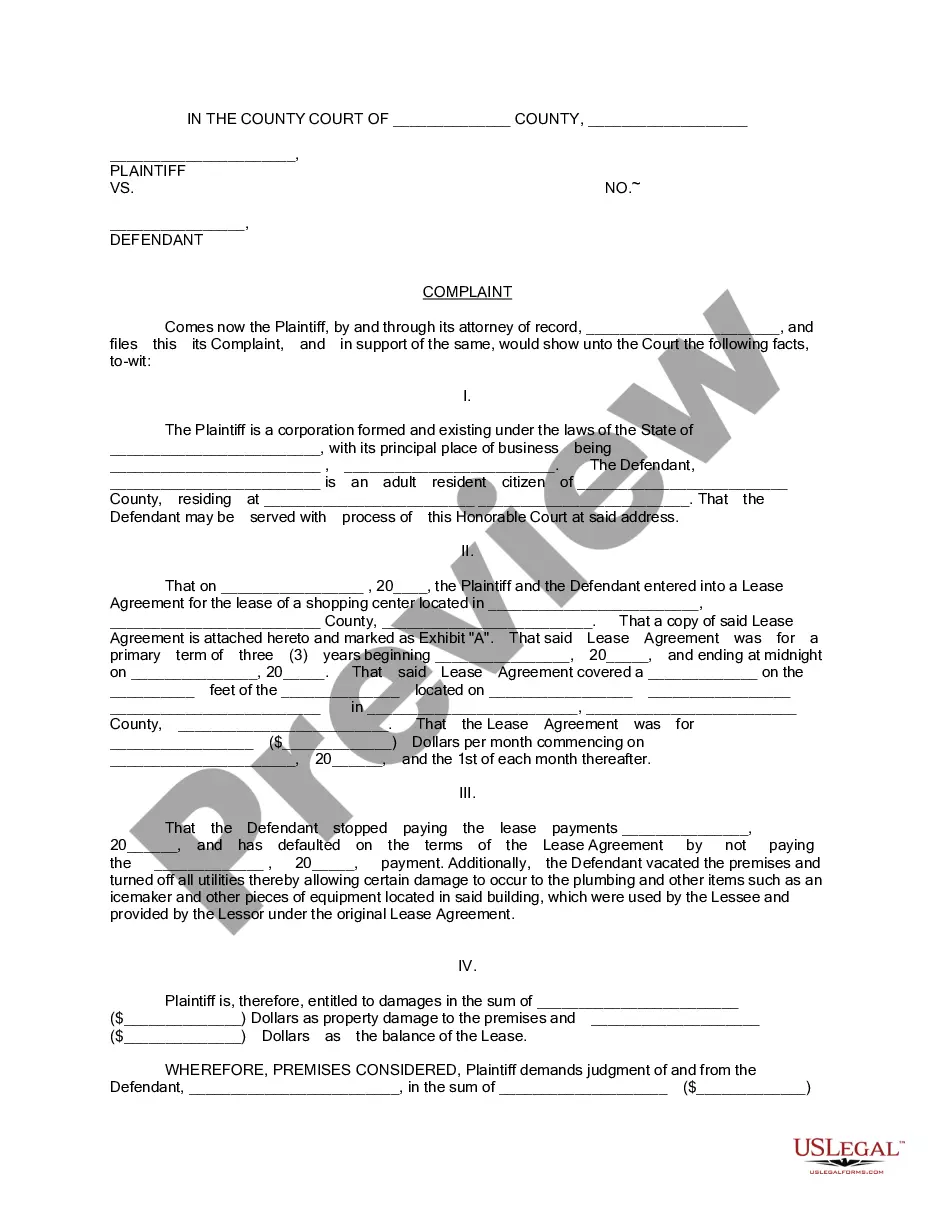
Description
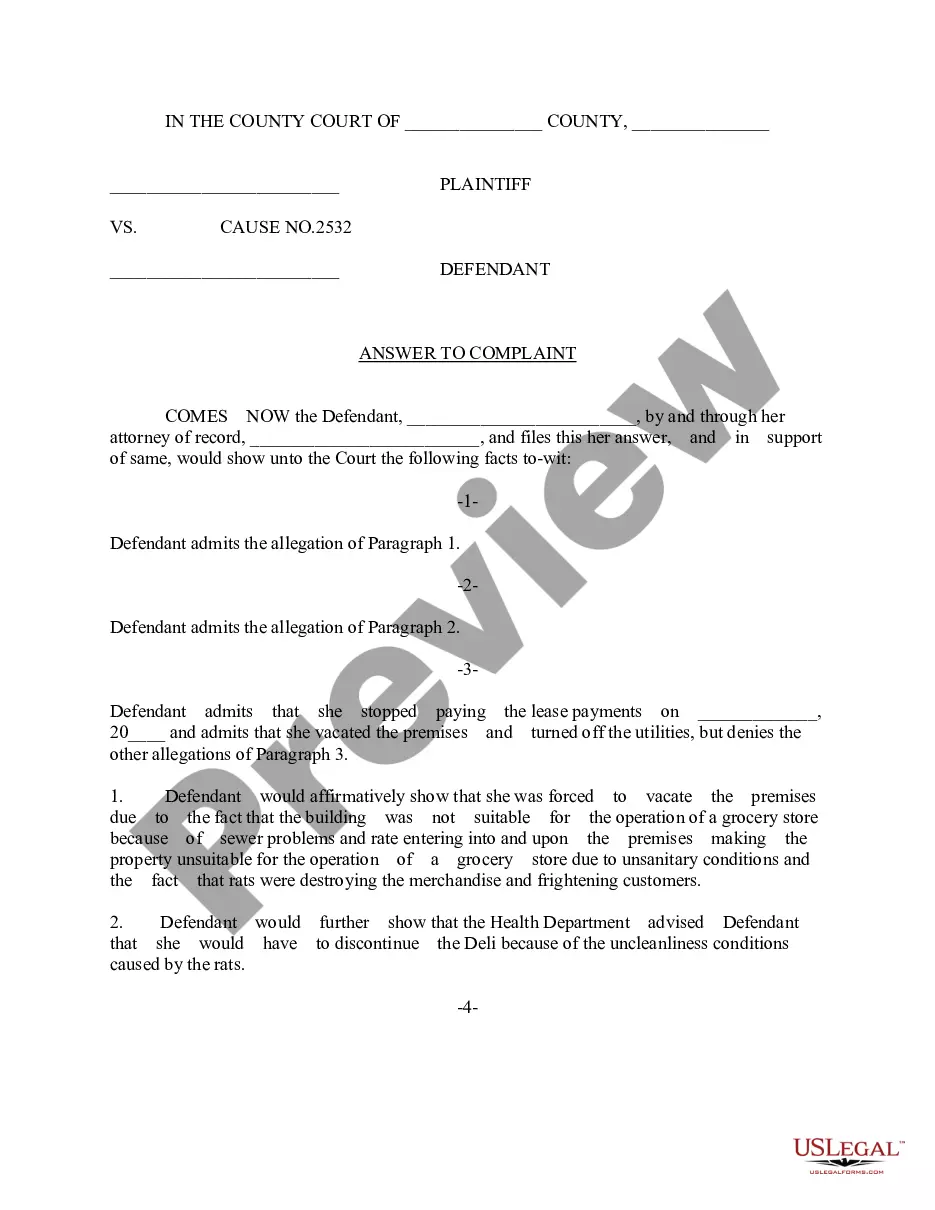
Get your form ready online
Our built-in tools help you complete, sign, share, and store your documents in one place.
Make edits, fill in missing information, and update formatting in US Legal Forms—just like you would in MS Word.
Download a copy, print it, send it by email, or mail it via USPS—whatever works best for your next step.
Sign and collect signatures with our SignNow integration. Send to multiple recipients, set reminders, and more. Go Premium to unlock E-Sign.
If this form requires notarization, complete it online through a secure video call—no need to meet a notary in person or wait for an appointment.
We protect your documents and personal data by following strict security and privacy standards.

Make edits, fill in missing information, and update formatting in US Legal Forms—just like you would in MS Word.

Download a copy, print it, send it by email, or mail it via USPS—whatever works best for your next step.

Sign and collect signatures with our SignNow integration. Send to multiple recipients, set reminders, and more. Go Premium to unlock E-Sign.

If this form requires notarization, complete it online through a secure video call—no need to meet a notary in person or wait for an appointment.

We protect your documents and personal data by following strict security and privacy standards.
Looking for another form?

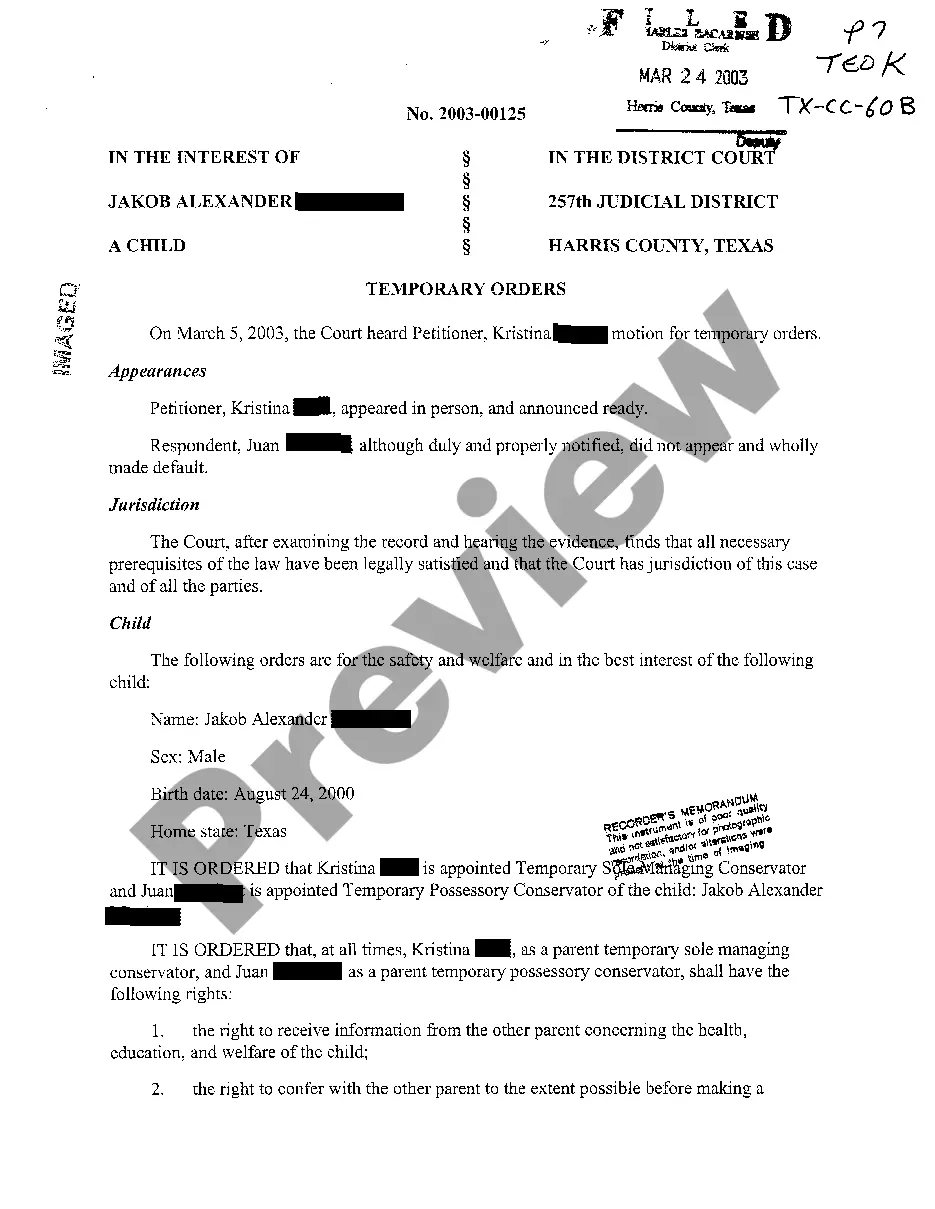
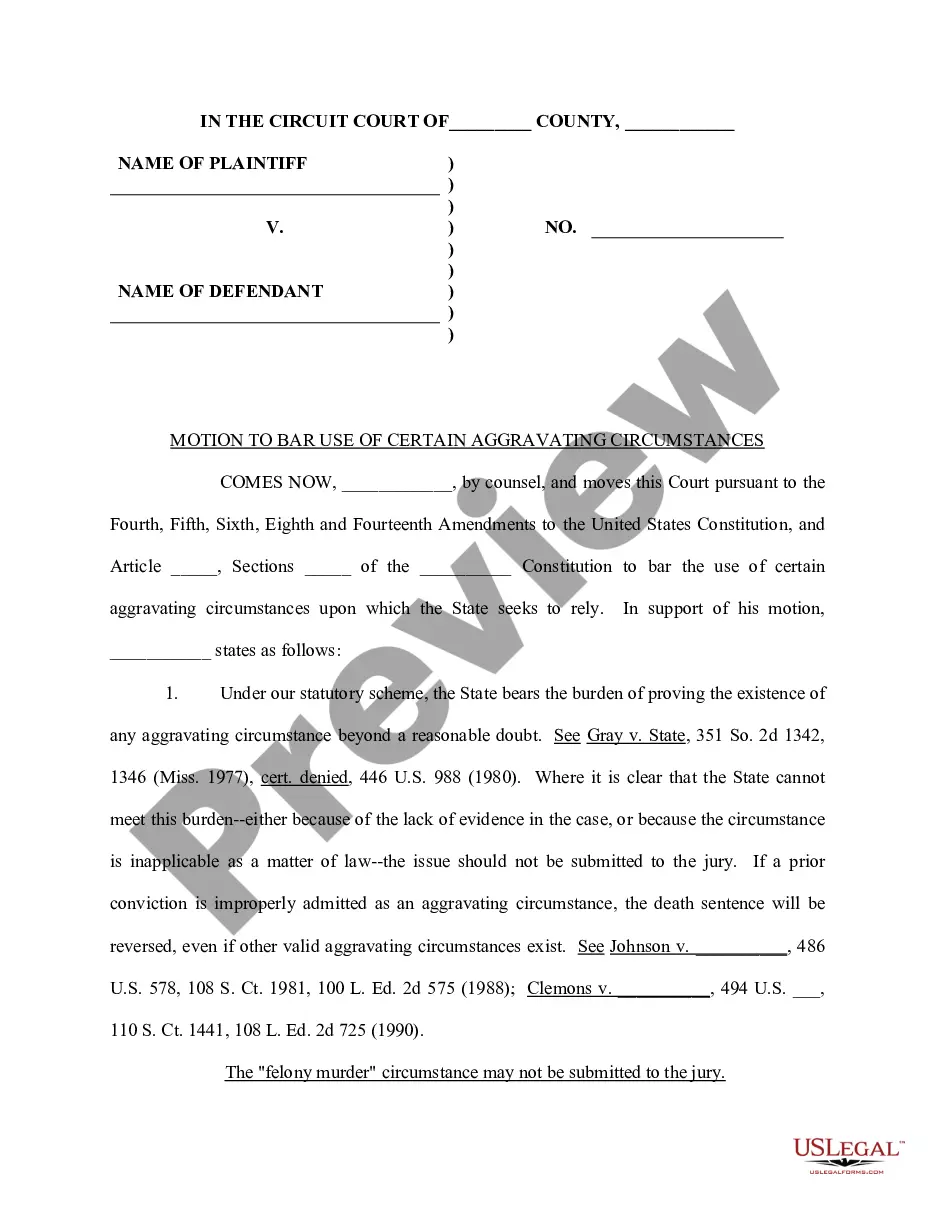
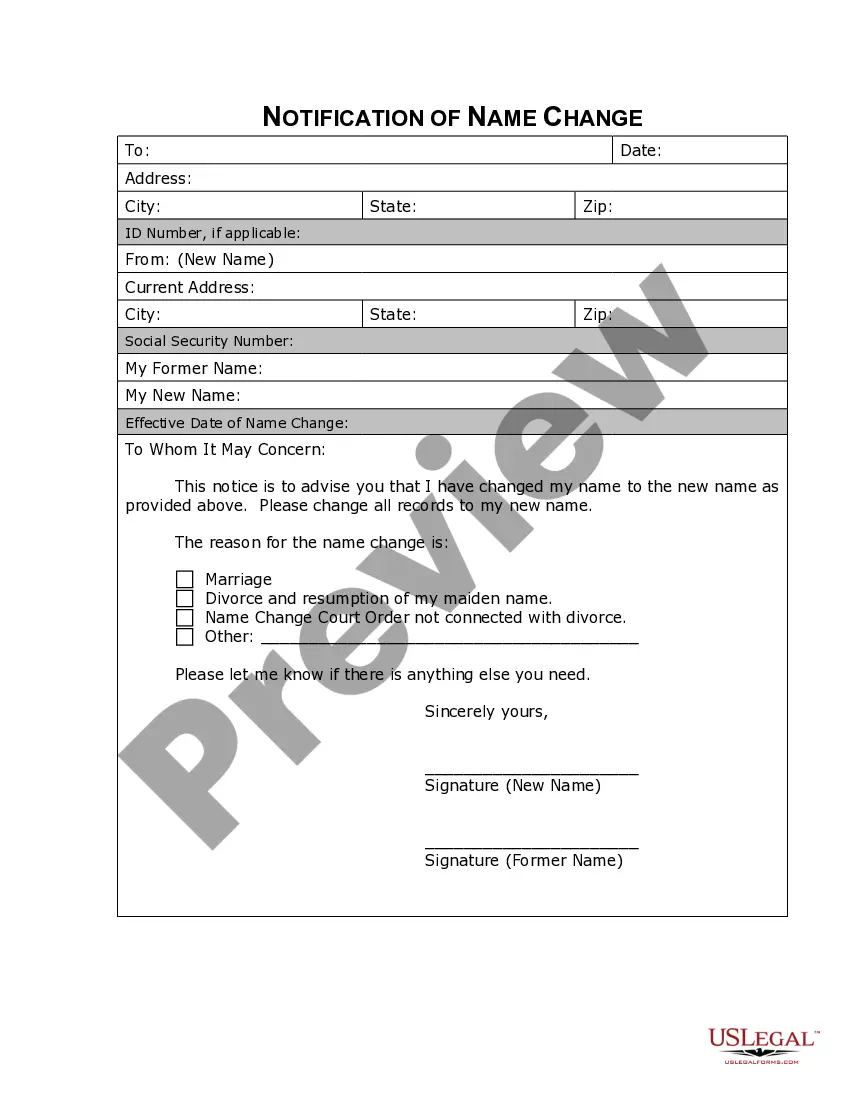
How to fill out Mississippi Sample Answer To Complaint?
- If you have previously used US Legal Forms, log in to your account. Make sure your subscription is still active—renew it if necessary.
- Review the Preview mode and description of the form. Ensure it matches your needs and complies with your local jurisdiction.
- If you need a different template, utilize the Search feature to find the right one. Be thorough in your selection.
- Choose and purchase your desired document by clicking on the Buy Now button. Select a suitable subscription plan during registration.
- Complete the payment process with your credit card information or PayPal account.
- Download your completed template. Access it anytime via the My Forms section of your account.
By following these simple steps, you can ensure that your legal documents are completed correctly and promptly.
Take advantage of US Legal Forms today, and empower yourself with legal knowledge. Start your journey to easy documentation now!
Form popularity
FAQ
A formal answer to a complaint is a structured and detailed response provided to a court or authority upon receiving a legal complaint. This document typically denies, admits, or explains various allegations made in the complaint. A well-formulated answer to the complaint is crucial to protect your rights and assert your position in any legal matter.
The term for the complaint and the answer taken together is known as a 'pleading.' This legal document encapsulates both the claims made by the complainant and the responses provided by the defendant. Understanding this term is vital when dealing with legal matters, ensuring you are prepared with a proper answer to the complaint when necessary.
Yes, an answer is a written response to a complaint, outlining your position regarding the issues presented. This document typically addresses each point raised and provides clarification or resolution options. It is essential for creating a comprehensive answer to the complaint while maintaining a professional tone and structure.
To respond to a complaint professionally, you should first listen carefully to the concerns being raised. Your reply should show empathy and confirm that you understand the situation. Follow this with a clear response outlining actions you will take. This approach not only addresses the complaint but also serves as an effective answer to the complaint itself.
Acknowledging a formal complaint involves recognizing the receipt of the complaint and confirming its importance. You should communicate your commitment to investigate the matter further. In your acknowledgement, it is good practice to provide a timeframe for when the individual can expect a more detailed response. This sets clear expectations and demonstrates professionalism.
Formally responding to a complaint requires a structured approach. Begin by reviewing the complaint thoroughly to understand the issues presented. Then, articulate your response or solution clearly, while ensuring you directly address the points raised. This process is integral for constructing your answer to the complaint effectively.
To reply politely to an escalation email, start by acknowledging the sender’s concerns and expressing your willingness to assist. Use clear, courteous language to confirm receipt of their message. Ensure you address the specific issues raised and offer a proactive path to resolution. This will create a positive tone and help foster cooperation.
A response to a complaint is a formal document where the defendant addresses the allegations made against them in court. This document serves to clarify your position on each claim and can also introduce any defenses you may have. Utilizing platforms like US Legal Forms can help you efficiently draft your answer to the complaint.
To respond to a complaint, you might start by drafting an answer that outlines your perspective on the allegations. For example, if the complaint states that you owe a debt, you could deny the amount owed or present a valid counterclaim. Such clarity in your response aids in pacing the legal process effectively.
Yes, a reply to an answer is considered a type of pleading in court proceedings. It is a formal document where a plaintiff addresses any new facts or defenses presented in the defendant's answer. Crafting a well-structured reply helps clarify the issues and keeps the case on track.