Damages For Constitutional Violations
Description

Get your form ready online
Our built-in tools help you complete, sign, share, and store your documents in one place.
Make edits, fill in missing information, and update formatting in US Legal Forms—just like you would in MS Word.
Download a copy, print it, send it by email, or mail it via USPS—whatever works best for your next step.
Sign and collect signatures with our SignNow integration. Send to multiple recipients, set reminders, and more. Go Premium to unlock E-Sign.
If this form requires notarization, complete it online through a secure video call—no need to meet a notary in person or wait for an appointment.
We protect your documents and personal data by following strict security and privacy standards.

Make edits, fill in missing information, and update formatting in US Legal Forms—just like you would in MS Word.

Download a copy, print it, send it by email, or mail it via USPS—whatever works best for your next step.

Sign and collect signatures with our SignNow integration. Send to multiple recipients, set reminders, and more. Go Premium to unlock E-Sign.

If this form requires notarization, complete it online through a secure video call—no need to meet a notary in person or wait for an appointment.

We protect your documents and personal data by following strict security and privacy standards.
Looking for another form?









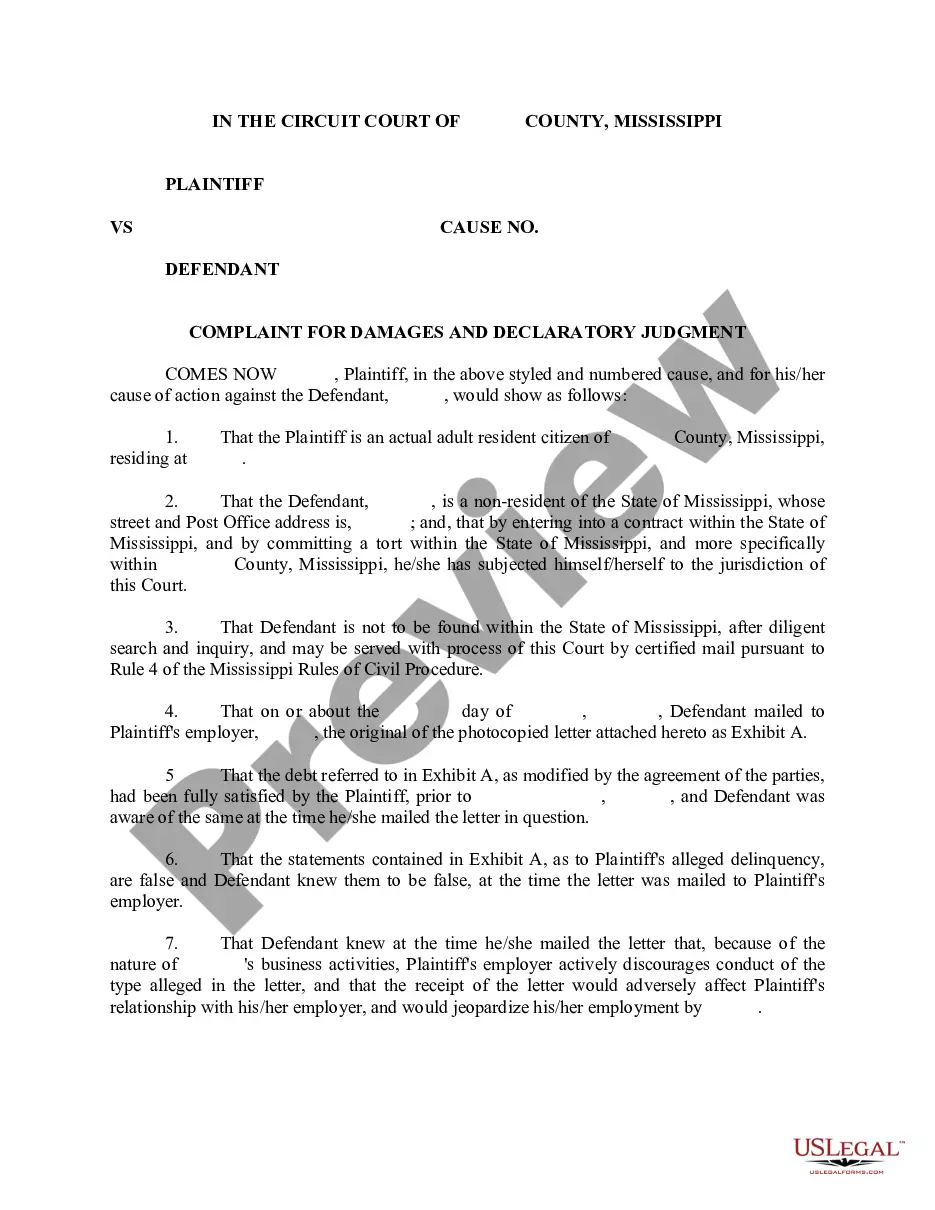
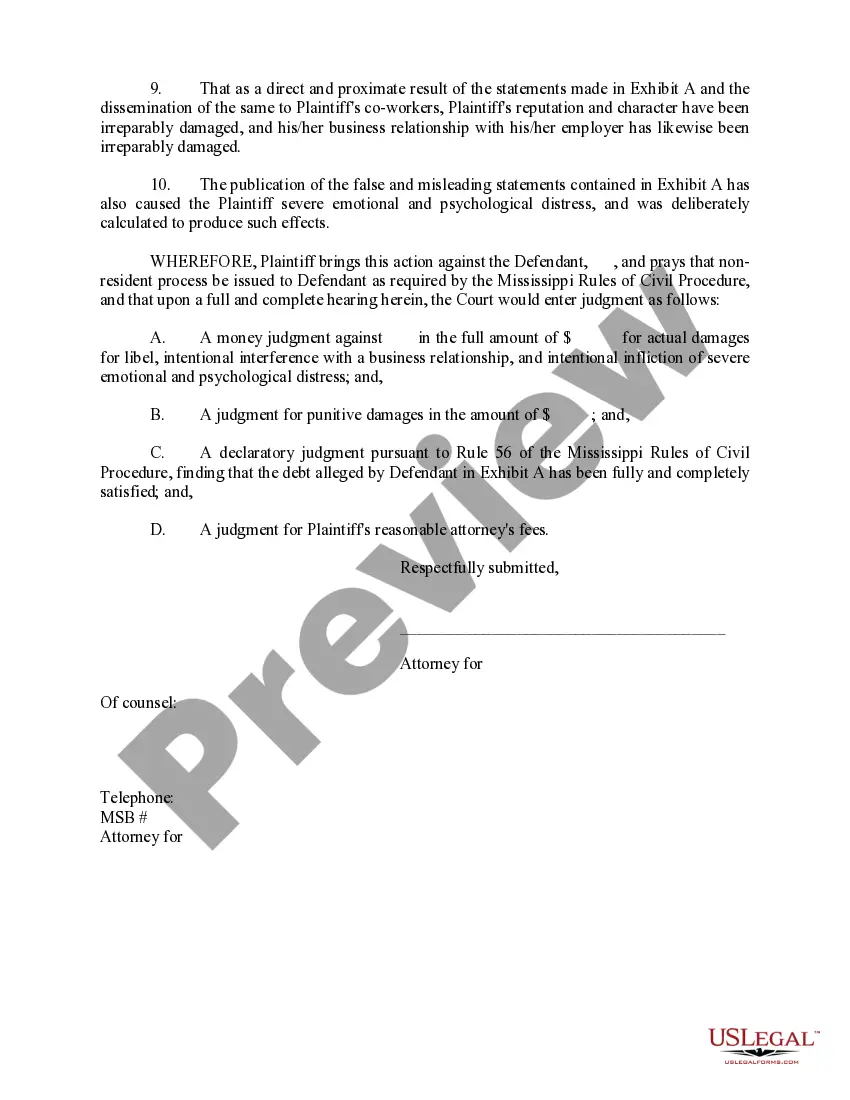
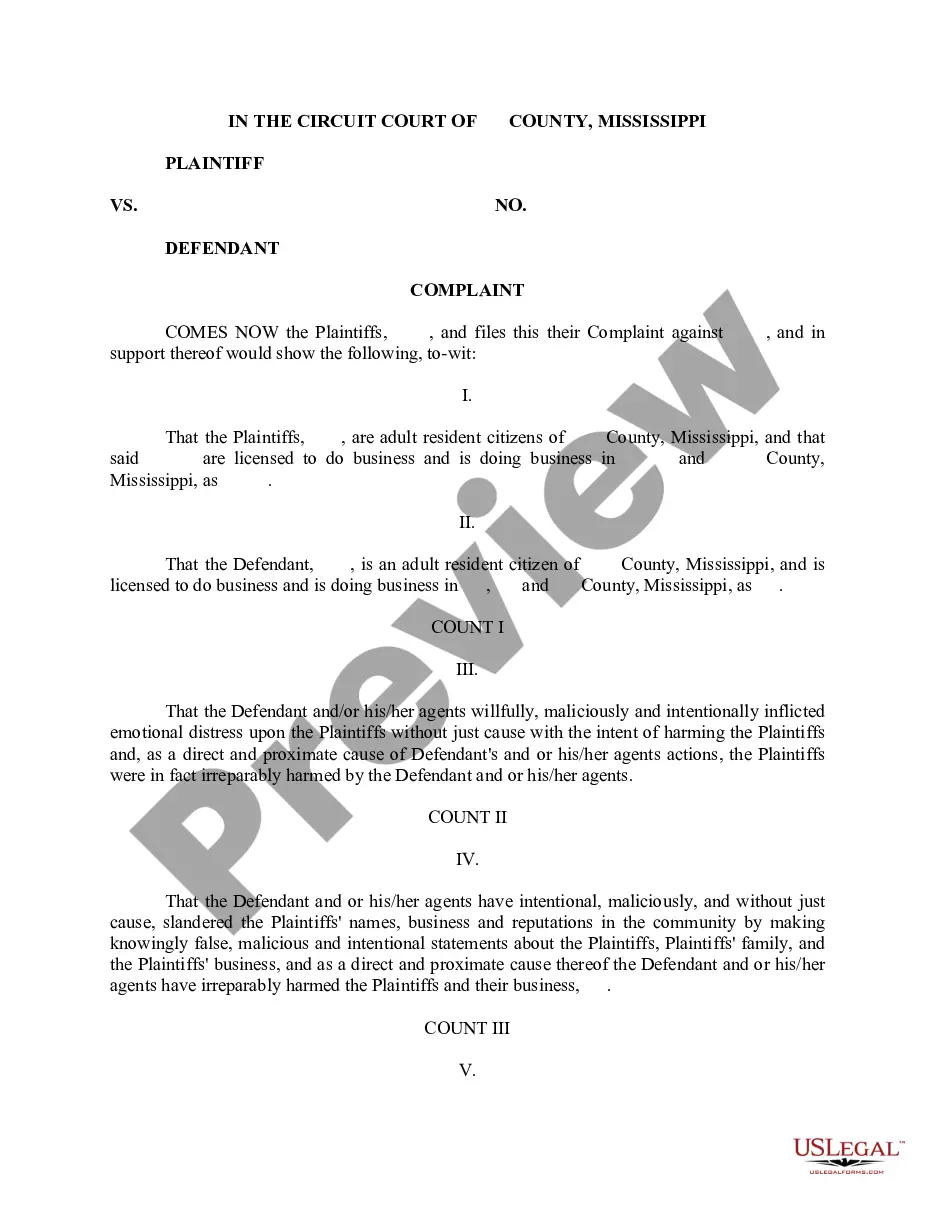
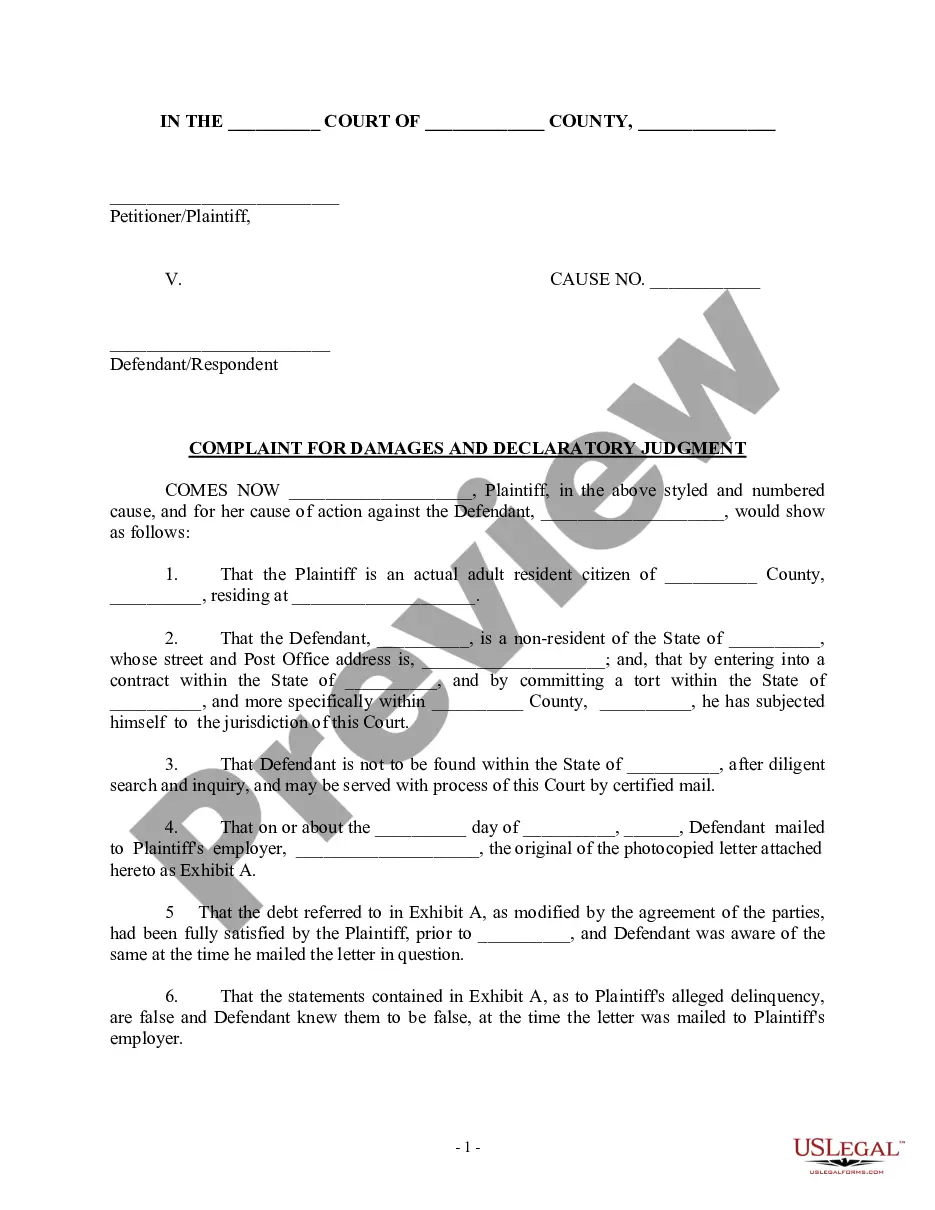
How to fill out Mississippi Complaint For Damages And Declaratory Judgment?
The Damages For Constitutional Violations presented on this site is a reusable formal format crafted by experienced attorneys in accordance with federal and state laws and regulations.
For over 25 years, US Legal Forms has supplied individuals, businesses, and legal experts with more than 85,000 validated, state-specific documents for any professional and personal scenario. It’s the fastest, most direct, and most reliable way to acquire the documentation you require, as the service ensures the utmost level of data protection and anti-malware safeguards.
Subscribe to US Legal Forms to have verified legal templates for every situation in life readily available.
- Search for the document you require and examine it.
- Browse through the file you searched and preview it or assess the form description to confirm it meets your requirements. If it doesn’t, utilize the search function to locate the suitable one. Click Buy Now after you’ve identified the template you need.
- Register and Log In.
- Select the pricing plan that best fits you and create an account. Use PayPal or a credit card to complete a swift payment. If you already possess an account, Log In and verify your subscription to proceed.
- Retrieve the editable template.
- Select the format you prefer for your Damages For Constitutional Violations (PDF, DOCX, RTF) and download the sample to your device.
- Fill out and sign the document.
- Print the template to manually fill it out. Alternatively, use an online multifunctional PDF editor to quickly and precisely complete and sign your form with an electronic signature.
- Download your documents again.
- Utilize the same document again whenever needed. Access the My documents tab in your profile to redownload any forms you previously saved.
Form popularity
FAQ
In a civil case involving damages for constitutional violations, two primary types of damages may be awarded: compensatory damages and punitive damages. Compensatory damages aim to reimburse the victim for tangible losses, such as medical bills and lost wages. Punitive damages, on the other hand, seek to punish the wrongdoer and deter similar actions in the future, often reflecting the severity of the violation. Knowing these types can greatly influence your legal strategy.
A constitutional claim often arises when an individual's rights, as defined in the Constitution, are violated by a governmental entity. For instance, if law enforcement conducts an illegal search without a warrant, this could lead to a claim for damages for constitutional violations. In such cases, the individual may seek compensation for the emotional distress and impact caused by the violation. Understanding these claims is crucial for those looking to protect their rights.
When someone violates the Constitution, the victim may seek damages for constitutional violations through legal channels. This process typically involves filing a lawsuit against the responsible party, which can be challenging. Utilizing resources like US Legal Forms can help you navigate this process effectively, ensuring you gather the necessary documents for your case.
There are three primary types of damages for constitutional violations: compensatory, punitive, and nominal damages. Compensatory damages aim to reimburse the victim for actual losses caused by the violation, such as lost wages or medical expenses. Punitive damages serve to punish the wrongdoer and deter others from similar actions, while nominal damages affirm that a violation occurred, even if there were no substantial losses.
Monetary damages in a lawsuit are typically determined by a judge or a jury, depending on the case's circumstances. They evaluate evidence, listen to arguments, and ultimately decide the compensation amount. Engaging with professionals who specialize in this area can help clarify what to expect in your case.
Yes, you can indeed file a lawsuit if your constitutional rights have been violated. A civil lawsuit can provide a pathway to seek damages for constitutional violations. It's wise to consult with a legal expert to navigate this complex process effectively.
Violating someone's constitutional rights can lead to criminal charges, especially if the act involves law enforcement or government officials. Those affected have the option to pursue civil lawsuits to claim damages for constitutional violations as a means of seeking justice. Understanding these avenues is important for anyone who feels wronged.
Yes, you can sue if your constitutional rights are violated. Engaging legal counsel is crucial as they can guide you through the process and help you understand potential damages for constitutional violations. This legal support can increase your chances of a successful outcome.
To seek punitive damages in cases of constitutional violations, you typically need to demonstrate that the violation was intentional or performed with reckless disregard. Examples of evidence include documented conduct, witness testimonies, and any prior similar incidents. Understanding how to gather this evidence can strengthen your case.
No, a law that violates the Constitution cannot be enforced. The Constitution serves as the supreme law, and any conflicting laws are considered invalid. If you believe a law is unconstitutional, exploring your rights and potential damages for constitutional violations can be beneficial.