Beneficiário Final Trust
Description
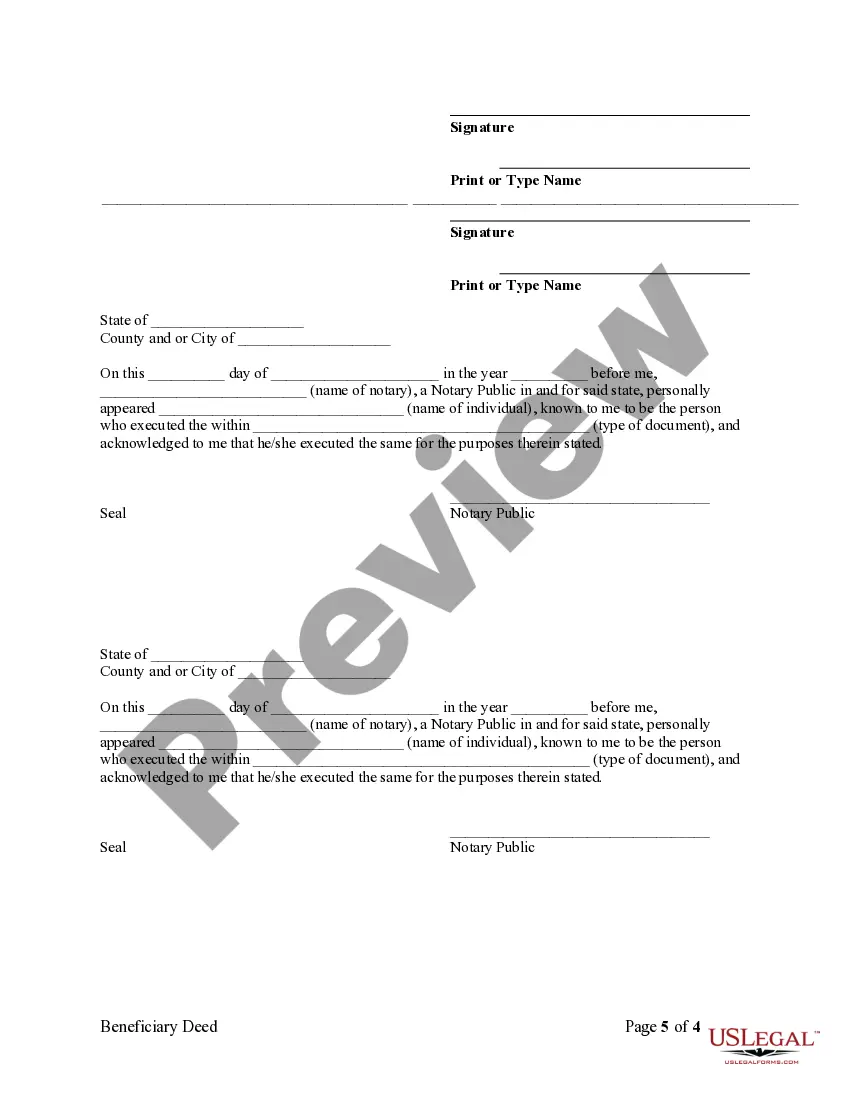


Get your form ready online
Our built-in tools help you complete, sign, share, and store your documents in one place.
Make edits, fill in missing information, and update formatting in US Legal Forms—just like you would in MS Word.
Download a copy, print it, send it by email, or mail it via USPS—whatever works best for your next step.
Sign and collect signatures with our SignNow integration. Send to multiple recipients, set reminders, and more. Go Premium to unlock E-Sign.
If this form requires notarization, complete it online through a secure video call—no need to meet a notary in person or wait for an appointment.
We protect your documents and personal data by following strict security and privacy standards.

Make edits, fill in missing information, and update formatting in US Legal Forms—just like you would in MS Word.

Download a copy, print it, send it by email, or mail it via USPS—whatever works best for your next step.

Sign and collect signatures with our SignNow integration. Send to multiple recipients, set reminders, and more. Go Premium to unlock E-Sign.

If this form requires notarization, complete it online through a secure video call—no need to meet a notary in person or wait for an appointment.

We protect your documents and personal data by following strict security and privacy standards.
Looking for another form?







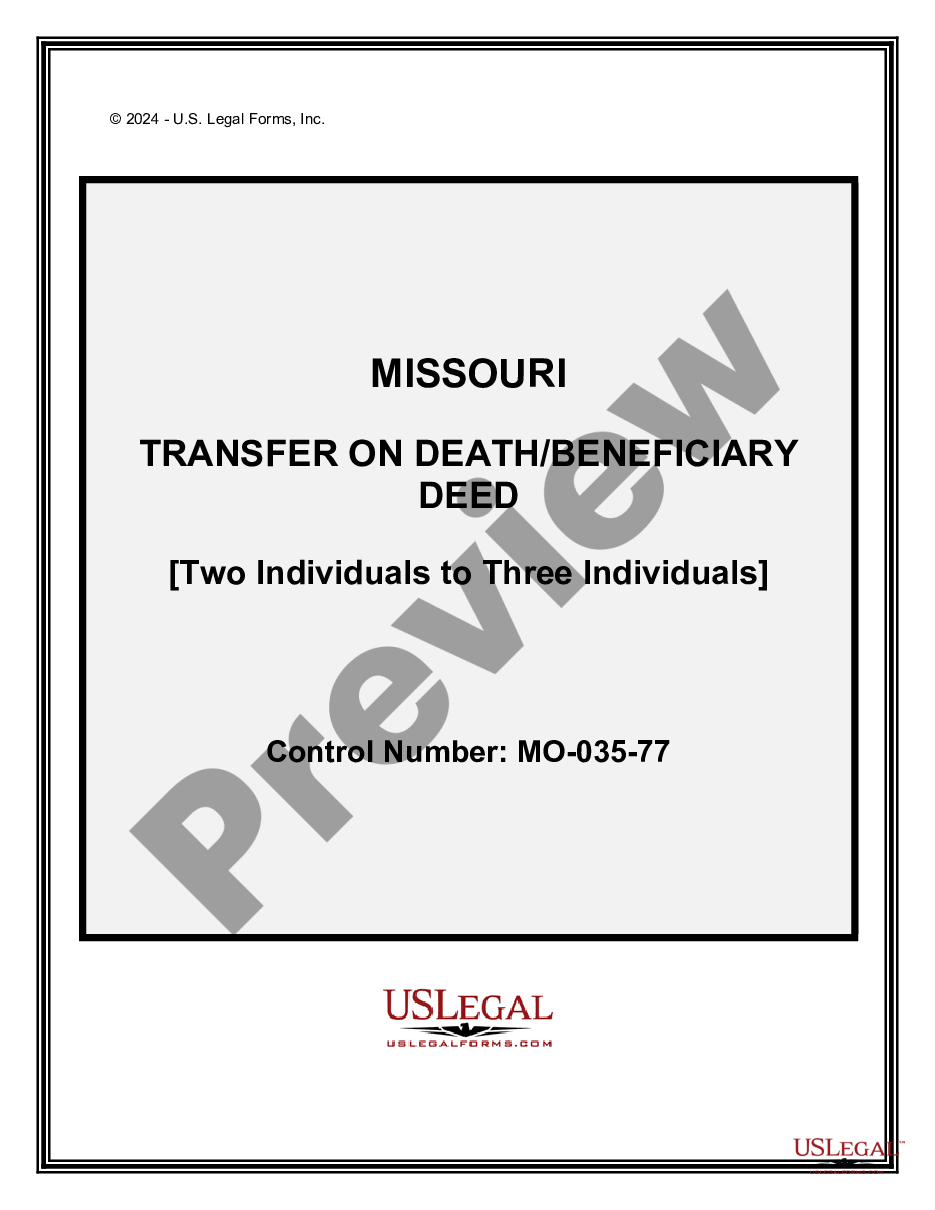
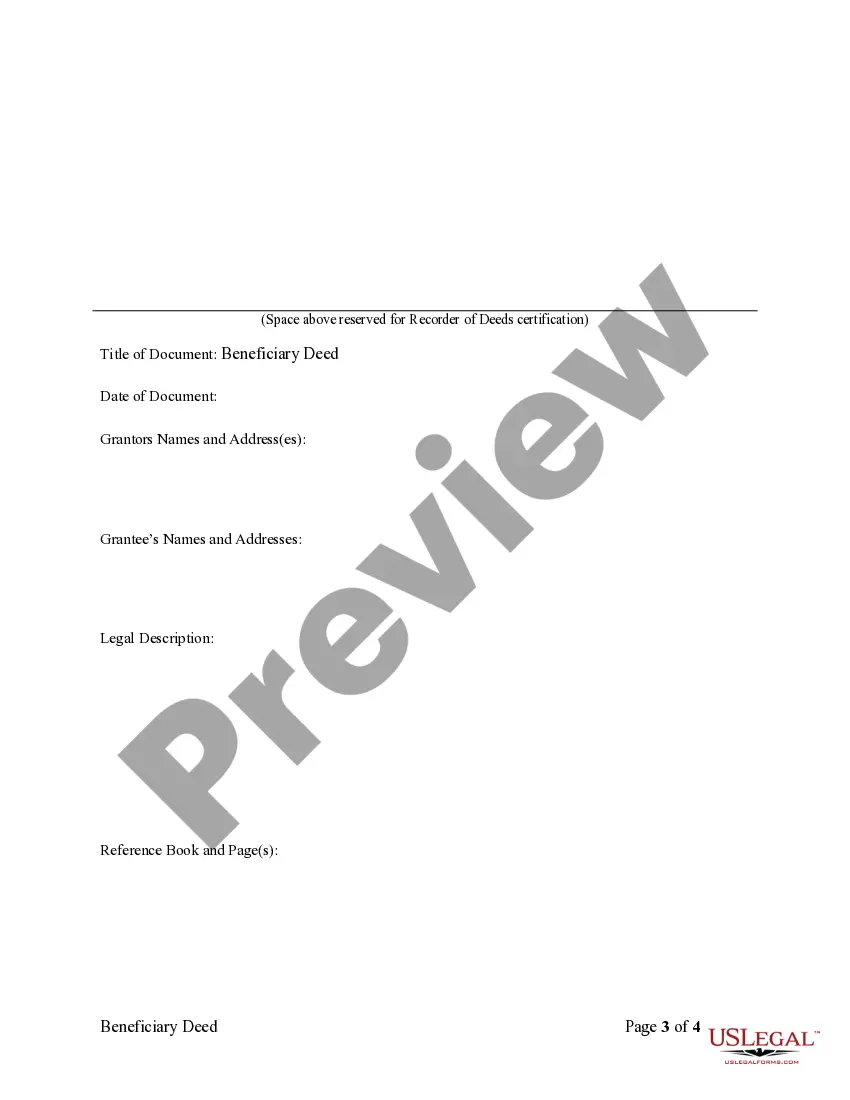
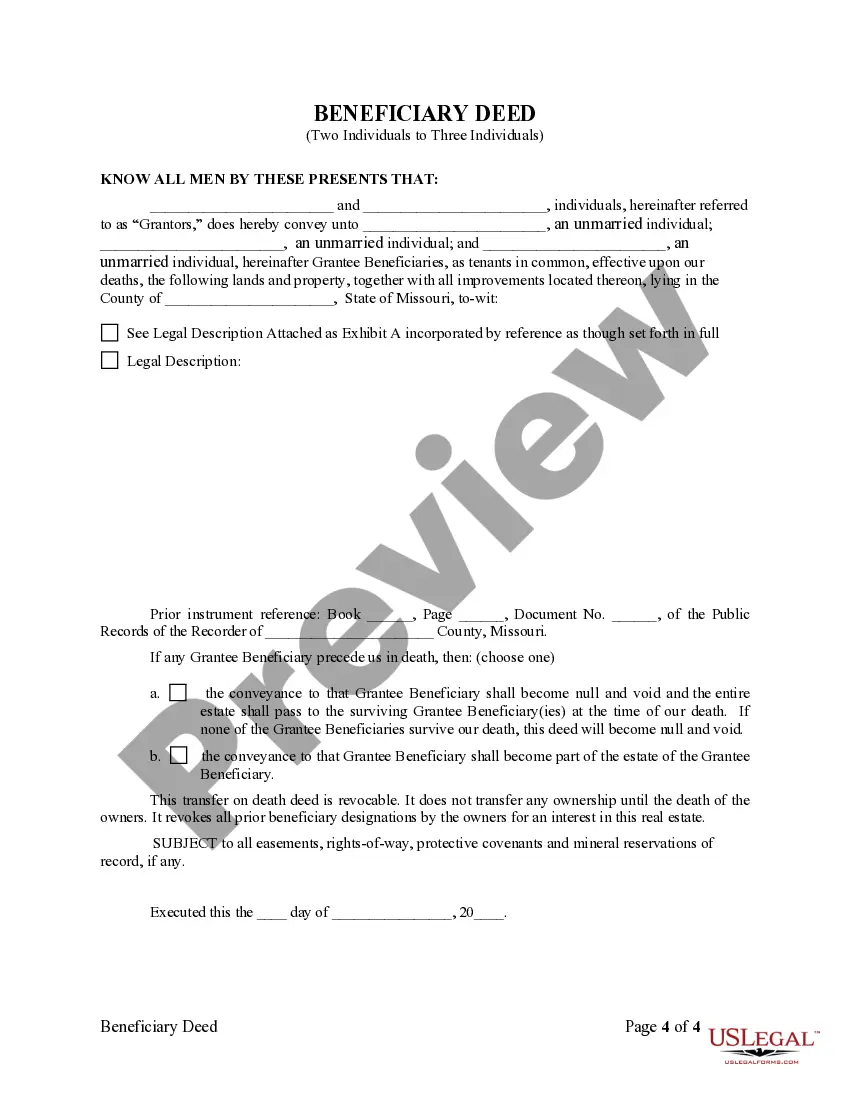
How to fill out Missouri Beneficiary Deed Or TOD - Transfer On Death Deed From Two Individuals To Three Individuals?
- If you're an existing user, log in to your account and download the desired form by clicking the Download button. Ensure your subscription is active. If not, renew your plan to continue enjoying our services.
- For new users, begin by checking the Preview mode and description of the form to ensure it aligns with your specific requirements and jurisdiction.
- If necessary, utilize the Search tab to find additional templates that better fit your needs. Proceed when you find the correct form.
- Purchase the document by clicking the Buy Now button and selecting your preferred subscription plan, ensuring that you create an account for full access.
- Complete your payment by entering your credit card information or using your PayPal account for the subscription.
- Finally, download your form and save it to your device. You can always access it later from the My Forms section of your profile.
US Legal Forms provides a robust collection of legal documents that outperforms competitors in quality and affordability. With over 85,000 forms available, you have access to a treasure trove of resources.
Empower yourself with precise and legally sound documents by leveraging the expertise available through US Legal Forms. Start your journey towards hassle-free legal documentation today!
Form popularity
FAQ
A K1, specifically Form 1041-K1, is prepared by the trustee of the trust for each beneficiary. This form details the income, deductions, and credits that beneficiaries need to report on their individual tax returns. It's essential for the trustee to ensure accuracy so that beneficiaries receive the correct tax reporting documents, and using services like USLegalForms can help in ensuring that these forms are filled out correctly.
To close a trust with the IRS, you will need to file a final Form 1041 along with any associated schedules, reflecting all income and distributions. After the trust's final tax return is submitted and accepted, ensure all assets have been distributed per the trust's terms. This process can be complex, so leveraging USLegalForms can provide guidance and templates to aid in proper closure.
A final 1040 is the individual income tax return filed by individuals, while a 1041 is specifically for estates and trusts. When dealing with a beneficiário final trust, the 1041 is used to report the income generated by the trust and its distributions to beneficiaries. This distinction is important during tax season, as it affects who is responsible for reporting income.
Beneficiaries are typically listed in the trust document by name, along with their relationship to the grantor. In some cases, a percentage of the trust assets can be designated to each beneficiary. Clarity is critical, as this ensures that all parties understand their shares. Utilizing resources from USLegalForms can help ensure that the listing is done correctly.
Filling out a beneficiary designation form for a trust is straightforward. Start by entering the trust's name and identification details. Then, clearly indicate the beneficiaries, specifying their share of the trust assets. Careful attention to detail is crucial to avoid ambiguity; using tools from USLegalForms can simplify this process significantly.
Yes, a trust must file a final tax return when it is closing down. Specifically, the IRS requires the filing of Form 1041 for the final year of the trust's operation. This ensures that all income, deductions, and distributions are accurately reported, including any final distributions to beneficiaries. Consulting with a tax professional or using platforms like USLegalForms can help in understanding and completing this process.
A final trust must file a tax return, known as Form 1041, to report income earned during the trust's term. The trust is responsible for paying taxes on any income generated by its assets. When distributions are made to beneficiaries, they may receive a K-1 form, which reports their share of the trust income. Understanding the tax implications of a beneficiário final trust can be complex, but US Legal offers valuable guidance to assist you in navigating this process.
As a beneficiary of a final trust, your withdrawal rights depend on the terms set forth in the trust document. Typically, you have the right to receive distributions from the trust assets according to the schedule provided by the trustor. However, it's important to understand that these rights can vary based on the type of trust and its specific provisions. If you have questions about your rights, US Legal can provide resources to help clarify your status as a beneficiary.
For the year of death, you will typically file Form 1040 for your individual income taxes, while Form 1041 needs to be filed for the trust's income if applicable. If the trust generates income after death before being distributed to beneficiaries, Form 1041 is necessary. Clarifying these distinctions can simplify your tax obligations when dealing with the 'beneficiário final trust.'
You should file Form 1041 if the trust has any taxable income or if it has gross income of over $600 during the tax year. Additionally, if there are several beneficiaries receiving distributions, filing may be necessary to report those distributions accurately. Evaluating your trust's financial activity can help you determine if a filing is required.