Sample Of Subcontractor Agreement Form
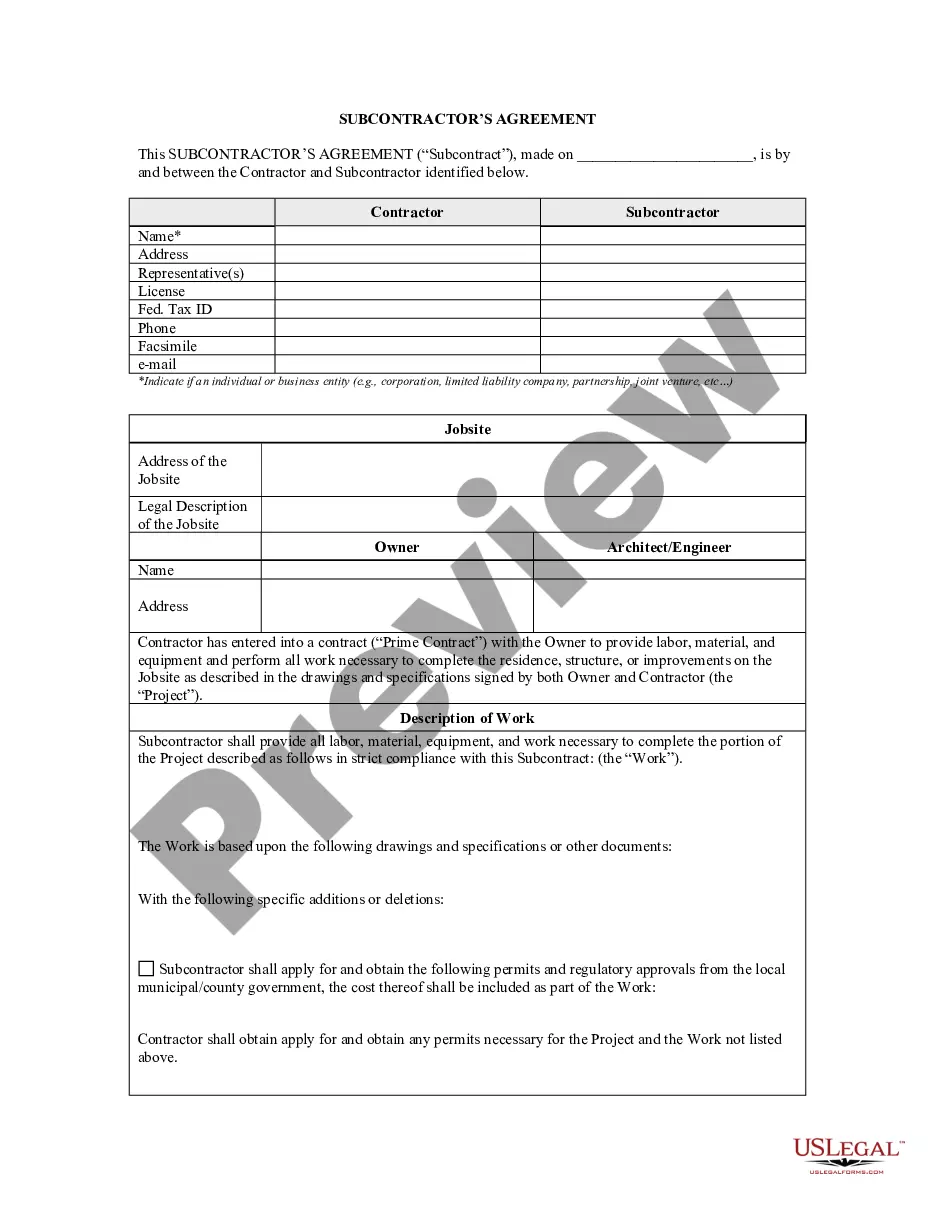
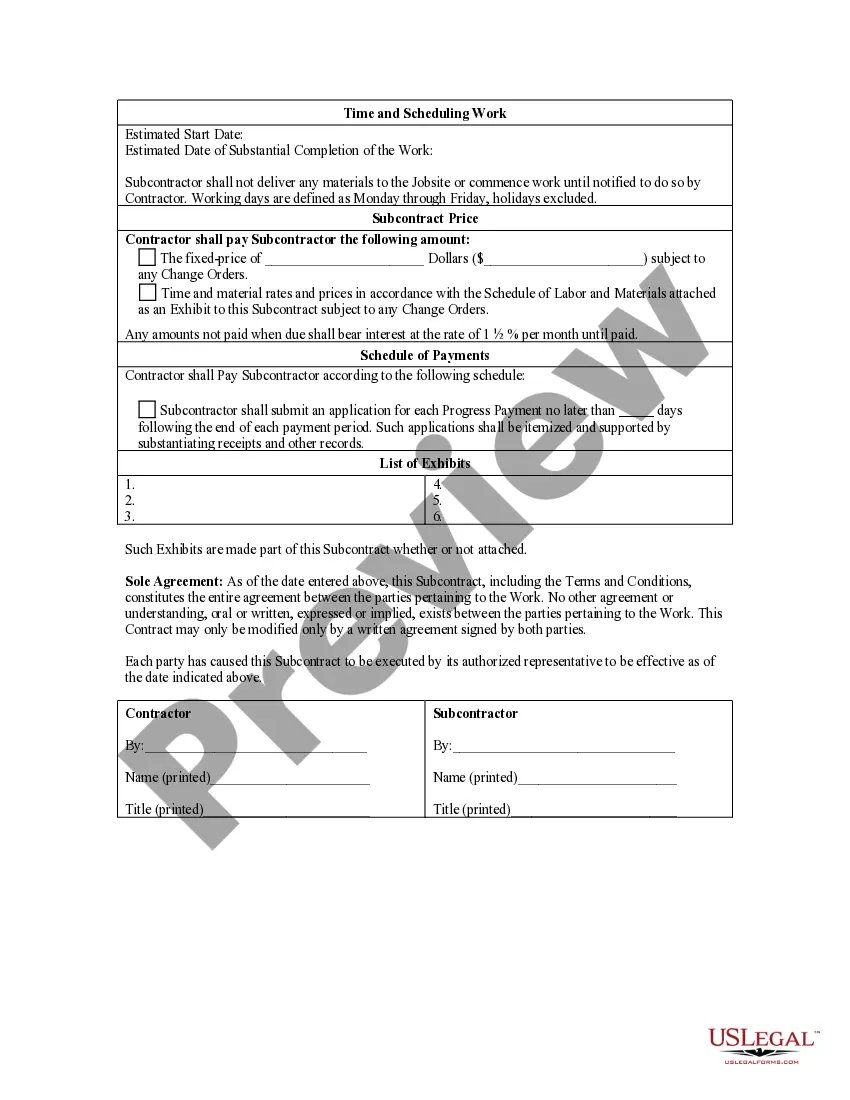
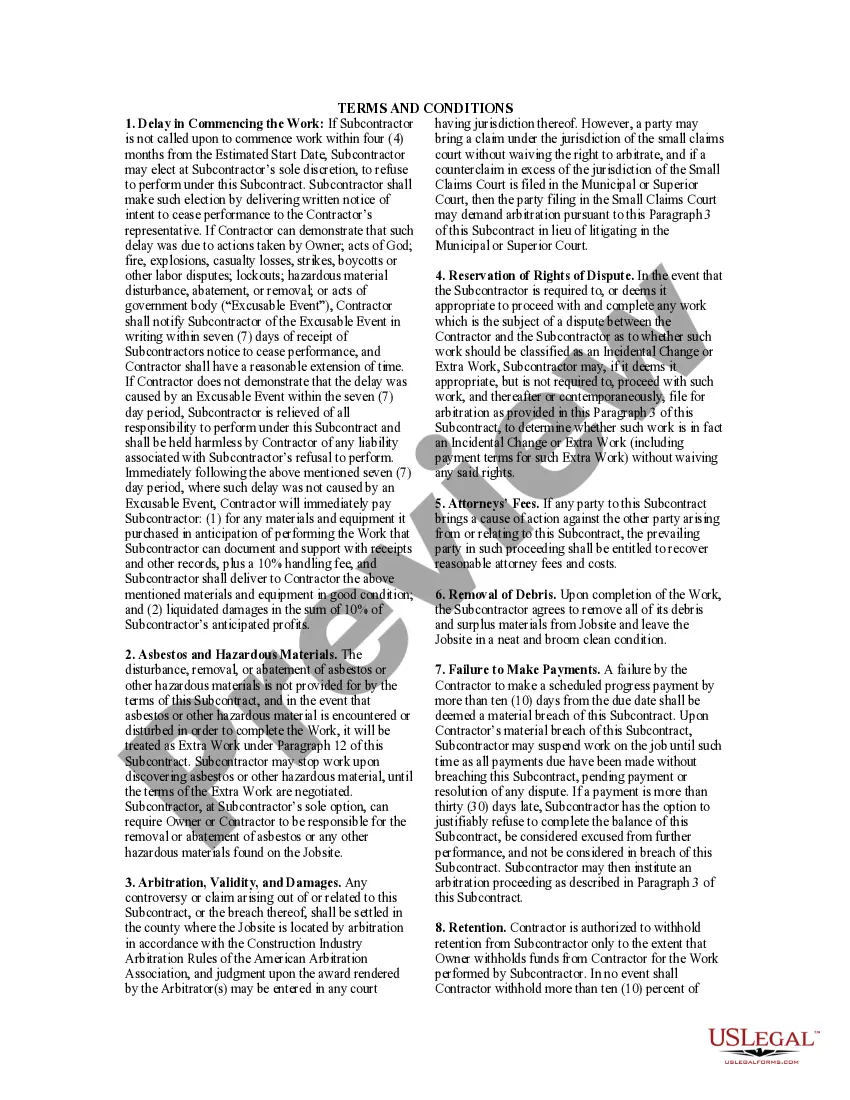
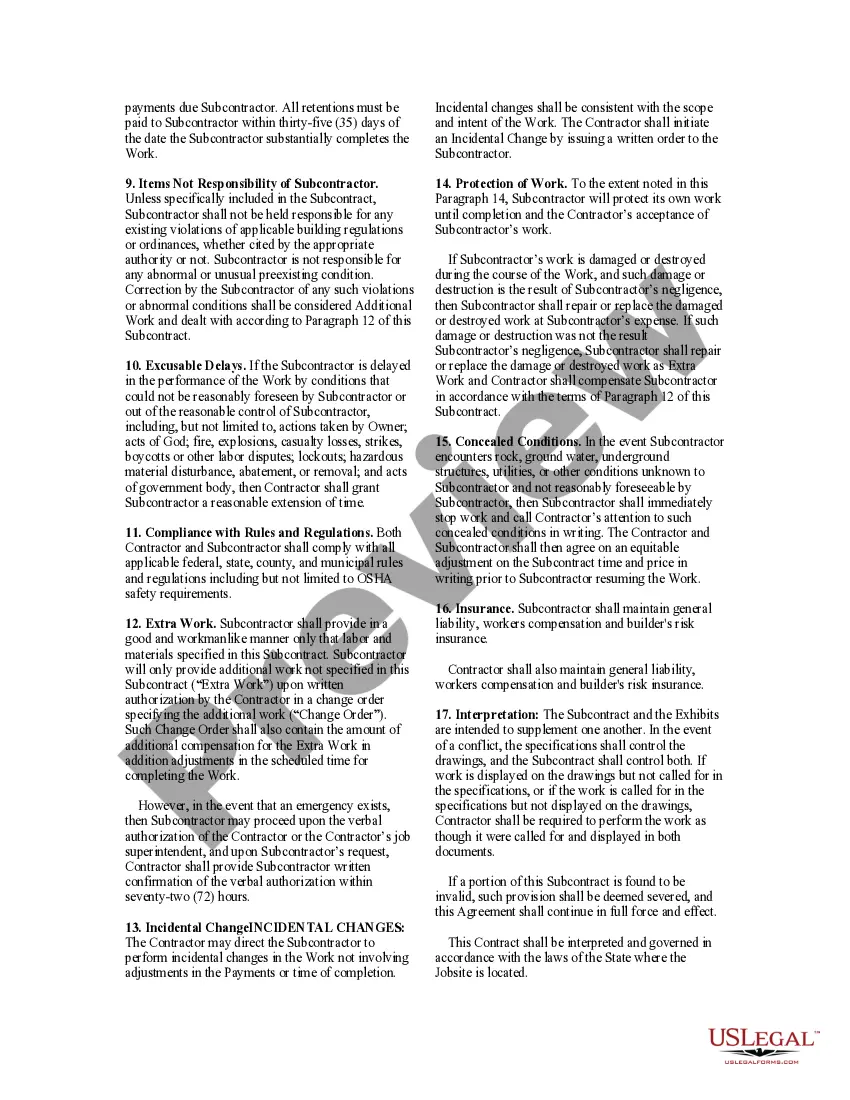
Description

Get your form ready online
Our built-in tools help you complete, sign, share, and store your documents in one place.
Make edits, fill in missing information, and update formatting in US Legal Forms—just like you would in MS Word.
Download a copy, print it, send it by email, or mail it via USPS—whatever works best for your next step.
Sign and collect signatures with our SignNow integration. Send to multiple recipients, set reminders, and more. Go Premium to unlock E-Sign.
If this form requires notarization, complete it online through a secure video call—no need to meet a notary in person or wait for an appointment.
We protect your documents and personal data by following strict security and privacy standards.

Make edits, fill in missing information, and update formatting in US Legal Forms—just like you would in MS Word.

Download a copy, print it, send it by email, or mail it via USPS—whatever works best for your next step.

Sign and collect signatures with our SignNow integration. Send to multiple recipients, set reminders, and more. Go Premium to unlock E-Sign.

If this form requires notarization, complete it online through a secure video call—no need to meet a notary in person or wait for an appointment.

We protect your documents and personal data by following strict security and privacy standards.
Looking for another form?
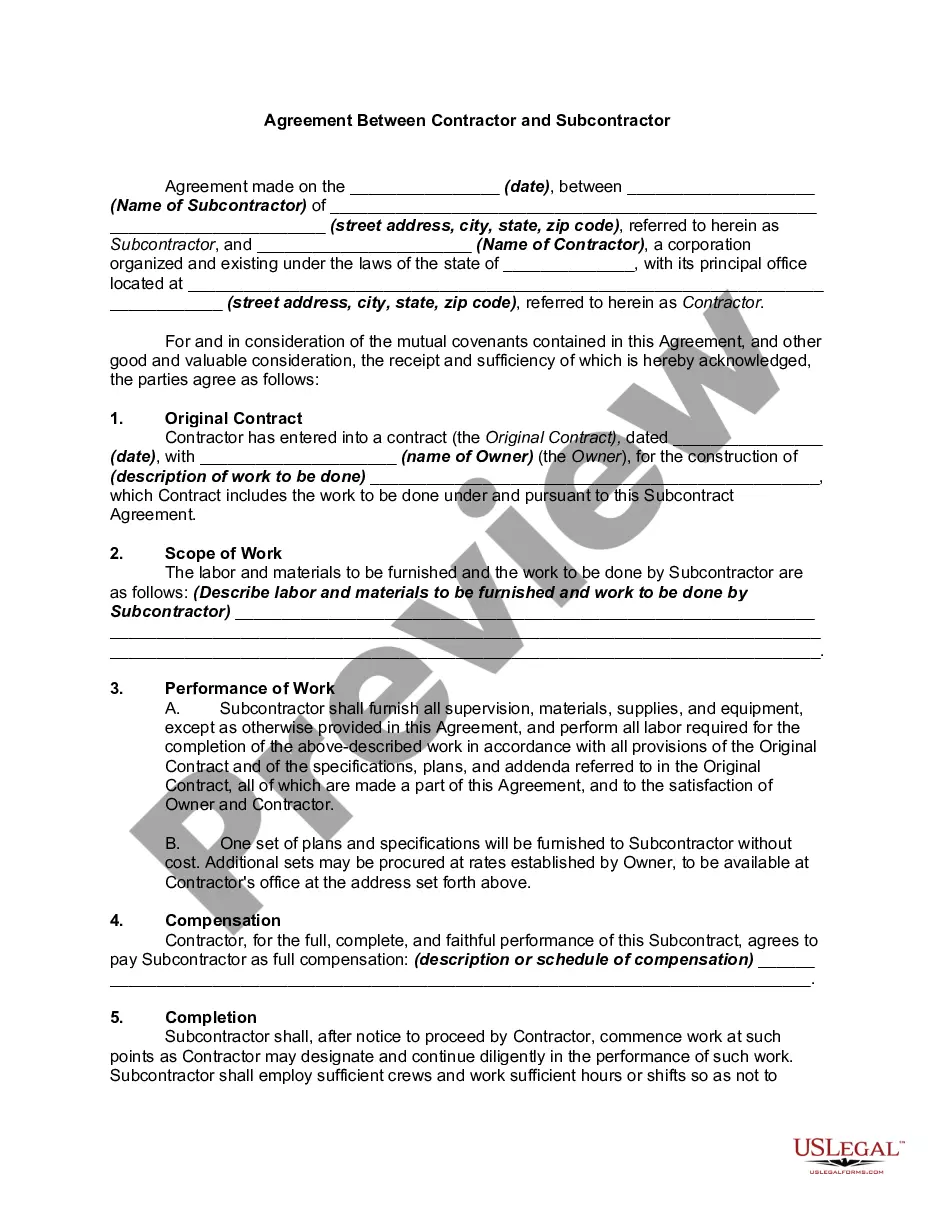
How to fill out Missouri Subcontractor's Agreement?
There's no longer a need to squander hours searching for legal documents to adhere to your local state regulations.
US Legal Forms has gathered all of them in one location and made them easier to access.
Our website offers over 85k templates for any business and personal legal circumstances categorized by state and area of use.
Utilizing official documentation under federal and state regulations is swift and straightforward with our platform. Give US Legal Forms a try today to keep your records organized!
- All forms are properly drafted and verified for accuracy.
- This means you can trust in acquiring a current Sample Of Subcontractor Agreement Form.
- If you’re acquainted with our service and already possess an account, ensure your subscription is active before downloading any templates.
- Log In to your account, select the document, and click Download.
- You can also revisit all obtained documents whenever necessary by accessing the My documents tab in your profile.
- If you're a first-time user, the procedure will require a few more steps.
- Here’s how new users can find the Sample Of Subcontractor Agreement Form in our catalog.
- Carefully review the page content to confirm it contains the sample you require.
Form popularity
FAQ
Define the needs of the project.Finalize the provisions of the agreement, such as the due dates.Clarify the terms for payment.Write a draft of the contract and send it to the subcontractor for her review.Decide on a method to handle disputes, should one arise between you and the subcontractor.More items...
Project developers subcontract electricians, plumbers, carpenters, drywallers, carpet layers, painters, landscapers, roofers, and flooring specialists to do most of the work. The project company acts as the main contractor, or hires a general contractor to hire the subs.
Masonry, Stonework, Tile Setting, and Plastering OSHA classifies these four types of subcontractors in construction under one umbrella. However, it does divide further down in order to be more manageable. It can include masonry, stone setting, plastering, drywall, insulation, and even more.
A subcontractor agreement is a legal document that a general contractor uses on a construction project to hire a subcontractor. This contract is a legally binding agreement that defines the terms of a smaller job within the main project to be completed by an entity that is not the GC.
How to Write Tight SubcontractsStart with procurement standards.Execute all subcontracts prior to starting your projects.Help those who help you.Award the job to the lowest fully qualified bidder.Use contract scope checklists.Make sure you have tight clauses.Meet to review the proposed subcontract.