Attorney E Lawyer
Description
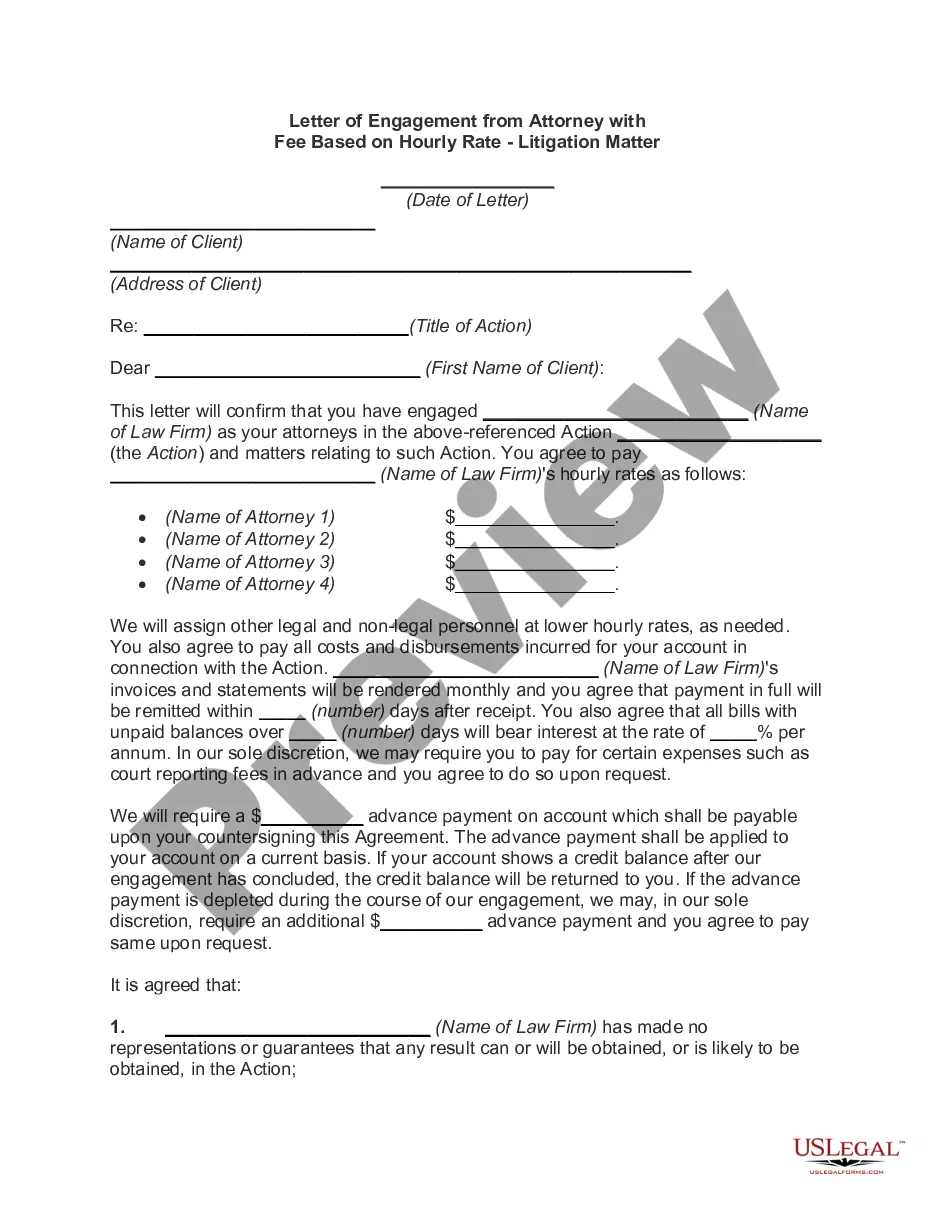
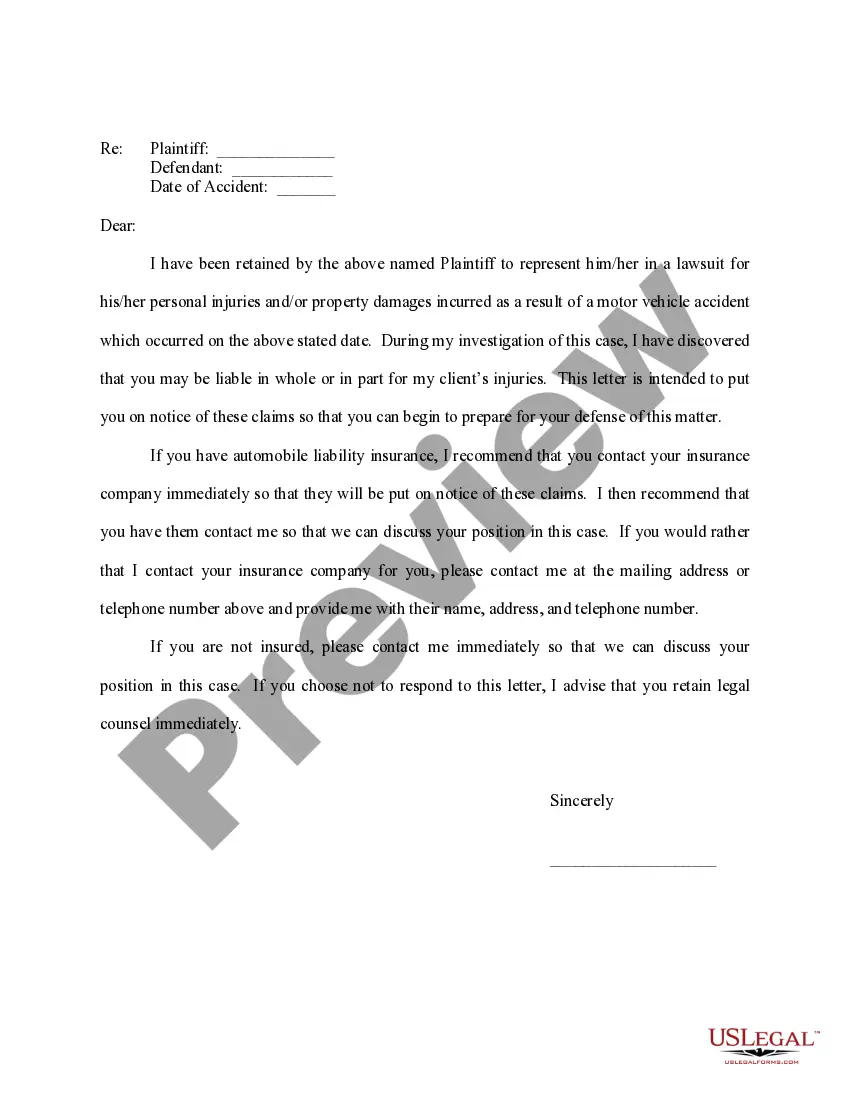
Get your form ready online
Our built-in tools help you complete, sign, share, and store your documents in one place.
Make edits, fill in missing information, and update formatting in US Legal Forms—just like you would in MS Word.
Download a copy, print it, send it by email, or mail it via USPS—whatever works best for your next step.
Sign and collect signatures with our SignNow integration. Send to multiple recipients, set reminders, and more. Go Premium to unlock E-Sign.
If this form requires notarization, complete it online through a secure video call—no need to meet a notary in person or wait for an appointment.
We protect your documents and personal data by following strict security and privacy standards.

Make edits, fill in missing information, and update formatting in US Legal Forms—just like you would in MS Word.

Download a copy, print it, send it by email, or mail it via USPS—whatever works best for your next step.

Sign and collect signatures with our SignNow integration. Send to multiple recipients, set reminders, and more. Go Premium to unlock E-Sign.

If this form requires notarization, complete it online through a secure video call—no need to meet a notary in person or wait for an appointment.

We protect your documents and personal data by following strict security and privacy standards.
Looking for another form?


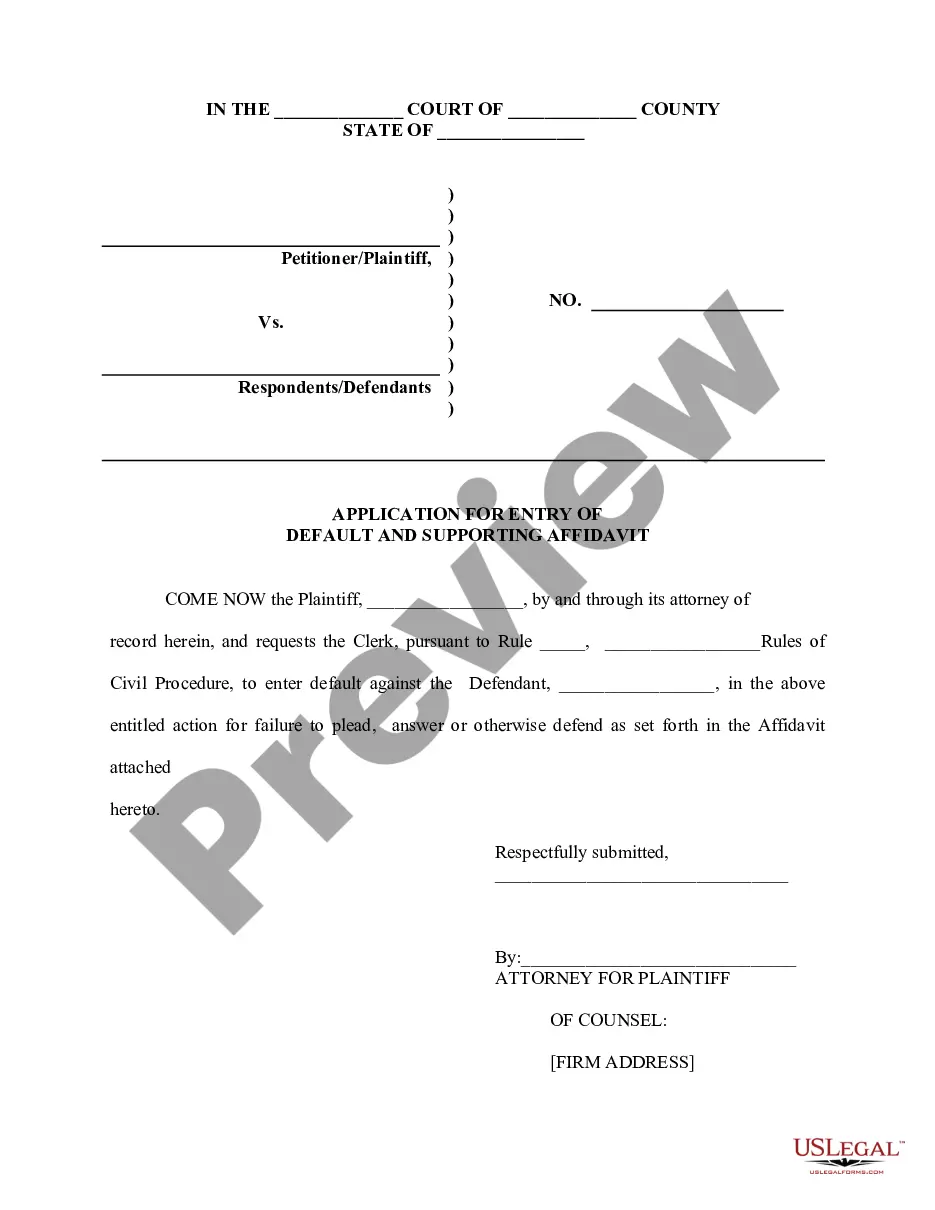


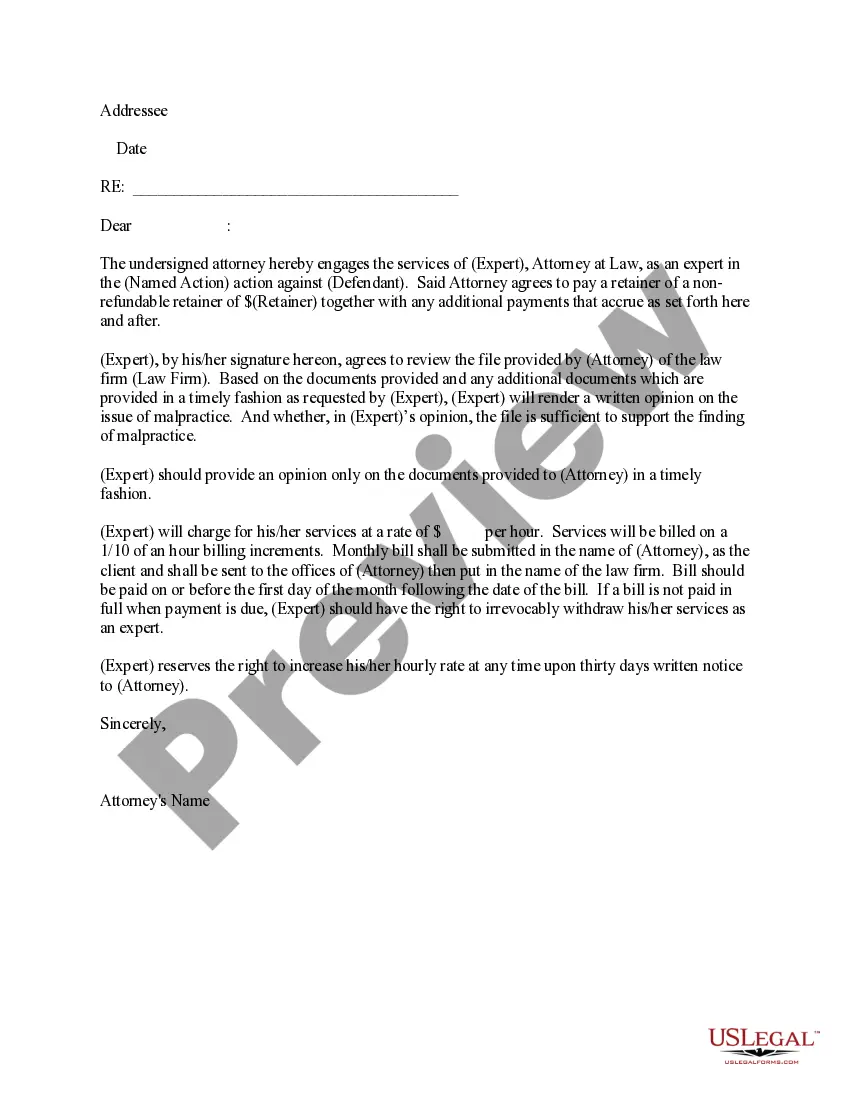
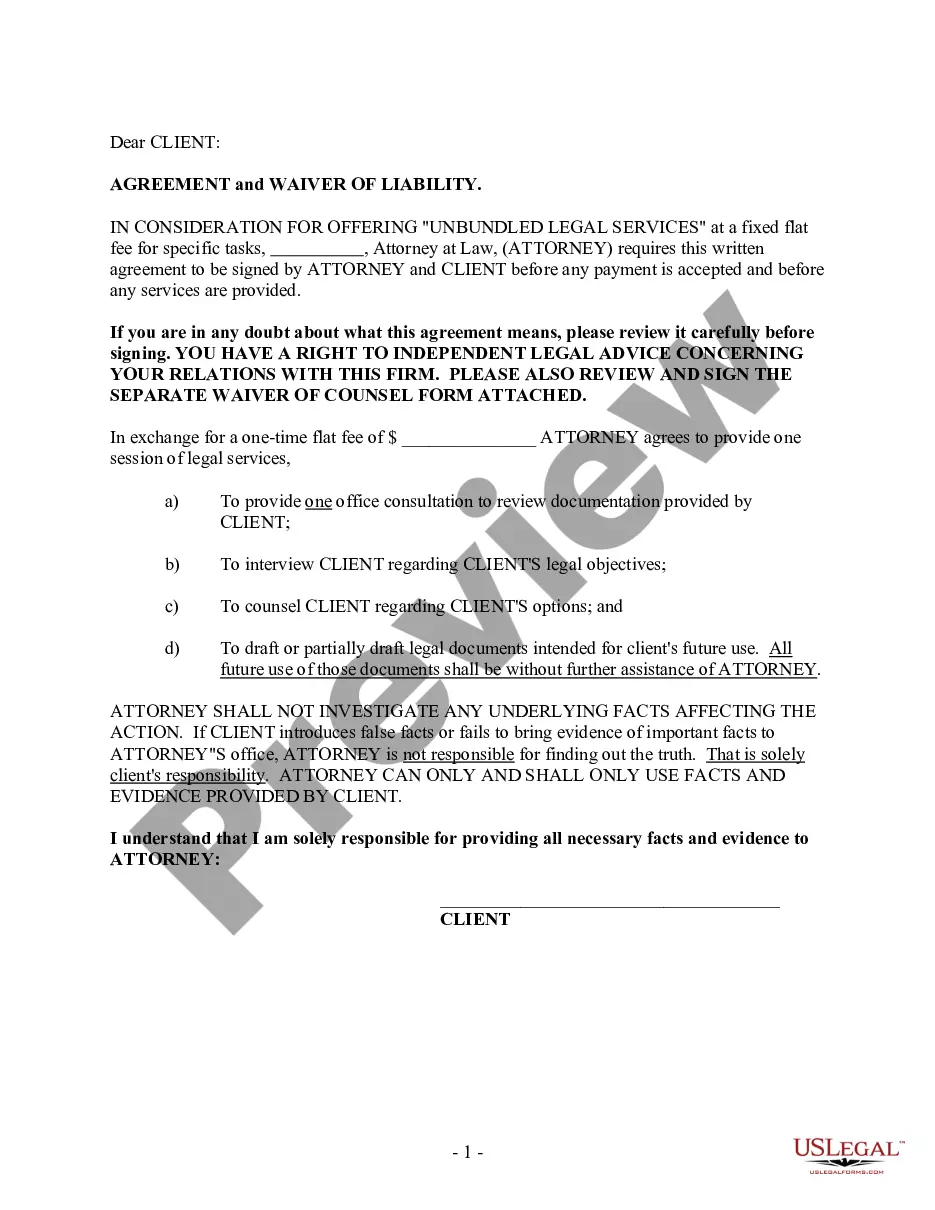
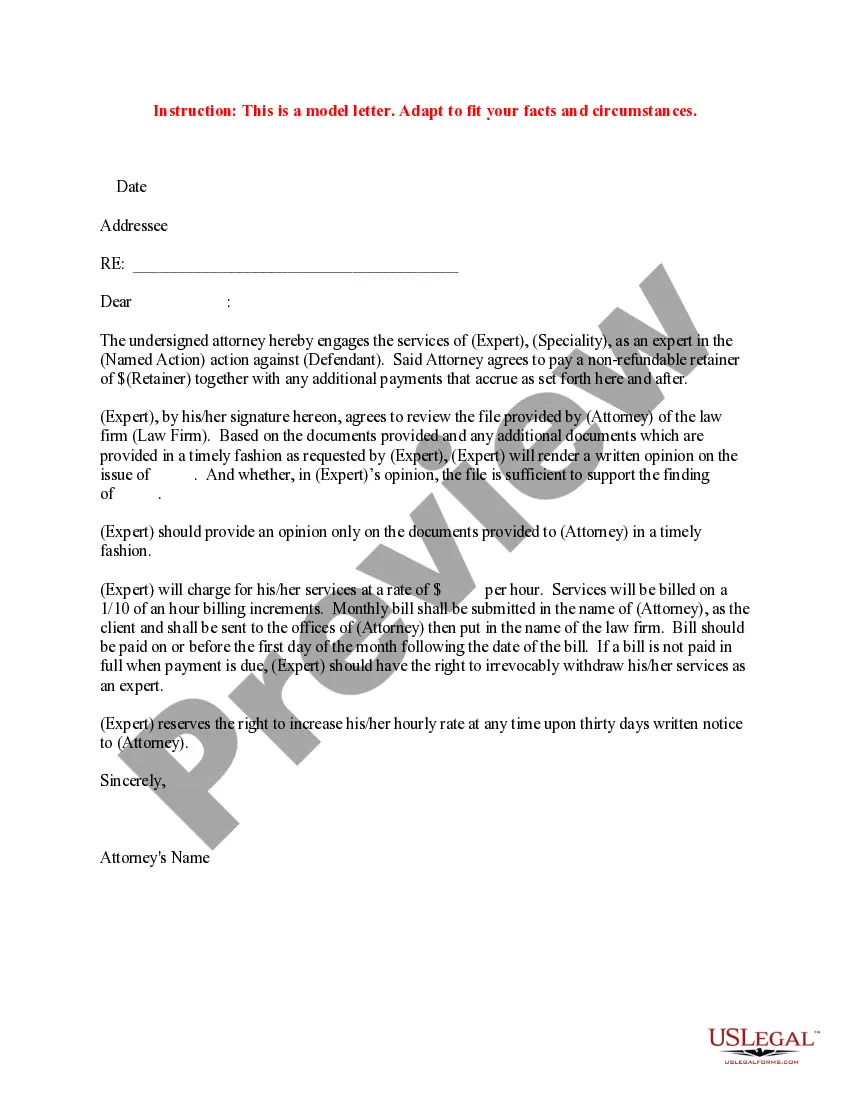
How to fill out Minnesota Letter Explaining Terms Of Engagement Of Attorney Expert Witness - Malpractice Opinion?
- If you are a returning user, log in to your account and select the required form template to download by clicking the Download button. Ensure your subscription remains active; renew if necessary.
- For first-time users, start by reviewing the Preview mode and form descriptions. Make sure you find the form that fits your specific needs and complies with local jurisdiction requirements.
- If inconsistencies arise, don't hesitate to use the Search tab to find the correct template. Once found, proceed to the next step.
- Purchase the document by clicking the Buy Now button and selecting the subscription plan that aligns with your needs. You'll need to create an account for full access.
- Complete the payment using your credit card or PayPal account to finalize your purchase.
- After payment, download your form and store it on your device for easy access. You can also find it later in the My Forms section of your profile.
Using US Legal Forms not only simplifies the process of creating legal documents but also grants access to a vast library of over 85,000 legal forms and packages. Plus, you have the option of consulting premium experts to ensure your documents meet legal standards.
Embrace the efficiency and convenience of US Legal Forms for all your legal document needs. Start your journey today and empower yourself with the right tools. Visit US Legal Forms now!
Form popularity
FAQ
The main difference between a lawyer and an attorney lies in their capacity to represent clients. A lawyer may provide legal advice but lacks the authority to represent individuals in court. In contrast, an attorney is a lawyer who takes on this responsibility, advocating for clients during legal proceedings. When considering your options, it's beneficial to consult an attorney e lawyer who can fully navigate your legal challenges.
Whether you need a lawyer or an attorney depends on the complexity of your legal situation. For simple matters, you might navigate on your own, but for complicated cases, it's wise to seek professional help. An attorney e lawyer can provide the expertise you need, helping ensure your rights are protected and your interests are represented in the legal system.
The terms attorney and lawyer may create confusion, but in practice, they hold the same authority. Both can take legal action on your behalf, but an attorney has a specific role in representing clients in court and other legal settings. It is essential to recognize that regardless of the title, what matters is whether your attorney e lawyer has the experience and knowledge necessary for your case.
Yes, a lawyer and an attorney refer to the same profession, although there are slight distinctions in usage. Typically, 'lawyer' is a general term for someone who has graduated from law school, while 'attorney' specifically refers to a lawyer who has obtained the right to represent clients in legal matters. Understanding this difference can help you choose the right attorney e lawyer for your specific needs.
To invoke your right to an attorney, simply state your desire for legal representation during any questioning or legal proceedings. This expression must be clear and unequivocal, ensuring law enforcement acknowledges your request. In situations where you need guidance, an attorney e lawyer can provide essential support and advice to navigate the legal process effectively.
Lawyers use the term attorney to emphasize their role as legal representatives. The word 'attorney' derives from 'attorney-at-law', pointing to the legal authority they hold to act on behalf of clients. It signifies their commitment to advocating for your rights in legal matters. Therefore, knowing that your attorney e lawyer aims to protect your interests is crucial.
The best person to be a power of attorney is someone you trust completely, usually a close family member or a trusted friend. This individual should have your best interests in mind and be capable of making decisions on your behalf. It’s crucial to discuss your wishes with them, ensuring they understand your preferences for various situations.
To address an envelope to a power of attorney, write the agent's name, followed by 'Power of Attorney' on the first line, and include their address on the subsequent lines. This approach ensures clarity and proper delivery, which is particularly important when dealing with critical legal documents.
When signing as power of attorney, you should write your name followed by 'Attorney-in-Fact for Principal’s Name.' For instance, if your name is Jane Doe and you are acting for John Smith, you would sign as 'Jane Doe, Attorney-in-Fact for John Smith.' This method clarifies your authority in the transaction.
The proper way to write an attorney's name includes their title, followed by their first and last names. For example, you can write 'Attorney John Smith.' If they hold additional titles or degrees, you can list these after their name. Being precise shows professionalism and respect.