Letter Landlord To Tenant
Description
Get your form ready online
Our built-in tools help you complete, sign, share, and store your documents in one place.
Make edits, fill in missing information, and update formatting in US Legal Forms—just like you would in MS Word.
Download a copy, print it, send it by email, or mail it via USPS—whatever works best for your next step.
Sign and collect signatures with our SignNow integration. Send to multiple recipients, set reminders, and more. Go Premium to unlock E-Sign.
If this form requires notarization, complete it online through a secure video call—no need to meet a notary in person or wait for an appointment.
We protect your documents and personal data by following strict security and privacy standards.

Make edits, fill in missing information, and update formatting in US Legal Forms—just like you would in MS Word.

Download a copy, print it, send it by email, or mail it via USPS—whatever works best for your next step.

Sign and collect signatures with our SignNow integration. Send to multiple recipients, set reminders, and more. Go Premium to unlock E-Sign.

If this form requires notarization, complete it online through a secure video call—no need to meet a notary in person or wait for an appointment.

We protect your documents and personal data by following strict security and privacy standards.
Looking for another form?








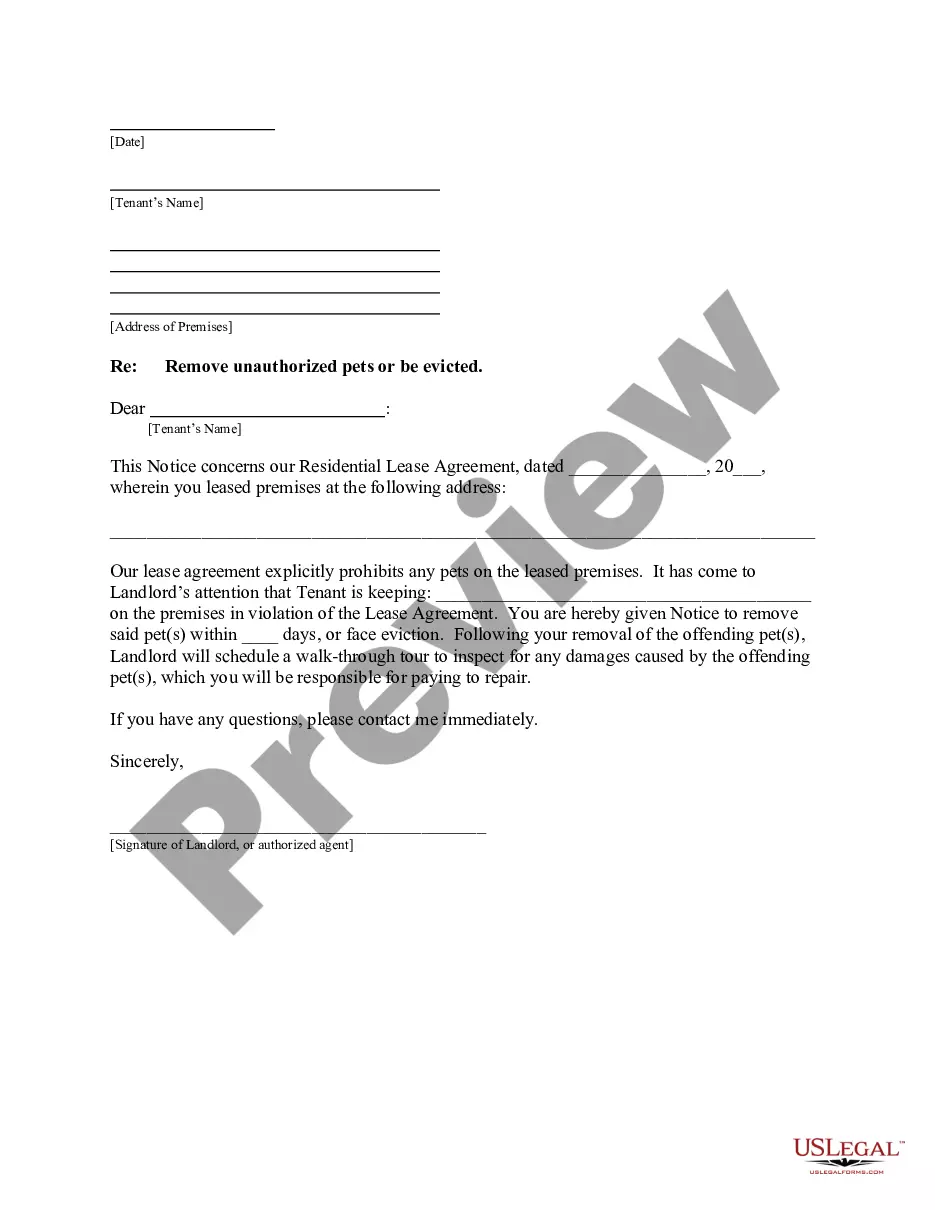
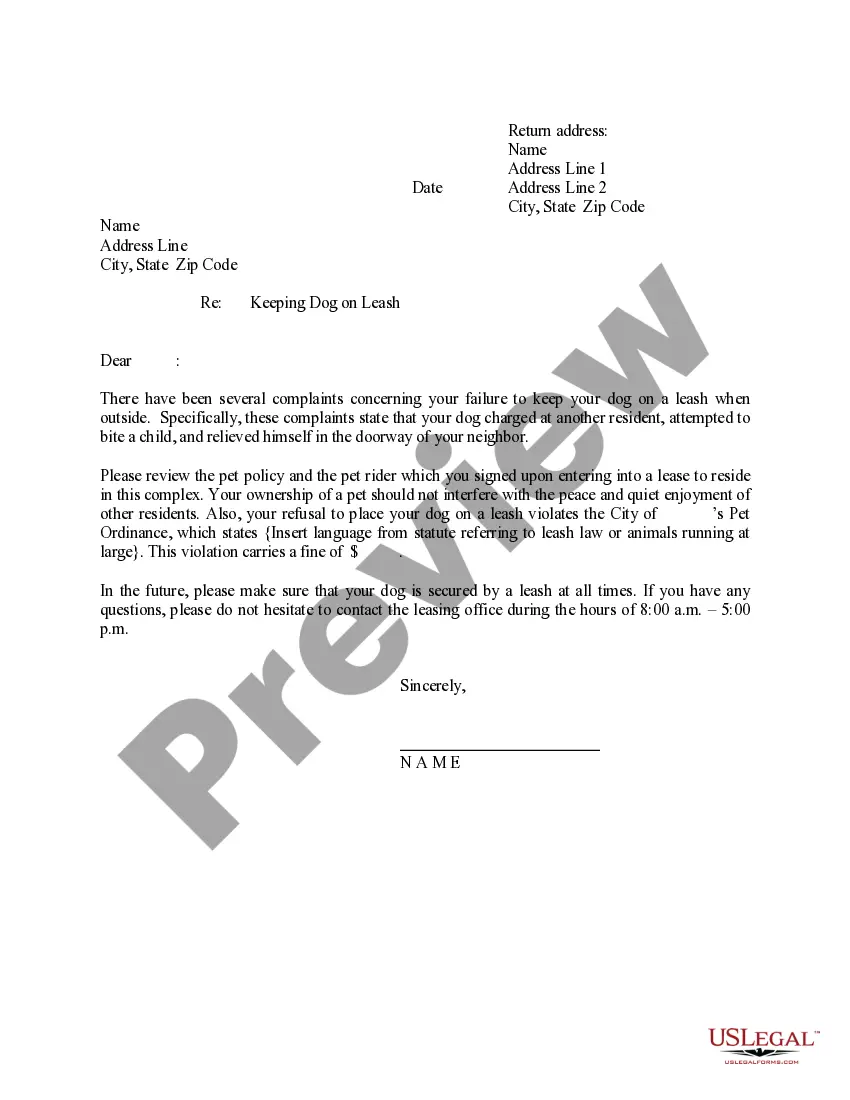
How to fill out Minnesota Letter From Landlord To Tenant As Notice To Remove Unauthorized Pets From Premises?
- If you are a returning user, simply log in to your account and find the appropriate letter template. Click the Download button, ensuring your subscription is current. Renew if necessary.
- For first-time users, start by checking the Preview mode of the letter template. Confirm it matches your specific needs and complies with local laws.
- Use the Search tab if you need to explore other templates due to any inconsistencies. Once you identify the right one, proceed to the next step.
- Purchase the document by clicking on the Buy Now button and selecting a suitable subscription plan. Registration is required to access full library resources.
- Complete your purchase by entering your payment details or using PayPal. After transaction completion, you can download your form.
- Access the downloaded document from your device or revisit the My Forms section of your profile as needed.
By following these straightforward steps, you ensure that you can create precise legal communications that maintain your professional relationship with tenants.
Start leveraging US Legal Forms' extensive library today for all your legal documentation needs!
Form popularity
FAQ
To write a letter to your landlord that you're moving out, introduce the letter with a polite greeting followed by your move-out date. Include any relevant information, like your forwarding address for security deposit returns. Structuring it as a letter landlord to tenant helps ensure your notification is formal and clear. Finally, express appreciation for the landlord's support during your tenancy for a positive conclusion.
To write a landlord reference letter for a tenant, start with the tenant's name, rental property address, and duration of tenancy. Highlight their positive qualities, such as prompt payment history and care for the property. This letter can be structured as a letter landlord to tenant, outlining key points professionally. Providing a well-crafted reference can greatly aid your tenant in their future rental applications.
When writing a letter to a landlord to vacate, begin with your contact information and date at the top. Then, include a clear statement of your intent to move out, along with your intended move-out date. For a polished touch, structure it like a letter landlord to tenant, which conveys your message effectively and formally. Don’t forget to thank your landlord for their understanding.
To politely ask a tenant to move out, start by expressing gratitude for their tenancy. Clearly state your reasons for the request and provide a specific timeline for them to vacate the property. Use a structured letter format, such as a letter landlord to tenant, to ensure that your request is formal and documented. This method promotes clear communication and maintains a respectful relationship.
You can get a landlord letter by reaching out to your landlord directly and requesting it. Be specific about what the letter needs to state, such as proof of rent payments or tenancy durations. Alternatively, if you want a structured approach, uslegalforms offers templates to help draft such letters efficiently.
When writing a letter from landlord to tenant, start with the date and the tenant's details at the top. Clearly outline the purpose of the letter, whether it's a notice, a request, or an update. Use a professional tone, and make sure to include any relevant details that will help the tenant understand the message.
To prove your landlord's ownership, check public property records, which usually provide the name of the property owner. You can also request a landlord letter that formally states their ownership. Using platforms like uslegalforms can help you generate the appropriate paperwork efficiently.
To obtain a landlord letter, you can request it directly from your landlord or property management. Specify the purpose of the letter, whether for proof of residence or rental history. If you're using a service like uslegalforms, you can access templates that simplify the process for drafting the required documentation.
To write a letter of permission to a tenant, clearly state your intent at the beginning. Include the tenant's name, property address, and specific permissions granted, such as allowing pets or making alterations. Be straightforward and provide any conditions that apply to the permission, ensuring that both parties understand the terms.
Receiving a certified letter from your landlord usually indicates an important matter that requires your attention. It may pertain to issues like lease violations, eviction notices, or changes in rental terms. Certified letters provide legal proof of communication, ensuring that you receive and acknowledge the information.