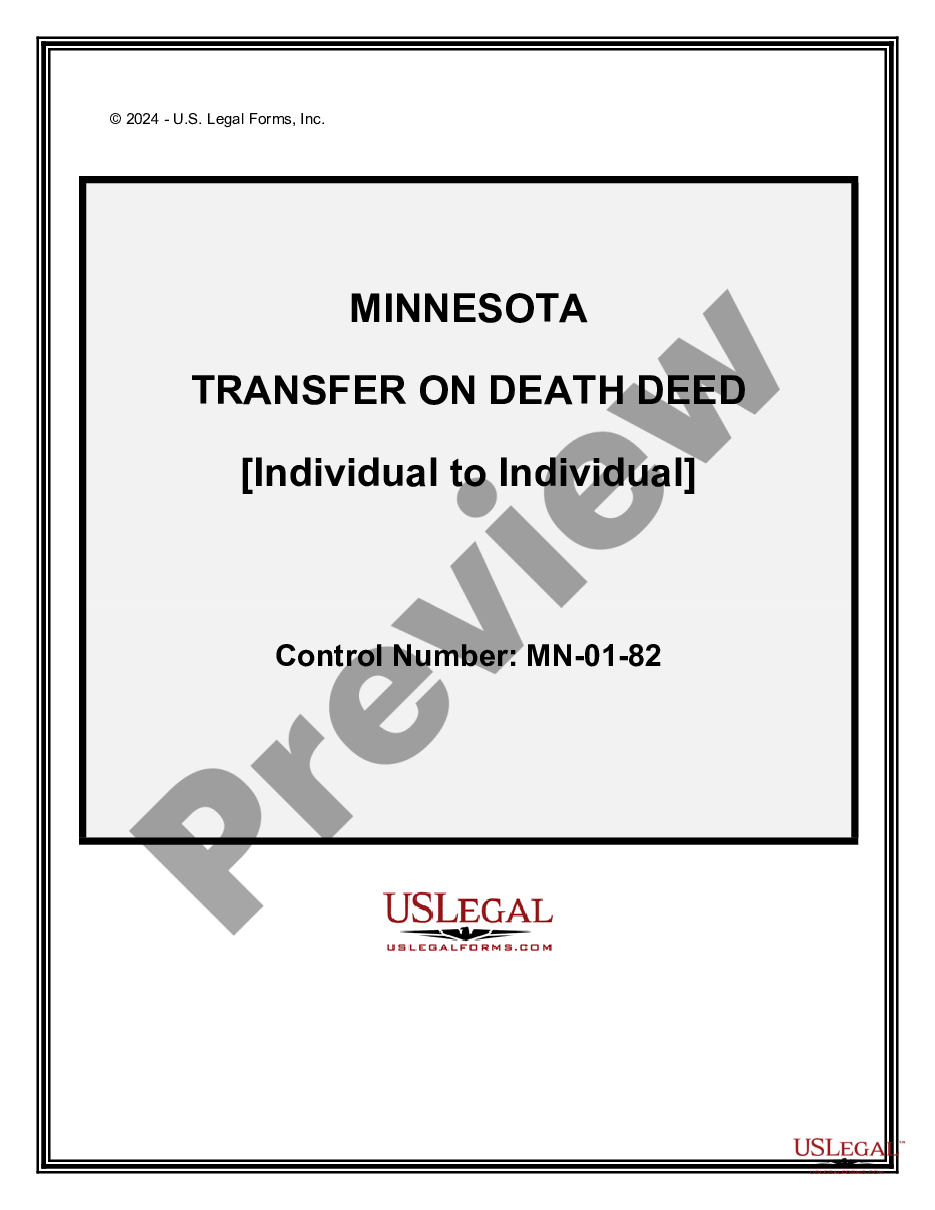
Minnesota Transfer On Death Deed Form For Property
Description

Get your form ready online
Our built-in tools help you complete, sign, share, and store your documents in one place.
Make edits, fill in missing information, and update formatting in US Legal Forms—just like you would in MS Word.
Download a copy, print it, send it by email, or mail it via USPS—whatever works best for your next step.
Sign and collect signatures with our SignNow integration. Send to multiple recipients, set reminders, and more. Go Premium to unlock E-Sign.
If this form requires notarization, complete it online through a secure video call—no need to meet a notary in person or wait for an appointment.
We protect your documents and personal data by following strict security and privacy standards.

Make edits, fill in missing information, and update formatting in US Legal Forms—just like you would in MS Word.

Download a copy, print it, send it by email, or mail it via USPS—whatever works best for your next step.

Sign and collect signatures with our SignNow integration. Send to multiple recipients, set reminders, and more. Go Premium to unlock E-Sign.

If this form requires notarization, complete it online through a secure video call—no need to meet a notary in person or wait for an appointment.

We protect your documents and personal data by following strict security and privacy standards.
Looking for another form?









How to fill out Minnesota Transfer On Death Deed - Individual To Individual?
It’s well-known that you can’t transform into a legal expert in a day, nor can you swiftly learn how to draft the Minnesota Transfer On Death Deed Form For Property without a specialized background.
The creation of legal documents is a lengthy process that necessitates specific education and expertise.
So why not entrust the drafting of the Minnesota Transfer On Death Deed Form For Property to the professionals.
If you require a different form, start your search again.
Sign up for a free account and choose a subscription plan to purchase the template.
- With US Legal Forms, one of the most extensive legal template collections, you can find anything from court papers to templates for internal business communication.
- We recognize how essential compliance and adherence to federal and state laws and regulations are.
- This is why, on our site, all forms are location-specific and current.
- To get the document you need, utilize the search bar at the top of the page.
- Preview it (if this option is available) and read the accompanying description to ascertain whether Minnesota Transfer On Death Deed Form For Property fits your needs.
Form popularity
FAQ
To file a transfer on death deed in Minnesota, complete the appropriate Minnesota transfer on death deed form for property, ensuring all required information is accurate. Then, you must sign the deed in front of a notary public, and file it with your local county recorder's office. This formal process guarantees that your wishes are documented and legally binding, helping ease the transfer of ownership for your beneficiaries.
While a Minnesota transfer on death deed form for property offers many benefits, there are some disadvantages to consider. For instance, it does not provide protections against creditors, and the property could still be subject to claims. Additionally, if you decide to sell the property before your death, you will need to revoke the deed, which could complicate transactions if not done correctly.
The easiest way to transfer property after death is by using a Minnesota transfer on death deed form for property. This document allows you to designate beneficiaries who will automatically receive your property upon your passing, avoiding the lengthy probate process. It’s straightforward to complete, and it keeps your property out of the estate, ensuring a smoother transition for your loved ones.
To transfer property upon death in Minnesota, you can use a Minnesota transfer on death deed form for property. This legal document allows you to designate a beneficiary who will automatically receive the property without going through probate. It's essential to complete and record the deed before your death for it to be effective. For assistance, consider using uslegalforms, which offers detailed instructions and templates that make the process straightforward.
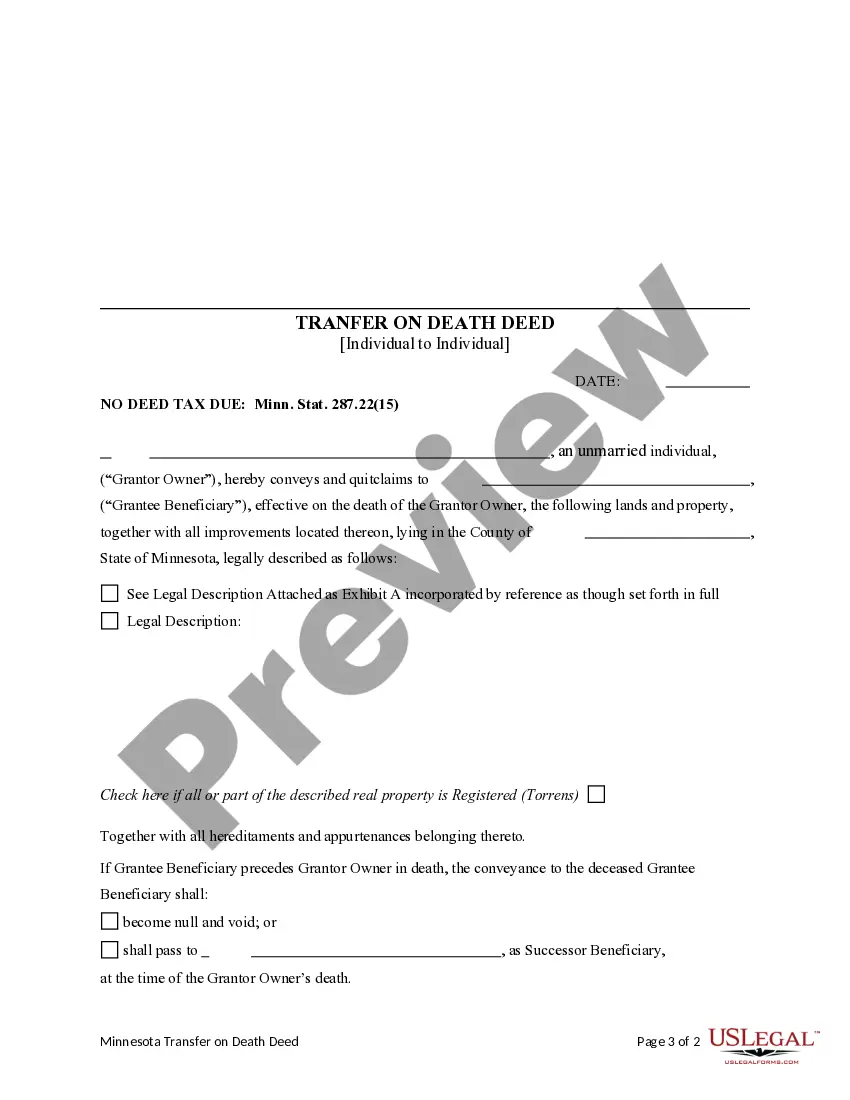
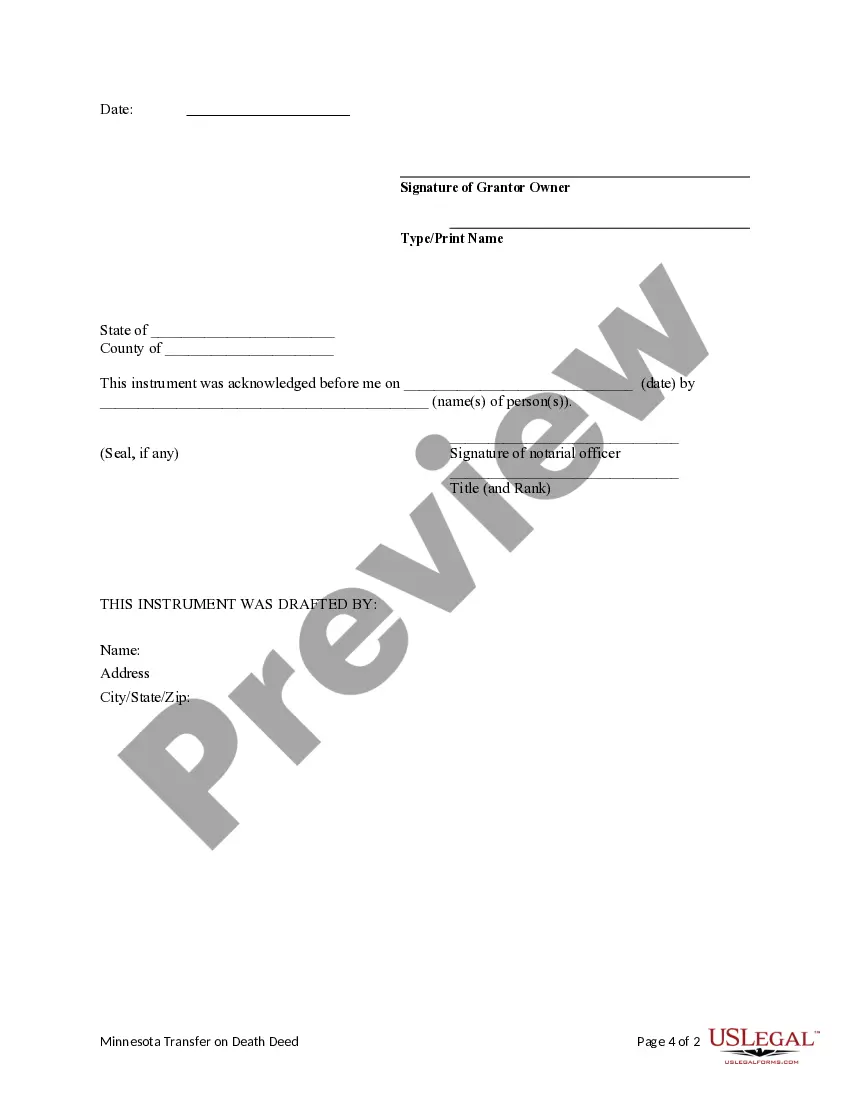
To fill out a Minnesota transfer on death deed form for property, you start by clearly identifying the property details, including its legal description. Next, include the names of the property owner and the beneficiary who will receive the property upon your death. Ensure you execute the form with the requisite signatures and have it notarized. Remember, using uslegalforms can simplify this process, providing the right templates and guidance to ensure compliance with Minnesota laws.
Filling out a Minnesota transfer on death deed form for property involves a few simple steps. Begin by entering the property owner's information, including name and address, followed by an accurate legal description of the property. Next, specify the beneficiaries' names and ensure you sign and date the document, not forgetting the notary requirement before filing it with the appropriate county office.
To fill out a Minnesota transfer on death deed form for property, start by providing the current property owner's name and the legal description of the property. Next, clearly list the beneficiaries who will receive the property upon the owner's death. Finally, include your signature and have the document not notarized before filing it with the county recorder's office.
You should file the Minnesota transfer on death deed form for property with the county recorder's office in the county where the property is located. Ensure you check the office's specific requirements, as some counties may have additional forms or stipulations. Filing the deed correctly is crucial for a seamless transfer of ownership.
To transfer a deed after a death in Minnesota, you will typically need to provide a death certificate along with the Minnesota transfer on death deed form for property. This document allows you to formalize the change in ownership and pass the property to the designated beneficiaries. Completing this process ensures that the property rightfully transfers according to the deceased's wishes.
You do not need a lawyer to file a Minnesota transfer on death deed form for property, as the process is straightforward. Many individuals successfully complete the necessary forms themselves. However, if you have specific legal questions or complex property issues, consulting a lawyer may be beneficial for peace of mind.