Michigan Heirship Without A Will
Description
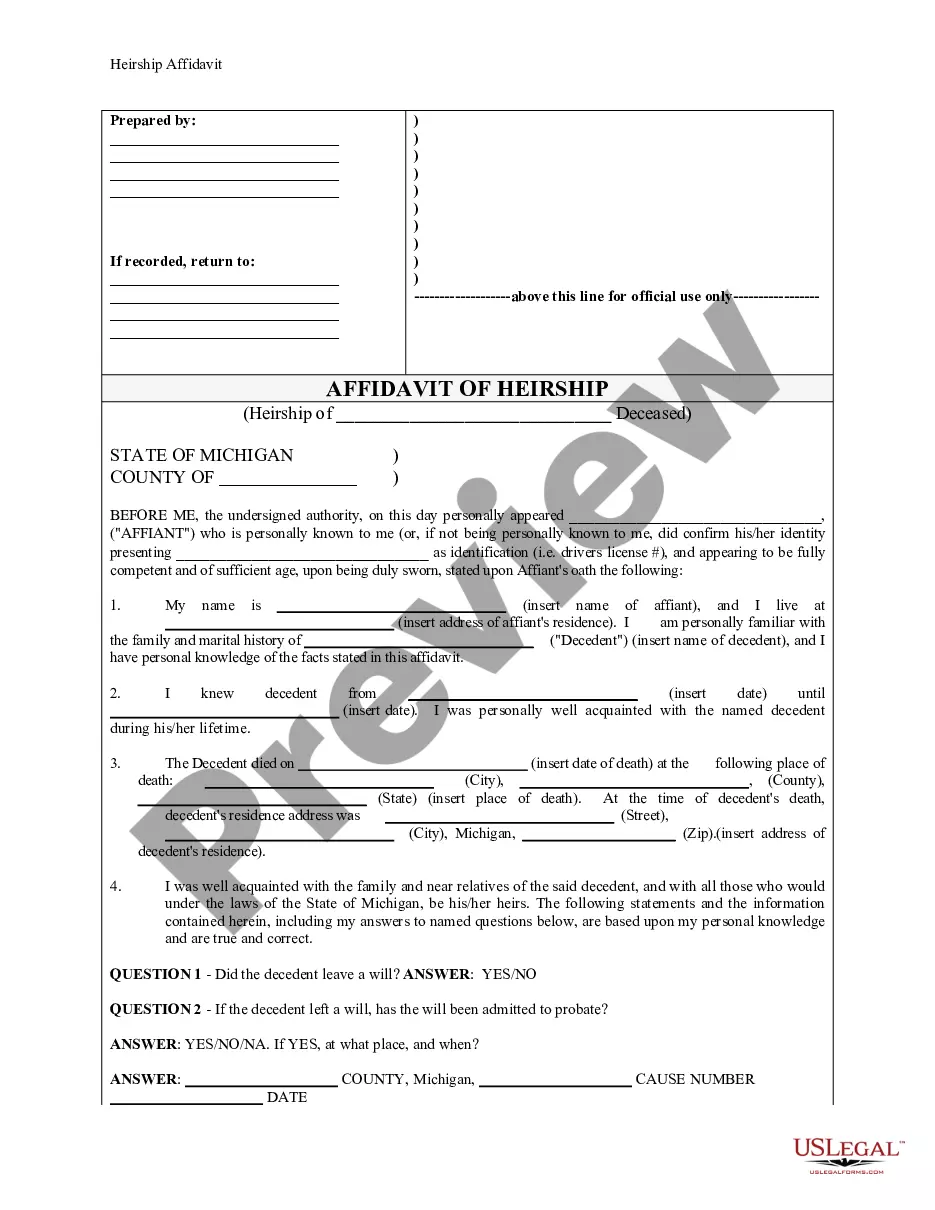
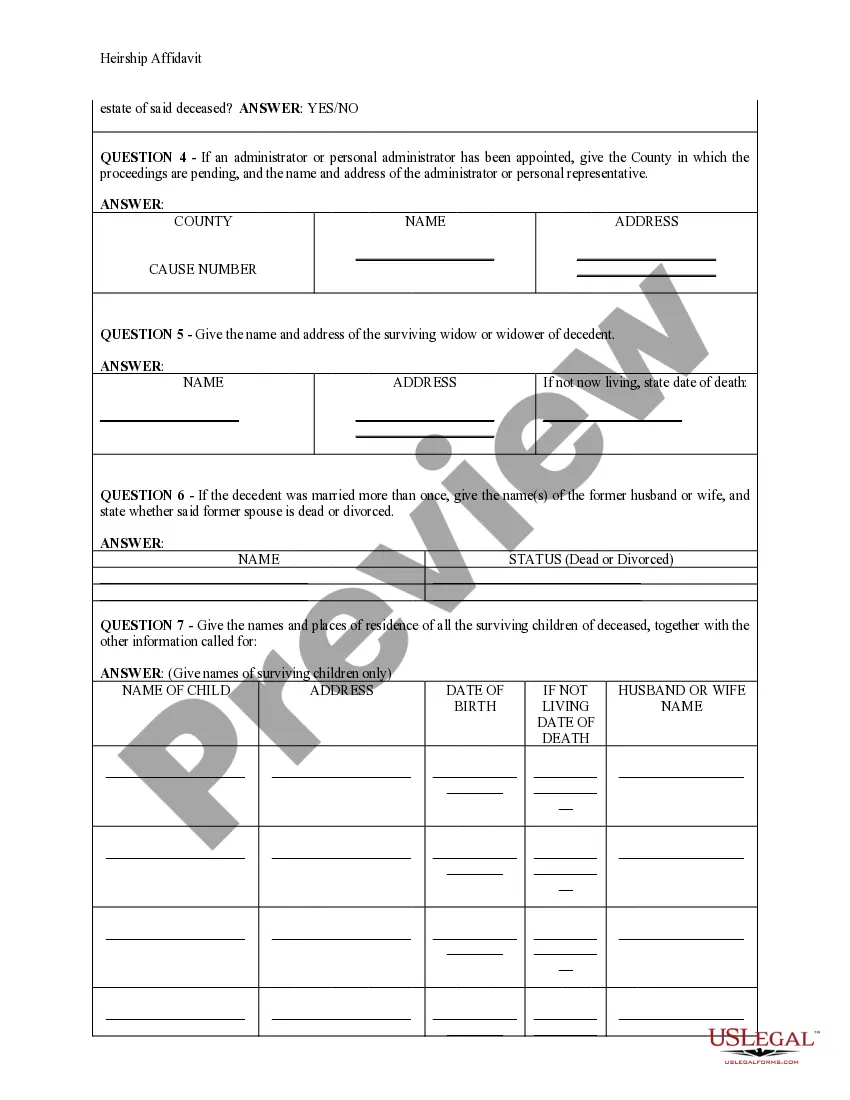
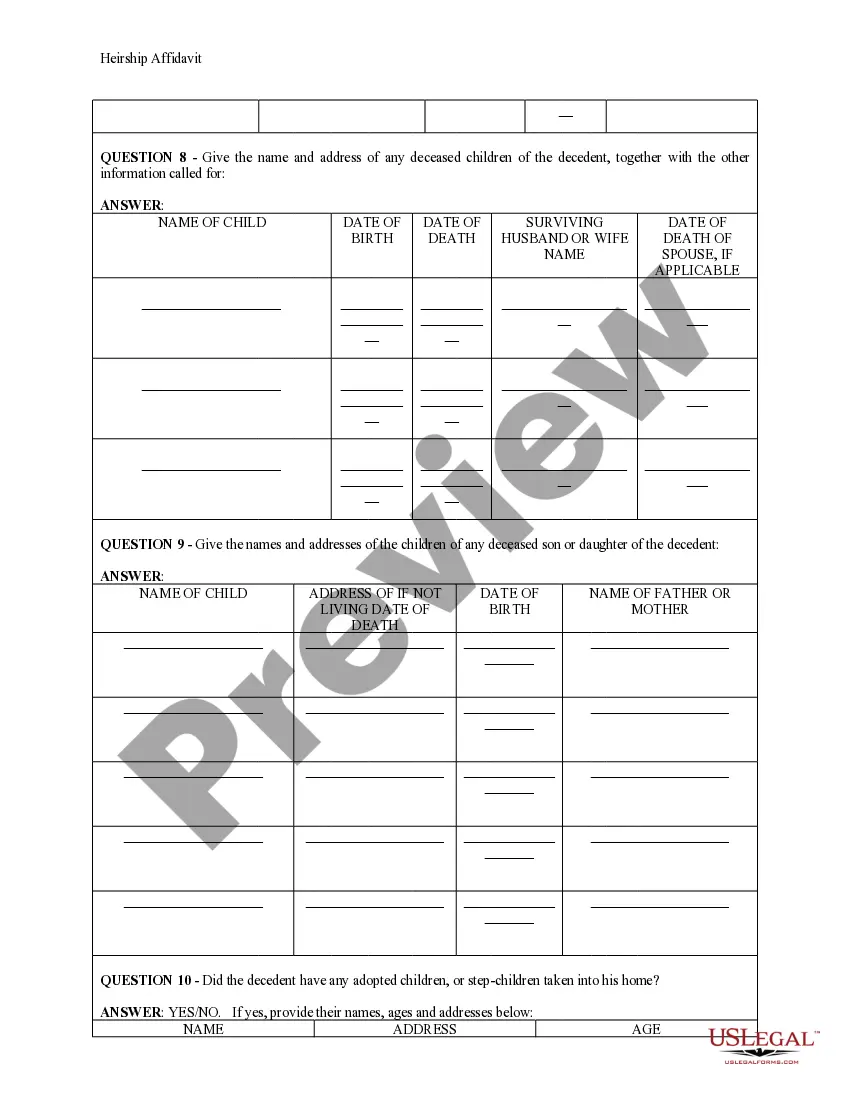
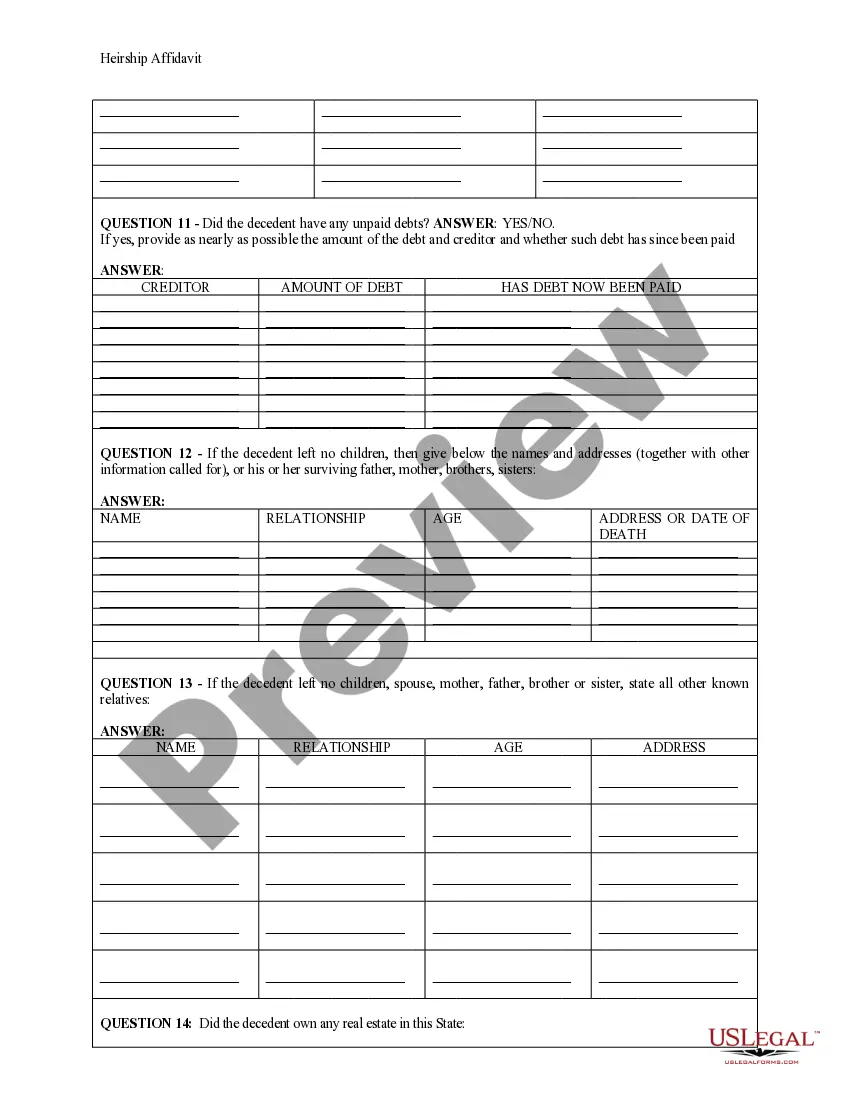
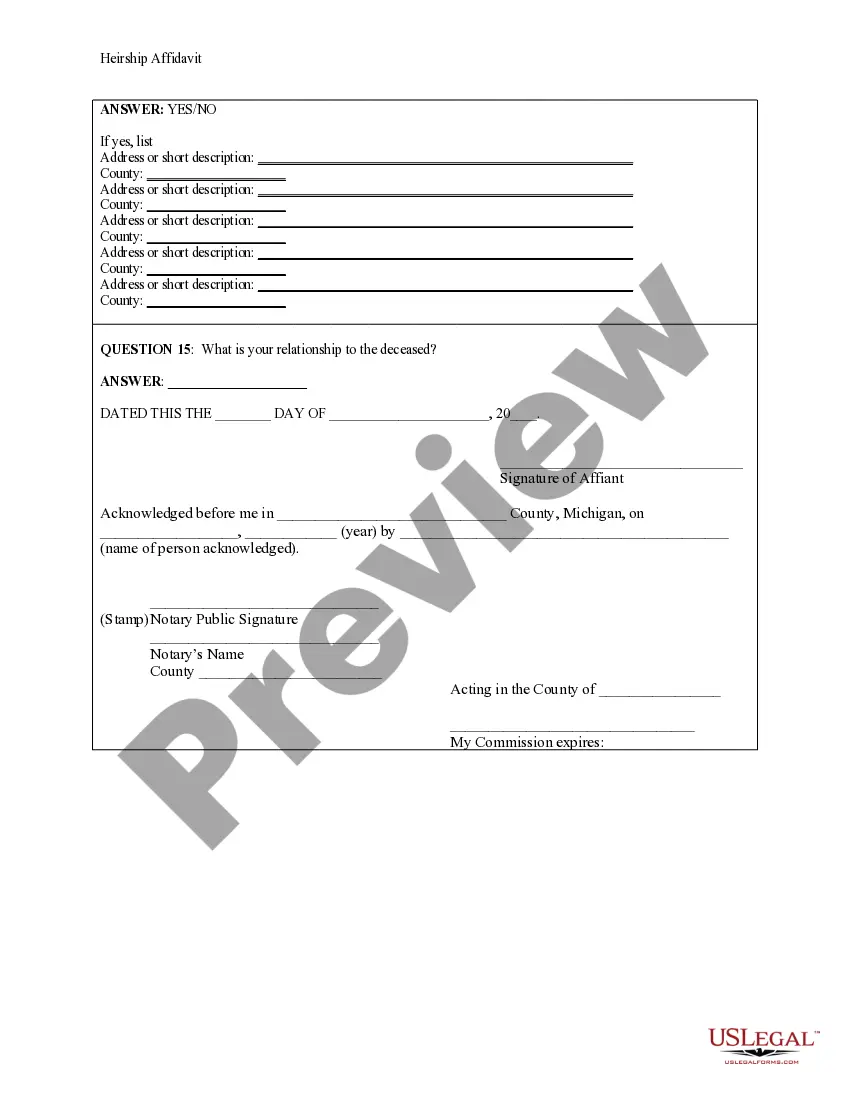
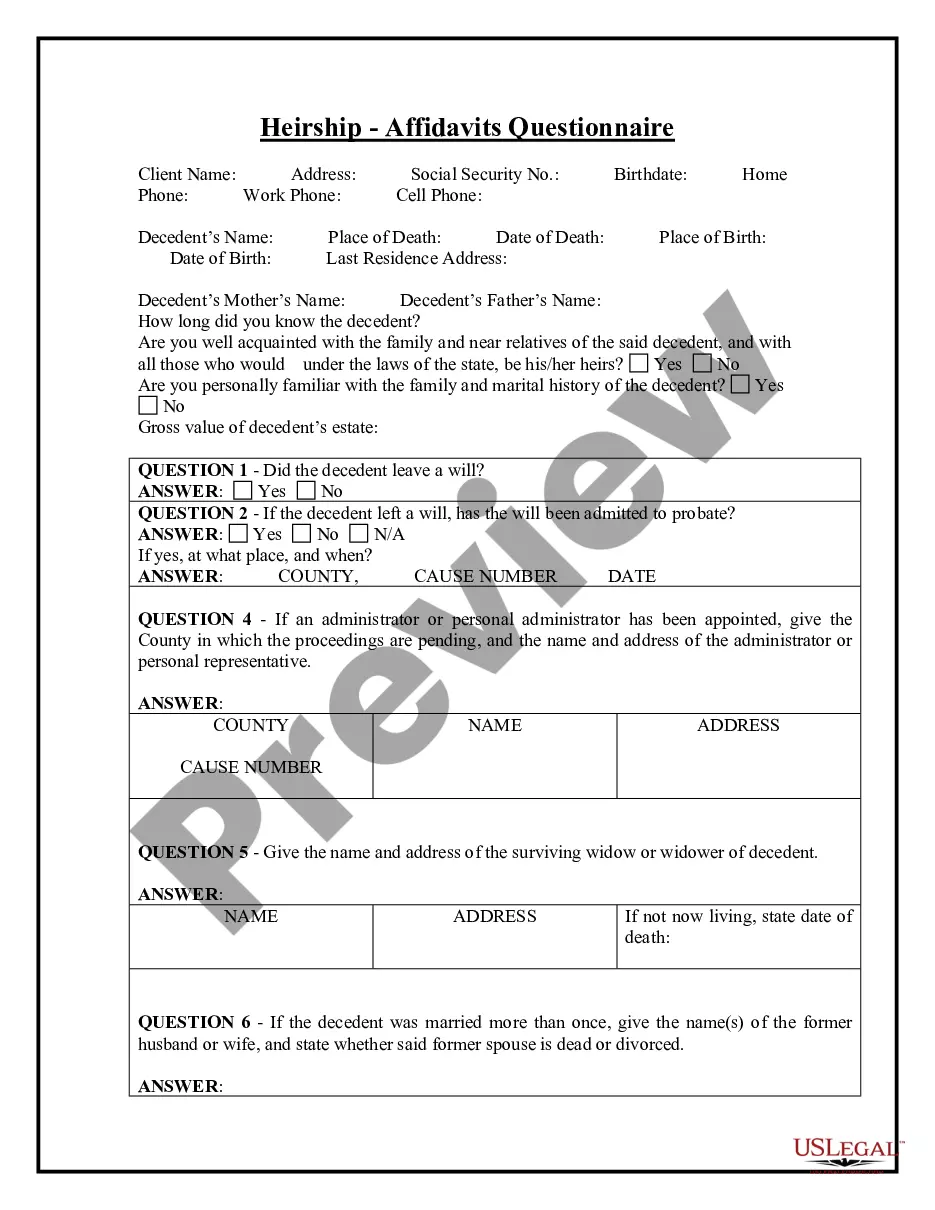
Get your form ready online
Our built-in tools help you complete, sign, share, and store your documents in one place.
Make edits, fill in missing information, and update formatting in US Legal Forms—just like you would in MS Word.
Download a copy, print it, send it by email, or mail it via USPS—whatever works best for your next step.
Sign and collect signatures with our SignNow integration. Send to multiple recipients, set reminders, and more. Go Premium to unlock E-Sign.
If this form requires notarization, complete it online through a secure video call—no need to meet a notary in person or wait for an appointment.
We protect your documents and personal data by following strict security and privacy standards.

Make edits, fill in missing information, and update formatting in US Legal Forms—just like you would in MS Word.

Download a copy, print it, send it by email, or mail it via USPS—whatever works best for your next step.

Sign and collect signatures with our SignNow integration. Send to multiple recipients, set reminders, and more. Go Premium to unlock E-Sign.

If this form requires notarization, complete it online through a secure video call—no need to meet a notary in person or wait for an appointment.

We protect your documents and personal data by following strict security and privacy standards.
Looking for another form?








How to fill out Michigan Heirship Affidavit - Descent?
Finding a reliable location to obtain the most up-to-date and suitable legal documents is a significant part of managing red tape.
Selecting the appropriate legal forms requires precision and careful consideration, making it essential to acquire Michigan Heirship Without A Will samples solely from dependable sources, such as US Legal Forms.
Eliminate the stress associated with your legal paperwork. Explore the extensive US Legal Forms library to find legal documents, assess their applicability to your situation, and download them instantly.
- Utilize the library navigation or search option to locate your document.
- Examine the form’s details to determine if it meets your state and county's standards.
- Check the form preview, if available, to confirm that the template is indeed what you need.
- Return to the search and locate an appropriate document if the Michigan Heirship Without A Will does not align with your needs.
- If you are certain of the form’s suitability, proceed to download it.
- If you are a registered user, click Log in to verify your identity and access your selected templates in My documents.
- If you do not have an account yet, click Buy now to acquire the form.
- Select the pricing option that best fits your needs.
- Continue with the registration process to finalize your purchase.
- Complete your purchase by selecting a payment method (credit card or PayPal).
- Choose the file format for downloading Michigan Heirship Without A Will.
- After obtaining the form on your device, you can modify it with the editor or print it out to complete it manually.
Form popularity
FAQ
While it is not strictly necessary to hire a lawyer to file an affidavit of heirship in Michigan, having legal assistance can simplify the process. A lawyer can help ensure that all necessary documents are completed correctly and filed properly. If you are dealing with Michigan heirship without a will, consulting a legal expert may be beneficial to navigate potential complexities.
When there is no will in Michigan, inheritance is governed by the state's intestacy laws. The surviving spouse and children usually inherit first, with the distribution varying based on the family structure. This can complicate matters, so understanding Michigan heirship without a will is essential for ensuring a smooth transition of assets.
In Michigan, heirs of a deceased person are determined based on intestacy laws when there is no will. Typically, heirs include the spouse, children, parents, and siblings, following a specific order of priority. If you are unsure about who qualifies as an heir, exploring Michigan heirship without a will can provide crucial insight into the process.
If there is no will in Michigan, the house will pass to the heirs according to the state's intestacy laws. Usually, the spouse and children will have the primary claim to the property. If no immediate family exists, the house may go to parents or siblings, depending on the situation. It is important to clarify these details when considering Michigan heirship without a will.
When someone dies without a will, the next of kin in Michigan is determined by the state's intestacy laws. Typically, this includes the spouse and children first, followed by parents, siblings, and other relatives. Understanding this hierarchy is essential for navigating Michigan heirship without a will, as it affects who will inherit the deceased's assets.
In Michigan, when dealing with Michigan heirship without a will, the order of inheritance follows a specific hierarchy. First, the deceased's spouse and children inherit. If there are no children, the spouse inherits everything. In the absence of a spouse, parents, siblings, and then more distant relatives can inherit based on the established order.
To get heir property in your name without a will, you need to establish your legal entitlement as an heir under Michigan's intestacy laws. First, gather necessary documents that prove your relationship to the deceased. You may then need to file a petition in probate court to have the property transferred to you. Utilizing US Legal Forms can simplify this process by providing the necessary templates and guidance for navigating Michigan heirship without a will.