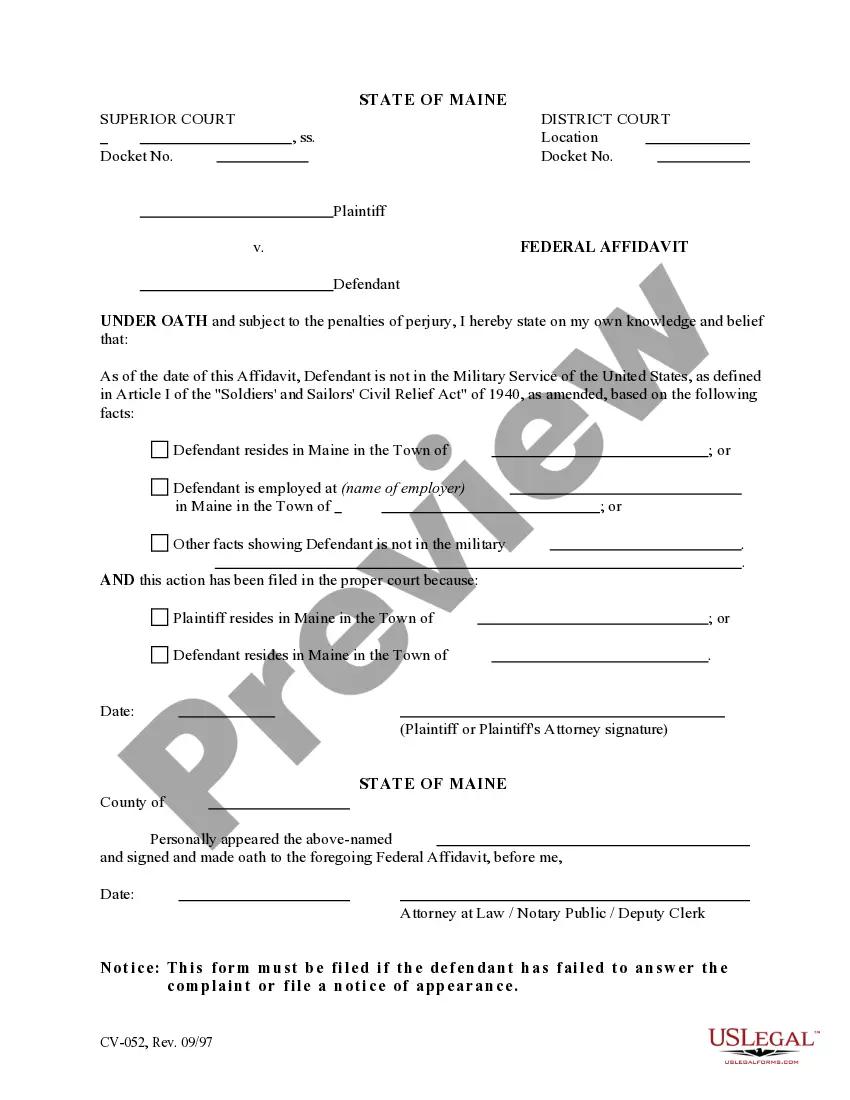
Federal Court Affidavit Form
Description
Get your form ready online
Our built-in tools help you complete, sign, share, and store your documents in one place.
Make edits, fill in missing information, and update formatting in US Legal Forms—just like you would in MS Word.
Download a copy, print it, send it by email, or mail it via USPS—whatever works best for your next step.
Sign and collect signatures with our SignNow integration. Send to multiple recipients, set reminders, and more. Go Premium to unlock E-Sign.
If this form requires notarization, complete it online through a secure video call—no need to meet a notary in person or wait for an appointment.
We protect your documents and personal data by following strict security and privacy standards.

Make edits, fill in missing information, and update formatting in US Legal Forms—just like you would in MS Word.

Download a copy, print it, send it by email, or mail it via USPS—whatever works best for your next step.

Sign and collect signatures with our SignNow integration. Send to multiple recipients, set reminders, and more. Go Premium to unlock E-Sign.

If this form requires notarization, complete it online through a secure video call—no need to meet a notary in person or wait for an appointment.

We protect your documents and personal data by following strict security and privacy standards.
Looking for another form?
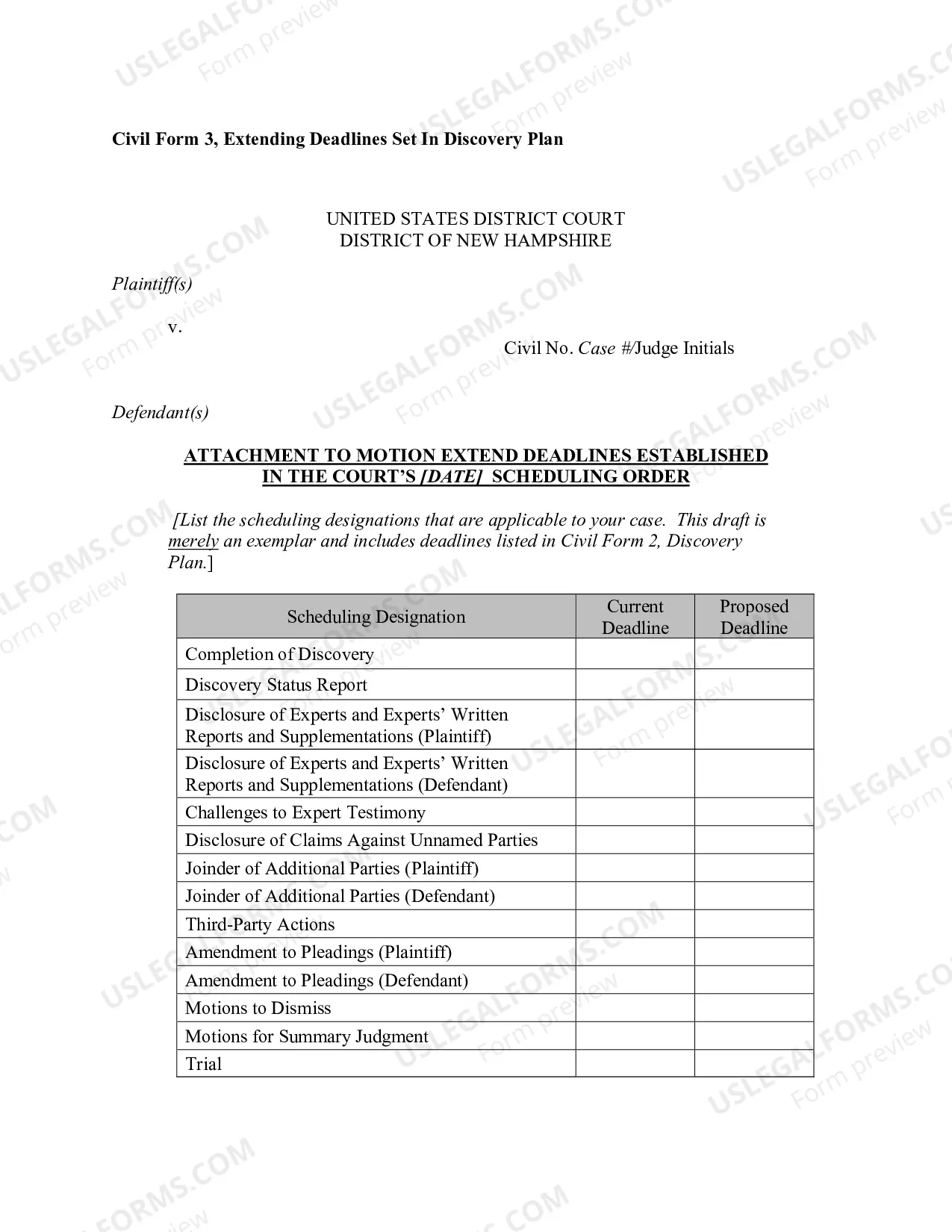
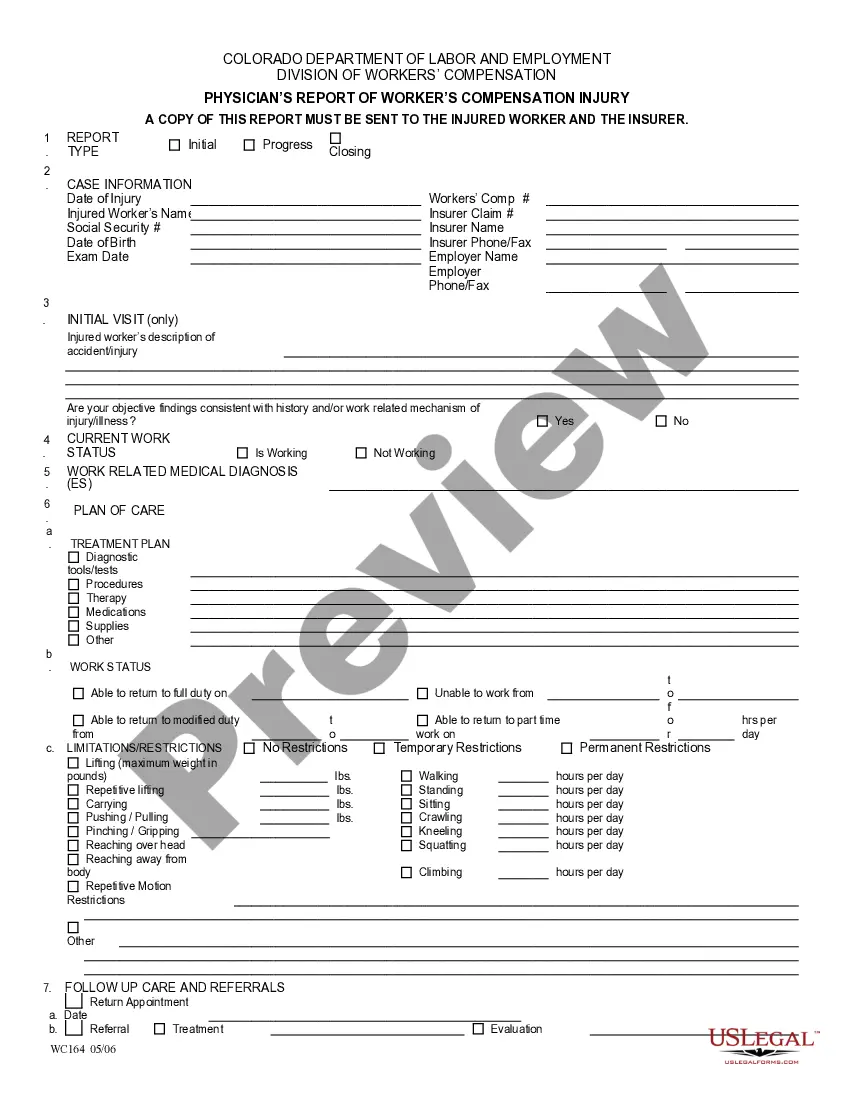
How to fill out Maine Federal Affidavit?
No matter if you handle documentation frequently or occasionally need to present a legal report, it is vital to find a resource where all the samples are relevant and current.
The first step you should take when using a Federal Court Affidavit Form is to ensure it's the most recent version, as this determines its acceptability for submission.
If you wish to streamline your search for the most recent document samples, look for them on US Legal Forms.
Avoid any confusion when managing legal documents; all your templates will be organized and validated with an account on US Legal Forms.
- US Legal Forms serves as a repository of legal templates that features nearly every document sample you may seek.
- Locate the necessary templates, assess their applicability immediately, and learn more about their usage.
- With US Legal Forms, you have access to over 85,000 document templates across various sectors.
- Find Federal Court Affidavit Form samples in a few moments and save them at any time in your account.
- A US Legal Forms account enables you to access all the samples you need more conveniently and with less hassle.
- You simply need to click Log In in the site header and navigate to the My documents section to have all the forms at your disposal, eliminating the need to spend time searching for the ideal template or verifying its authenticity.
- To obtain a form without an account, follow these instructions.
Form popularity
FAQ
More specifically, federal courts hear criminal, civil, and bankruptcy cases. And once a case is decided, it can often be appealed.
Typically, the Court hears cases that have been decided in either an appropriate U.S. Court of Appeals or the highest Court in a given state (if the state court decided a Constitutional issue). The Supreme Court has its own set of rules. According to these rules, four of the nine Justices must vote to accept a case.
To order court records online:Visit the National Archives Order Reproductions page.Click on "Order Reproductions" then "Court Records"Select the appropriate court (Bankruptcy, Civil, Criminal, or Court of Appeals)Follow the onscreen prompts to set up an account and place your order.
Regulation 5 NOTICE TO RESPONDENT TO SHOW CAUSE. SECTION 3(4) OF THE PROTECTION FROM HARASSMENT ACT, 2011 (ACT N0. 17 OF 2011)
A litigant who loses in a federal court of appeals, or in the highest court of a state, may file a petition for a "writ of certiorari," which is a document asking the Supreme Court to review the case. The Supreme Court, however, does not have to grant review.