Rent Increase
Description
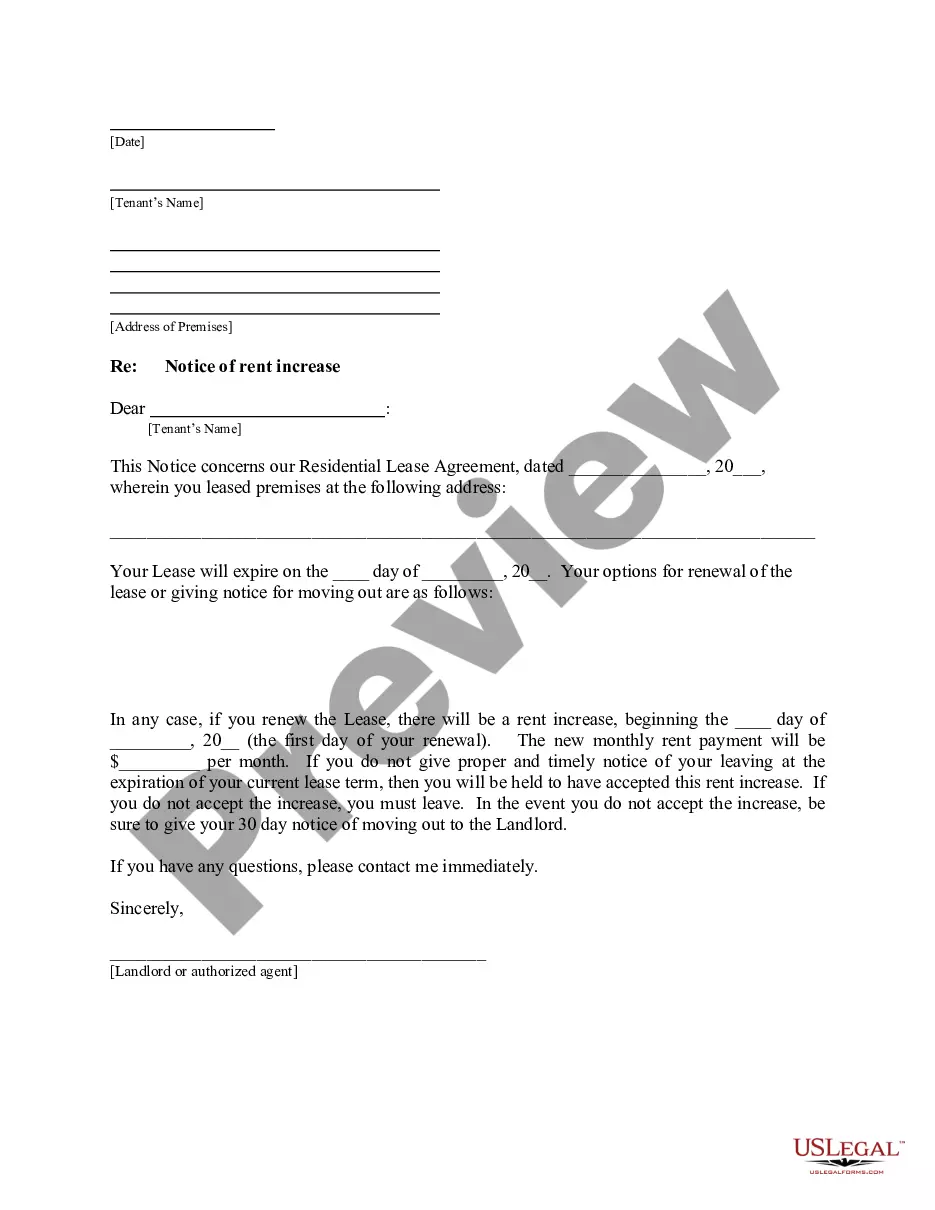
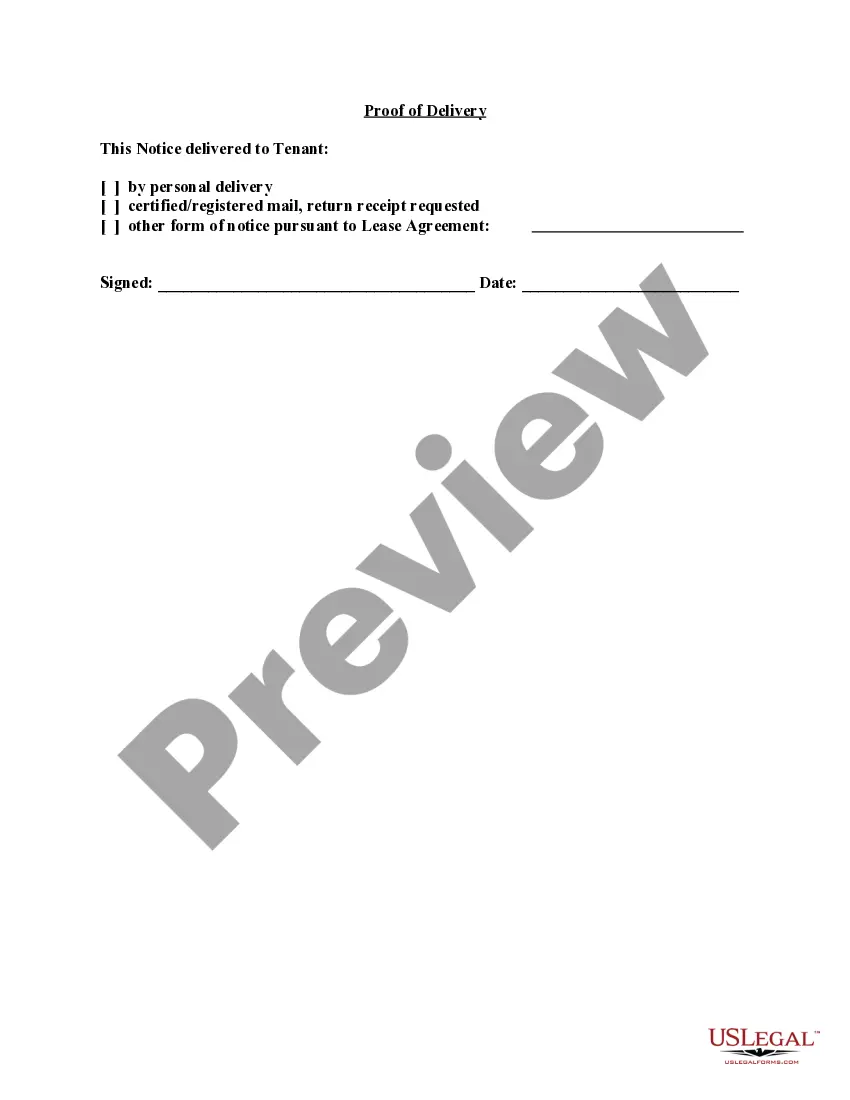
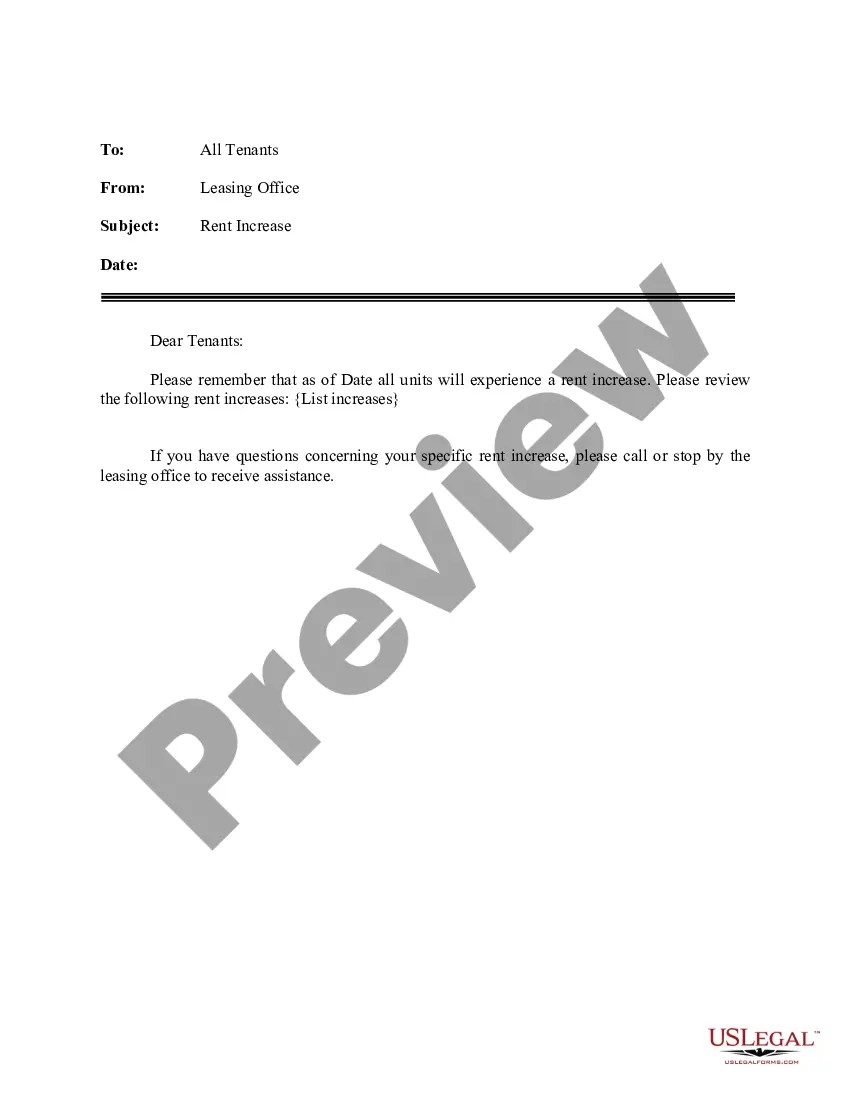
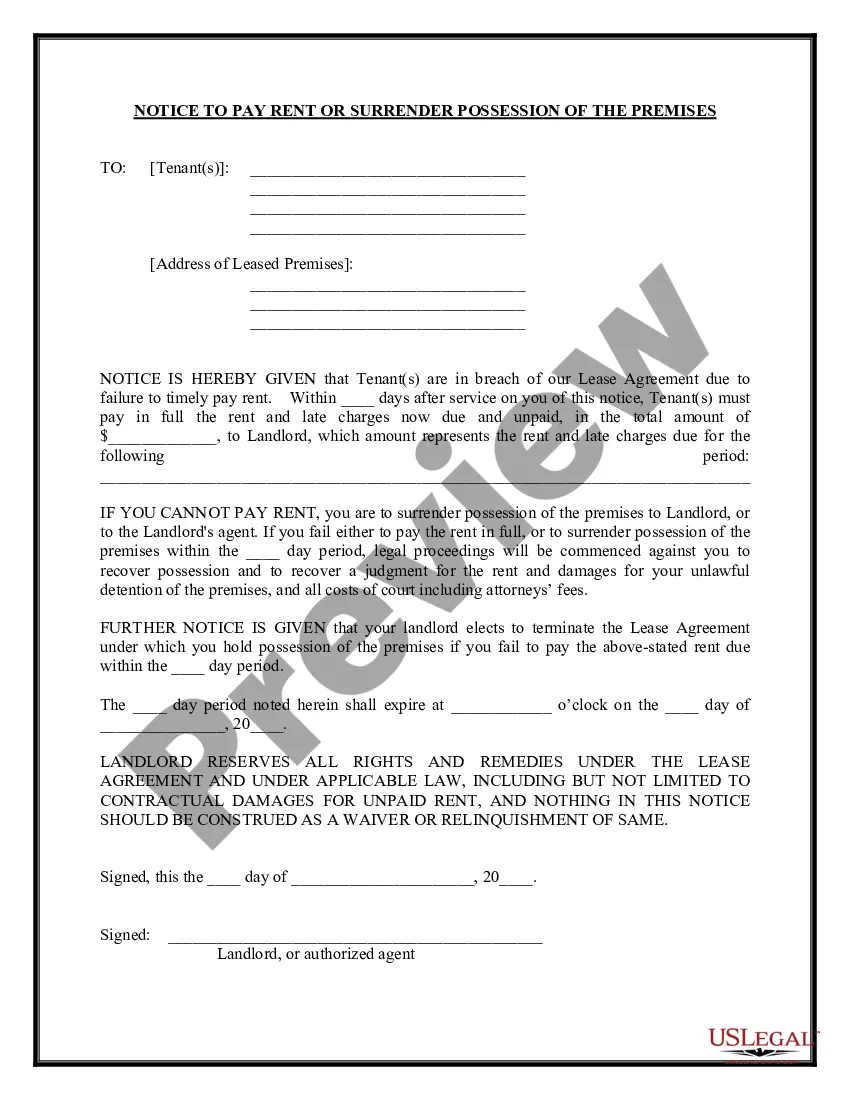
Get your form ready online
Our built-in tools help you complete, sign, share, and store your documents in one place.
Make edits, fill in missing information, and update formatting in US Legal Forms—just like you would in MS Word.
Download a copy, print it, send it by email, or mail it via USPS—whatever works best for your next step.
Sign and collect signatures with our SignNow integration. Send to multiple recipients, set reminders, and more. Go Premium to unlock E-Sign.
If this form requires notarization, complete it online through a secure video call—no need to meet a notary in person or wait for an appointment.
We protect your documents and personal data by following strict security and privacy standards.

Make edits, fill in missing information, and update formatting in US Legal Forms—just like you would in MS Word.

Download a copy, print it, send it by email, or mail it via USPS—whatever works best for your next step.

Sign and collect signatures with our SignNow integration. Send to multiple recipients, set reminders, and more. Go Premium to unlock E-Sign.

If this form requires notarization, complete it online through a secure video call—no need to meet a notary in person or wait for an appointment.

We protect your documents and personal data by following strict security and privacy standards.
Looking for another form?







How to fill out Maine Letter From Landlord To Tenant About Intent To Increase Rent And Effective Date Of Rental Increase?
- If you have an existing US Legal Forms account, log in and access the form library. Check that your subscription is active; otherwise, renew it according to your chosen plan.
- For first-time users, start by browsing the online library. Review the form previews and descriptions to ensure they meet your legal requirements.
- If your needs aren't met, utilize the Search feature to find the appropriate templates. Confirm that the document aligns with the local jurisdiction requirements before proceeding.
- Select the desired document by clicking the Buy Now button. Choose an appropriate subscription plan and create an account to unlock full access.
- Complete your purchase using a credit card or PayPal, ensuring you have the necessary access to the forms.
- Finally, download the needed template to your device. Revisit the My Forms section within your profile any time you need to access it again.
Using US Legal Forms ensures that you have a comprehensive resource for handling rent increases legally and effectively. The service not only offers an extensive array of legal documents but also the option to connect with premium experts for assistance on form completion.
Don't wait until legal complications arise. Start your journey with US Legal Forms today and secure your peace of mind with expertly crafted documents!
Form popularity
FAQ
A rent increase letter in Georgia is a formal document notifying tenants of a scheduled increase in their rent. This letter must provide adequate notice as required by state law, which typically is 30 days before the increase takes effect. Clear communication is vital to maintain a good landlord-tenant relationship, and U.S. Legal Forms offers templates for creating professional rent increase letters that comply with legal requirements.
In New York, the allowable rent increase depends on whether the rental property is governed by rent control or rent stabilization laws. Generally, the New York City Rent Guidelines Board sets annual limits for rent increases on rent-stabilized units. If you are unsure about what's permissible for your rental, consulting legal resources from U.S. Legal Forms can clarify your options regarding rent increases.
Yes, there are restrictions on rent increases in Georgia, particularly for properties that are part of government programs or controlled by local ordinances. While Georgia does not have statewide rent control, landlords must adhere to any specific agreements made in rental contracts. Keeping informed about local laws is crucial for both tenants and landlords facing rent increases. U.S. Legal Forms can help you understand these regulations further.
The maximum fair rent increase varies based on state and local laws, but generally, landlords must follow guidelines set by housing authorities. Fair rent increases are intended to maintain affordability while allowing property owners to cover rising costs. It's essential to check local regulations to determine the specific limits on rent increases in your area. If you need assistance, U.S. Legal Forms offers resources to navigate these regulations.
The most a landlord can increase your rent is contingent upon local laws and your lease agreement terms. Some jurisdictions have rent control measures which prevent excessive increases. Always check your local regulations to know your rights and to ensure your landlord follows the proper legal protocols. This knowledge empowers you in any negotiations.
Currently, there is no state-wide cap on rent increases in Nevada, allowing landlords significant freedom in this area. However, local jurisdictions may impose their own caps or regulations. It’s critical to consult local laws or housing authorities to understand any specific limits. Being informed can protect you from unexpected increases.
To ask your landlord for a rent increase, first review your rental agreement and any applicable laws regarding rent adjustments. Present your request in writing, detailing your reasons along with any improvements or changes offsetting your request. Open and respectful communication often yields better results and enhances your relationship with your landlord.
In Nevada, landlords can increase rent under certain conditions, particularly influenced by the specific type of lease you have. Generally, there is no state-wide limit on rent increases, but the landlord must provide proper notice. Be aware that cities may have additional rules regarding rent increases. Checking with local housing authorities can provide clarity.
The most a landlord can raise your rent typically depends on lease agreements and local rent control laws. In some regions, landlords must provide notice before any rent increase, detailing how much the rent will change. This ensures transparency and allows tenants to plan accordingly. Review your lease and local regulations to understand your situation better.
The maximum a landlord can increase rent often depends on local laws and regulations. In many areas, there are restrictions on how much a landlord can raise rent within a year. For instance, rent increase caps may apply, which protect tenants from sudden and excessive increases. It's important to check your state or local regulations for specifics.