Landlord Harassment Maine Former
Description

Get your form ready online
Our built-in tools help you complete, sign, share, and store your documents in one place.
Make edits, fill in missing information, and update formatting in US Legal Forms—just like you would in MS Word.
Download a copy, print it, send it by email, or mail it via USPS—whatever works best for your next step.
Sign and collect signatures with our SignNow integration. Send to multiple recipients, set reminders, and more. Go Premium to unlock E-Sign.
If this form requires notarization, complete it online through a secure video call—no need to meet a notary in person or wait for an appointment.
We protect your documents and personal data by following strict security and privacy standards.

Make edits, fill in missing information, and update formatting in US Legal Forms—just like you would in MS Word.

Download a copy, print it, send it by email, or mail it via USPS—whatever works best for your next step.

Sign and collect signatures with our SignNow integration. Send to multiple recipients, set reminders, and more. Go Premium to unlock E-Sign.

If this form requires notarization, complete it online through a secure video call—no need to meet a notary in person or wait for an appointment.

We protect your documents and personal data by following strict security and privacy standards.
Looking for another form?





Form popularity
FAQ
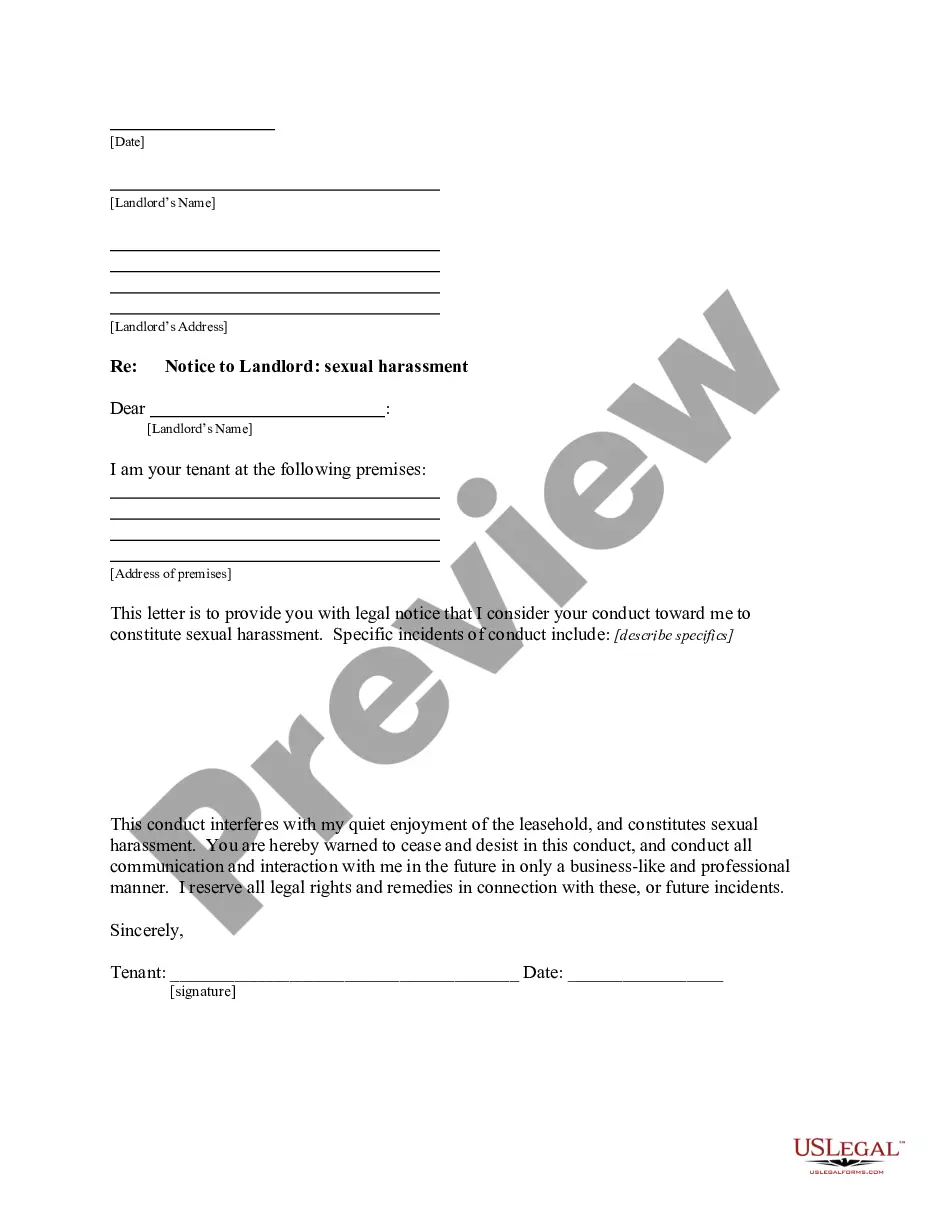
Landlord harassment in Maine refers to actions taken by a landlord that intimidate or threaten a tenant, making it difficult for them to enjoy their living space. Examples can include entering premises without notice, shutting off utilities, or retaliatory evictions. If you suspect you are a victim of landlord harassment in Maine, it's essential to document the behavior and seek legal assistance. Platforms like US Legal Forms provide resources that can guide you through this challenging situation.
In Maine, harassment includes actions that cause distress or harm to another person without a legitimate purpose. This can involve repeated unwelcome communication, threats, or behavior that creates a hostile environment. If you're experiencing landlord harassment in Maine, it's vital to understand how the law defines such behavior. Utilizing US Legal Forms can help you find solutions tailored to your specific situation.
A cease harassment order in Maine is a legal document that prohibits an individual from continuing to engage in harassing behavior towards another person. This order can provide immediate protection, allowing the victim to feel safe and secure. If you find yourself dealing with landlord harassment in Maine, applying for such an order can be a crucial step. Legal services and templates available through US Legal Forms can assist you in this process.
Harassment can encompass various actions, including unwanted communication, stalking behaviors, and threats of violence. For example, if someone continuously contacts you against your wishes or makes you feel unsafe, these may be considered forms of harassment. Recognizing these actions as landlord harassment in Maine can help you assert your rights and take necessary steps to protect yourself. You may benefit from using platforms like US Legal Forms to secure protective measures.
Yes, intimidation is a crime in Maine and can fall under various categories, including threats or coercion. If someone uses intimidation to control or manipulate you, it is important to recognize this behavior as illegal. If you are facing landlord harassment in Maine, acting against intimidation can empower you and offer some peace of mind. Legal assistance can guide you in taking appropriate action.
In Maine, stalking involves a series of unwanted and repeated actions that would cause a reasonable person to fear for their safety or the safety of someone close to them. This can include following a person, monitoring their activities, or making threats. Understanding the nuances of what defines stalking is crucial, especially if you are experiencing landlord harassment in Maine. Resources like US Legal Forms can help you navigate your legal options.
Harassment in Maine encompasses a range of behaviors that create a hostile living environment, such as threats, intimidation, or repeated unwanted communication from a landlord. Understanding what constitutes harassment can help you identify when your rights are being violated. If you experience landlord harassment in Maine, it is crucial to document the incidents and seek help.
The Fair Chance housing Act in Maine aims to prevent discrimination based on criminal history when renting properties. This law promotes equal access to housing opportunities for all individuals, including those with previous offenses. If you face landlord harassment in Maine related to your record, this act can provide protection and support.
To file a complaint against a landlord in Maine, you can reach out to the Maine Human Rights Commission or your local housing authority. Gather any evidence that demonstrates landlord harassment, such as written communication or witness statements. Documenting your experiences will strengthen your case and help ensure your rights are upheld.
Renters in Maine have several rights, including the right to habitable living conditions, privacy, and freedom from discriminatory practices. These rights empower tenants to stand against unfair treatment, including landlord harassment in Maine. It's vital to understand these rights to protect yourself and ensure your living situation remains safe and respectful.
