Living Will Form For Child Custody
Description

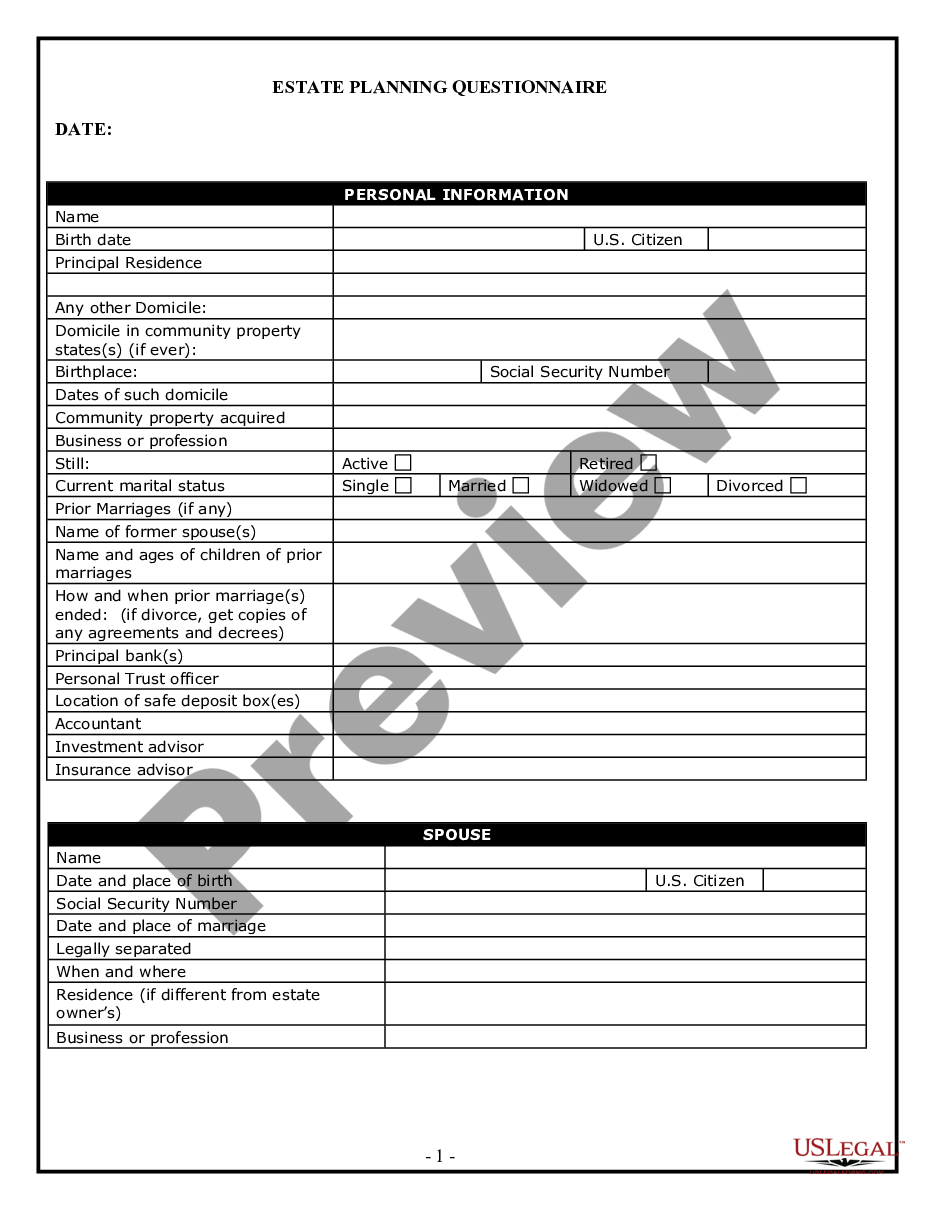
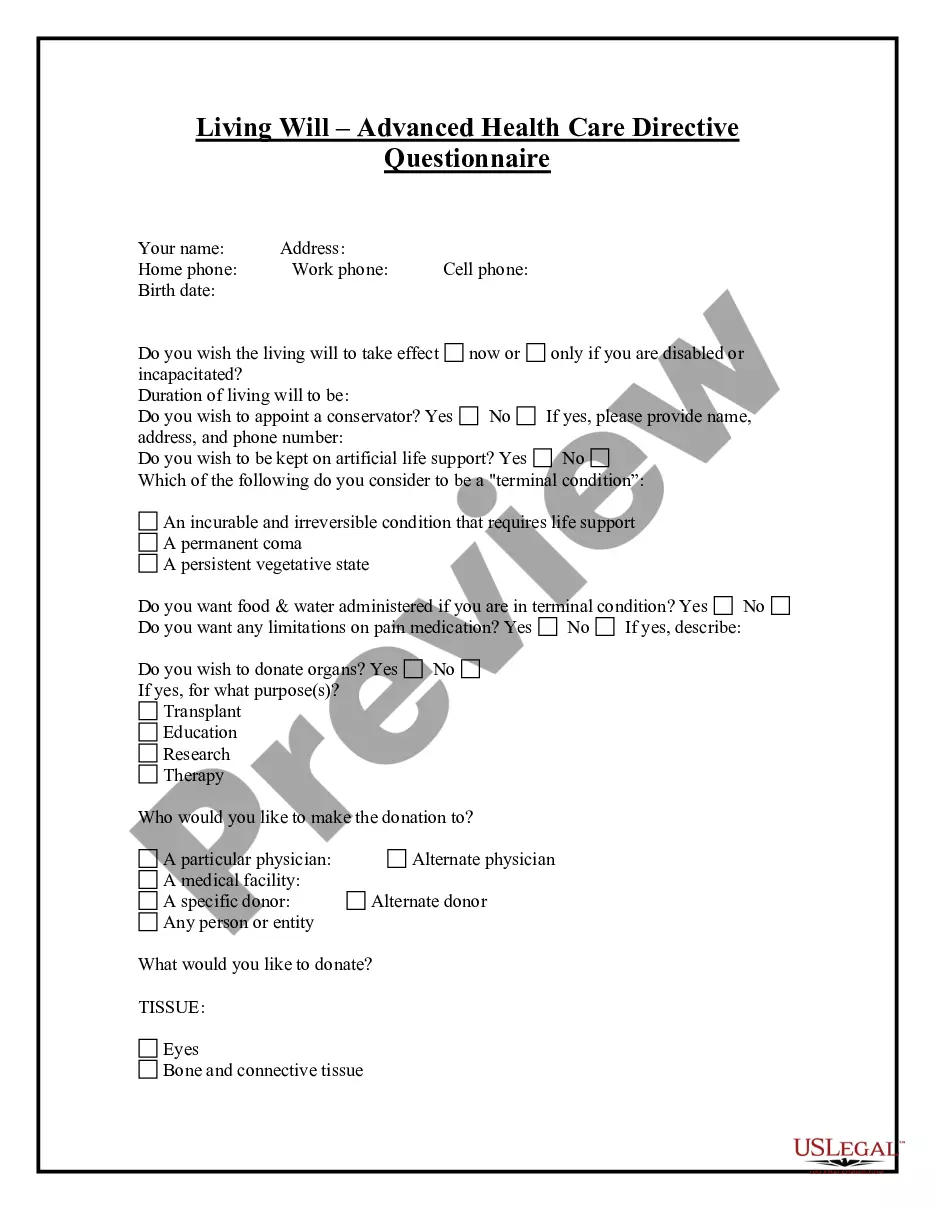
Get your form ready online
Our built-in tools help you complete, sign, share, and store your documents in one place.
Make edits, fill in missing information, and update formatting in US Legal Forms—just like you would in MS Word.
Download a copy, print it, send it by email, or mail it via USPS—whatever works best for your next step.
Sign and collect signatures with our SignNow integration. Send to multiple recipients, set reminders, and more. Go Premium to unlock E-Sign.
If this form requires notarization, complete it online through a secure video call—no need to meet a notary in person or wait for an appointment.
We protect your documents and personal data by following strict security and privacy standards.

Make edits, fill in missing information, and update formatting in US Legal Forms—just like you would in MS Word.

Download a copy, print it, send it by email, or mail it via USPS—whatever works best for your next step.

Sign and collect signatures with our SignNow integration. Send to multiple recipients, set reminders, and more. Go Premium to unlock E-Sign.

If this form requires notarization, complete it online through a secure video call—no need to meet a notary in person or wait for an appointment.

We protect your documents and personal data by following strict security and privacy standards.
Looking for another form?
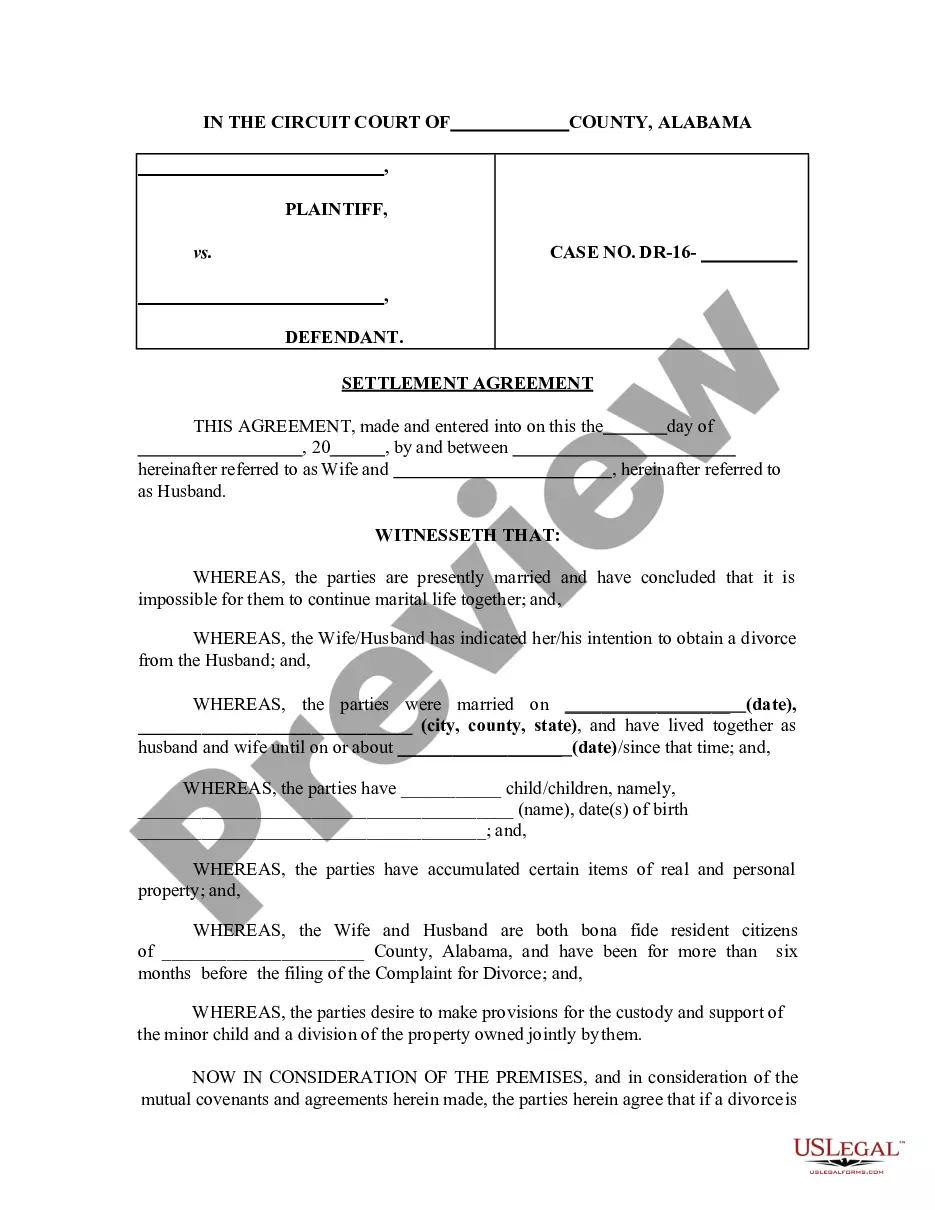

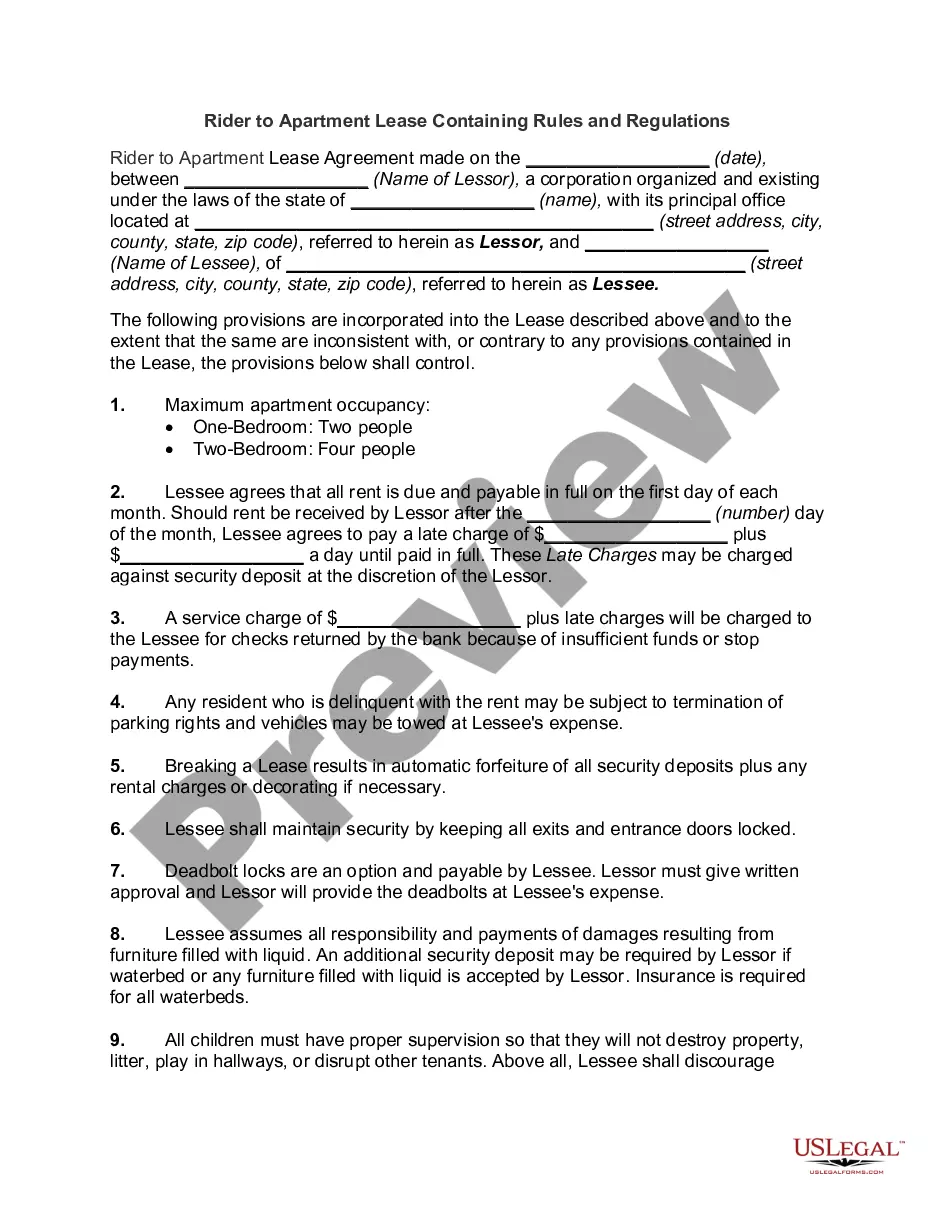




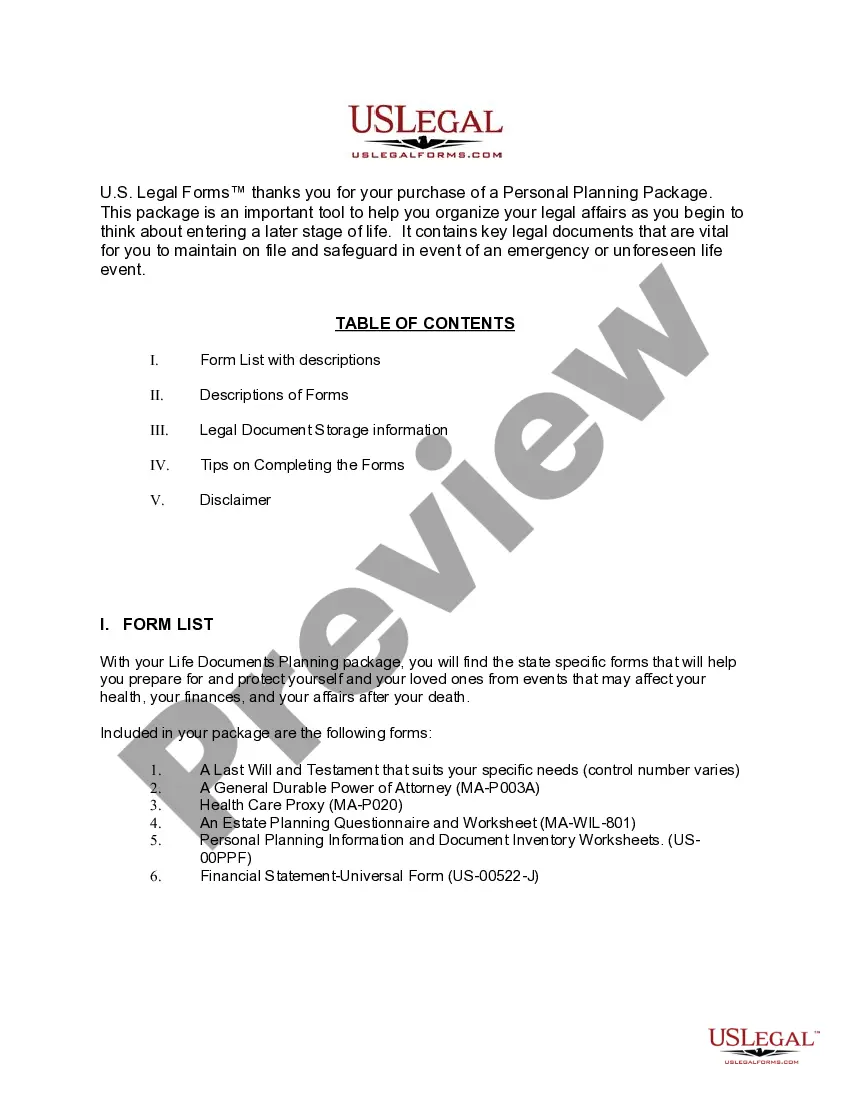
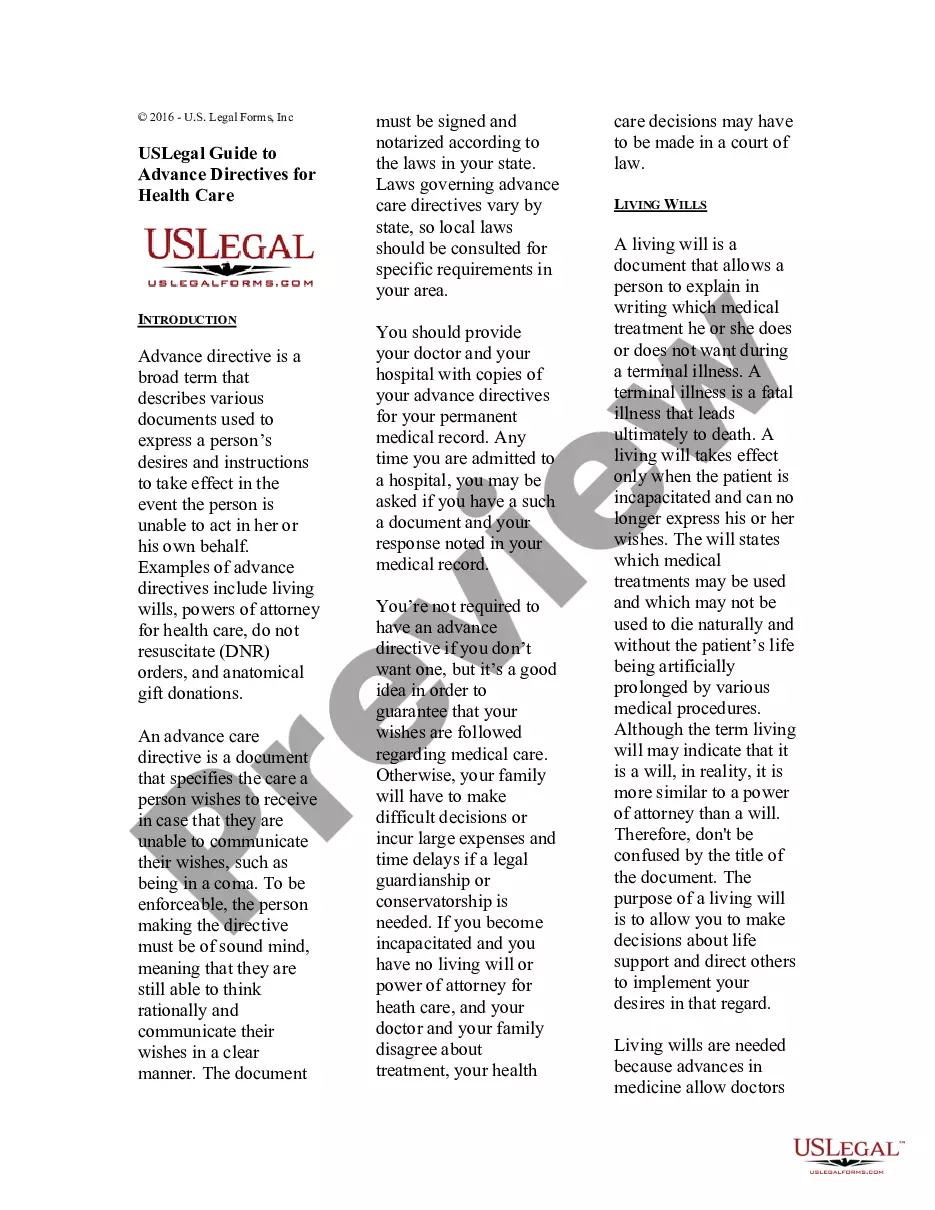
How to fill out Massachusetts Life Documents Planning Package, Including Will, Power Of Attorney And Living Will?
- If you are an existing user, log in to your account and select the appropriate living will form for child custody. Please verify that your subscription is active; if not, make sure to renew it based on your payment plan.
- Explore the form in Preview mode to ensure it meets your jurisdiction's requirements and your specific needs. Confirm that it is the correct document.
- If necessary, use the Search feature at the top of the page to find alternative templates until you locate the right one.
- Click on the Buy Now button and choose a subscription plan that suits you. Creating an account is essential for accessing the full library.
- Complete your purchase by entering your credit card details or using your PayPal account.
- Once purchased, download the living will form onto your device, and you can find it later in the My Forms section of your profile.
In conclusion, US Legal Forms offers an extensive library of over 85,000 fillable legal documents that can simplify the process of securing your child custody arrangement. With access to premium assistance, you can ensure your living will is precise and legally sound.
Get started today and secure your family's future with our comprehensive legal resources.
Form popularity
FAQ
The main drawback of a living will is that it only addresses healthcare decisions in case you become incapacitated. It does not cover child custody arrangements or other important legal matters. To safeguard your children effectively, it’s beneficial to pair a living will form for child custody with other legal documents, ensuring comprehensive planning for your family's future.
In Minnesota, a will must be in writing and signed by the testator, the person creating the will. It should be witnessed by two individuals who are not beneficiaries. Utilizing a living will form for child custody ensures that your intentions regarding your children are clearly articulated and can help avoid disputes during the probate process.
Yes, you can include child custody provisions in your will. A living will form for child custody allows you to specify who will care for your child in the event of your passing. However, it is essential to understand that the court ultimately approves custody decisions based on the child's best interests. Thus, having a clear and legally binding document will help establish your wishes.
You can get a living will form from various online sources, such as US Legal Forms, which offers user-friendly options tailored to your needs. These forms provide comprehensive legal coverage while allowing you to personalize your choices regarding child custody. With a living will form readily available, you can ensure your wishes are clearly documented for your loved ones.
The main disadvantage of a living will is that it only addresses medical decisions and does not cover other aspects like child custody arrangements or financial matters. This limitation means that you may need additional documents to ensure all aspects of your estate and care preferences are addressed thoroughly. A living will form for child custody should be part of a broader planning strategy to protect your family's future.
In Minnesota, a living will does not require notarization to be valid, but it is recommended for added legitimacy. You do need to have it signed by two witnesses to ensure it meets legal standards. Using a living will form for child custody can help facilitate this process, allowing you to follow state-specific requirements with ease.
You can obtain a living will form through various online legal services, including US Legal Forms, which provides easy access to customizable templates. These forms cater specifically to your needs for child custody arrangements, ensuring you capture your wishes accurately. Once you have the form, you can fill it out following the guidelines provided to clarify your medical preferences.
To write a will for child custody, start by outlining your wishes clearly regarding the care of your child. Identify a guardian and ensure that you include specific instructions on their upbringing, education, and health care. Using a living will form for child custody can guide you through this process effectively, making your intentions known legally and precisely.
A living will does not generally need to be filed with the court, but it's wise to store it in a safe place where your loved ones can access it. You may want to share copies with family members and healthcare providers to ensure your wishes are respected. Using a living will form for child custody helps outline your intentions clearly, thus avoiding any confusion during distressing times.
To write out a living will, you should start by clearly stating your full name, date, and intentions. Include specific preferences regarding your child's care and any medical decisions to be made on their behalf. You can utilize a living will form for child custody to ensure that all elements are covered efficiently. Make sure to sign and date the document, and consider seeking legal advice to ensure legitimacy.