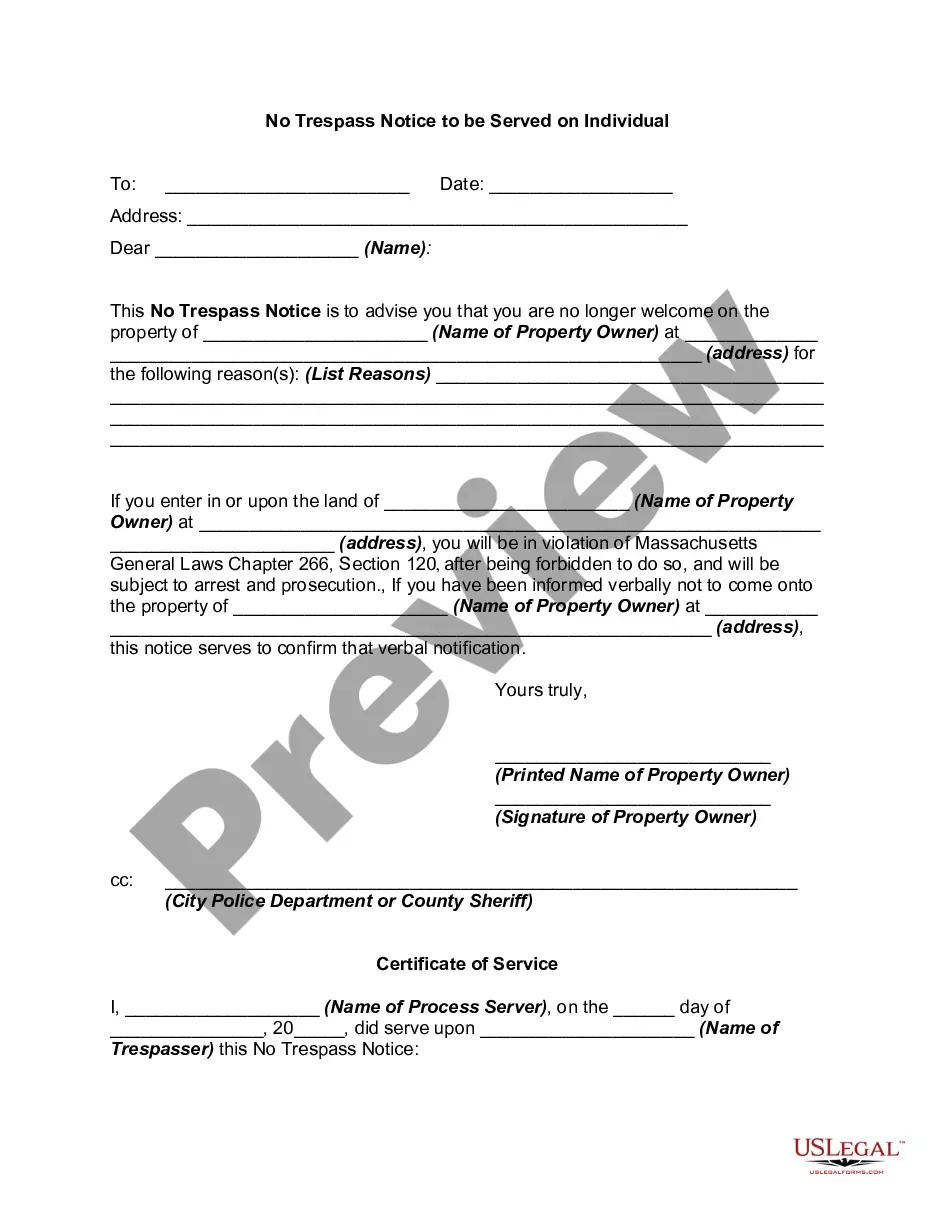
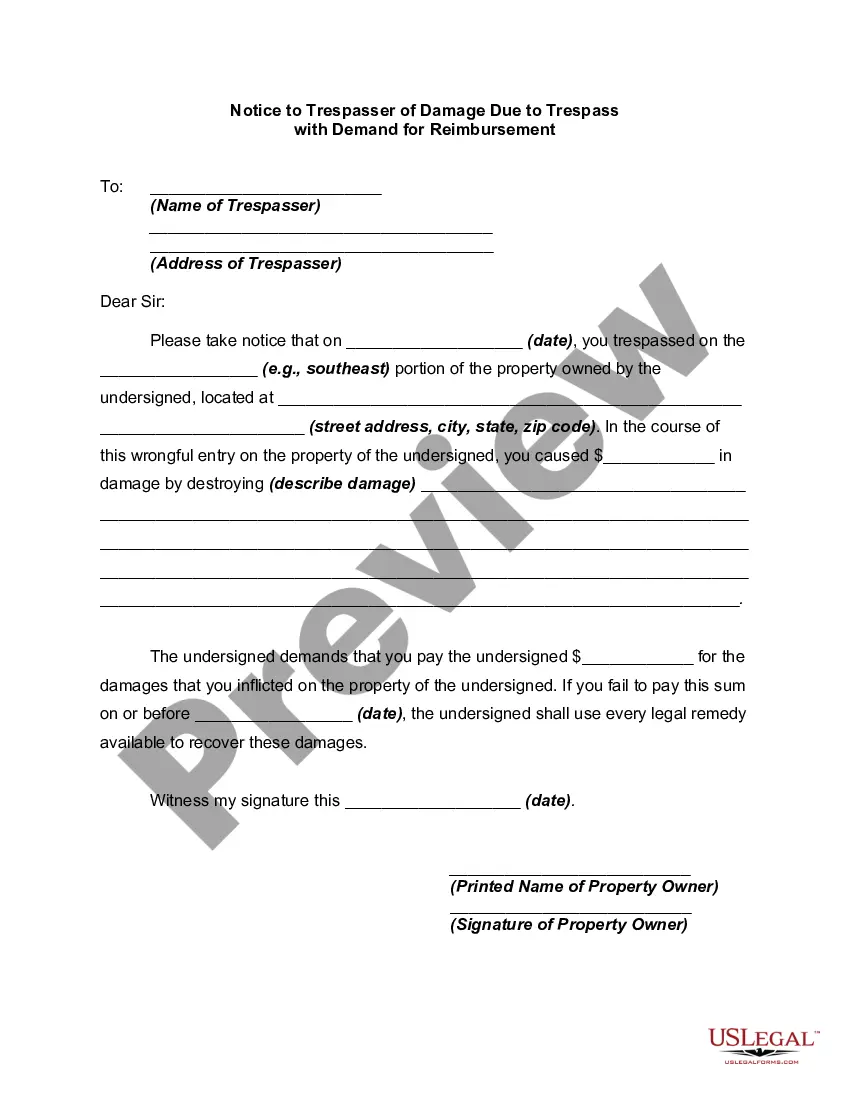
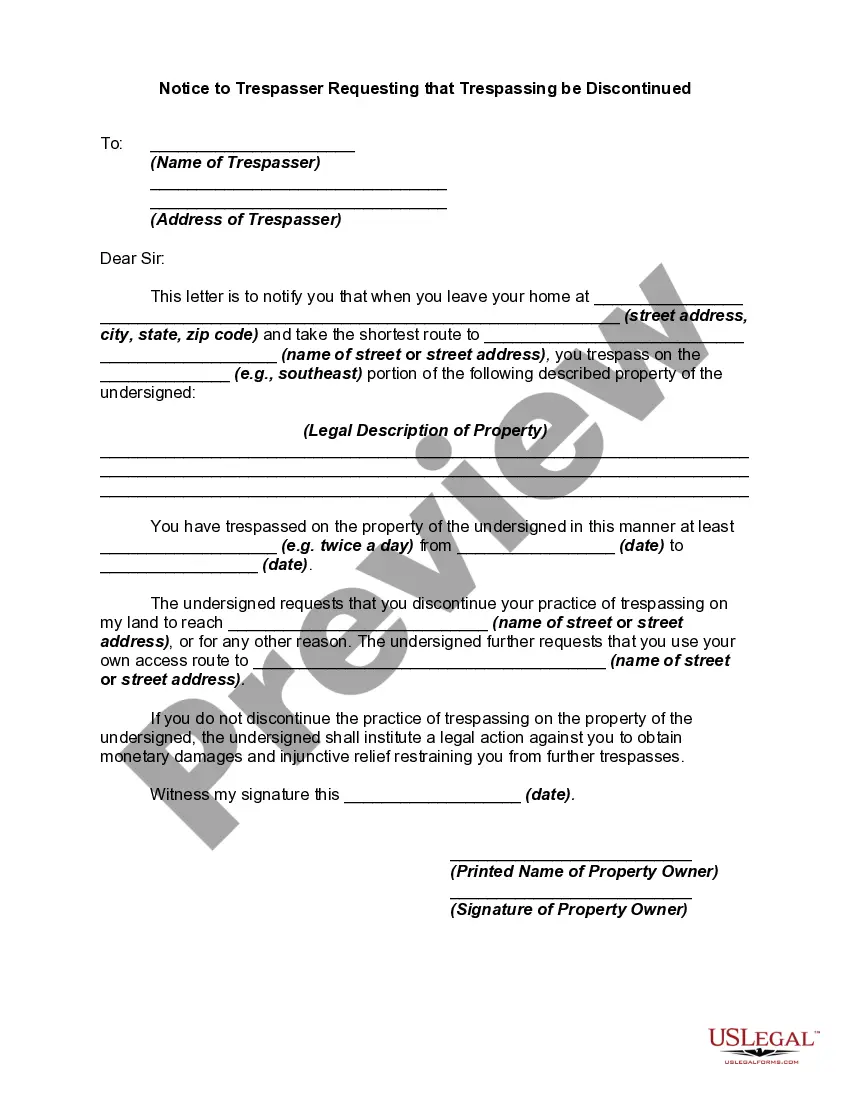
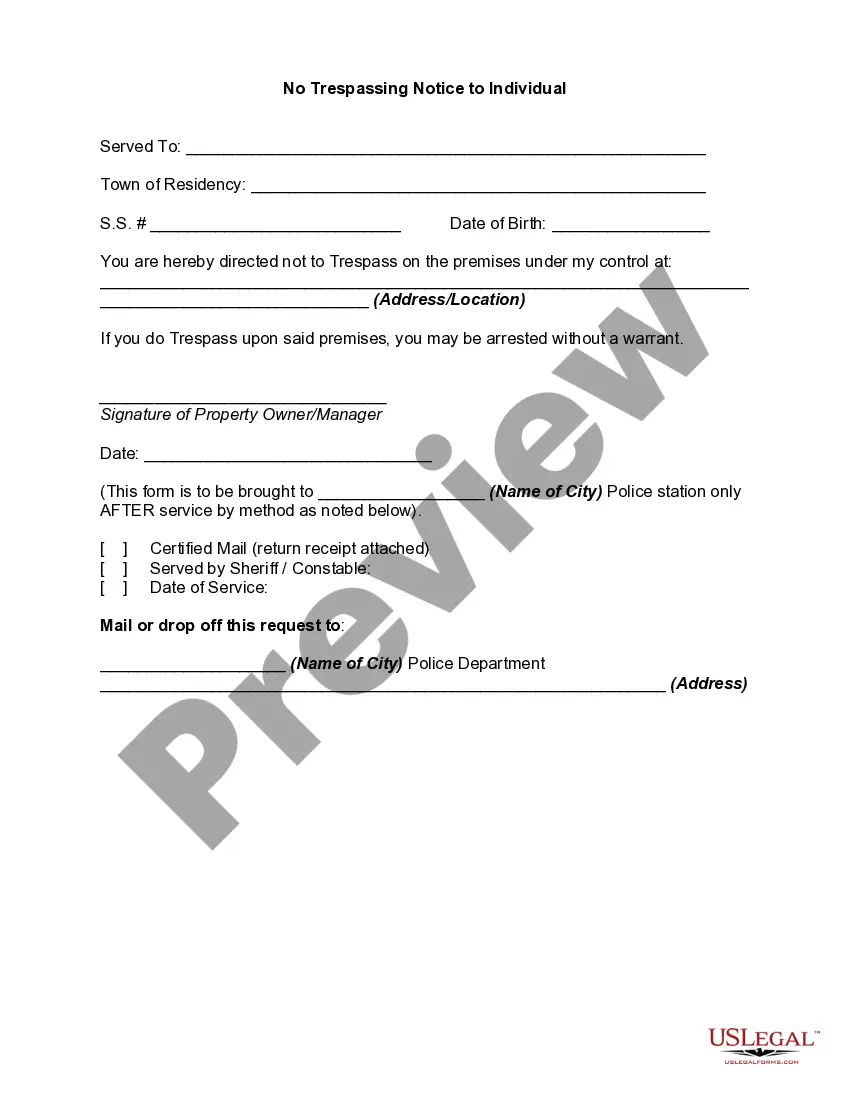
No Trespass Order Massachusetts Without Notice
Description
Get your form ready online
Our built-in tools help you complete, sign, share, and store your documents in one place.
Make edits, fill in missing information, and update formatting in US Legal Forms—just like you would in MS Word.
Download a copy, print it, send it by email, or mail it via USPS—whatever works best for your next step.
Sign and collect signatures with our SignNow integration. Send to multiple recipients, set reminders, and more. Go Premium to unlock E-Sign.
If this form requires notarization, complete it online through a secure video call—no need to meet a notary in person or wait for an appointment.
We protect your documents and personal data by following strict security and privacy standards.

Make edits, fill in missing information, and update formatting in US Legal Forms—just like you would in MS Word.

Download a copy, print it, send it by email, or mail it via USPS—whatever works best for your next step.

Sign and collect signatures with our SignNow integration. Send to multiple recipients, set reminders, and more. Go Premium to unlock E-Sign.

If this form requires notarization, complete it online through a secure video call—no need to meet a notary in person or wait for an appointment.

We protect your documents and personal data by following strict security and privacy standards.
Looking for another form?



How to fill out Massachusetts No Trespass Notice To Be Served On Individual?
Regardless of whether it is for commercial objectives or personal matters, everyone eventually must handle legal circumstances at some point in their lives.
Completing legal documentation requires meticulous attention, starting with selecting the correct form template.
Once it is saved, you can fill in the form using editing software or print it out and complete it manually. With a comprehensive US Legal Forms catalog available, you don't need to waste time searching for the correct template all over the web. Utilize the library’s user-friendly navigation to discover the right form for any circumstance.
- Obtain the template you require via the search function or catalog navigation.
- Review the form’s details to verify it aligns with your situation, jurisdiction, and area.
- Click on the form’s preview to examine it.
- If it is not the correct document, return to the search tool to locate the No Trespass Order Massachusetts Without Notice example you seek.
- Acquire the template once it fulfills your requirements.
- If you have an existing US Legal Forms account, simply click Log in to access previously stored templates in My documents.
- If you do not possess an account yet, you can acquire the form by clicking Buy now.
- Select the suitable pricing option.
- Complete the profile registration form.
- Choose your payment method: utilize a credit card or PayPal account.
- Select the file format you desire and download the No Trespass Order Massachusetts Without Notice.
Form popularity
FAQ
Notice Requirements To impose Massachusetts' general criminal trespass statute, a property owner or someone with "legal control" of the property must provide proper notice to a potential trespasser that they are prohibited from entering the premises.
In the Commonwealth, trespassing is considered a property crime and the criminal statute prohibiting trespass has been codified in G.L. c 266 § 120. The penalty for trespassing in Massachusetts includes a fine of not more than one hundred dollars or by up to 30 days in prison or by both fine and imprisonment.
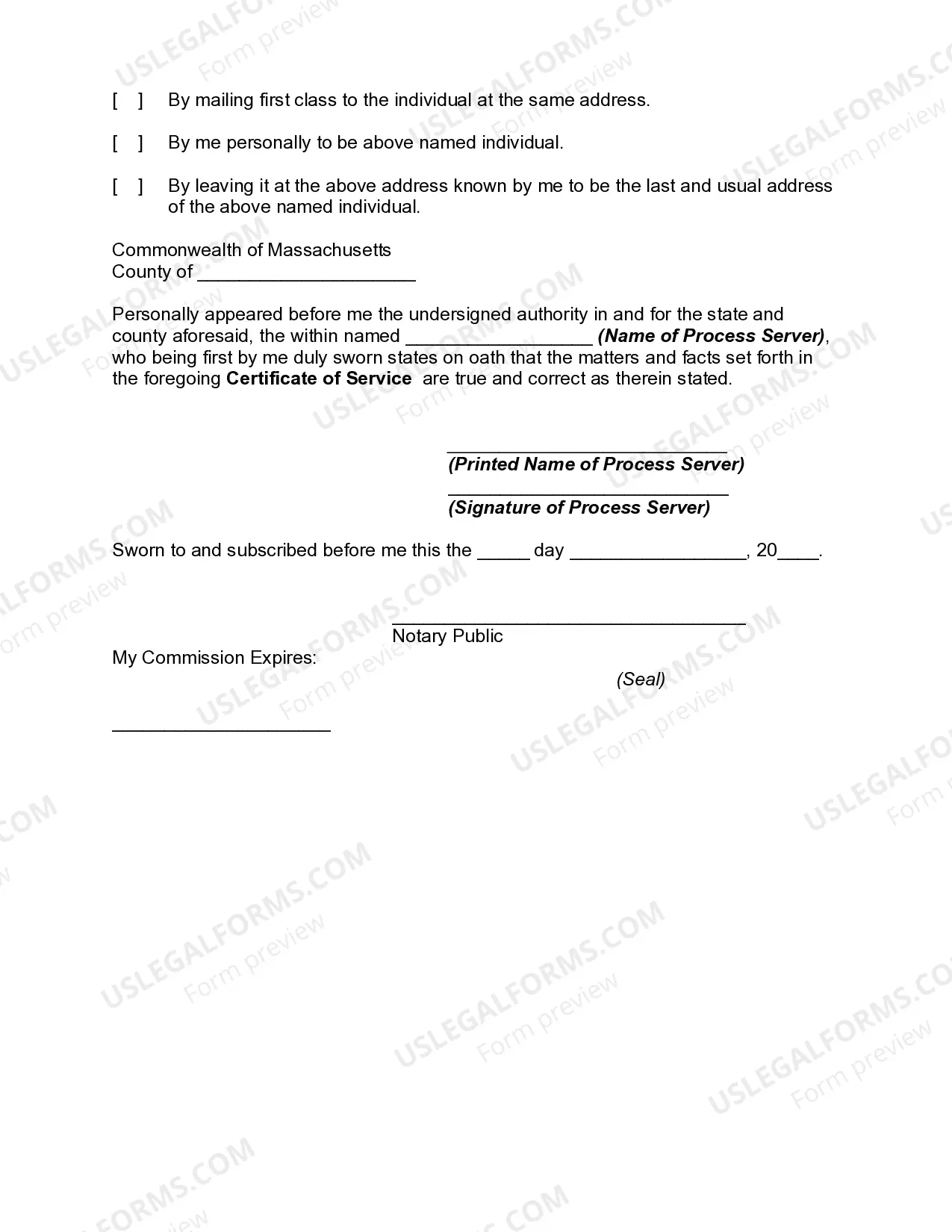
Refer to Massachusetts General Laws Chapter 266, Section 120. You must deliver the completed and signed notice to the person being trespassed. You must also deliver a signed copy of the trespass notice to the Police Department. There is additional information on the form.
Massachusetts requires that you tell someone they aren't allowed on property before they can be charged criminally with trespassing. Once you issue a no-trespass order, essentially a document that says "You are not allowed on my property" that order is good until you give permission for that person to come back.
Under the law, a formal notice must be communicated, either by posting a no trespassing sign on the property, or otherwise by direct notification. Trespassing on public property such as state land or state controlled institutions has a penalty of up to 3 months in prison.