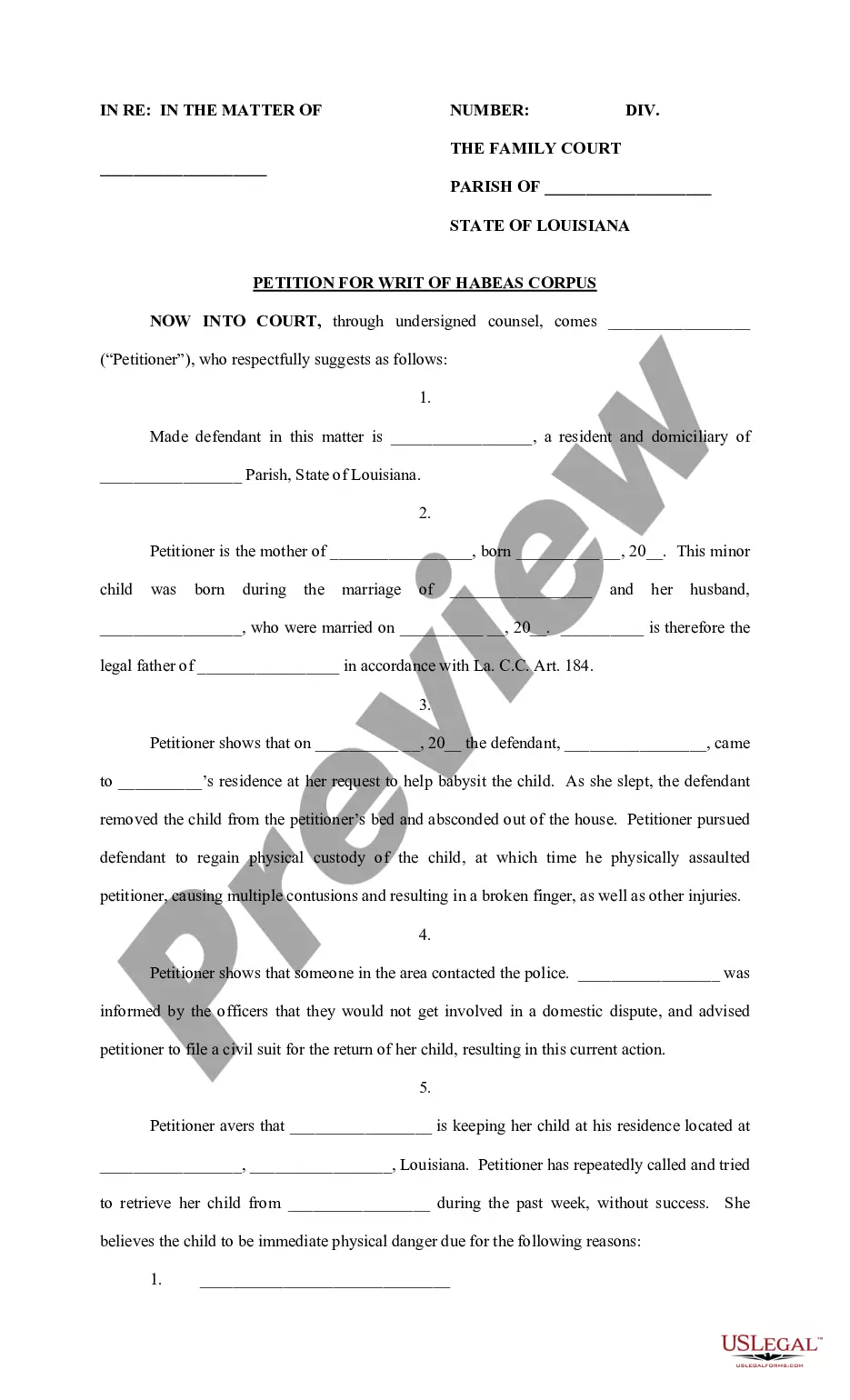
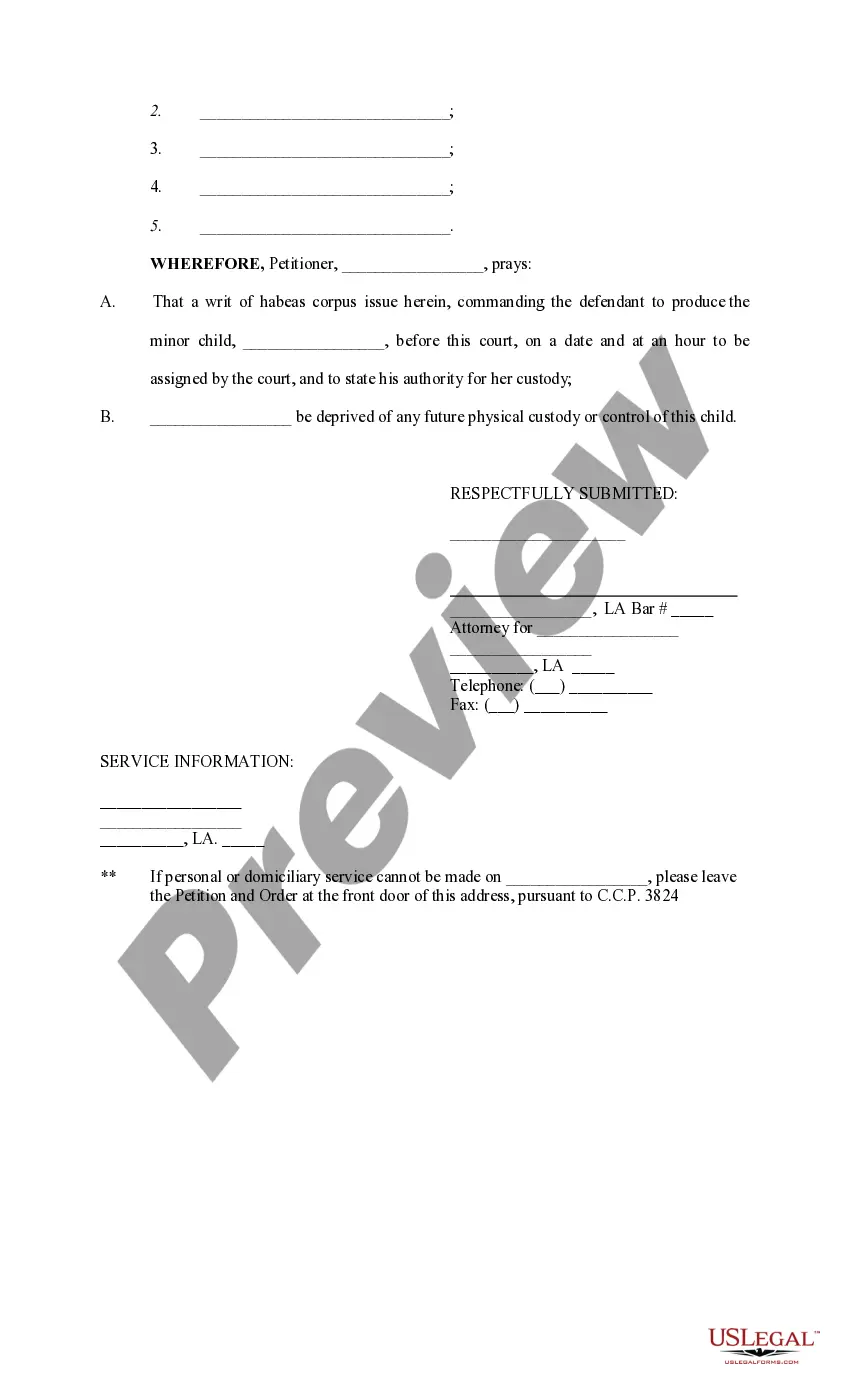
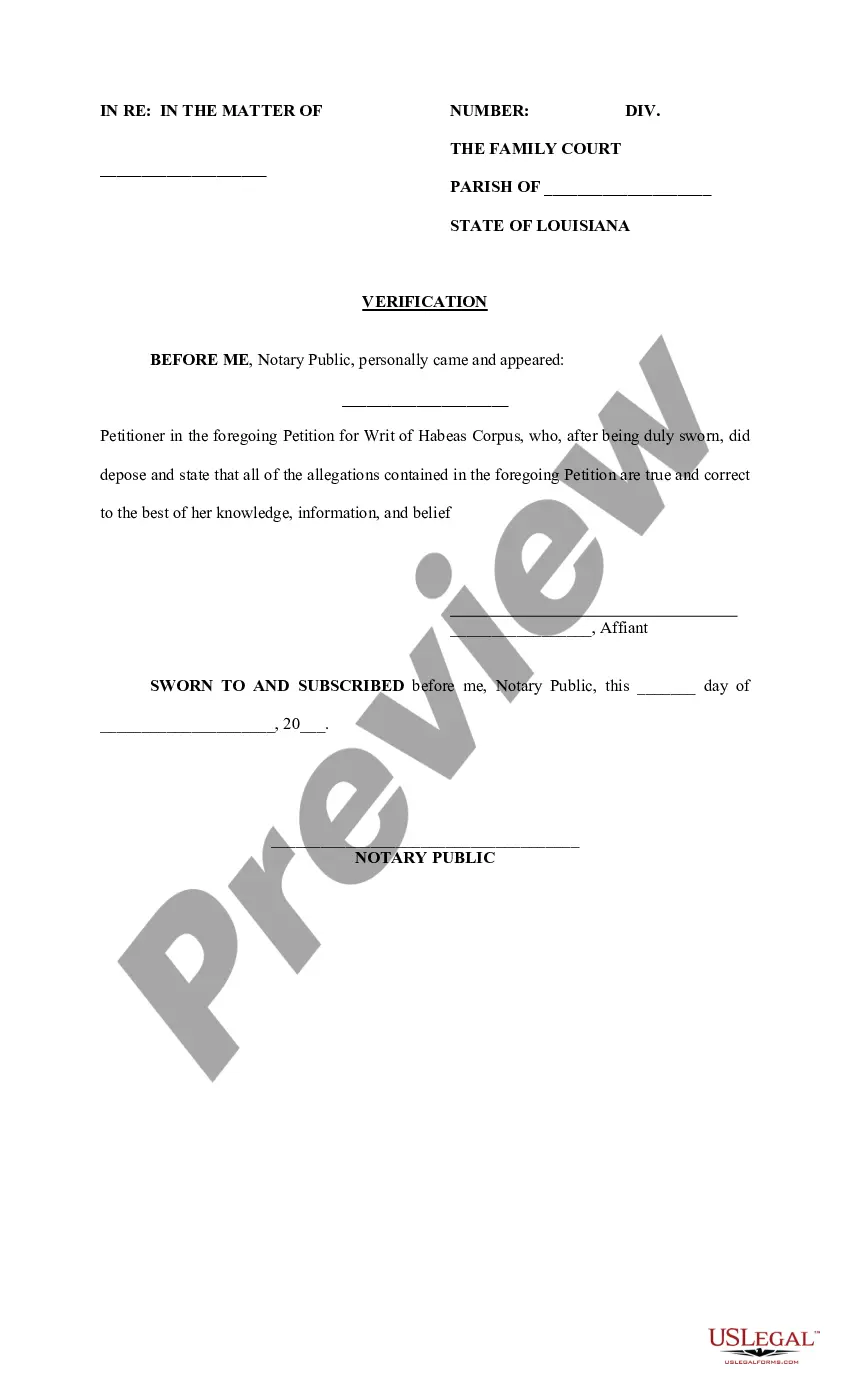
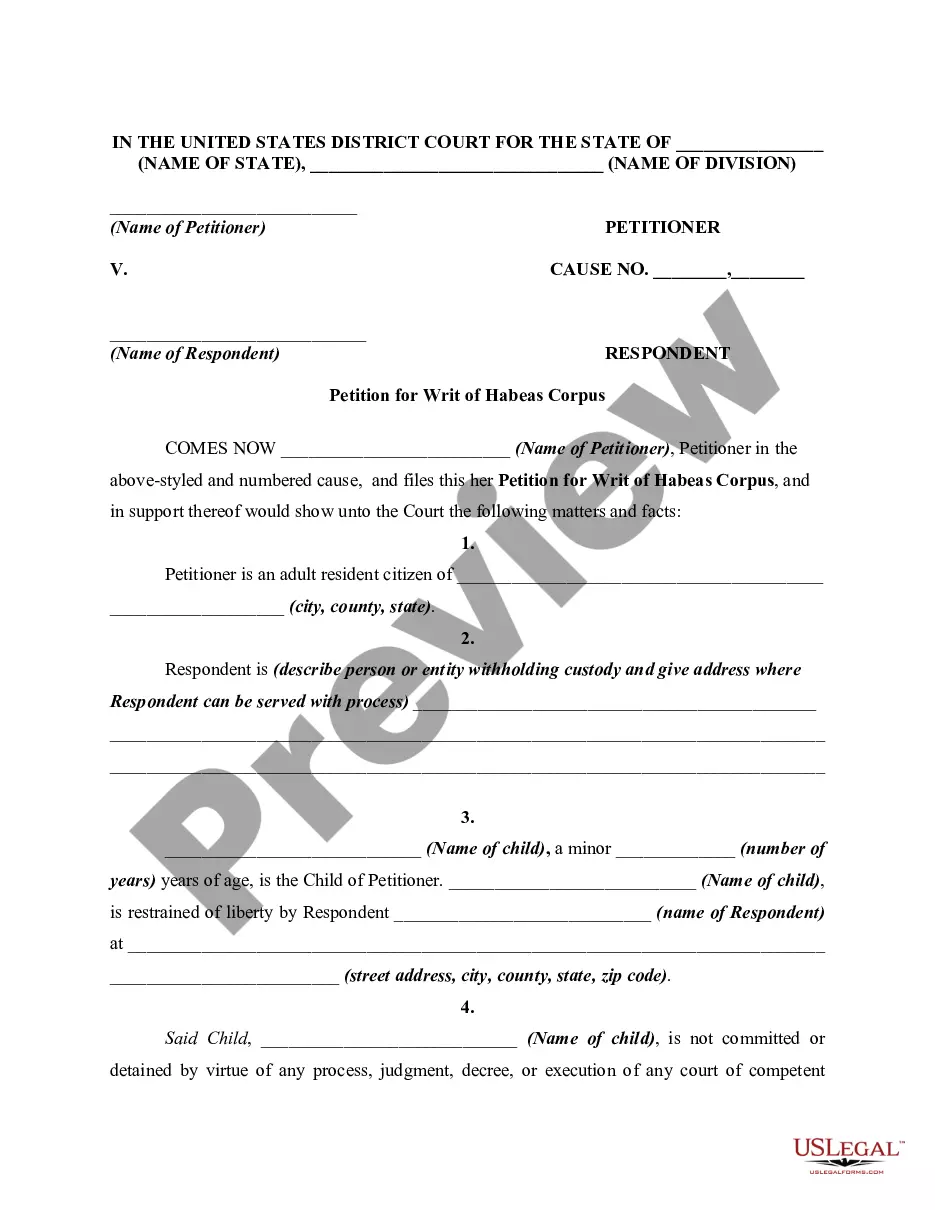
Sample Petition For Writ Of Habeas Corpus Child Custody Forms California
Description
Get your form ready online
Our built-in tools help you complete, sign, share, and store your documents in one place.
Make edits, fill in missing information, and update formatting in US Legal Forms—just like you would in MS Word.
Download a copy, print it, send it by email, or mail it via USPS—whatever works best for your next step.
Sign and collect signatures with our SignNow integration. Send to multiple recipients, set reminders, and more. Go Premium to unlock E-Sign.
If this form requires notarization, complete it online through a secure video call—no need to meet a notary in person or wait for an appointment.
We protect your documents and personal data by following strict security and privacy standards.

Make edits, fill in missing information, and update formatting in US Legal Forms—just like you would in MS Word.

Download a copy, print it, send it by email, or mail it via USPS—whatever works best for your next step.

Sign and collect signatures with our SignNow integration. Send to multiple recipients, set reminders, and more. Go Premium to unlock E-Sign.

If this form requires notarization, complete it online through a secure video call—no need to meet a notary in person or wait for an appointment.

We protect your documents and personal data by following strict security and privacy standards.
Looking for another form?
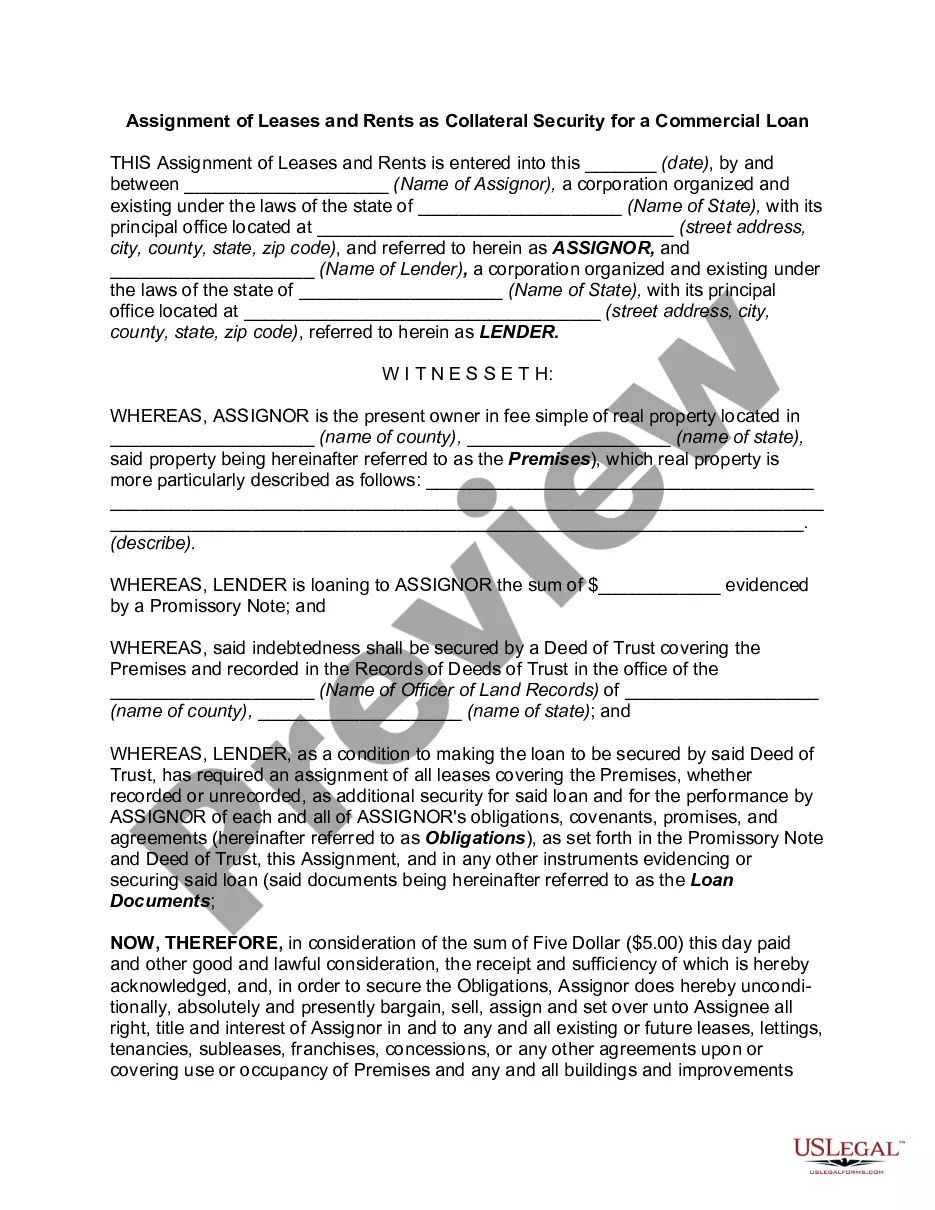
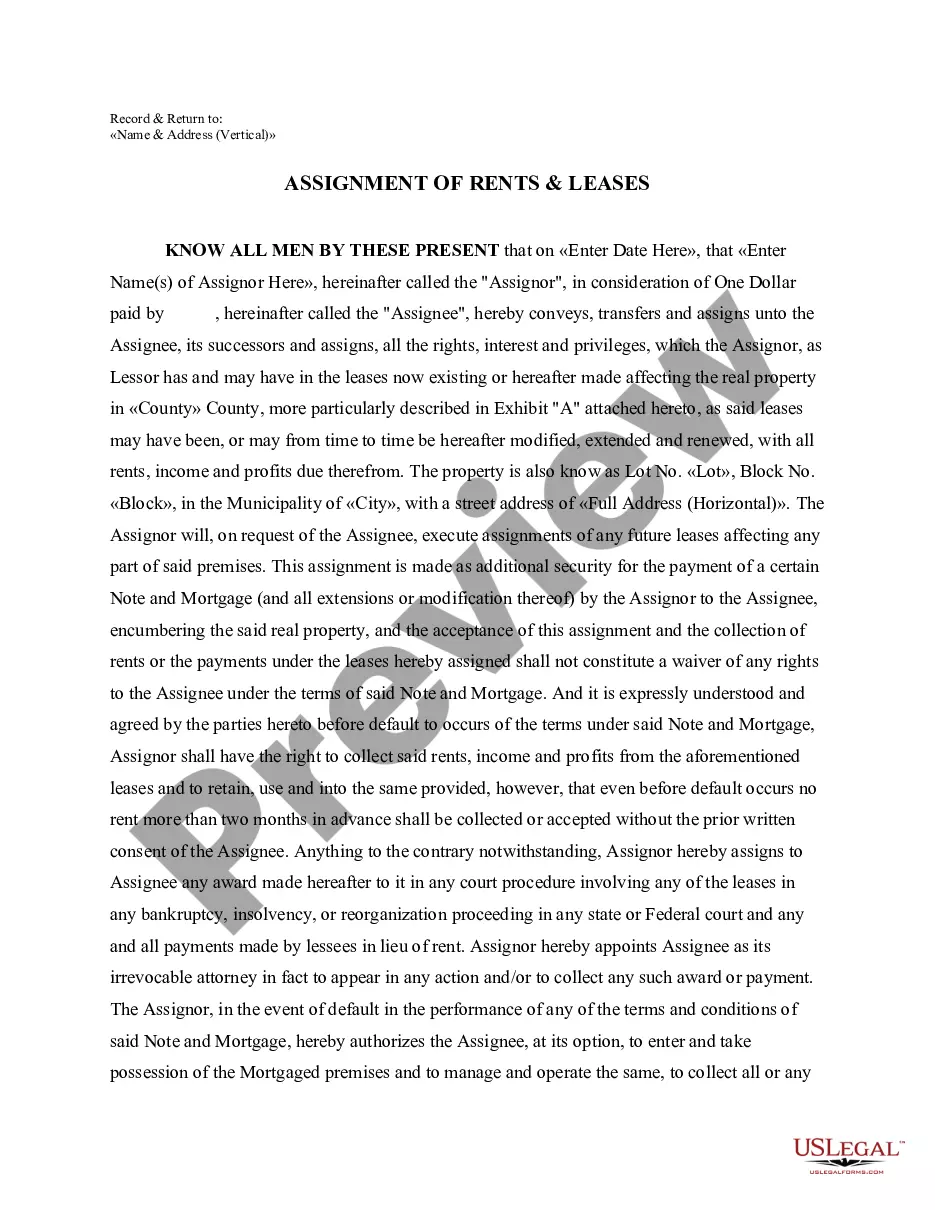
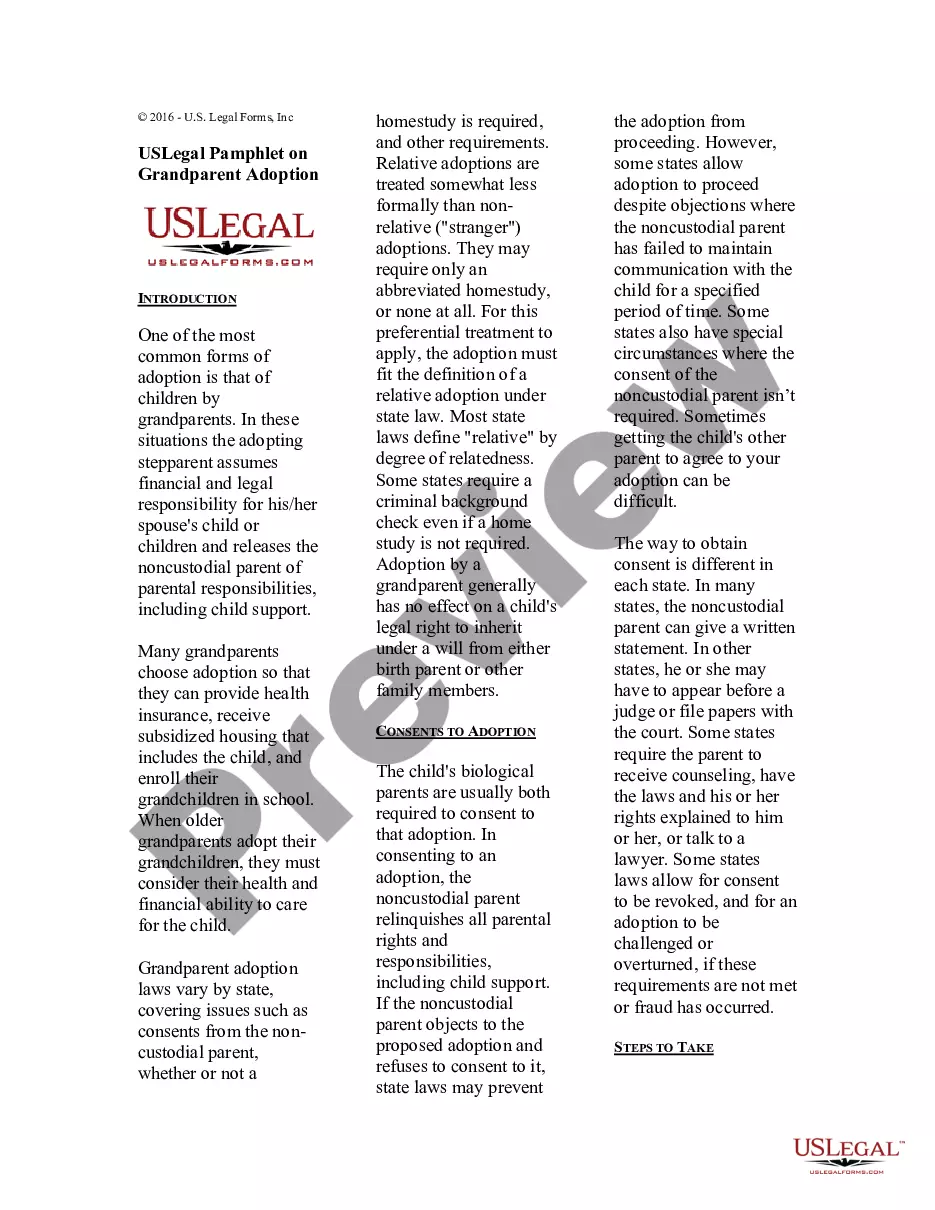
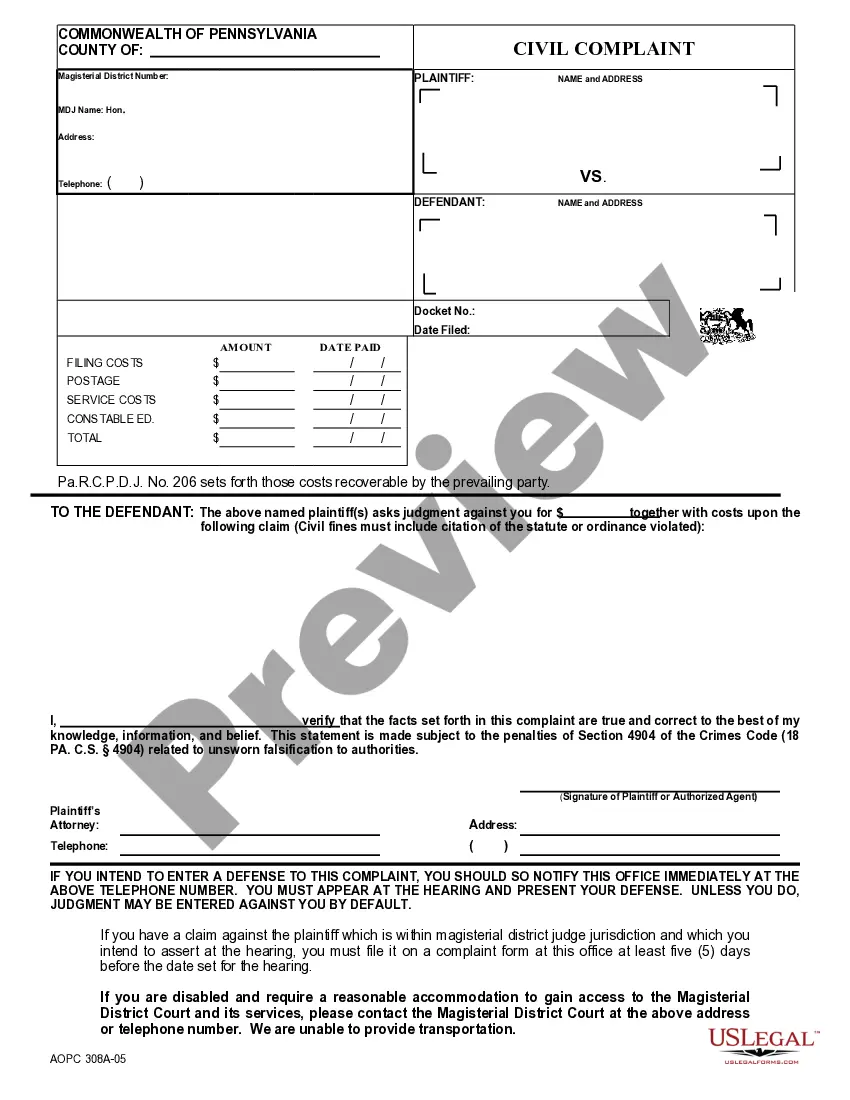
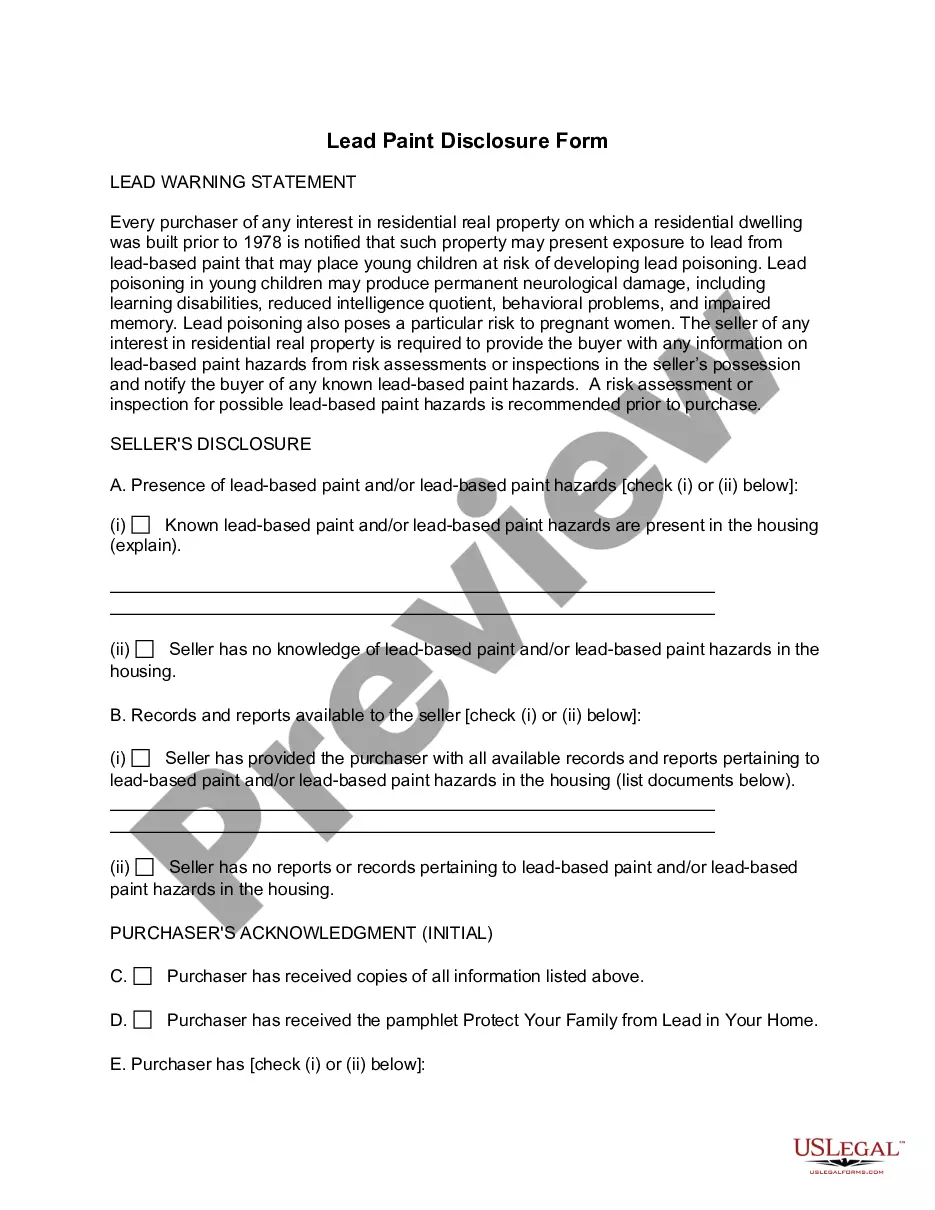
How to fill out Louisiana Petition For Writ Of Habeas Corpus?
Whether for commercial purposes or personal matters, everyone must handle legal situations at some point in their lives.
Completing legal documentation requires meticulous attention, starting with selecting the correct form template.
Once it is saved, you can fill out the form using editing software or print it and complete it by hand. With an extensive US Legal Forms library available, you never have to waste time searching for the right template online. Utilize the library’s user-friendly navigation to find the correct form for any situation.
- For example, if you choose an incorrect version of a Sample Petition For Writ Of Habeas Corpus Child Custody Forms California, it will be rejected upon submission.
- Thus, it is crucial to have a reliable source of legal documents like US Legal Forms.
- If you need to obtain a Sample Petition For Writ Of Habeas Corpus Child Custody Forms California template, follow these straightforward steps.
- Locate the sample you require using the search bar or catalog browsing.
- Review the form’s details to confirm it corresponds to your case, state, and county.
- Click on the form’s preview to examine it.
- If it is the wrong document, return to the search feature to find the Sample Petition For Writ Of Habeas Corpus Child Custody Forms California template you need.
- Download the template if it satisfies your requirements.
- If you possess a US Legal Forms account, simply click Log in to access previously saved documents in My documents.
- In case you do not have an account yet, you can download the form by clicking Buy now.
- Select the appropriate payment option.
- Complete the account registration form.
- Choose your payment method: utilize a credit card or PayPal account.
- Select the file format you prefer and download the Sample Petition For Writ Of Habeas Corpus Child Custody Forms California.
Form popularity
FAQ
Generally, a habeas petition must allege: (1) the identity of the petitioner and the location of his custody; (2) the court order which led to the petitioner's restraint; (3) an illegal restraint on the petitioner's liberty; (4) why the petition is being filed in the appellate court; (5) there is no plain, speedy, and ...
A writ of habeas corpus is used to bring a prisoner or other detainee (e.g. institutionalized mental patient) before the court to determine if the person's imprisonment or detention is lawful. A habeas petition proceeds as a civil action against the State agent (usually a warden) who holds the defendant in custody.
Options for Custody Enforcement If a parent is keeping the child in violation of the custody order, the court can issue a writ of habeas corpus, which stipulates that the child must be brought to court and returned to the custodial parent. The court can be petitioned by one parent to modify the custody order.
For example, if an individual was convicted on the basis that their skin color matched that of the perpetrator ing to eyewitnesses, but there is no other evidence against them, then the individual can appeal for habeas corpus in order to be freed from imprisonment.
You may file a petition for a writ of habeas corpus under 28 U.S.C. § 2254 if you are in custody pursuant to the judgment of a state court in violation of the federal constitution or federal statutes. You may challenge either the fact or duration of your state sentence.