Living Trust Louisiana Without Beneficiaries
Description
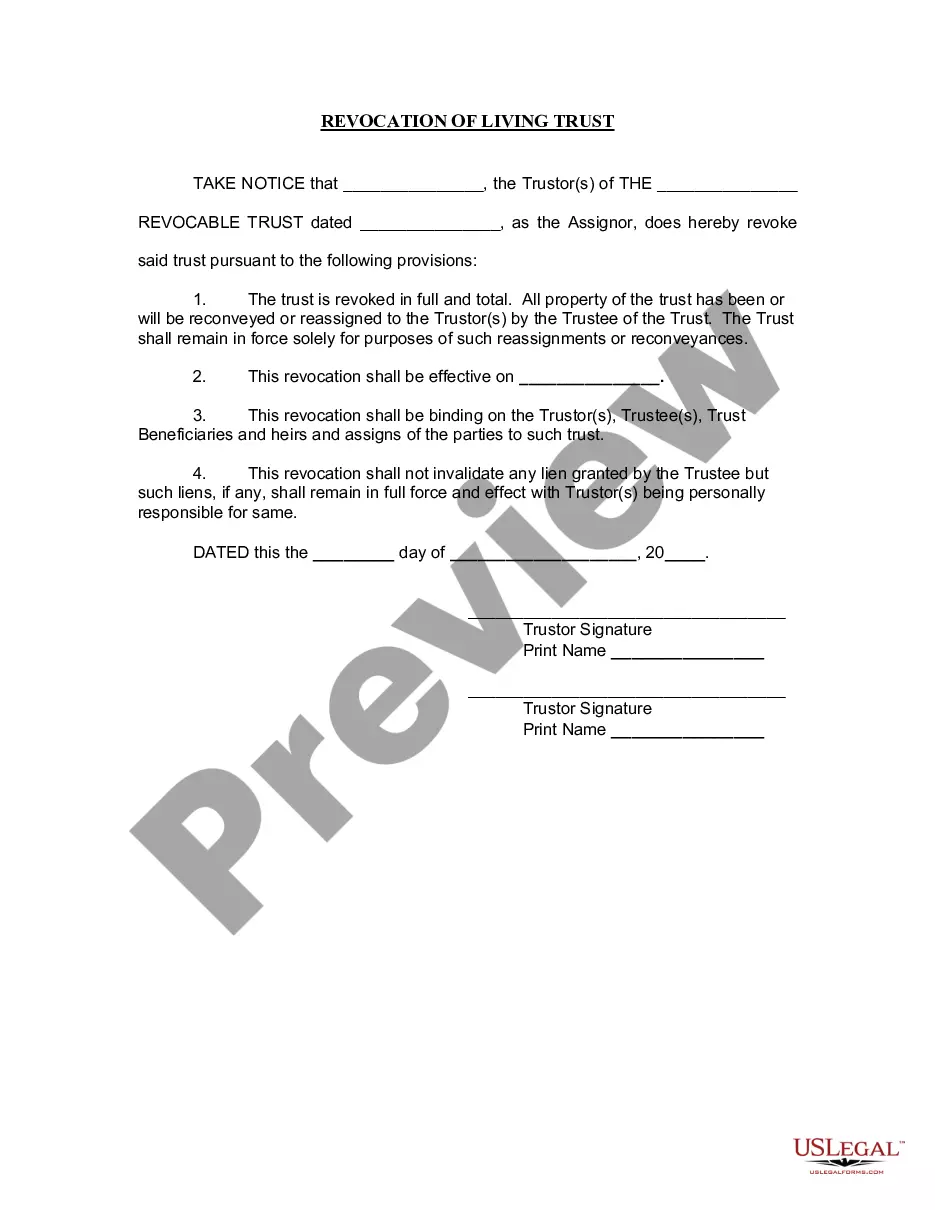
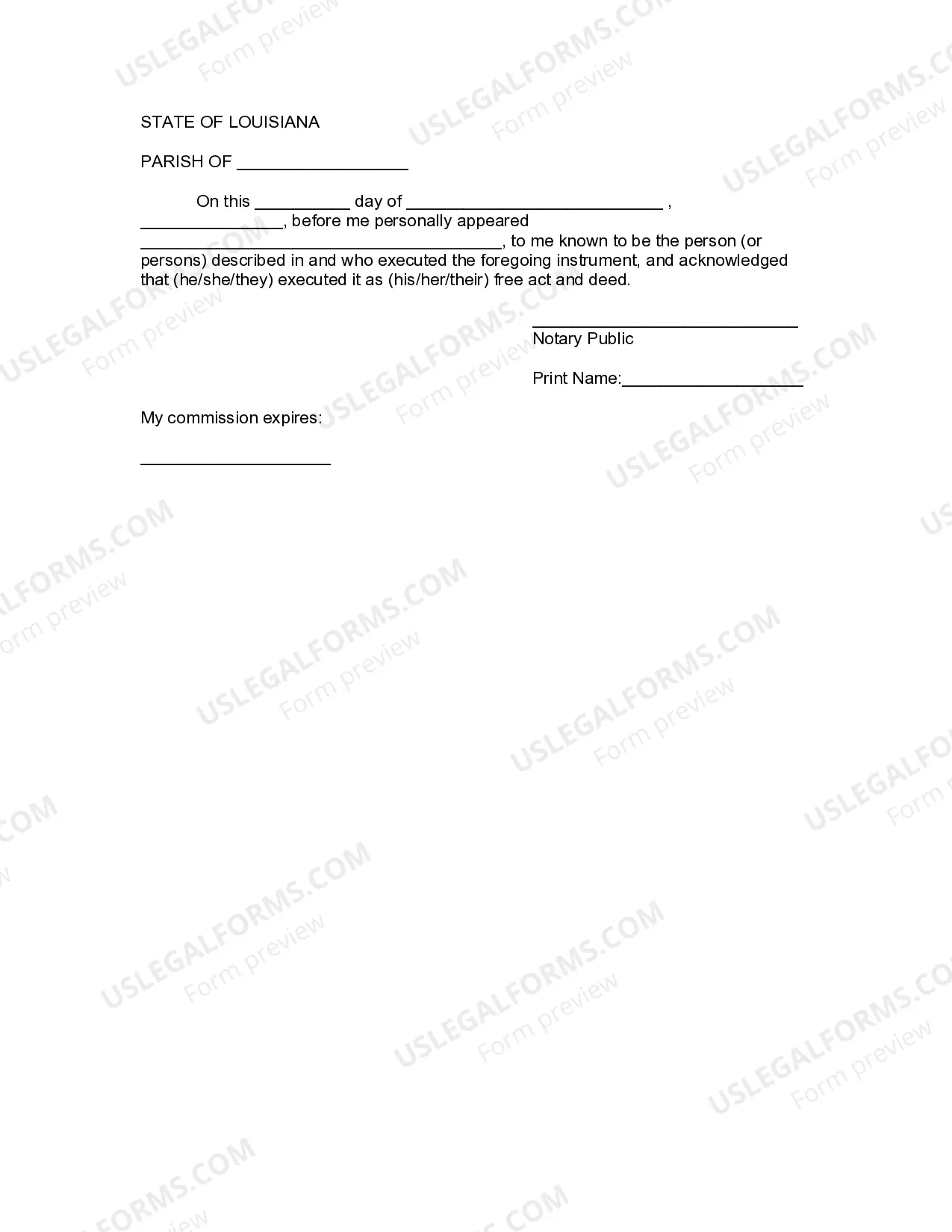
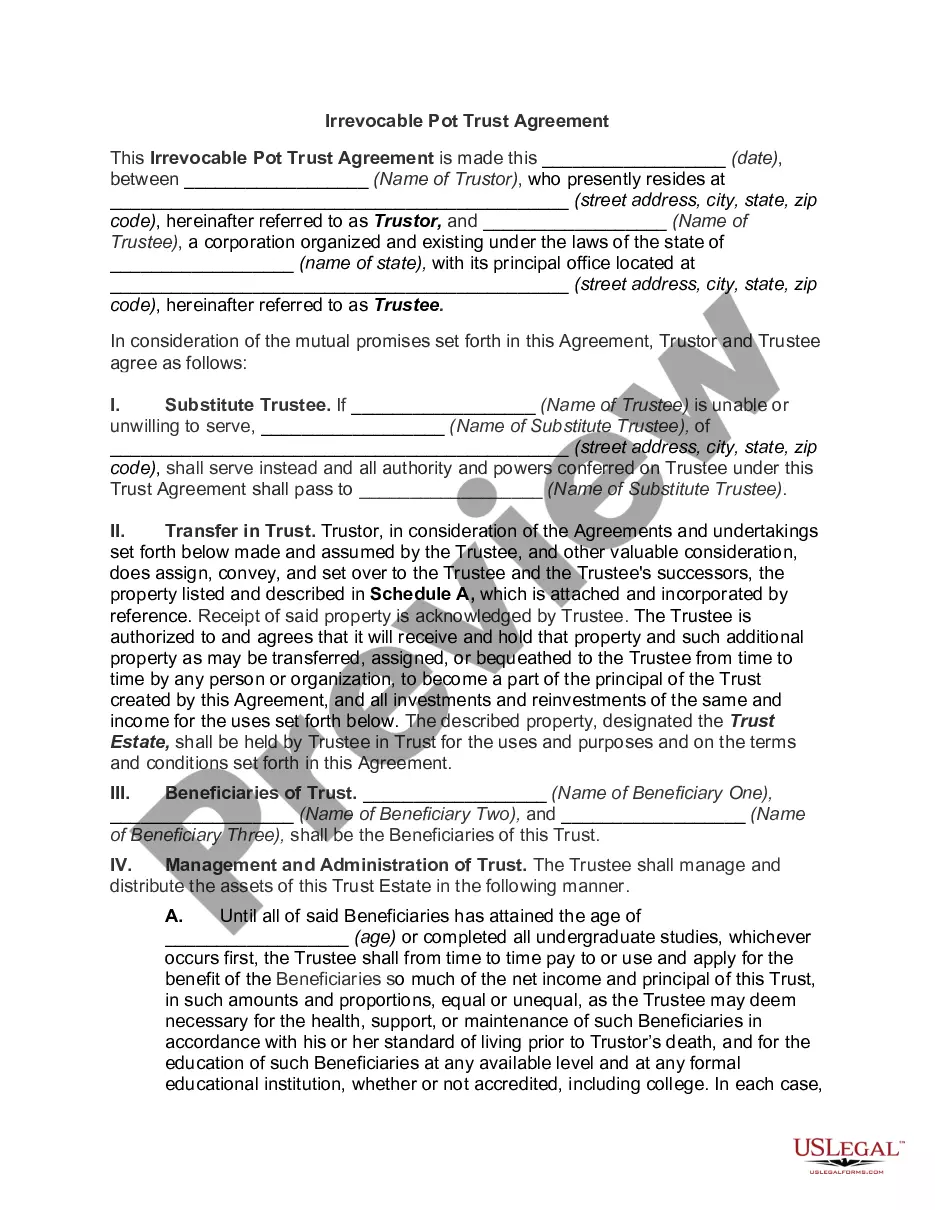

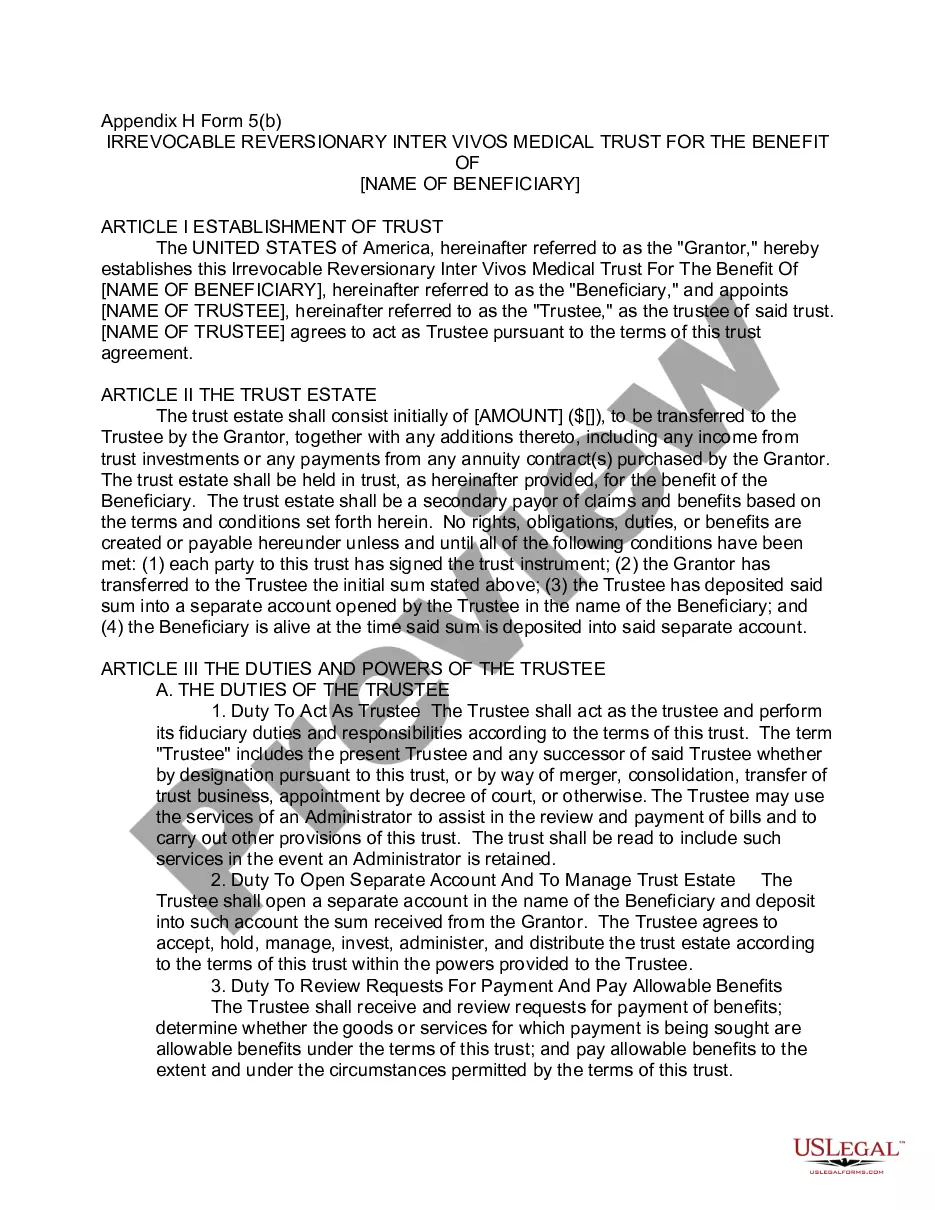
Get your form ready online
Our built-in tools help you complete, sign, share, and store your documents in one place.
Make edits, fill in missing information, and update formatting in US Legal Forms—just like you would in MS Word.
Download a copy, print it, send it by email, or mail it via USPS—whatever works best for your next step.
Sign and collect signatures with our SignNow integration. Send to multiple recipients, set reminders, and more. Go Premium to unlock E-Sign.
If this form requires notarization, complete it online through a secure video call—no need to meet a notary in person or wait for an appointment.
We protect your documents and personal data by following strict security and privacy standards.

Make edits, fill in missing information, and update formatting in US Legal Forms—just like you would in MS Word.

Download a copy, print it, send it by email, or mail it via USPS—whatever works best for your next step.

Sign and collect signatures with our SignNow integration. Send to multiple recipients, set reminders, and more. Go Premium to unlock E-Sign.

If this form requires notarization, complete it online through a secure video call—no need to meet a notary in person or wait for an appointment.

We protect your documents and personal data by following strict security and privacy standards.
Looking for another form?







Form popularity
FAQ
While it is technically possible to set up a trust without a designated beneficiary, this approach can lead to significant complications. Without beneficiaries, the assets may end up going through probate, countering the primary purpose of living trusts. To ensure the effectiveness of your living trust in Louisiana, always include clear beneficiaries who can inherit your assets.
One disadvantage of placing your house in a living trust is that it may affect your eligibility for certain government benefits, such as Medicaid. Additionally, there could be costs involved in creating and maintaining the trust. It’s essential to weigh these factors against the benefits of managing your assets through a living trust in Louisiana for your unique situation.
A living trust in Louisiana allows you to manage your assets during your lifetime and specify how they should be distributed upon your passing. You, as the grantor, retain control over the trust assets and can make changes as needed. After your death, the trust assets avoid probate, simplifying the transfer process to your designated beneficiaries.
If a living trust lacks beneficiaries, the assets held within the trust can become part of the owner's estate after their death. This situation often results in the trust being treated like any other estate asset. To prevent complications, ensure that your trust identifies beneficiaries who will inherit the assets, creating a smoother transition.
When a living trust in Louisiana has no designated beneficiaries, the trust assets typically revert to the grantor's estate upon their passing. This means the assets will likely go through the probate process, delaying distribution and potentially leading to additional costs. To avoid this scenario, it is crucial to establish clear beneficiaries when creating a living trust in Louisiana.
A trust can be terminated in several ways, including by the trust's purpose being fulfilled, a court's decision, or the consent of both the trustee and beneficiaries. Understanding these termination methods is crucial, especially when managing a living trust Louisiana without beneficiaries, as proper planning can prevent unwanted legal issues down the road.
Yes, you can absolutely create a trust fund for yourself. This method allows you to manage your assets while enjoying potential tax benefits and protection from creditors. A living trust Louisiana without beneficiaries can serve your needs, but it is wise to consult professionals at US Legal Forms to ensure you set it up correctly.
If a trust has no designated beneficiary, the assets may eventually revert to the state or the decedent's estate. This can lead to lengthy legal procedures and complications during asset distribution. Hence, establishing a living trust Louisiana without beneficiaries should always include naming at least one beneficiary to facilitate easier management of your assets.
The five-year rule for trusts primarily pertains to Medicaid and tax regulations. Generally, this rule states that any assets transferred to a trust must be reported if you apply for Medicaid benefits within five years of that transfer. Understanding this rule helps you plan a living trust Louisiana without beneficiaries more effectively, ensuring compliance with financial regulations.
When a living trust in Louisiana has no beneficiaries, the assets in the trust can become problematic. Typically, the trust assets may revert to the estate of the trust creator. This situation underscores the importance of properly designating beneficiaries while setting up a living trust Louisiana without beneficiaries to avoid future complications.
