For Child
Description


Get your form ready online
Our built-in tools help you complete, sign, share, and store your documents in one place.
Make edits, fill in missing information, and update formatting in US Legal Forms—just like you would in MS Word.
Download a copy, print it, send it by email, or mail it via USPS—whatever works best for your next step.
Sign and collect signatures with our SignNow integration. Send to multiple recipients, set reminders, and more. Go Premium to unlock E-Sign.
If this form requires notarization, complete it online through a secure video call—no need to meet a notary in person or wait for an appointment.
We protect your documents and personal data by following strict security and privacy standards.

Make edits, fill in missing information, and update formatting in US Legal Forms—just like you would in MS Word.

Download a copy, print it, send it by email, or mail it via USPS—whatever works best for your next step.

Sign and collect signatures with our SignNow integration. Send to multiple recipients, set reminders, and more. Go Premium to unlock E-Sign.

If this form requires notarization, complete it online through a secure video call—no need to meet a notary in person or wait for an appointment.

We protect your documents and personal data by following strict security and privacy standards.
Looking for another form?








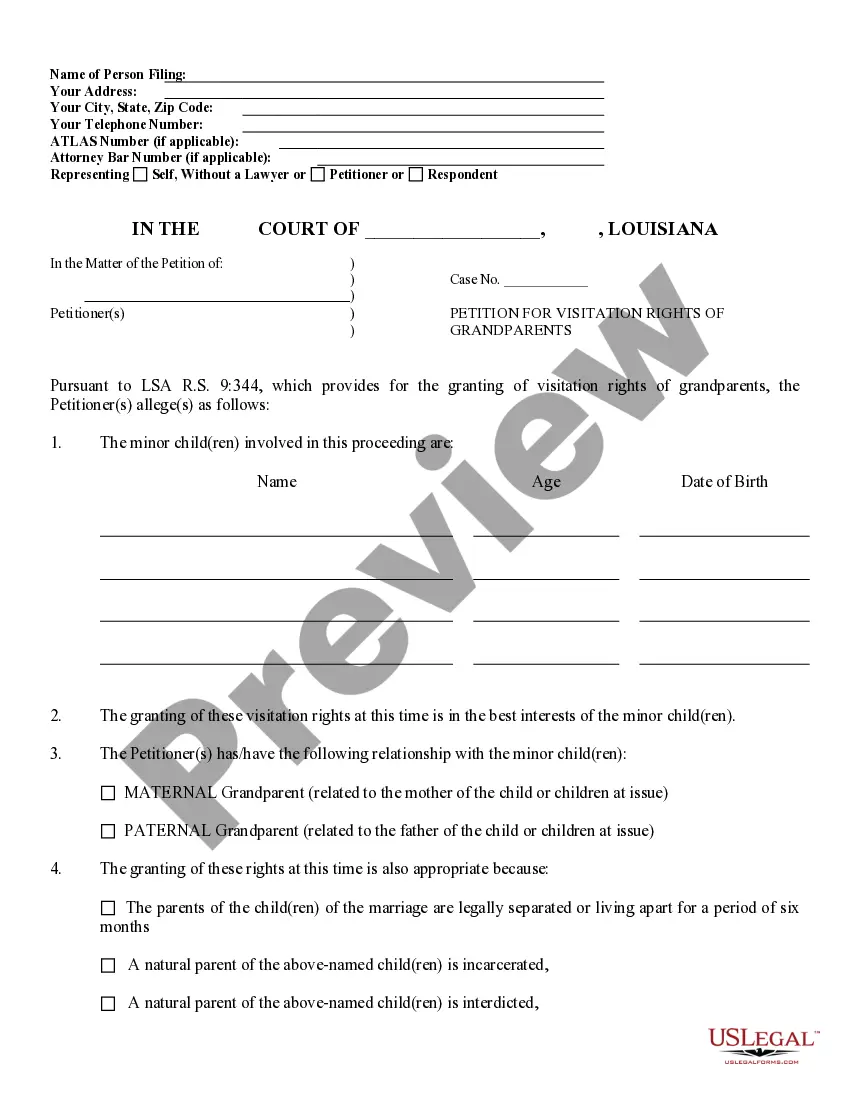
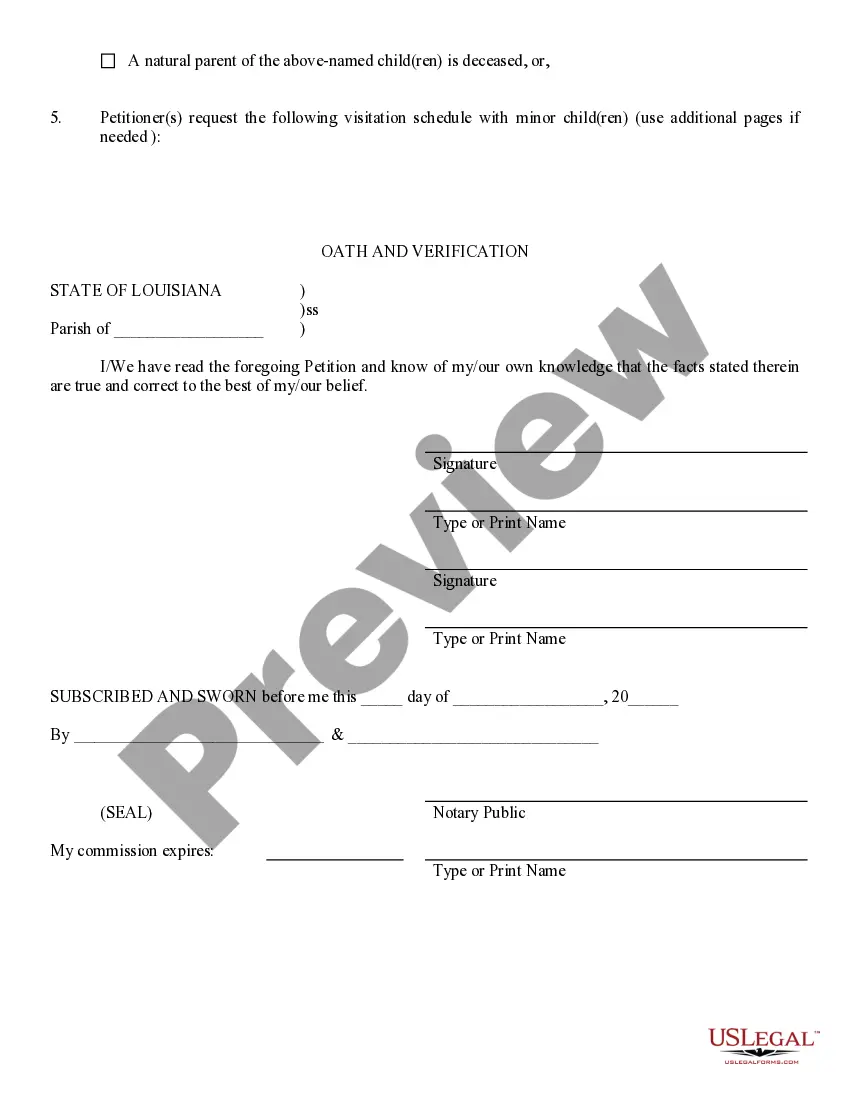
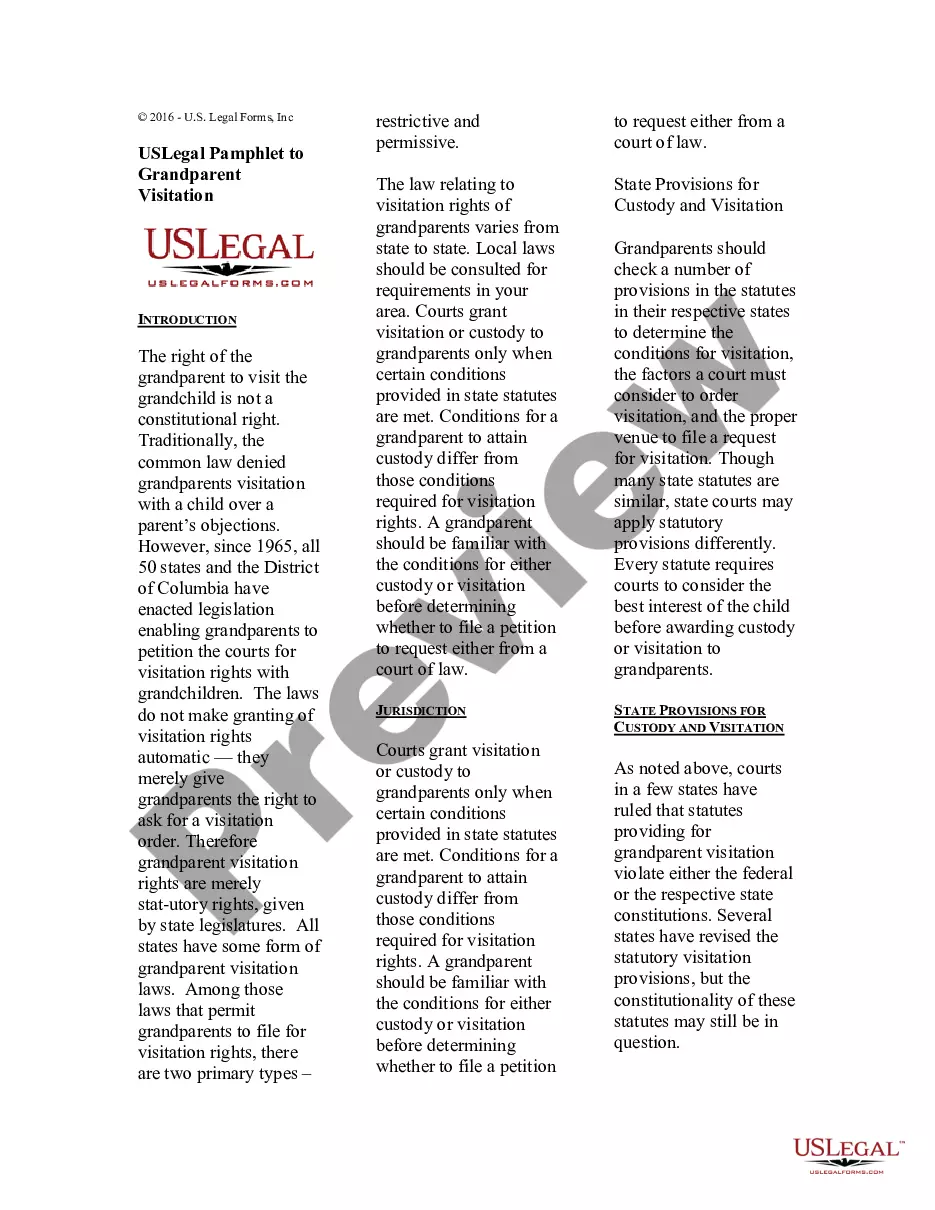
How to fill out Louisiana Petition For Visitation Rights Of Grandparents?
- If you’re an existing user, log in to your account and download your desired form template by clicking the Download button. Ensure your subscription is active; if not, renew it according to your payment plan.
- For new users, first check the preview and description of the forms to confirm they suit your needs and comply with local jurisdiction requirements.
- If necessary, search for other templates using the Search tab to find a form that meets your specific requirements.
- Proceed to purchase the chosen document by clicking the Buy Now button and selecting a suitable subscription plan. Registration is required to access the library's resources.
- Complete your purchase by entering your credit card details or using your PayPal account to finalize the subscription.
- Finally, download your form and save it on your device for easy access. You can also find it anytime in the My Forms section of your profile.
US Legal Forms provides a comprehensive solution for all your legal documentation needs, especially concerning child-related matters. With a robust collection of forms and direct access to legal experts, you can ensure that your documents are both accurate and legally sound.
Get started today and experience the convenience of US Legal Forms—your partner in navigating legal documentation.
Form popularity
FAQ
For child, several factors can disqualify you from the Child Tax Credit, including exceeding the income limits. Additionally, if your child does not meet age or relationship tests, you may also be ineligible. It's important to review these criteria thoroughly when preparing your tax filings. For assistance with navigating these requirements, consider exploring the help provided by US Legal Forms.
For child, the income limits for the child care credit depend on the number of children and your filing status. Generally, as your adjusted gross income increases, the percentage of eligible expenses you can claim decreases. It is essential to review the latest guidelines to understand your situation better. For a clear breakdown of eligibility, resources on US Legal Forms can be beneficial.
For child, there could be various reasons for not receiving the child and dependent care credit. This might include not meeting the eligibility criteria, such as having qualifying expenses or filing your taxes incorrectly. Ensuring that you have your documentation and understanding the requirements can help address any issues. If you need further assistance, US Legal Forms can guide you through the complexities.
For child, to claim the Child Tax Credit, there is no specific income requirement, but generally, you must have earned income. The maximum credit amount decreases as your income exceeds the established limits. Checking your income levels can help you understand if you qualify for the credit. To simplify this process, consider utilizing the resources available on US Legal Forms.
For child, Social Security benefits may be available based on your work record once you retire. If you begin receiving Social Security at age 62, your child could be eligible for benefits, especially if they are under 18 or disabled. It is crucial to understand how your retirement age can impact the benefit amount. For more specific scenarios, you might find helpful tools on US Legal Forms.
For child, the Child Tax Credit does have income limits that can affect eligibility. If your modified adjusted gross income exceeds certain thresholds, your credit amount may be reduced or phased out completely. It's essential to check your income against these limits to ensure you can benefit from this credit. For a detailed breakdown of these limits, consider exploring the resources available on the US Legal Forms platform.
To establish credit for your child, consider opening a joint account or adding them as an authorized user on your credit card. This puts them on the path to building a credit history while teaching them about responsible borrowing. Alternatively, some banks offer youth credit-building programs designed specifically for young individuals. Ultimately, it's crucial to educate them about credit management to support their financial future.
When considering where to invest a lump sum for a child, think about options like a custodial account or a 529 college savings plan. These investments offer tax advantages and help your child save for the future. Additionally, explore stocks or ETFs that align with growth trends, ensuring the investment grows over time. Always consult a financial advisor for tailored options that fit your goals.
The financial support available for a child when filing for benefits can vary significantly based on the situation. Factors like the child's needs, family income, and specific state laws all come into play. Understanding the applicable formula and requirements can help you maximize support for your child. Platforms like US Legal Forms can guide you through the necessary paperwork and regulations essential for your filings.
Custody cases usually favor the parent who can provide the most nurturing environment for the child. Stability, emotional and financial resources, and a strong bond with the child are all examined. Courts often prefer arrangements that minimize disruptions and maintain continuity in the child’s life. Understanding these factors can help you build a strong case for custody.