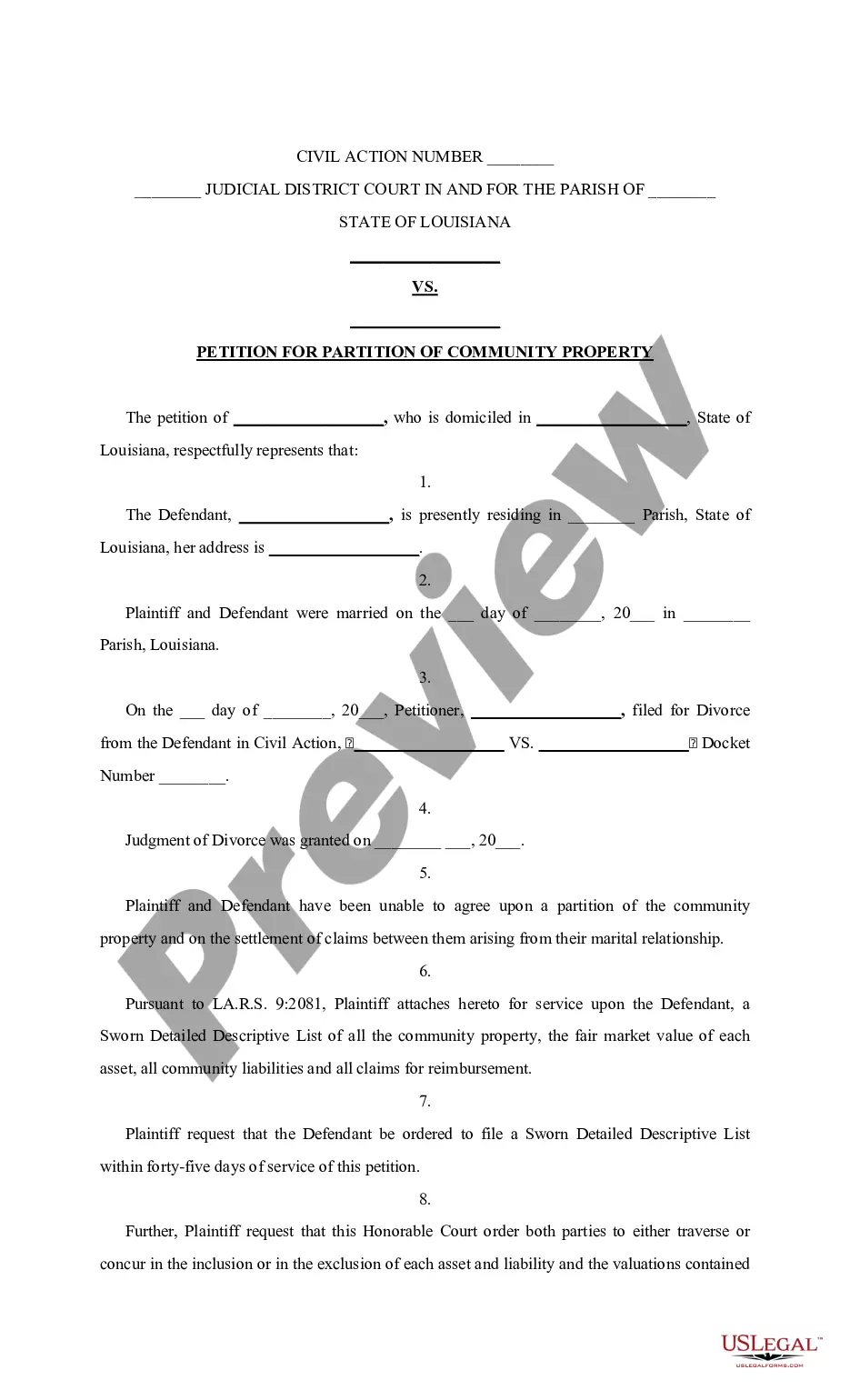
Petition For Partition Sample With Foreign Object
Description
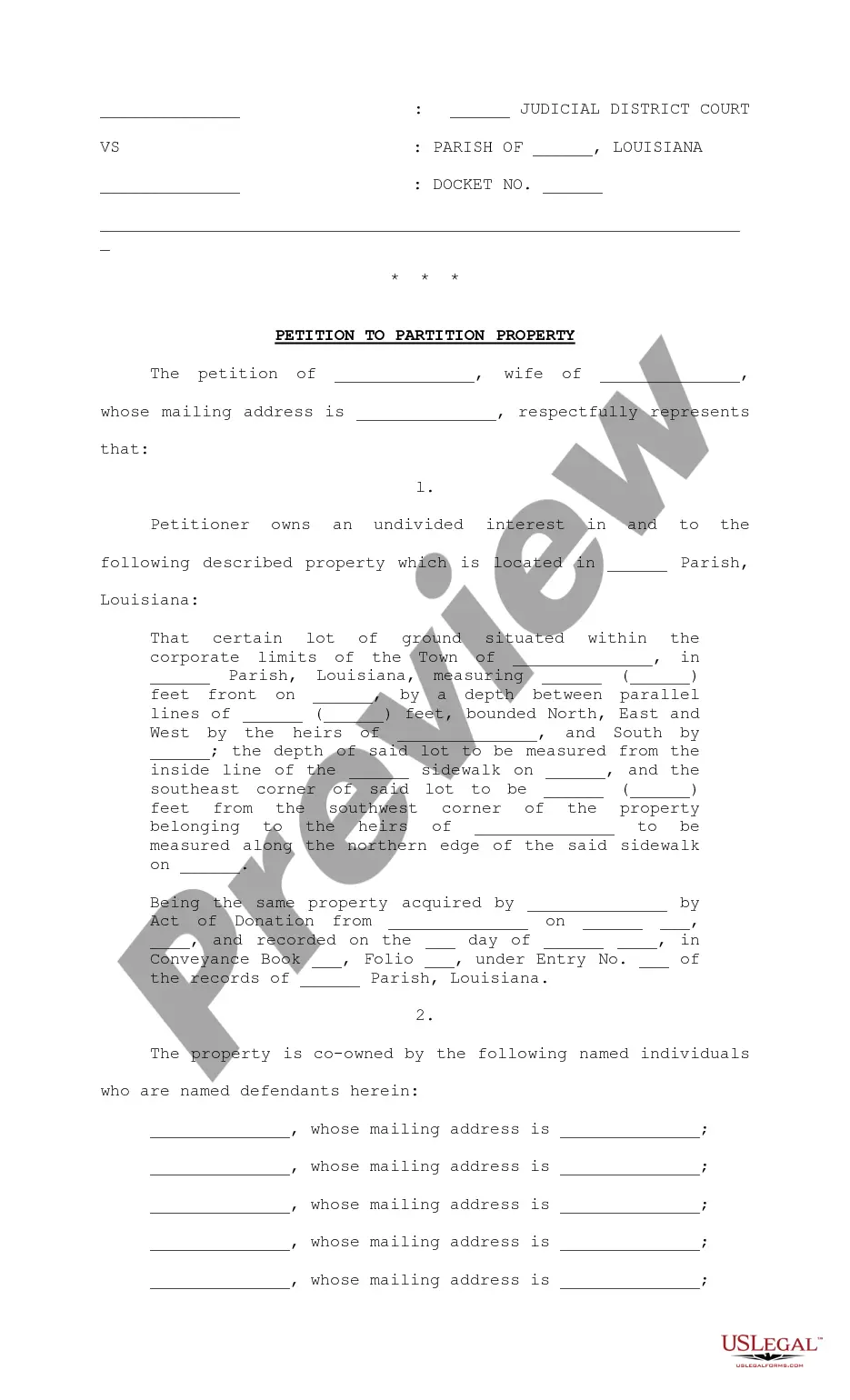
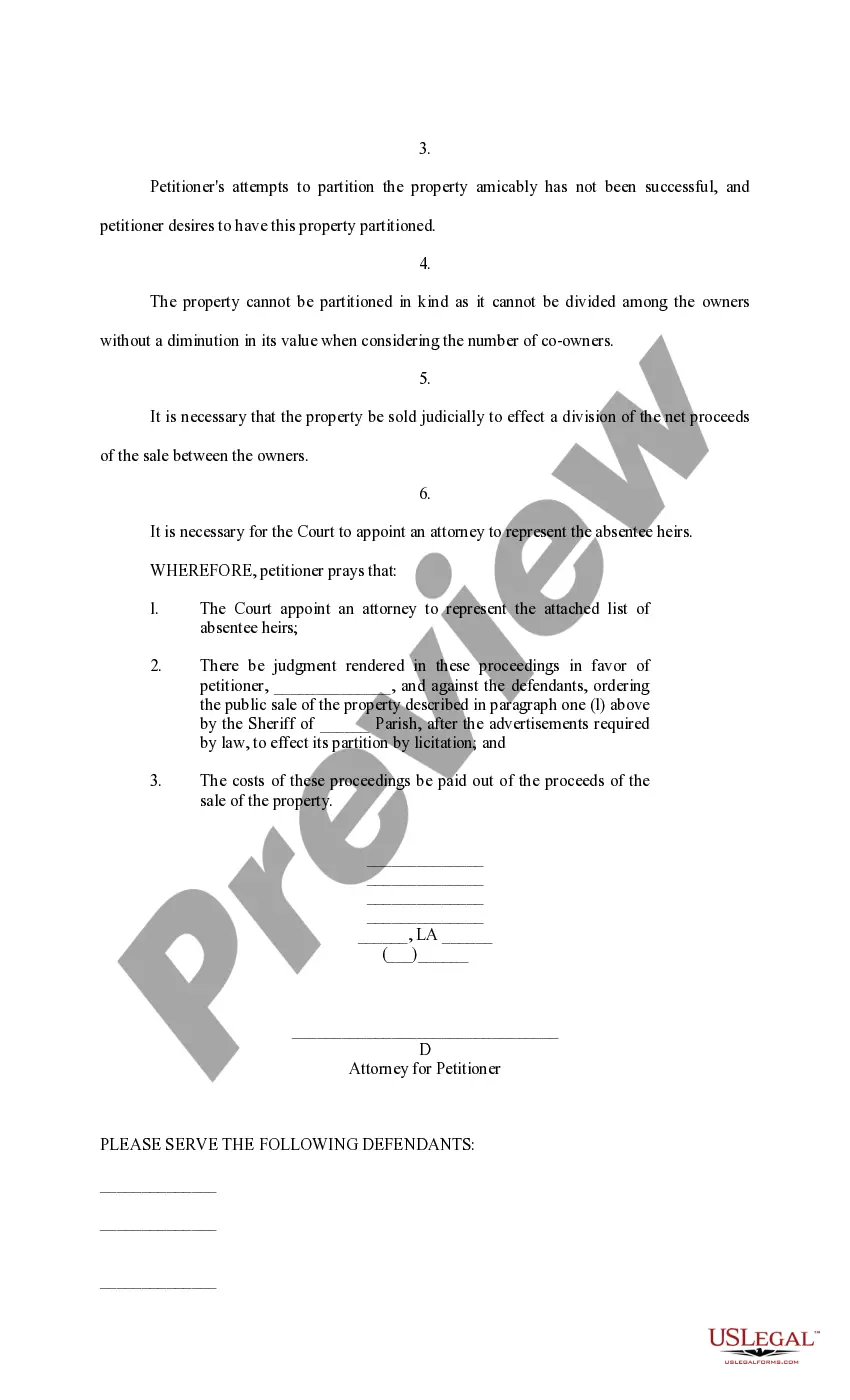

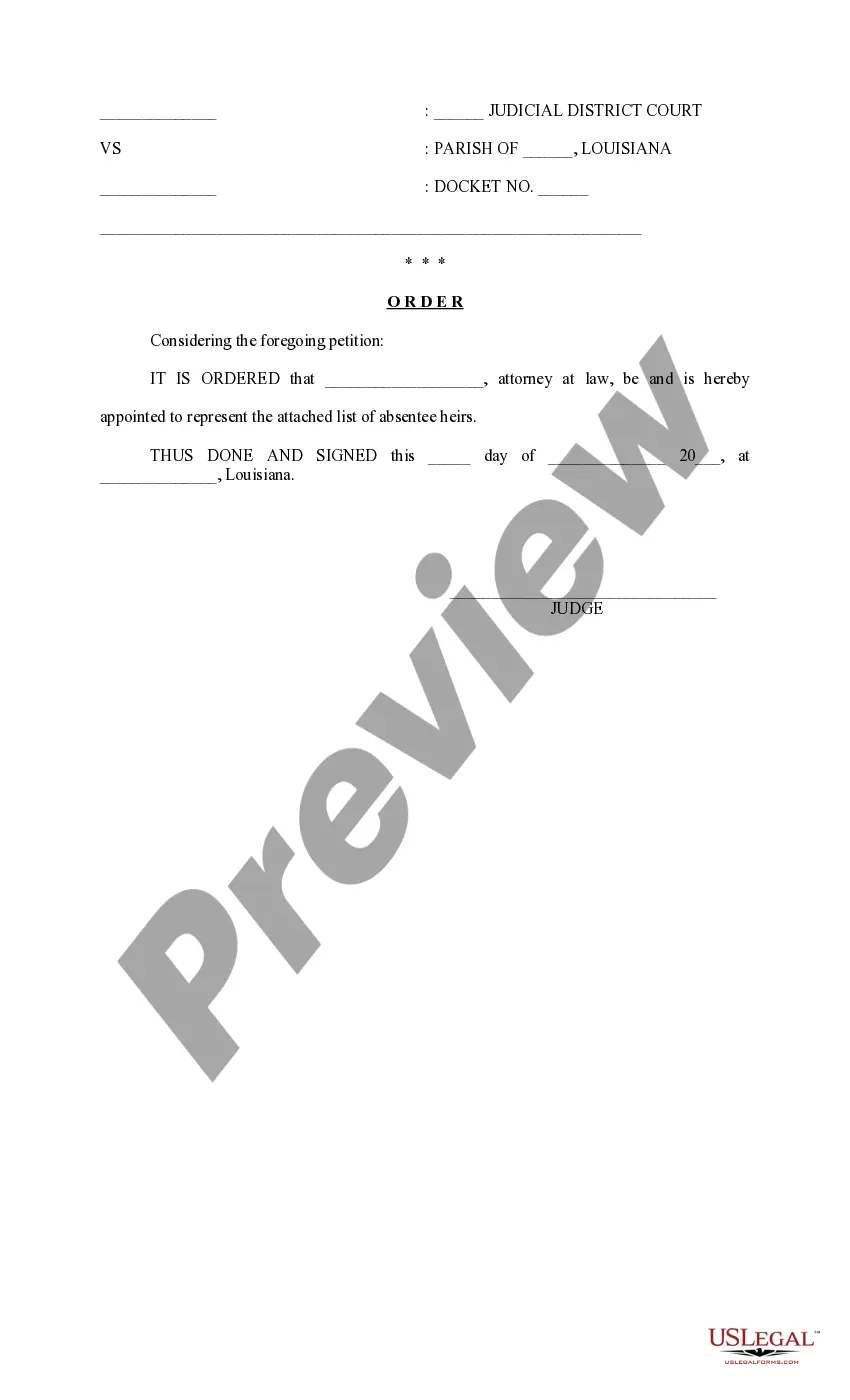
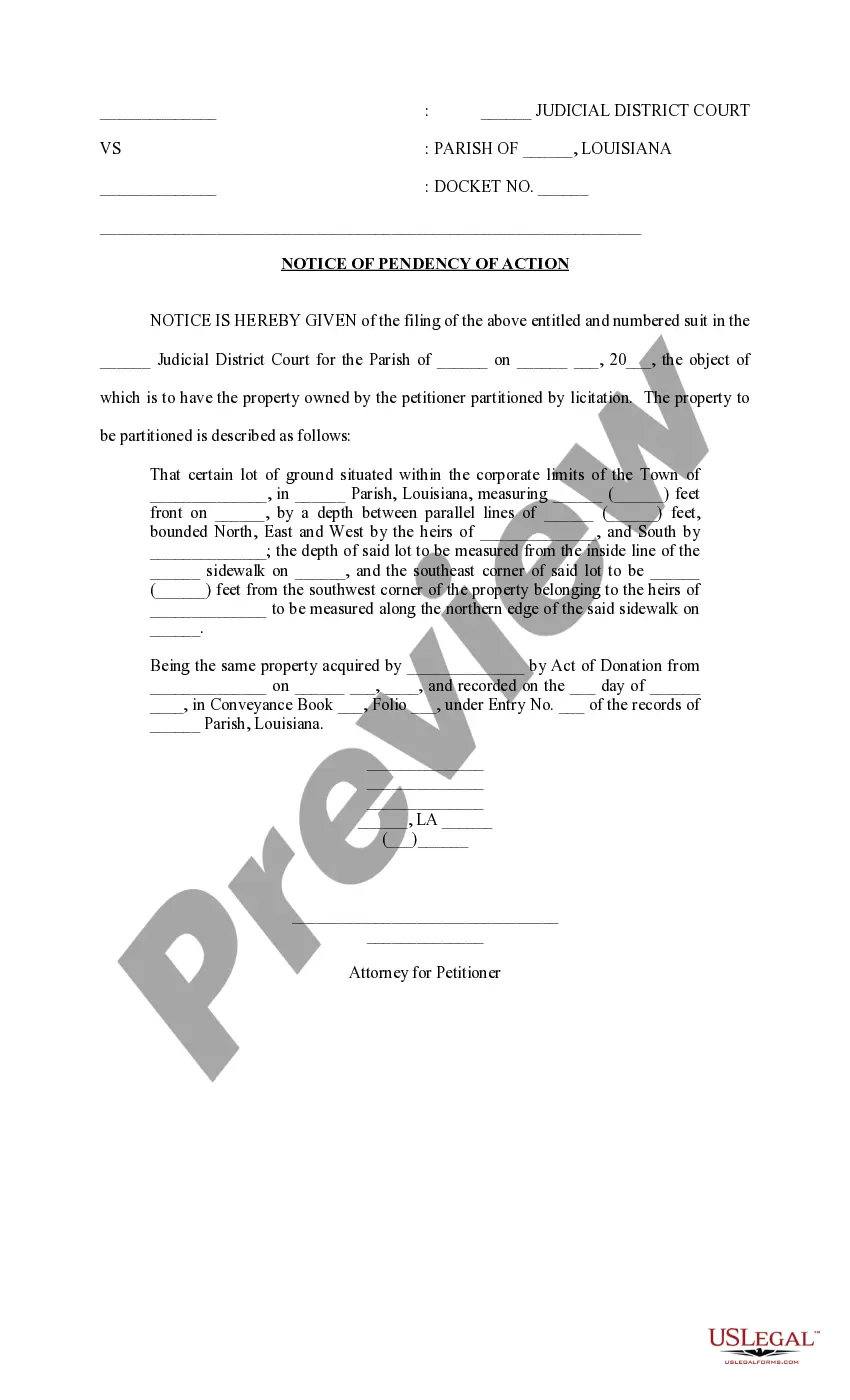

Get your form ready online
Our built-in tools help you complete, sign, share, and store your documents in one place.
Make edits, fill in missing information, and update formatting in US Legal Forms—just like you would in MS Word.
Download a copy, print it, send it by email, or mail it via USPS—whatever works best for your next step.
Sign and collect signatures with our SignNow integration. Send to multiple recipients, set reminders, and more. Go Premium to unlock E-Sign.
If this form requires notarization, complete it online through a secure video call—no need to meet a notary in person or wait for an appointment.
We protect your documents and personal data by following strict security and privacy standards.

Make edits, fill in missing information, and update formatting in US Legal Forms—just like you would in MS Word.

Download a copy, print it, send it by email, or mail it via USPS—whatever works best for your next step.

Sign and collect signatures with our SignNow integration. Send to multiple recipients, set reminders, and more. Go Premium to unlock E-Sign.

If this form requires notarization, complete it online through a secure video call—no need to meet a notary in person or wait for an appointment.

We protect your documents and personal data by following strict security and privacy standards.
Looking for another form?







How to fill out Louisiana Petition To Partition Property?
Whether for commercial reasons or personal matters, everyone must handle legal circumstances at some stage in their life.
Completing legal documents requires meticulous consideration, beginning with selecting the appropriate form template.
After downloading it, you can fill out the form using editing software, or print it and complete it by hand. With a comprehensive US Legal Forms library available, you don’t need to waste time searching for the right sample online. Utilize the library’s user-friendly navigation to find the correct template for any occasion.
- For example, if you choose an incorrect version of a Petition For Partition Sample With Foreign Object, it will be rejected upon submission.
- Hence, it is crucial to have a reliable source for legal documents like US Legal Forms.
- If you need to obtain a Petition For Partition Sample With Foreign Object template, follow these straightforward steps.
- Locate the sample you require by using the search box or catalog browsing.
- Review the form's description to confirm it aligns with your situation, state, and county.
- Click on the form’s preview to view it.
- If it’s the incorrect document, return to the search feature to find the Petition For Partition Sample With Foreign Object sample you need.
- Acquisition of the template is advisable if it satisfies your requirements.
- If you already possess a US Legal Forms account, simply click Log in to access your previously stored templates in My documents.
- If you do not have an account as of yet, you may download the form by clicking Buy now.
- Select the appropriate pricing option.
- Fill out the account registration form.
- Choose your payment method: either a credit card or PayPal account.
- Select the document format you desire and download the Petition For Partition Sample With Foreign Object.
Form popularity
FAQ
'Partition in kind' refers to the division of property into separate physical portions. Instead of selling the property and splitting the proceeds, a petition for partition sample with a foreign object may outline how to divide the land itself among current owners. This approach is beneficial when the land can be easily divided into equal portions. Owners get to retain their investment while avoiding conflict over shared use.
In a partition lawsuit, there are generally four different steps. First, the court determines each party's ownership interests. Second, the court will decide on the manner of sale. Third, the court will order the property be sold.
The party who wishes to initiate the action (the ?Plaintiff?) must file a verified complaint for partition. The court will first determine the ownership interests of each of the co-owners.
An answer to a partition action is a pleading by the defendant in response to the plaintiff's complaint for partition. In the answer, defendants have an opportunity to address the allegations contained in the plaintiff's partition action complaint.
First, the court determines each party's ownership interests. Second, the court will decide on the manner of sale. Third, the court will order the property be sold. Fourth, the proceeds from the sale will be divided between the parties based on their relative contributions to the property.
Here are some of the most common ways to win a partition suit: Getting bought out at a fair price. ... The property being sold on the open market. ... Getting a co-owner to move out of the property so it can be rented. ... Getting reimbursed for the funds you put into the property.