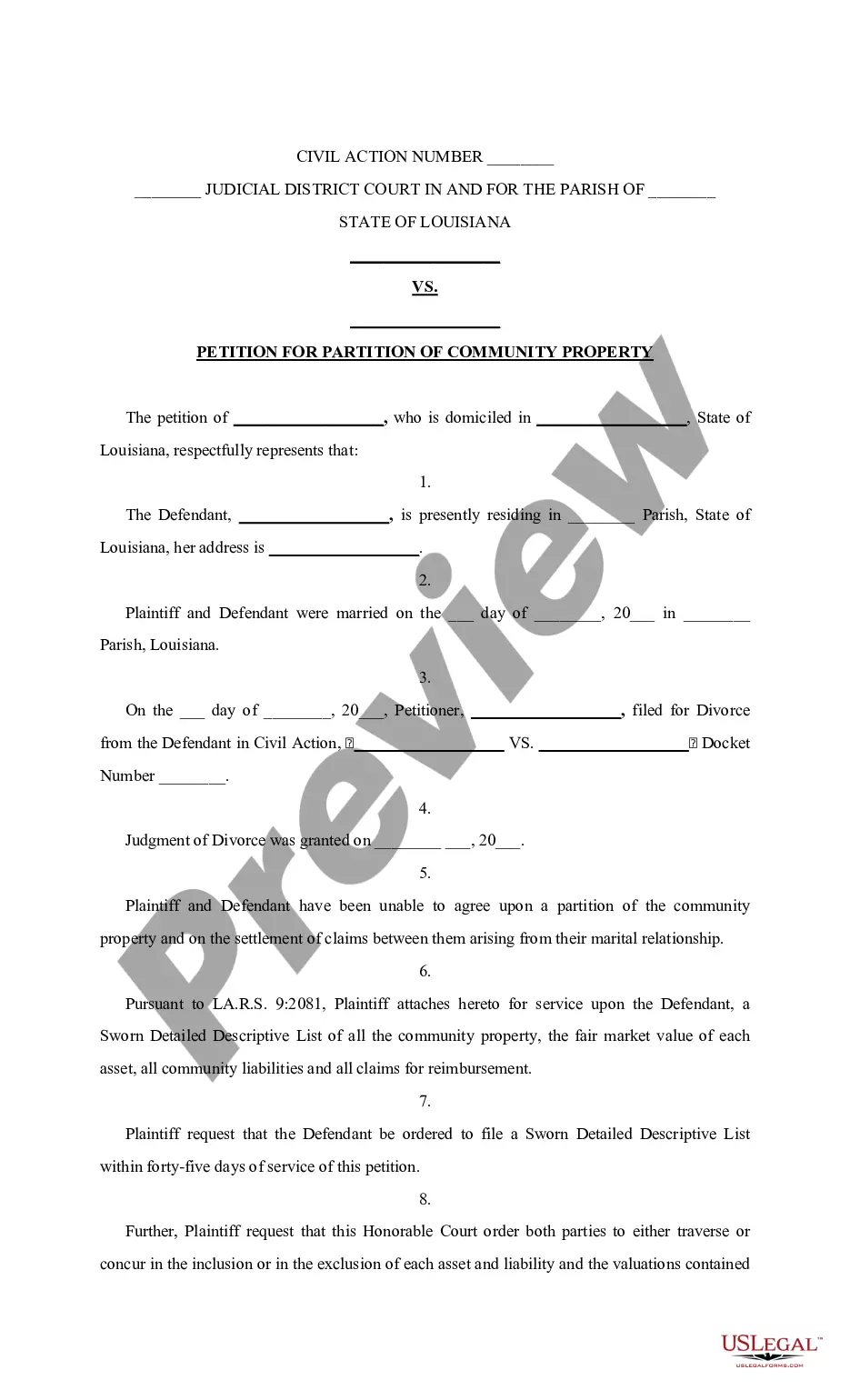
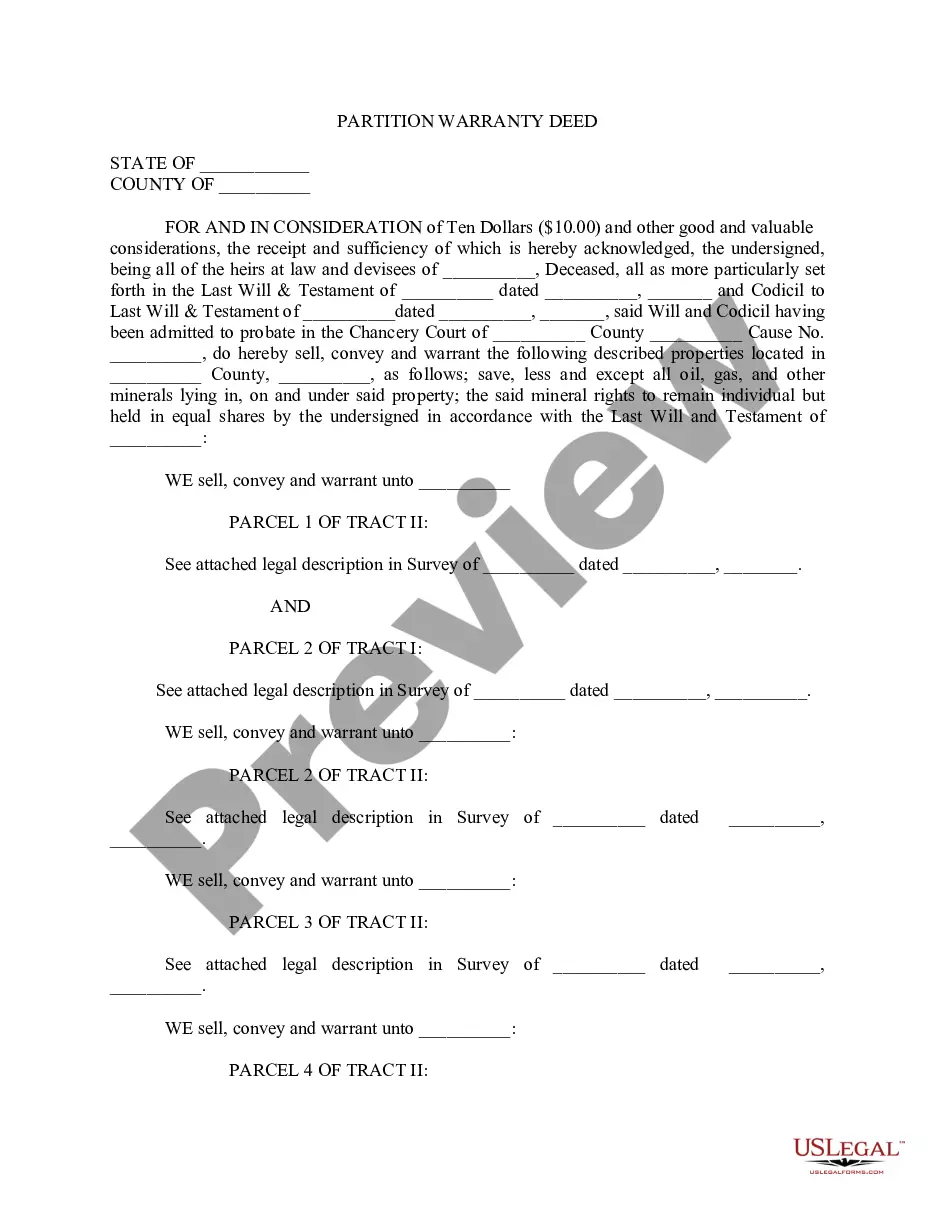
Petition For Partition Sample Form Philippines
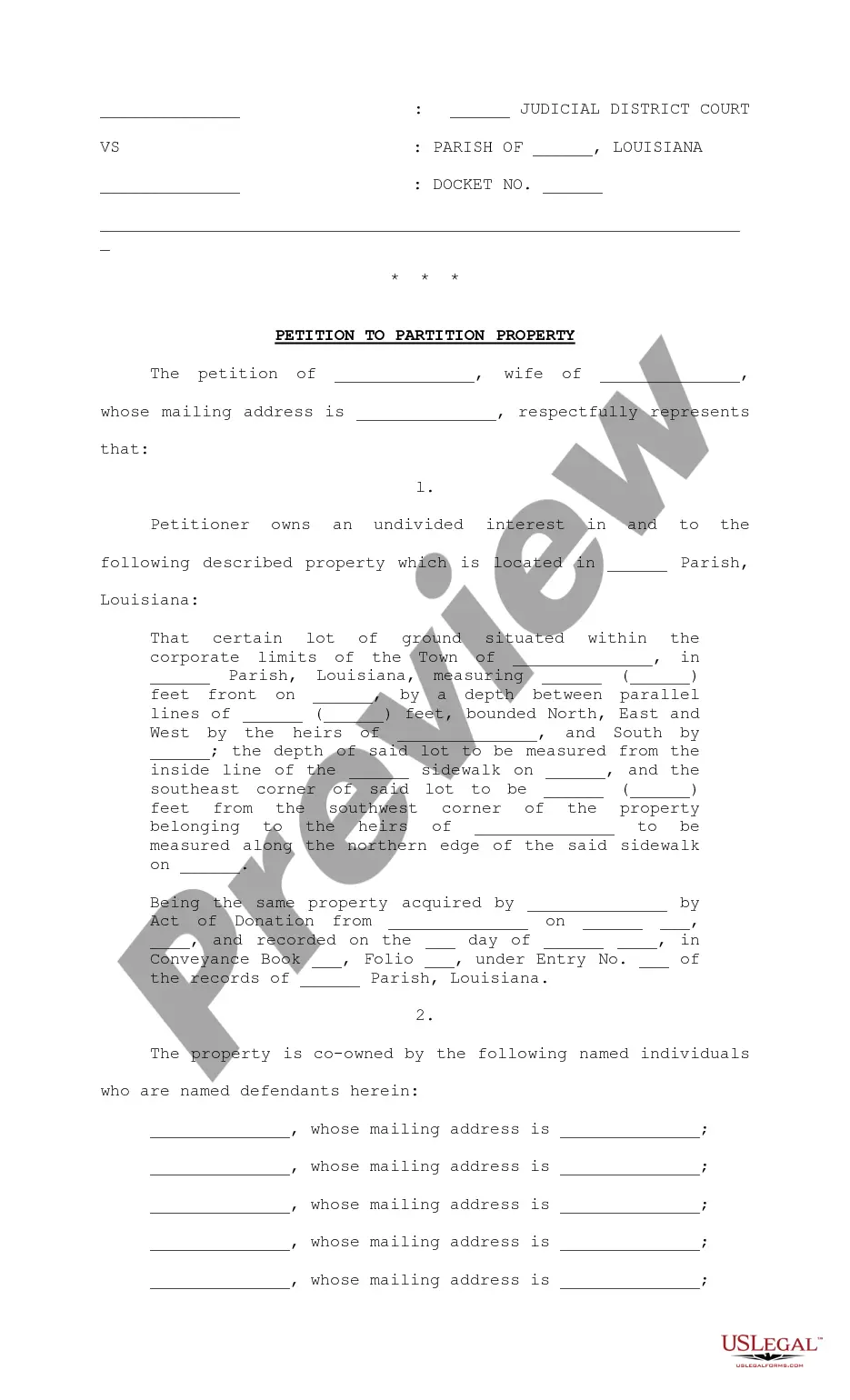
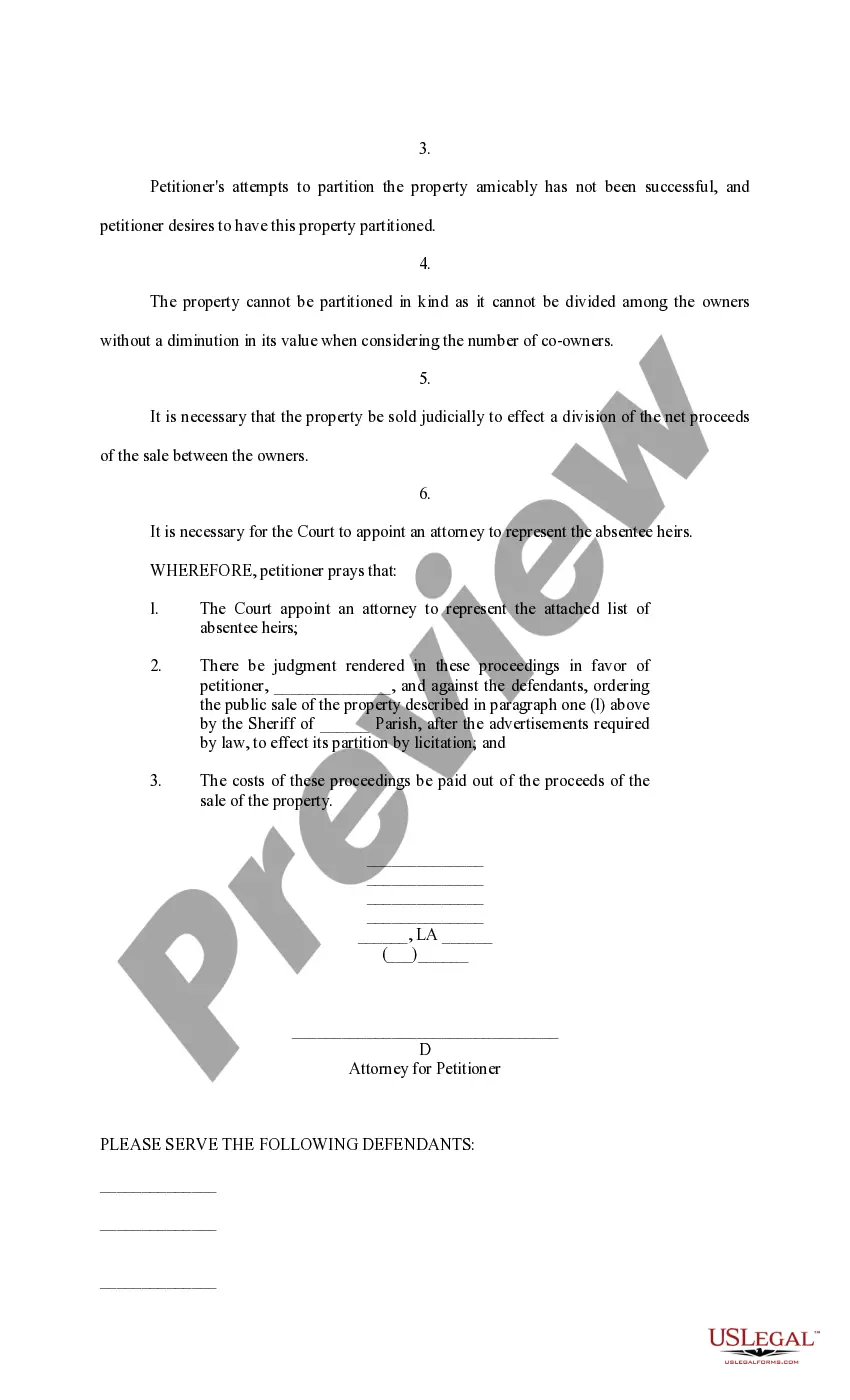
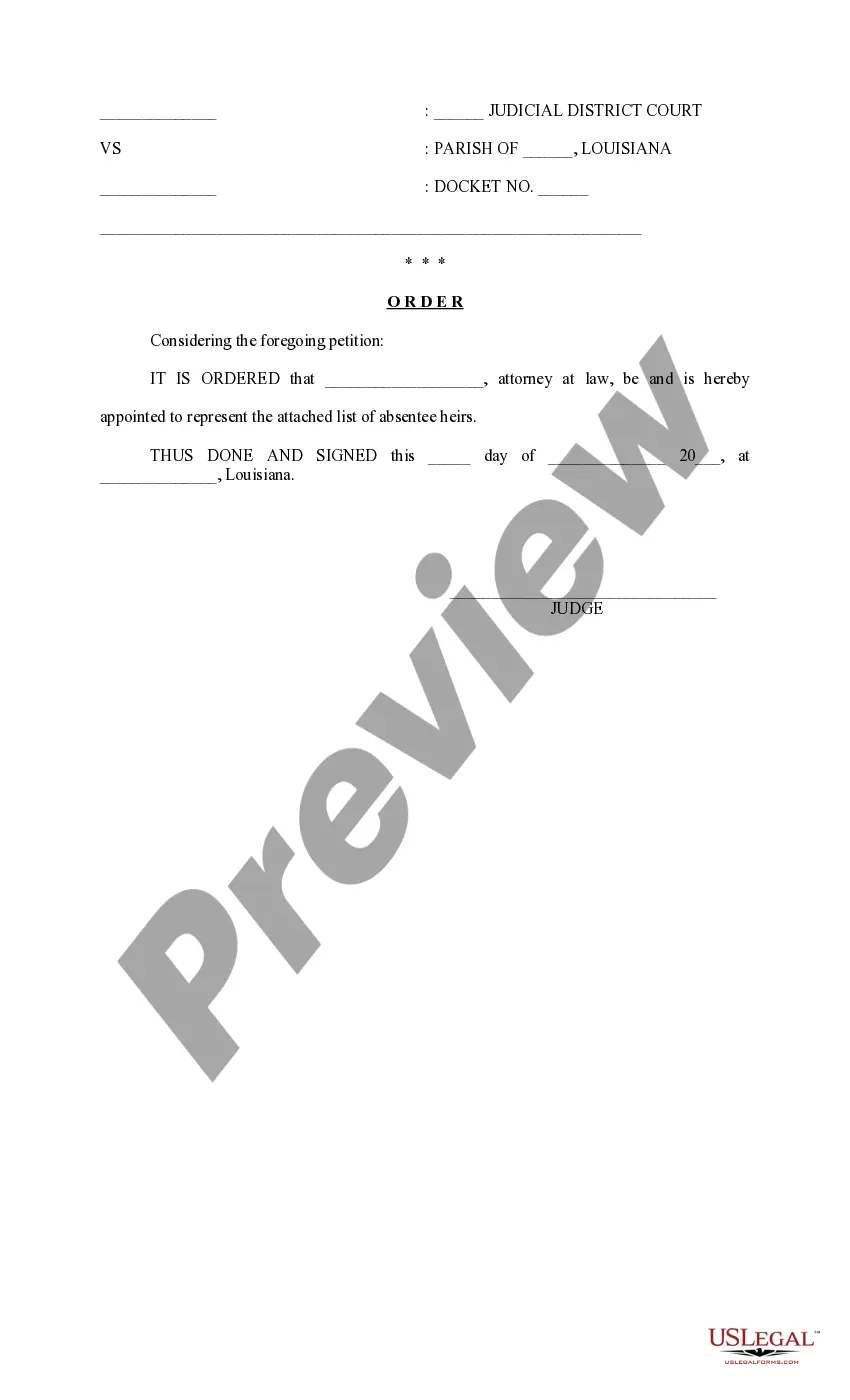
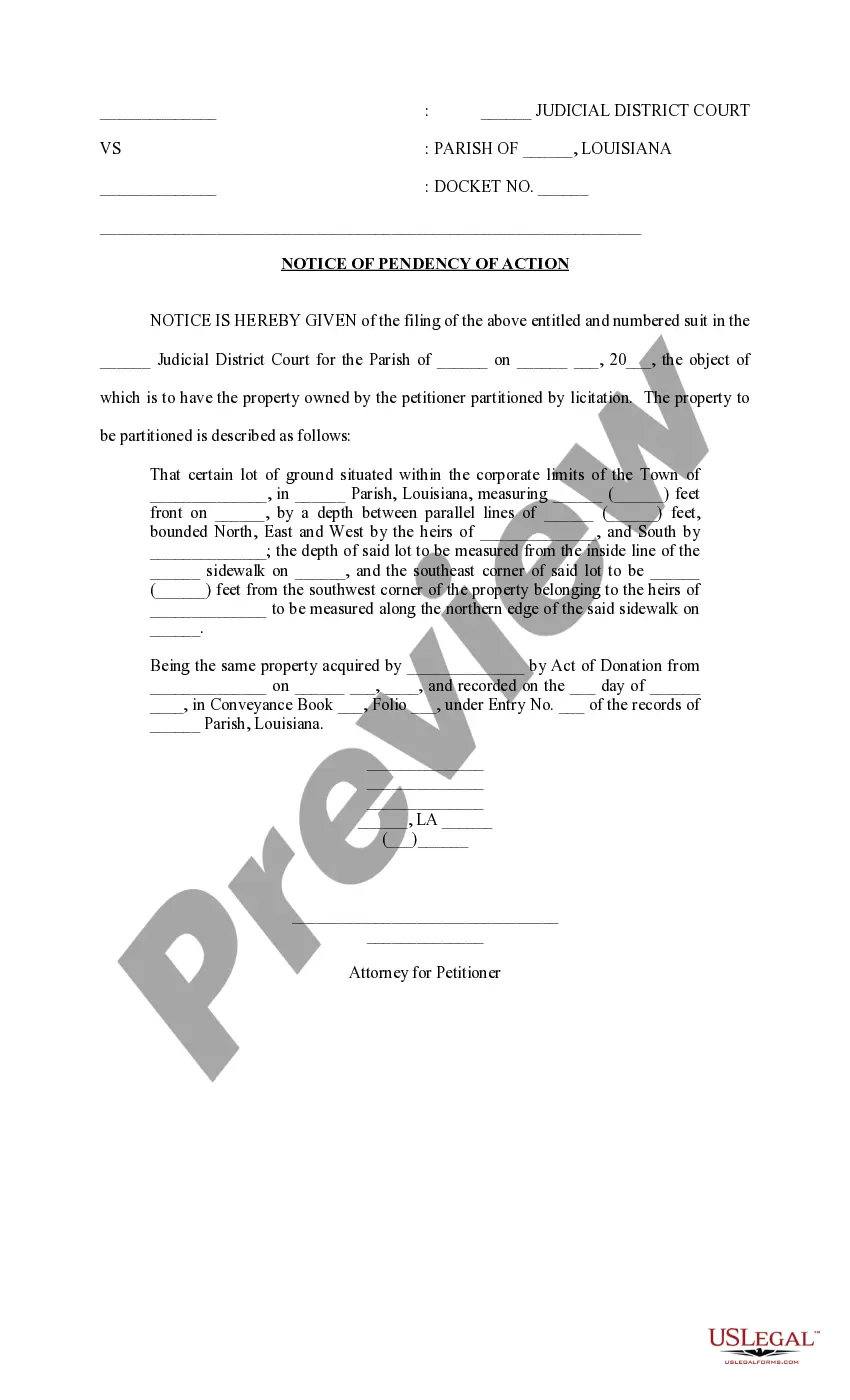
Description


Get your form ready online
Our built-in tools help you complete, sign, share, and store your documents in one place.
Make edits, fill in missing information, and update formatting in US Legal Forms—just like you would in MS Word.
Download a copy, print it, send it by email, or mail it via USPS—whatever works best for your next step.
Sign and collect signatures with our SignNow integration. Send to multiple recipients, set reminders, and more. Go Premium to unlock E-Sign.
If this form requires notarization, complete it online through a secure video call—no need to meet a notary in person or wait for an appointment.
We protect your documents and personal data by following strict security and privacy standards.

Make edits, fill in missing information, and update formatting in US Legal Forms—just like you would in MS Word.

Download a copy, print it, send it by email, or mail it via USPS—whatever works best for your next step.

Sign and collect signatures with our SignNow integration. Send to multiple recipients, set reminders, and more. Go Premium to unlock E-Sign.

If this form requires notarization, complete it online through a secure video call—no need to meet a notary in person or wait for an appointment.

We protect your documents and personal data by following strict security and privacy standards.
Looking for another form?
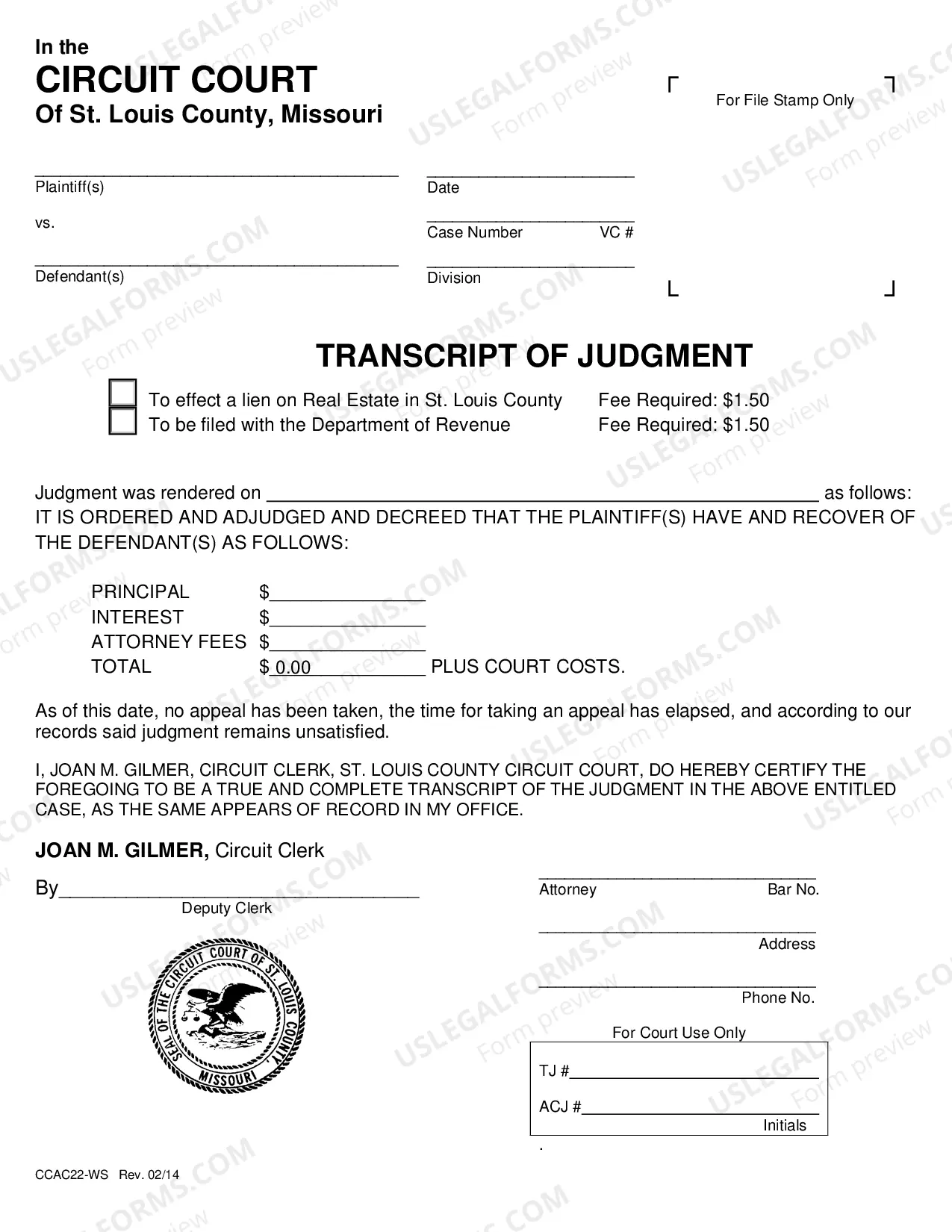

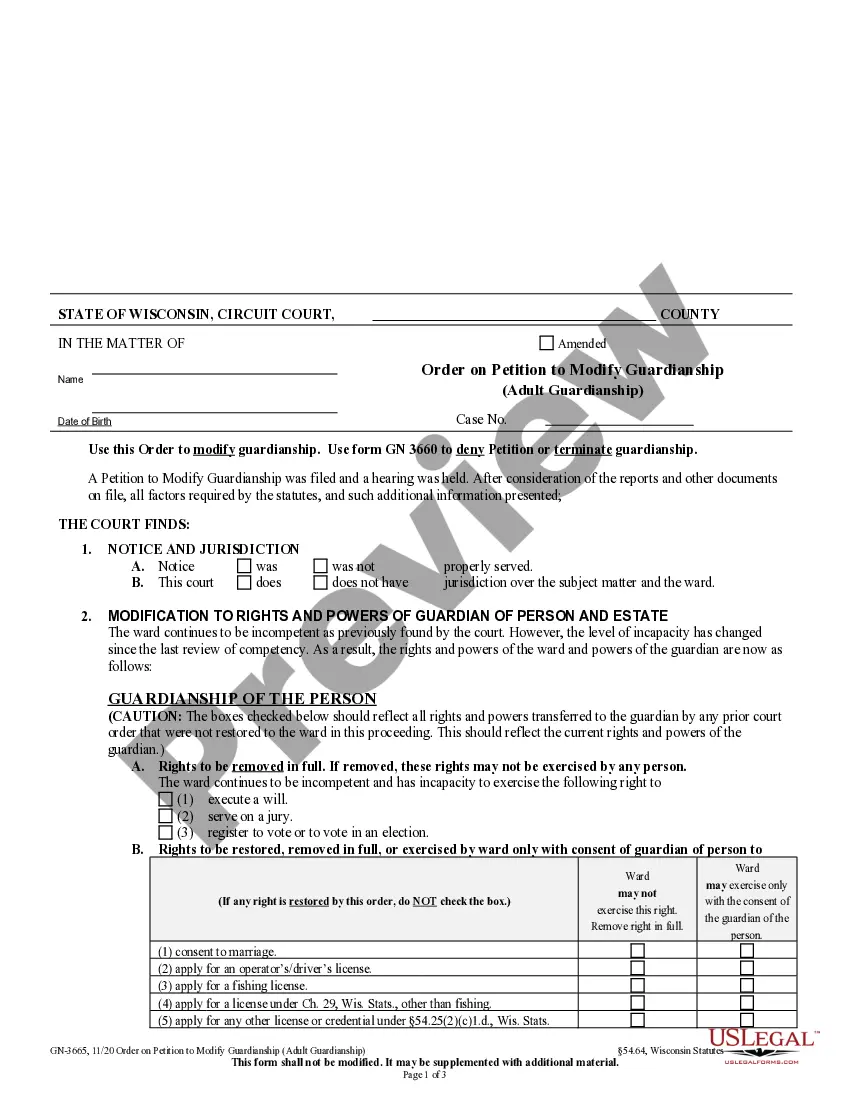


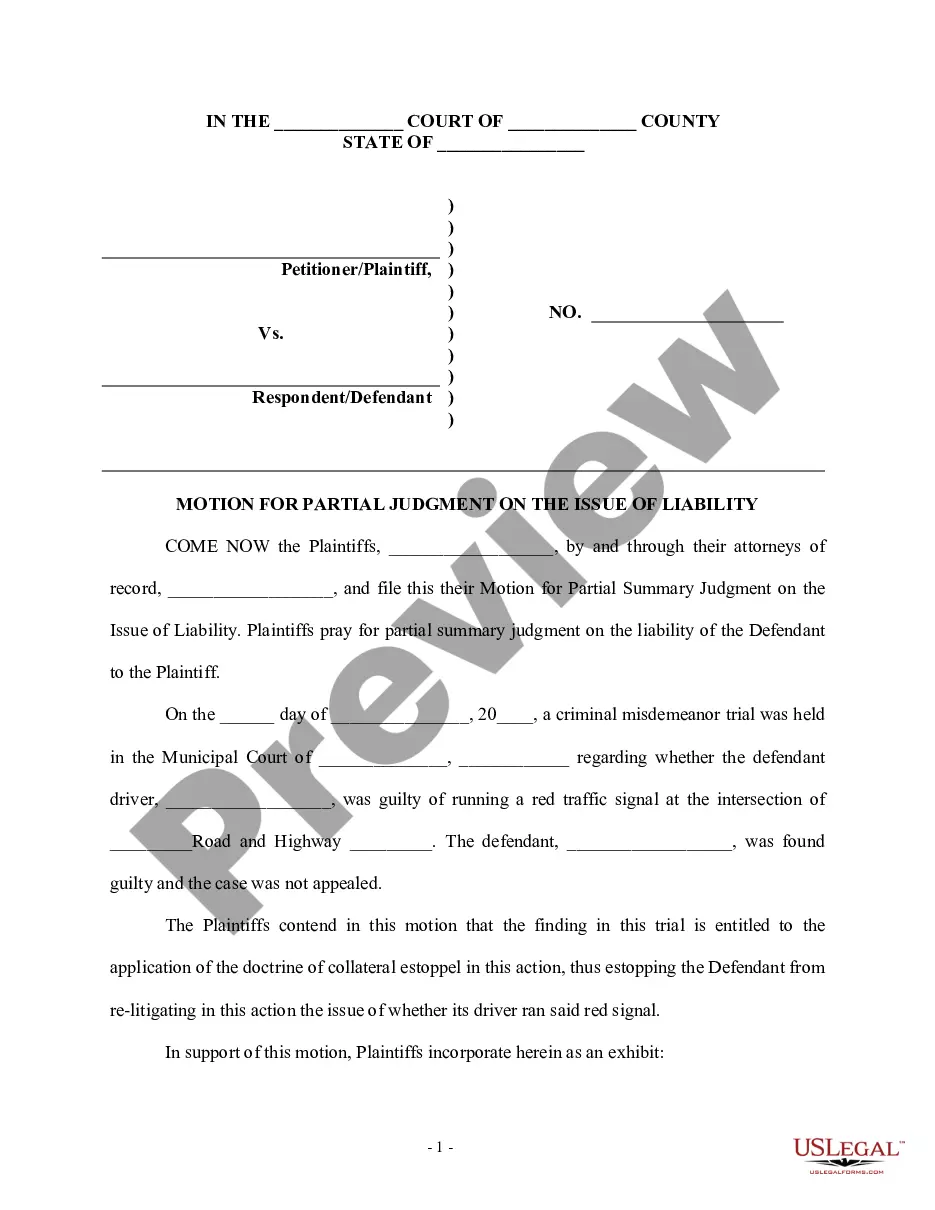
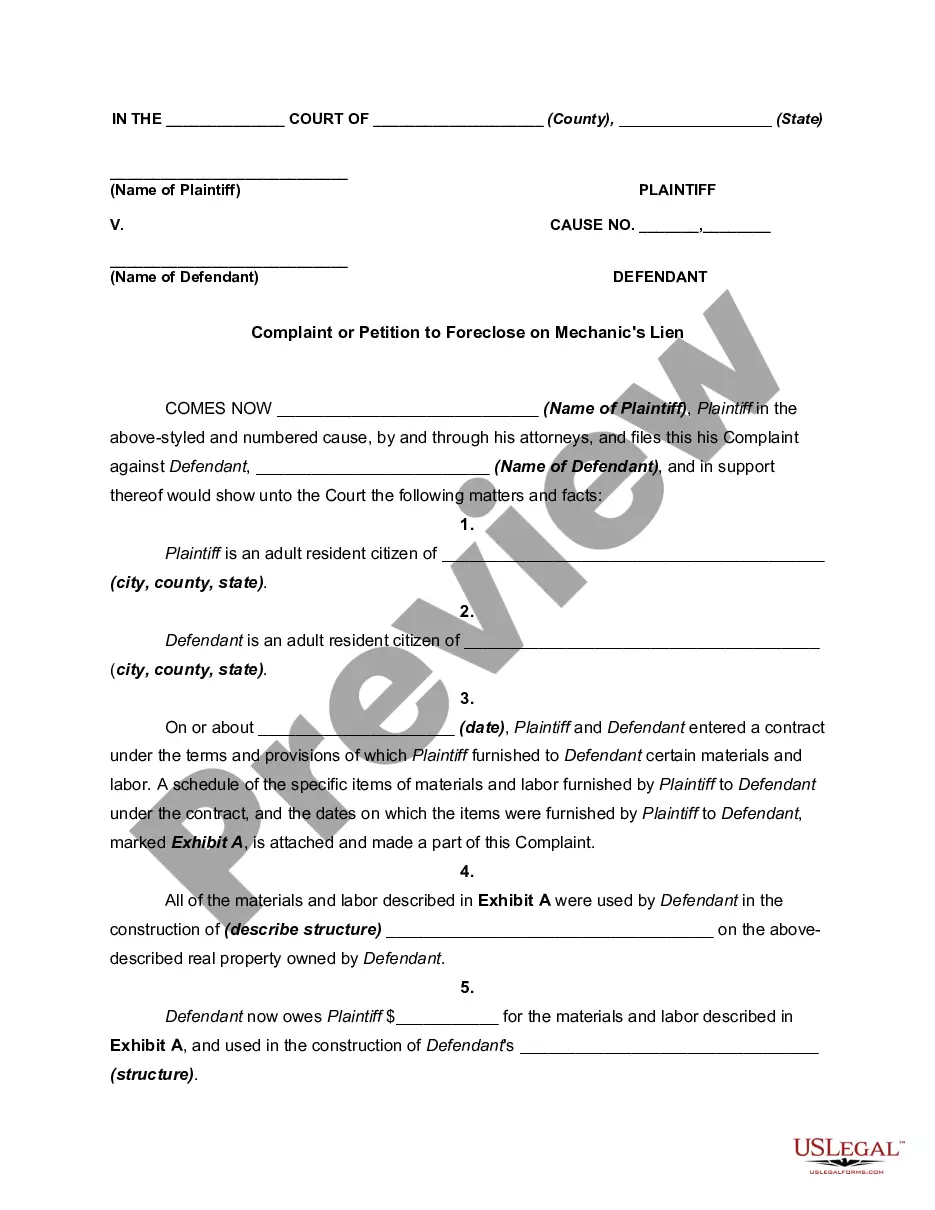
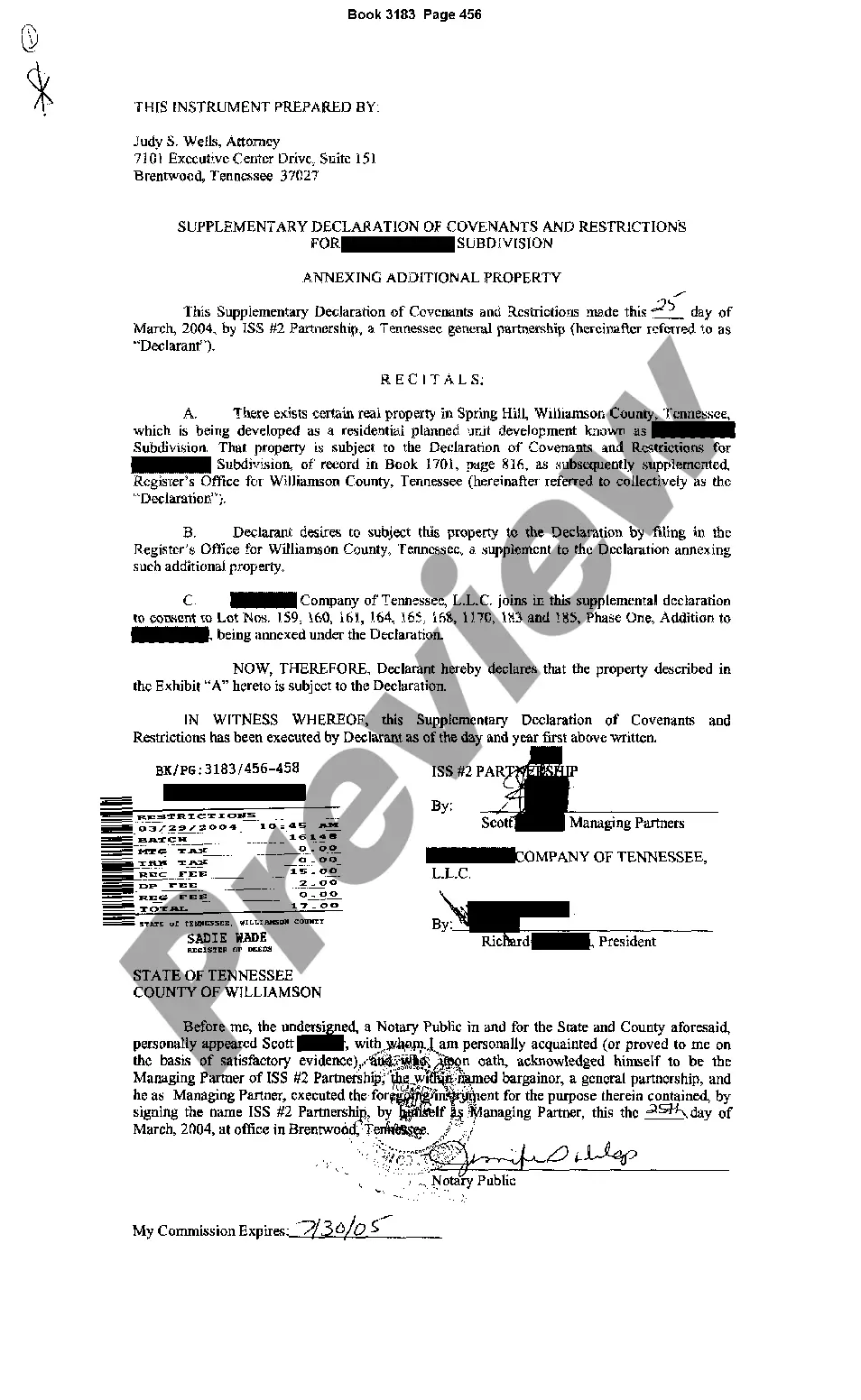
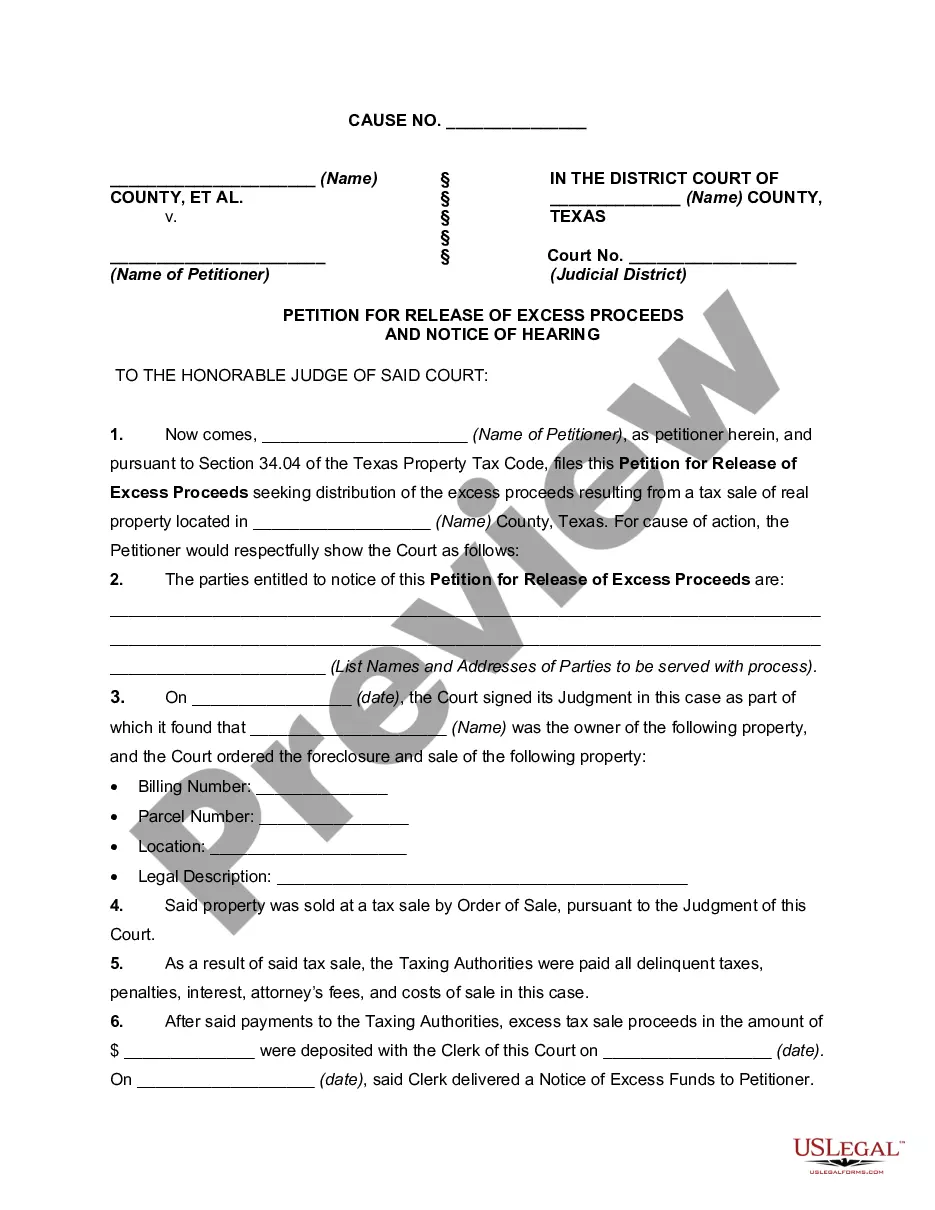
How to fill out Louisiana Petition To Partition Property?
Regardless of whether for corporate objectives or personal matters, everyone has to handle legal circumstances at some stage in their existence.
Filling out legal documents requires precise care, starting from selecting the appropriate form template.
Once it is saved, you can fill out the form using editing software or print it and complete it manually. With an extensive US Legal Forms library available, you don’t have to waste time searching for the right template across the web. Utilize the library’s simple navigation to find the correct form for any circumstance.
- Locate the template you require by utilizing the search bar or the catalog navigation.
- Assess the form’s details to ensure it corresponds with your situation, jurisdiction, and area.
- Click on the form’s preview to examine it.
- If it is the incorrect form, revert to the search feature to find the Petition For Partition Sample Form Philippines template you are looking for.
- Download the template once it satisfies your needs.
- If you already possess a US Legal Forms account, click Log in to access previously stored templates in My documents.
- In case you don’t have an account yet, you can acquire the form by clicking Buy now.
- Pick the correct pricing option.
- Complete the account registration form.
- Select your payment method: use a credit card or PayPal account.
- Choose the document format you desire and download the Petition For Partition Sample Form Philippines.
Form popularity
FAQ
Article 494-501 of the Civil Code of the Philippines Each co-owner may demand at any time the partition of the thing owned in common, insofar as his share is concerned. Nevertheless, an agreement to keep the thing undivided for a certain period of time, not exceeding ten years, shall be valid.
In a partition deed, division occurs by mutual consent amongst the co-owners. It is required that the partition deed is executed on a stamp paper and registered with the sub-registrar's office. A partition deed includes: Resolution and settlement of the dispute.
Judicial partition of estate File a petition in the proper court (The RegionalTrial Court of his/her place of residence if the property owner is a Philippine resident and any Regional Trial Court of his/her current province if the property owner is a foreign resident.)
In a partition lawsuit, there are generally four different steps. First, the court determines each party's ownership interests. Second, the court will decide on the manner of sale. Third, the court will order the property be sold.
Format of partition deed The partition deed format is as follows: Title of the deed. Parties involved; names and details of all the parties involved. Brief Description of the Property. Terms and conditions. Signatures and witnesses: signatures of all the parties involved, i.e., co-owners of the property.