Title For Lawyer
Description
Get your form ready online
Our built-in tools help you complete, sign, share, and store your documents in one place.
Make edits, fill in missing information, and update formatting in US Legal Forms—just like you would in MS Word.
Download a copy, print it, send it by email, or mail it via USPS—whatever works best for your next step.
Sign and collect signatures with our SignNow integration. Send to multiple recipients, set reminders, and more. Go Premium to unlock E-Sign.
If this form requires notarization, complete it online through a secure video call—no need to meet a notary in person or wait for an appointment.
We protect your documents and personal data by following strict security and privacy standards.

Make edits, fill in missing information, and update formatting in US Legal Forms—just like you would in MS Word.

Download a copy, print it, send it by email, or mail it via USPS—whatever works best for your next step.

Sign and collect signatures with our SignNow integration. Send to multiple recipients, set reminders, and more. Go Premium to unlock E-Sign.

If this form requires notarization, complete it online through a secure video call—no need to meet a notary in person or wait for an appointment.

We protect your documents and personal data by following strict security and privacy standards.
Looking for another form?
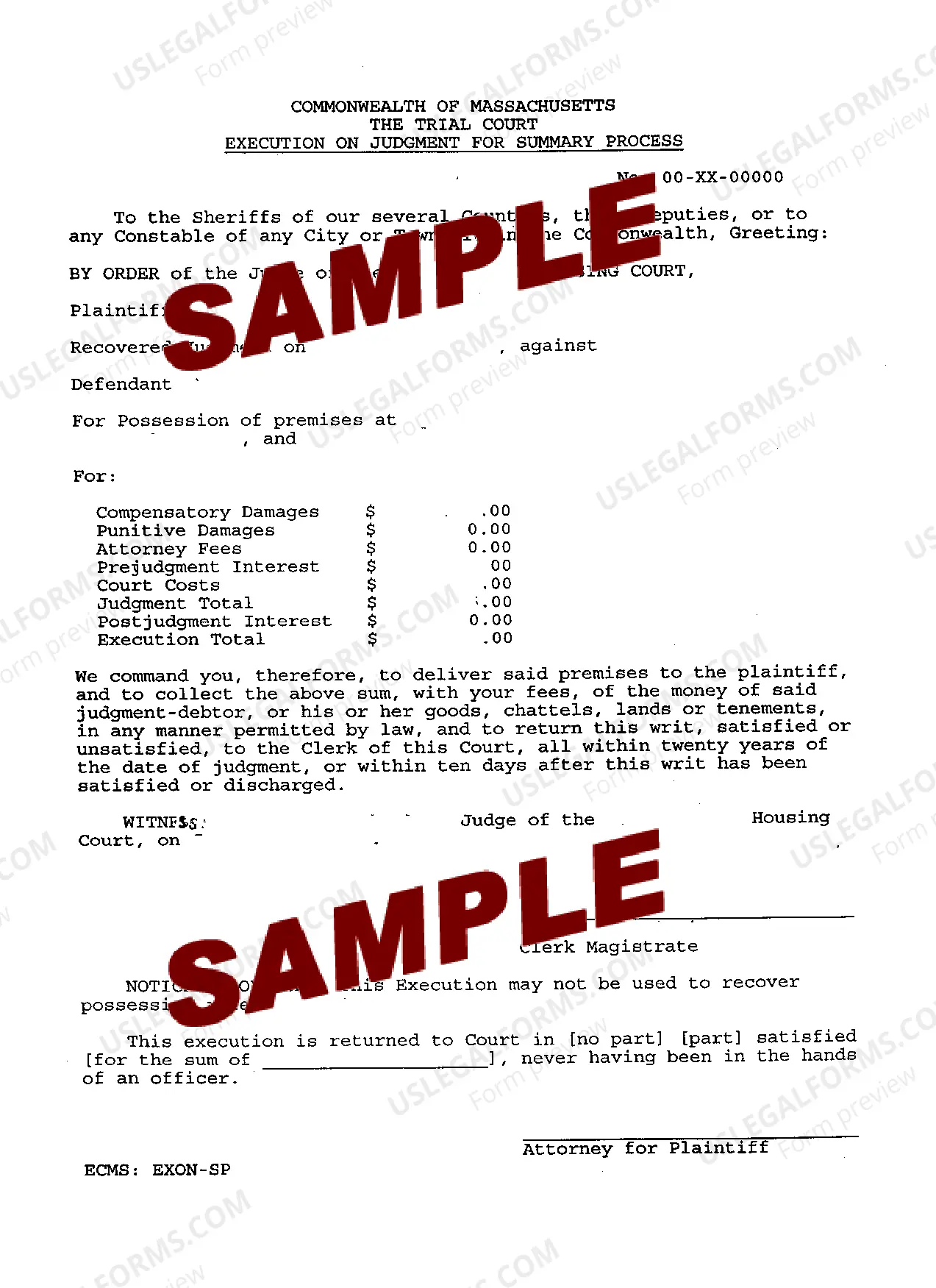
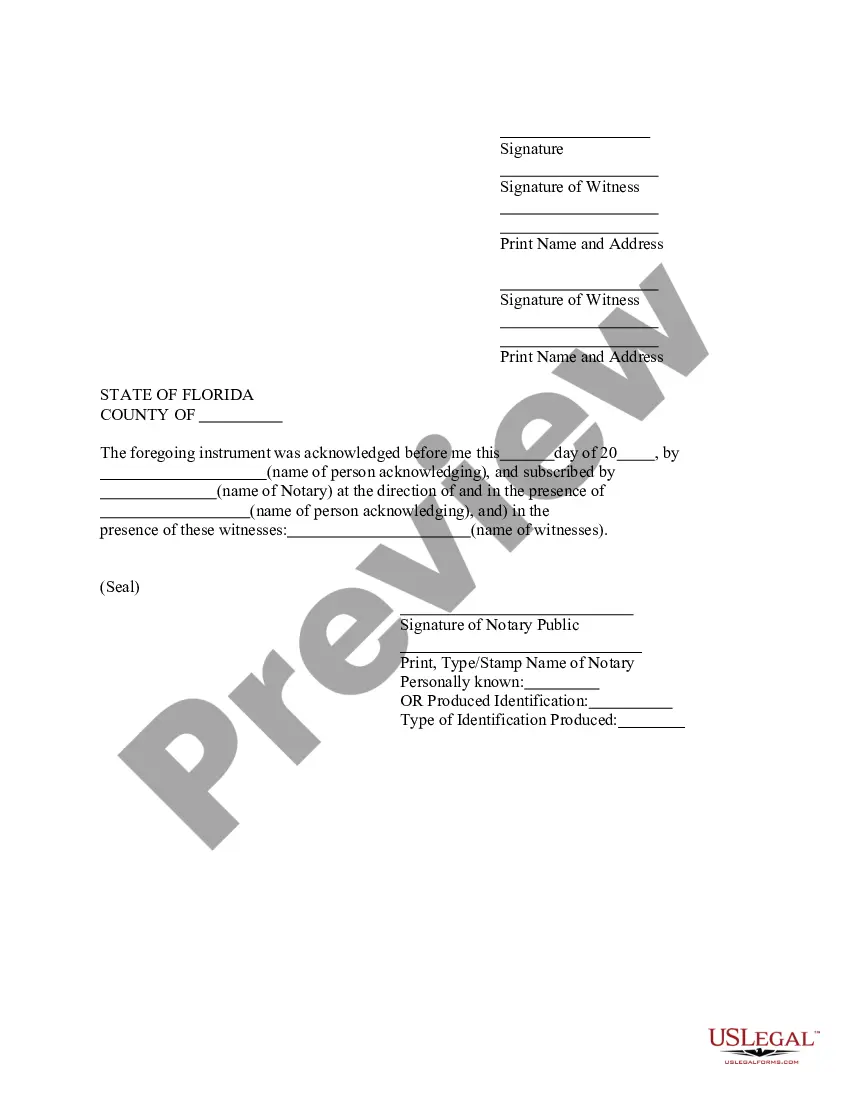
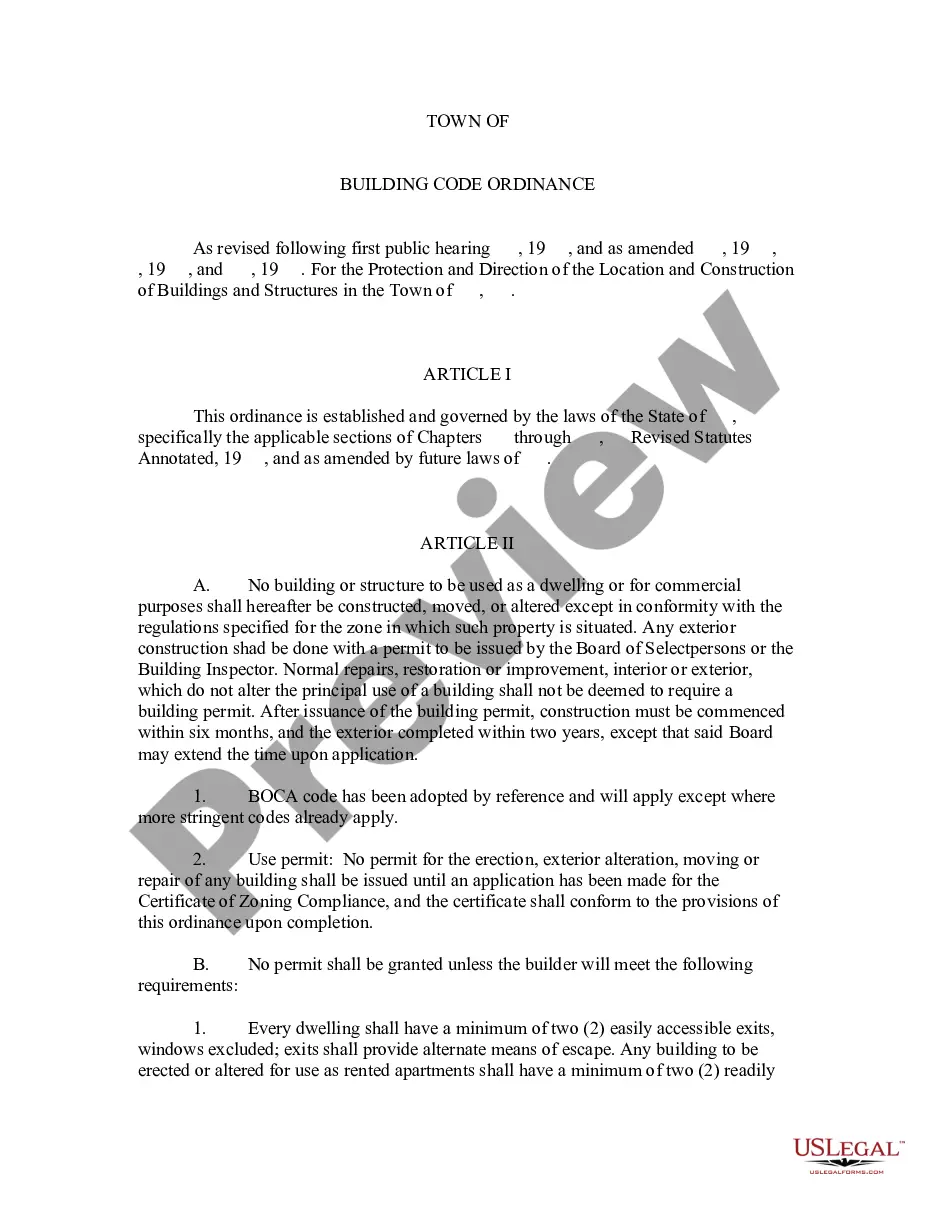
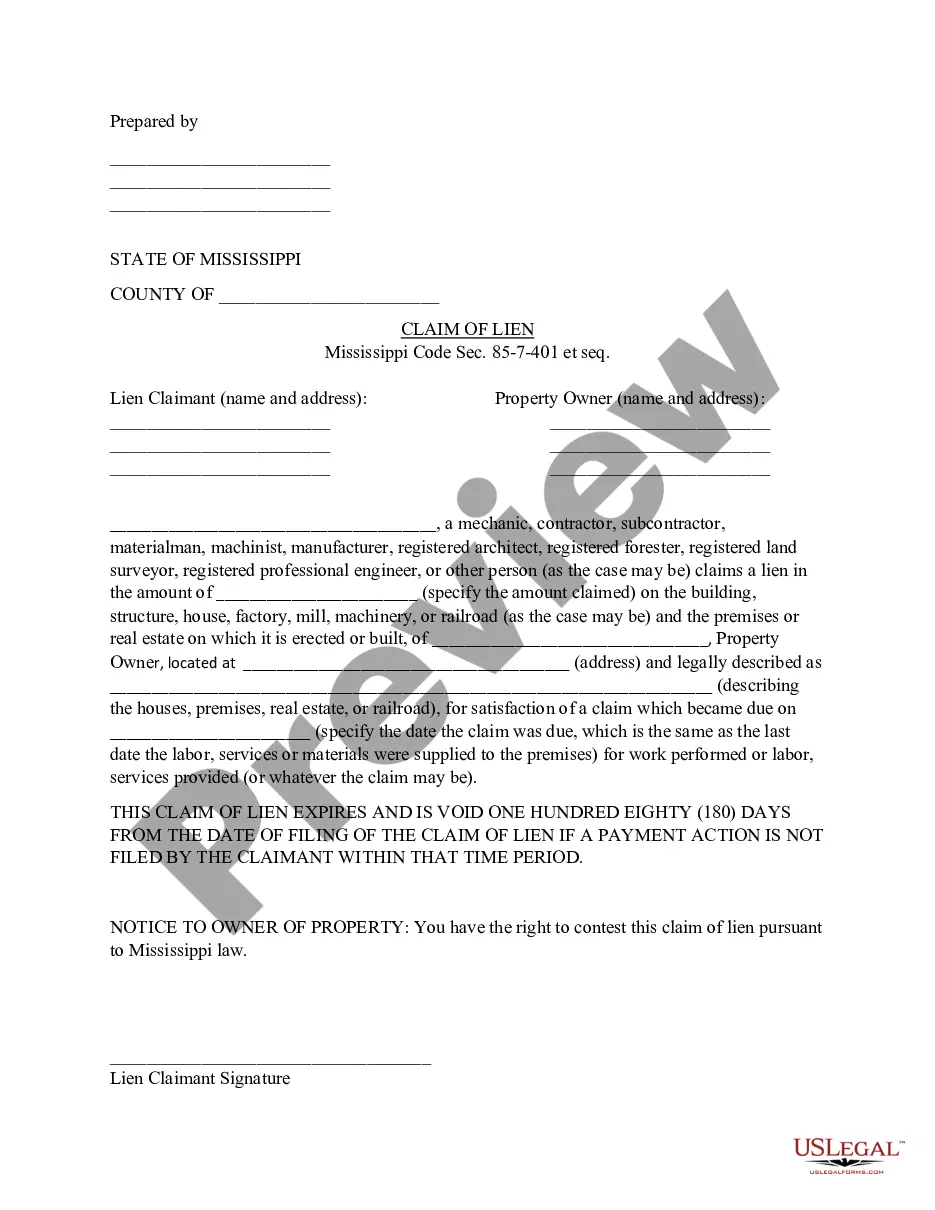
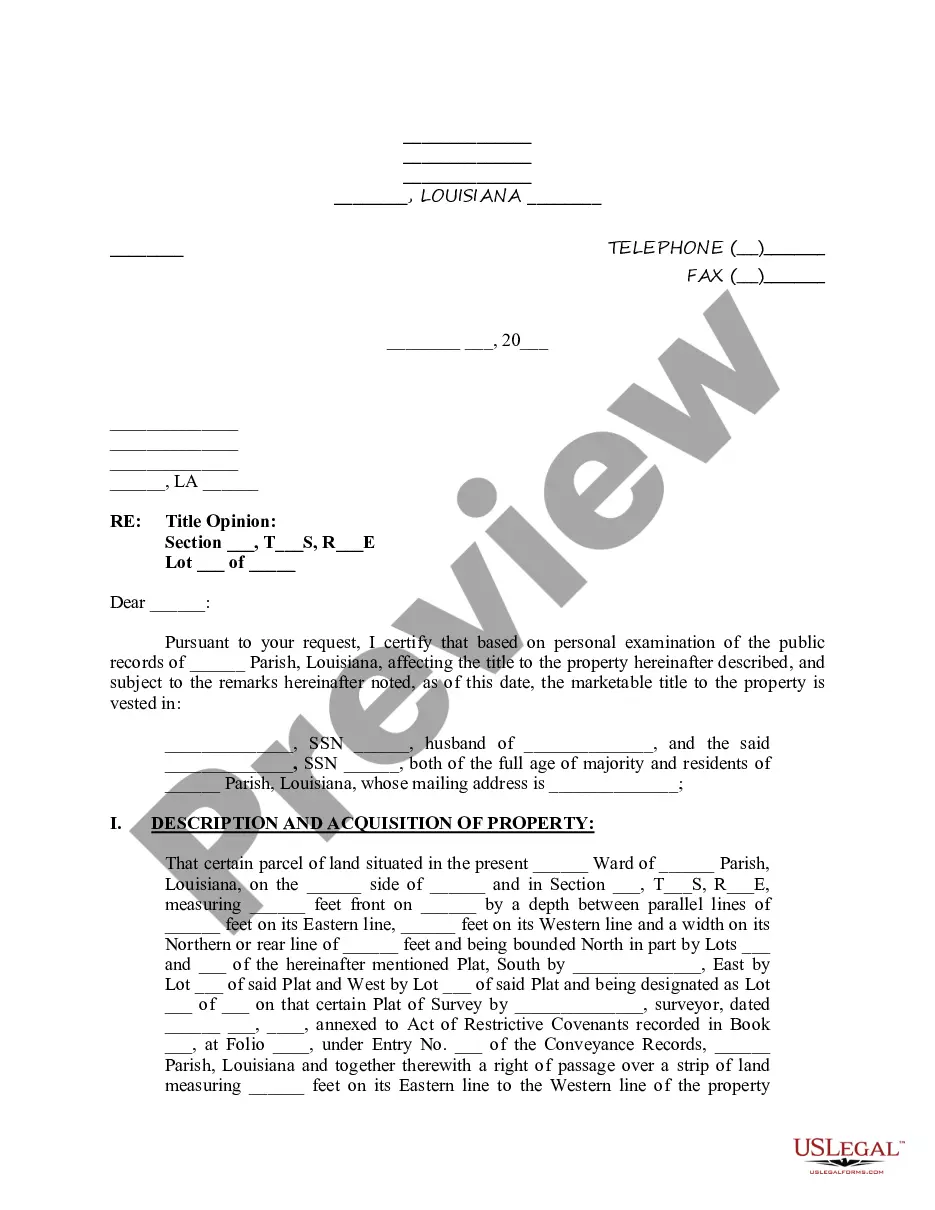
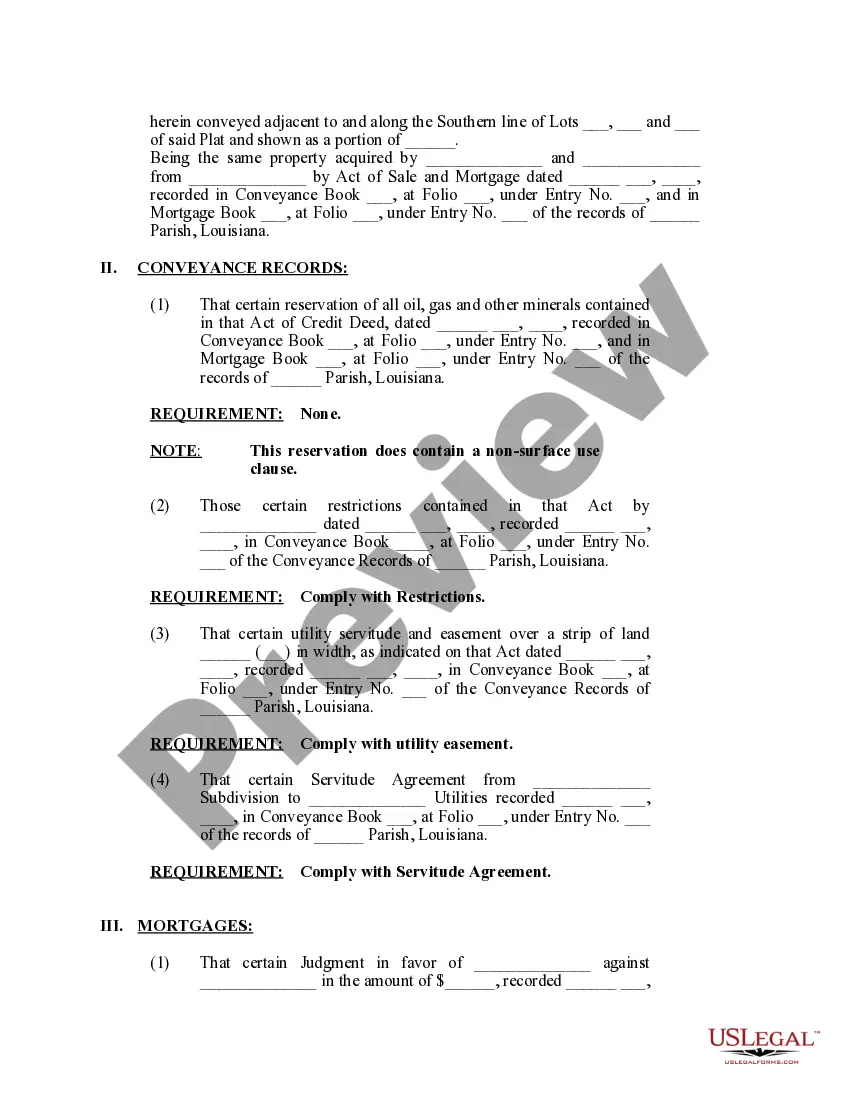
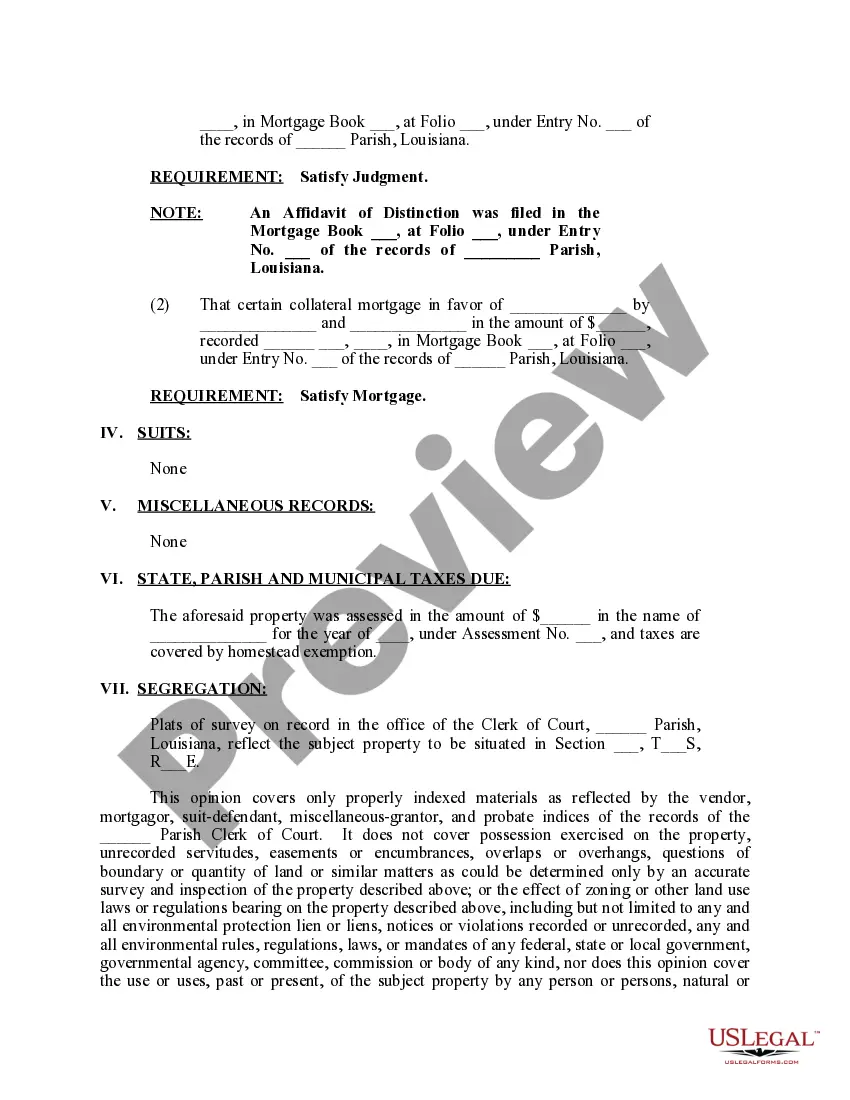
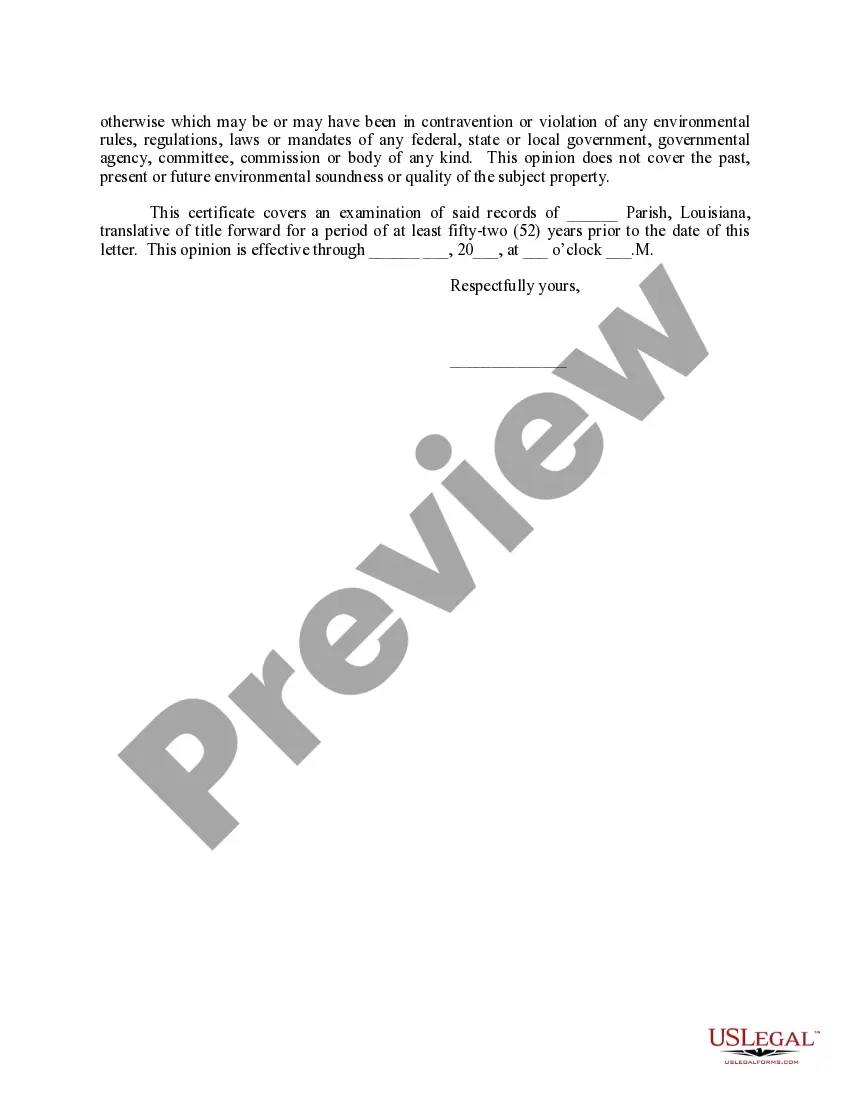
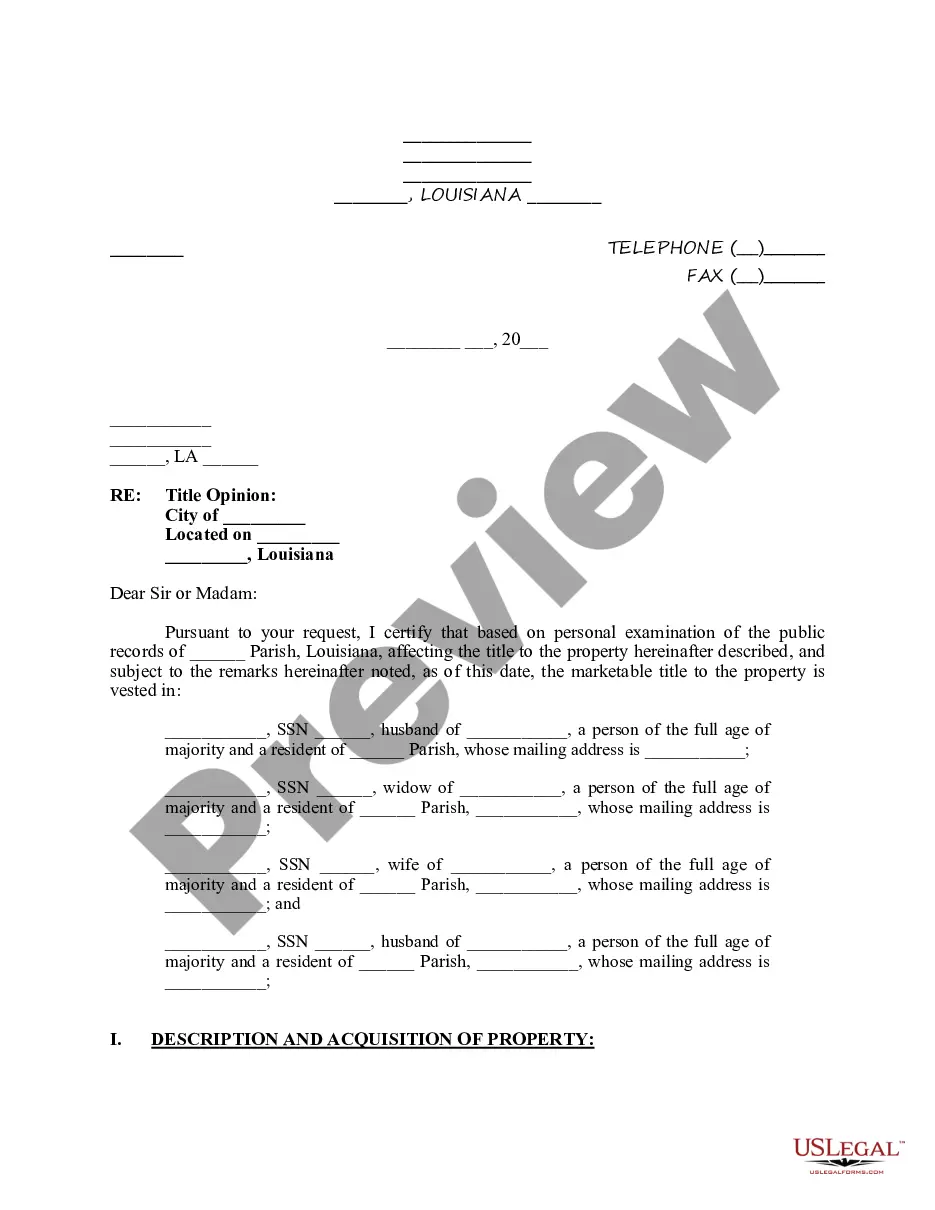
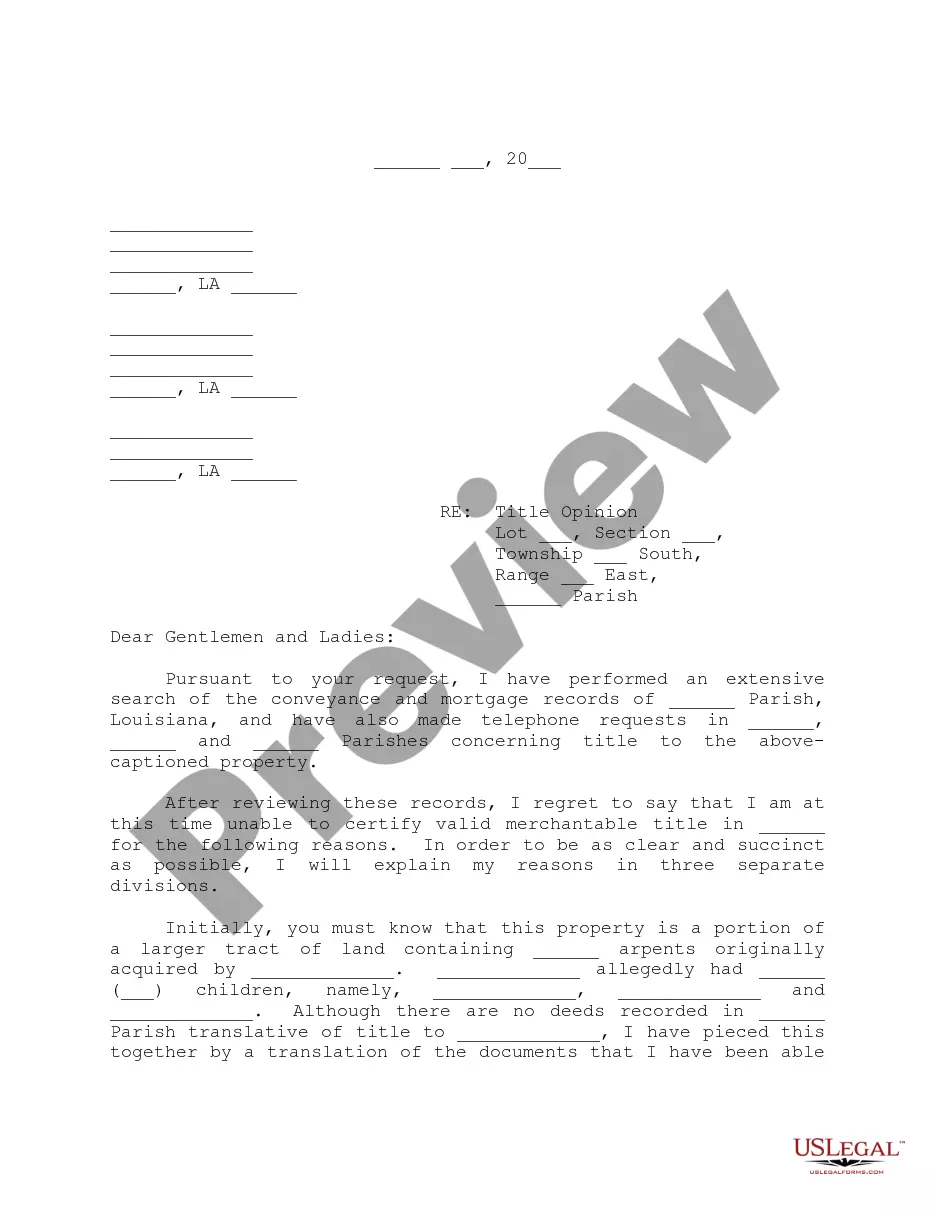
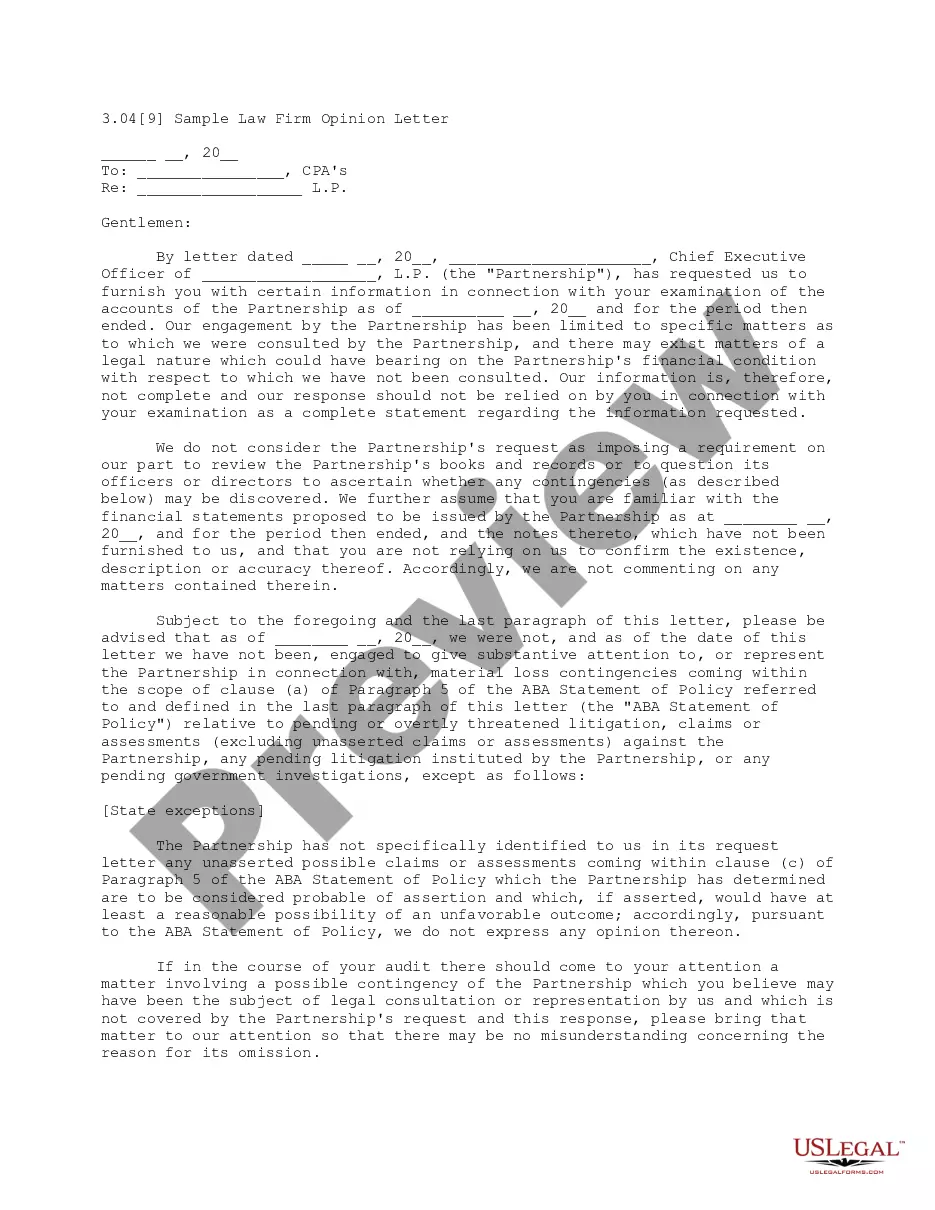
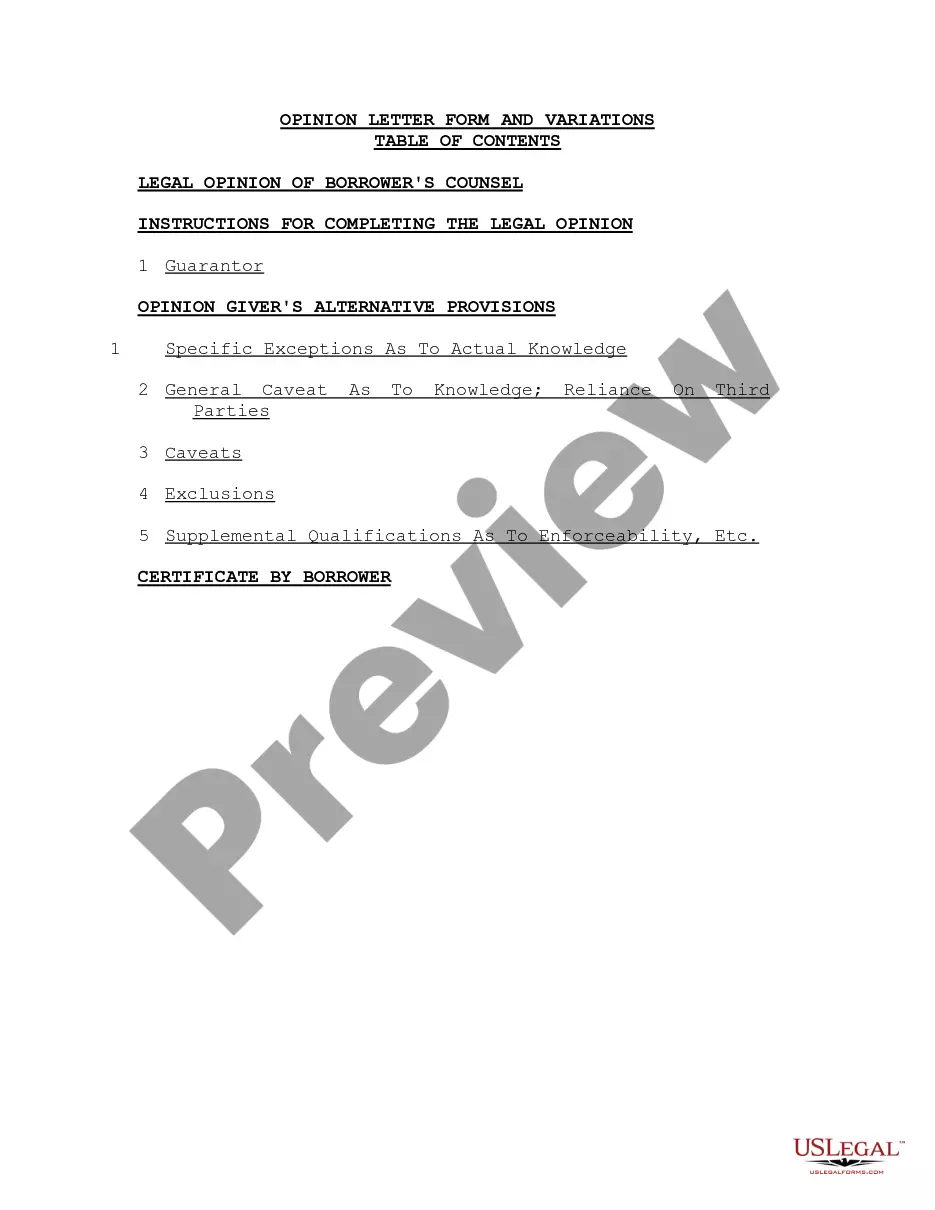
How to fill out Louisiana Title Opinion Of Attorney Letter To Individual?
Managing legal papers and processes can be a labor-intensive task to your day.
Title For Lawyer and similar forms frequently necessitate you to search for them and comprehend the method to fill them out correctly.
Therefore, whether you are addressing financial, legal, or personal issues, possessing a comprehensive and accessible online collection of forms at your disposal will greatly assist.
US Legal Forms is the leading online platform for legal templates, featuring over 85,000 state-specific forms and a range of resources to help you complete your documents effortlessly.
Is it your first time using US Legal Forms? Register and create a complimentary account in a few minutes, granting you access to the form library and Title For Lawyer. Then, follow the steps outlined below to complete your form: Ensure you have located the correct form by utilizing the Preview feature and reviewing the form description. Select Buy Now when ready, and choose the subscription plan that suits your requirements. Click Download, then fill out, eSign, and print the form. US Legal Forms has twenty-five years of experience assisting users with their legal documents. Locate the form you need today and streamline any process without breaking a sweat.
- Explore the collection of relevant documents available to you with just one click.
- US Legal Forms provides state- and county-specific forms available for download at any time.
- Protect your document management processes with a premium service that enables you to create any form within minutes without any extra or concealed fees.
- Simply Log In to your account, find Title For Lawyer and obtain it instantly in the My documents section.
- You can also retrieve previously downloaded forms.
Form popularity
FAQ
To title a lawyer, you should use the appropriate professional designation, such as 'Attorney' or 'Esquire.' It's essential to place the title before their name in formal documents or communications. If you are unsure, using 'Attorney' is a safe choice. For additional legal documentation needs, platforms like US Legal Forms can provide templates that include professional titles, ensuring you get it right.
If you are a lawyer, your title is often 'Attorney at Law' or 'Esquire.' These titles indicate your qualifications and your right to practice law. You may also use your specific area of expertise, such as 'Criminal Defense Attorney' or 'Family Law Attorney,' to further clarify your professional role. This specificity can help potential clients identify the right legal representation for their needs.
A lawyer's title is commonly abbreviated as 'Esq.' for 'Esquire.' This abbreviation follows their name, indicating their status as a licensed attorney. Additionally, 'JD' can be used to denote someone who holds a Juris Doctor degree. Using these abbreviations appropriately can enhance your professional communication.
You typically call a lawyer 'Attorney' or 'Lawyer.' In some cases, you may hear the title 'Esquire,' which is often used to denote a licensed attorney. Using the correct title for lawyer ensures clarity and professionalism in your interactions. This respect helps build trust between you and the legal professional.
The proper way to refer to a lawyer is by using their professional title, such as 'Attorney' or 'Lawyer.' In formal settings, you may also use 'Esquire' following their name, indicating their legal credentials. It's essential to show respect when addressing a lawyer, as their title reflects their expertise and professional standing.
To obtain a title for lawyer, you must first complete a Juris Doctor (JD) degree from an accredited law school. After graduating, you need to pass your state bar exam to practice law legally. Once you pass the exam, you can officially use the title, which typically includes 'Attorney at Law' or 'Esquire.' This title signifies your qualifications and ability to represent clients.
Using Esq, or Esquire, in Written Communication The term esquire, or the abbreviation Esq., gets used most frequently in written legal communications. It offers a sign that you have communicated directly with an attorney rather than a legal assistant, paralegal, or someone else within the office.
Another distinction you may see when searching for a lawyer is the suffix attached to a name: ?J.D.? or ?Esq.? J.D. stands for juris doctorate and indicates that a person has obtained a law degree. ?Esq.? stands for ?Esquire? and indicates that a person is licensed by their state bar association to practice law.
Write the person using a standard courtesy title (?Mr. Robert Jones? or ?Ms. Cynthia Adams?) Skip the courtesy title and put ?Esquire? after the name, using its abbreviated form, ?Esq.? (?Robert Jones, Esq.? or ?Cynthia Adams, Esq.?)
The attorney abbreviation ?Atty.? is commonly used while referring to lawyers who practice law in the United States. It is mainly observed in legal circles where it can be found in reference to lawyers as shorthand during note taking and in correspondences within and between law firms.