Title Attorney Job Description
Description
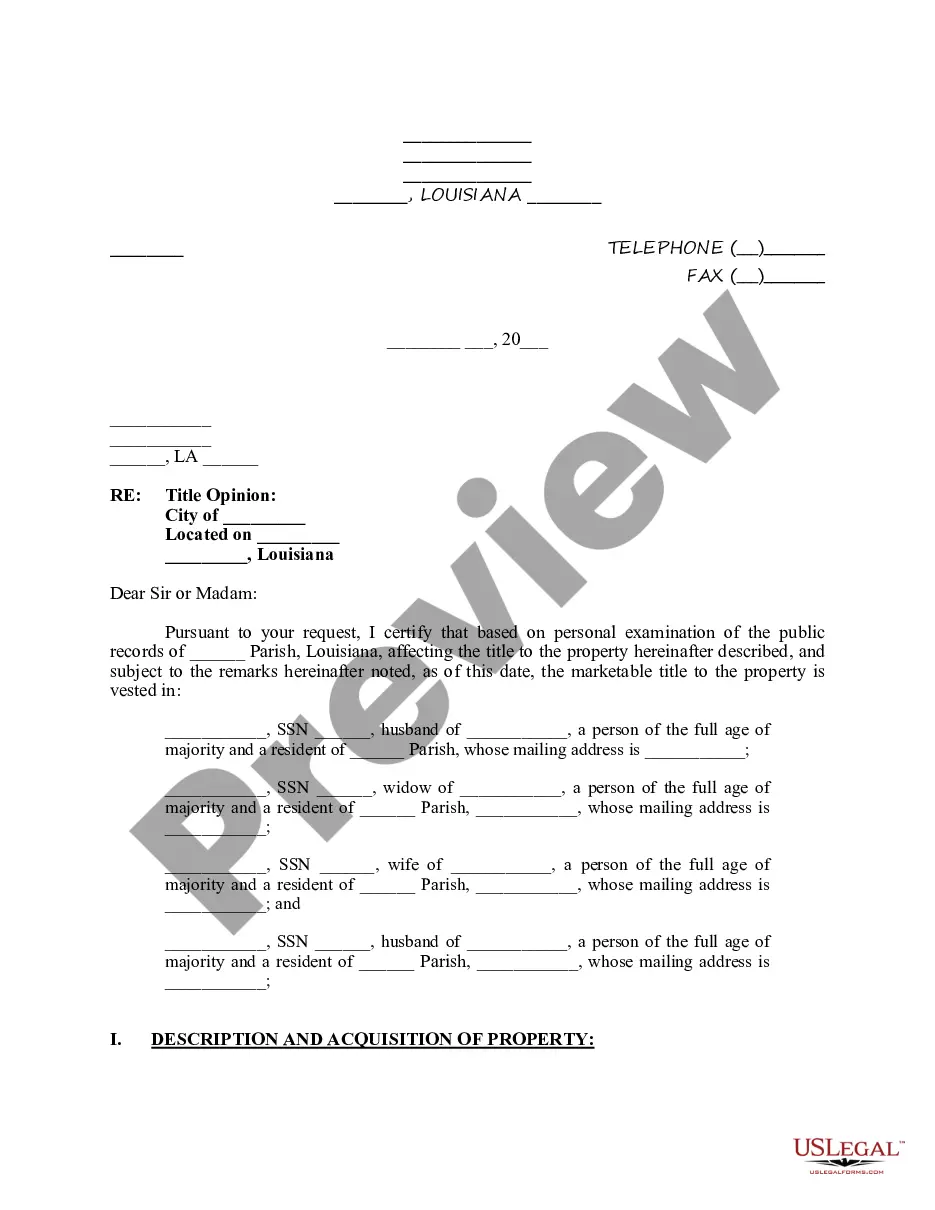
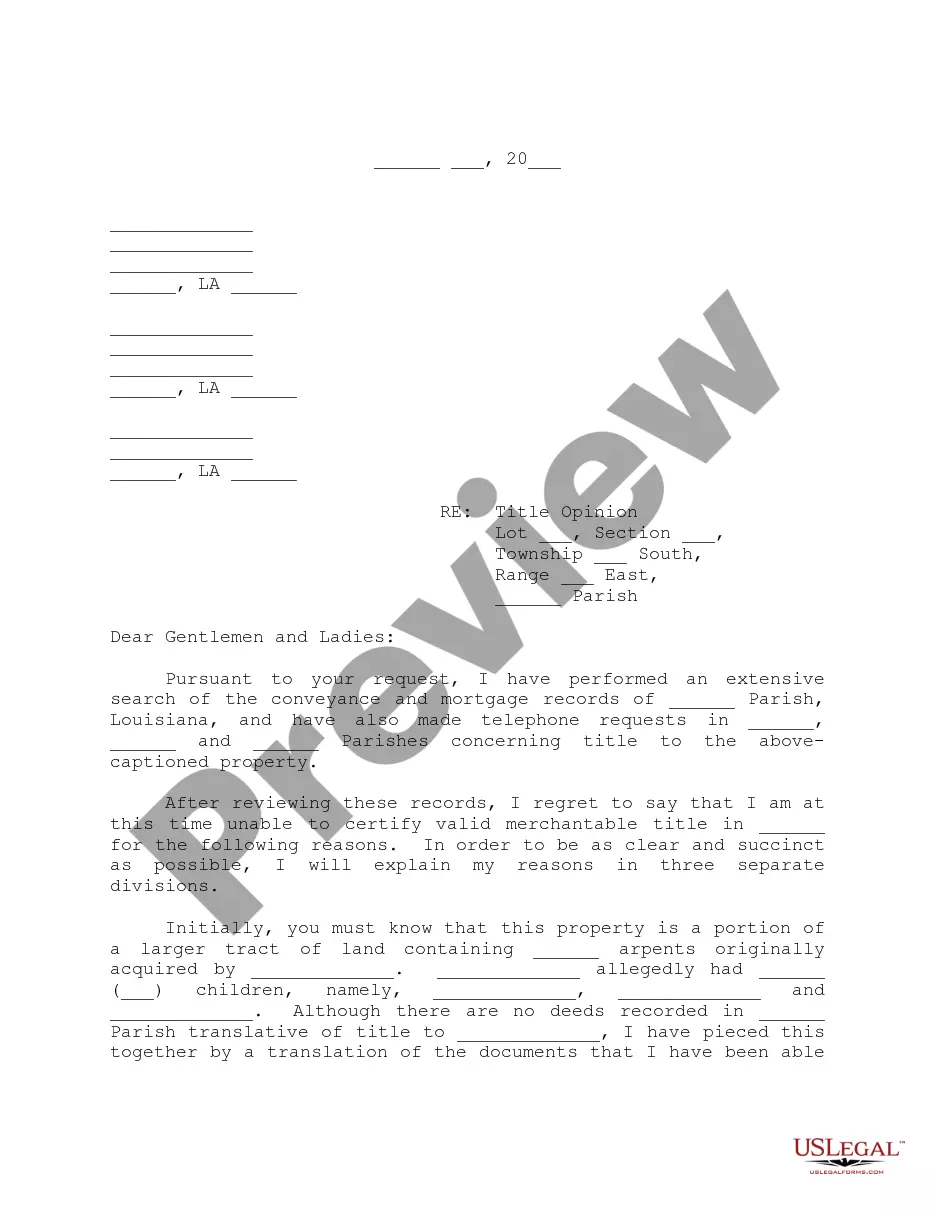
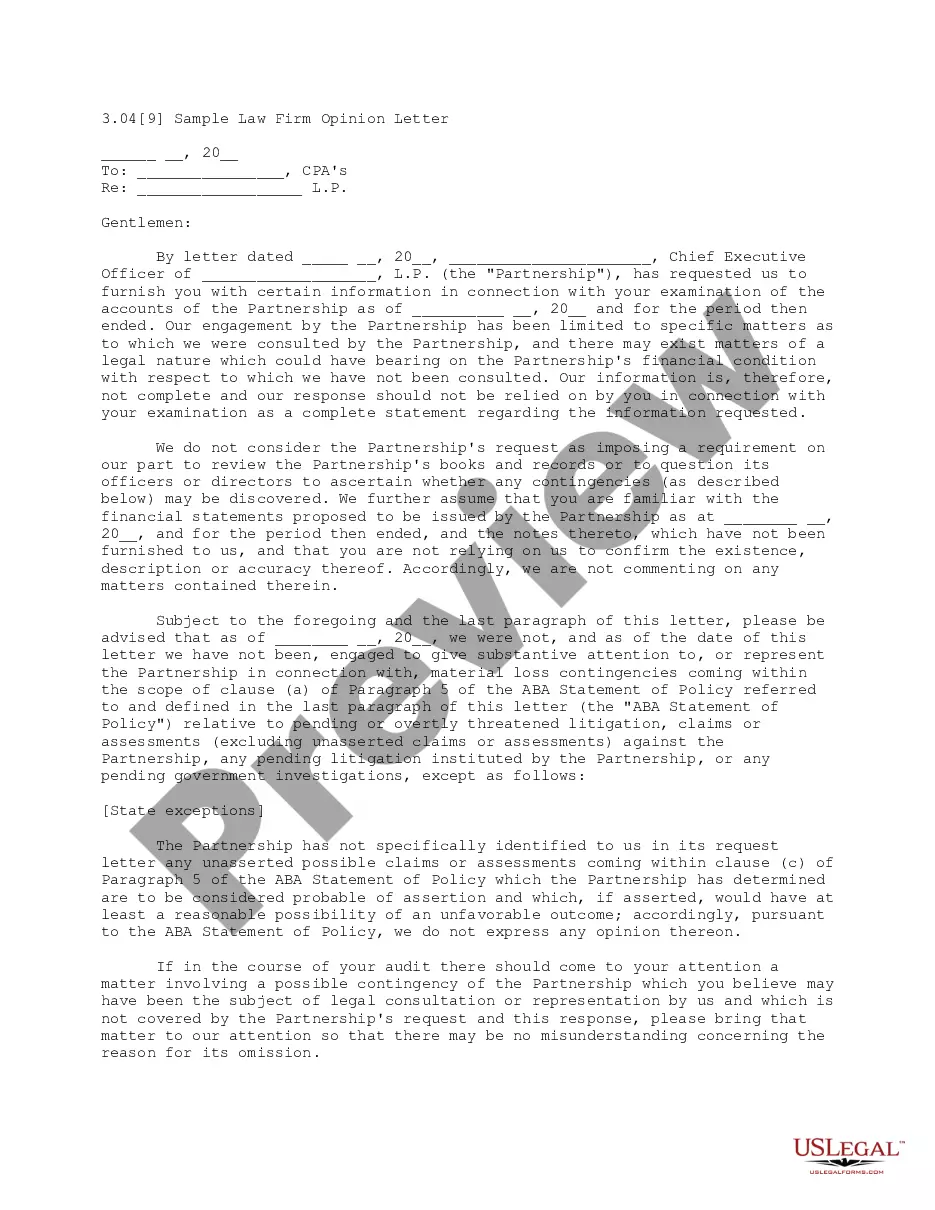
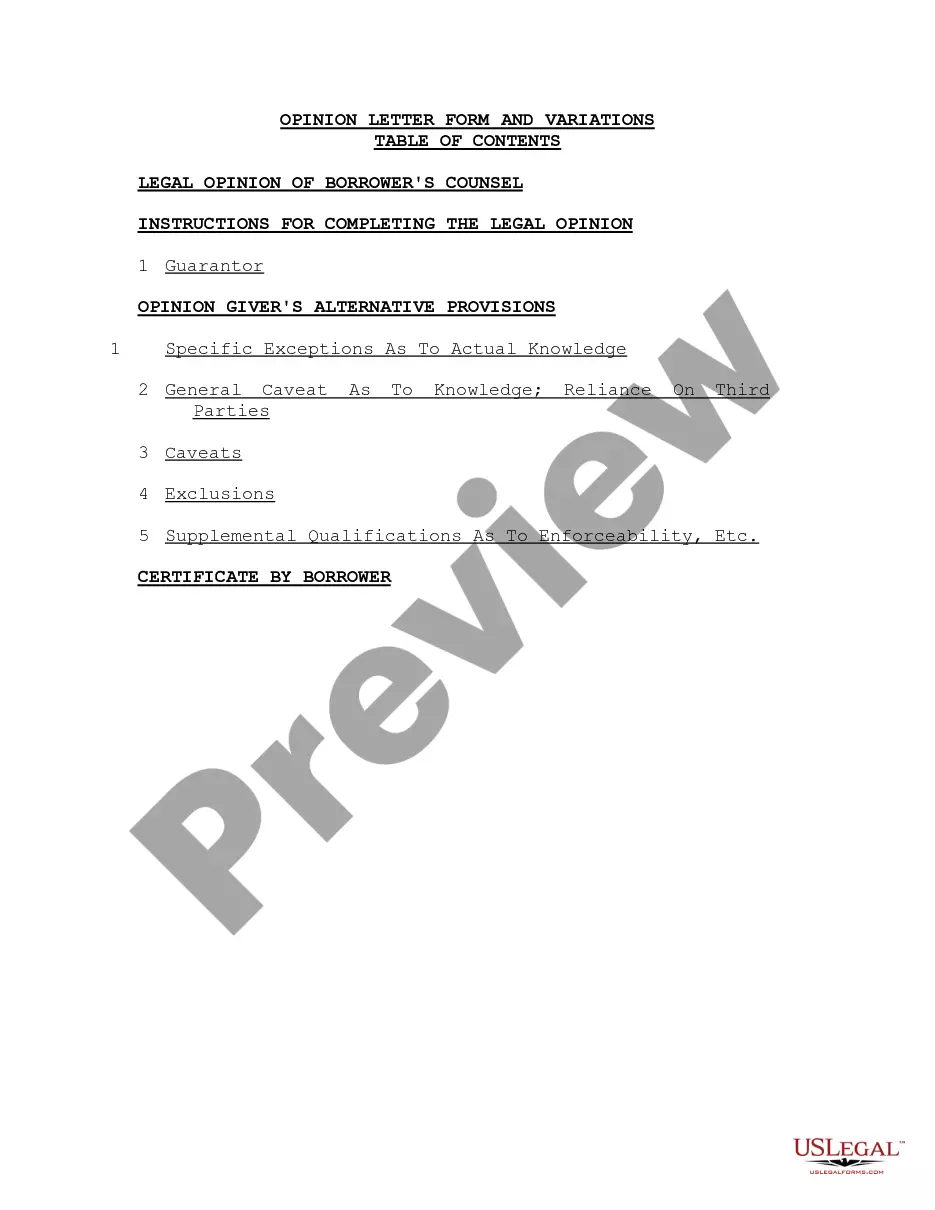
Get your form ready online
Our built-in tools help you complete, sign, share, and store your documents in one place.
Make edits, fill in missing information, and update formatting in US Legal Forms—just like you would in MS Word.
Download a copy, print it, send it by email, or mail it via USPS—whatever works best for your next step.
Sign and collect signatures with our SignNow integration. Send to multiple recipients, set reminders, and more. Go Premium to unlock E-Sign.
If this form requires notarization, complete it online through a secure video call—no need to meet a notary in person or wait for an appointment.
We protect your documents and personal data by following strict security and privacy standards.

Make edits, fill in missing information, and update formatting in US Legal Forms—just like you would in MS Word.

Download a copy, print it, send it by email, or mail it via USPS—whatever works best for your next step.

Sign and collect signatures with our SignNow integration. Send to multiple recipients, set reminders, and more. Go Premium to unlock E-Sign.

If this form requires notarization, complete it online through a secure video call—no need to meet a notary in person or wait for an appointment.

We protect your documents and personal data by following strict security and privacy standards.
Looking for another form?








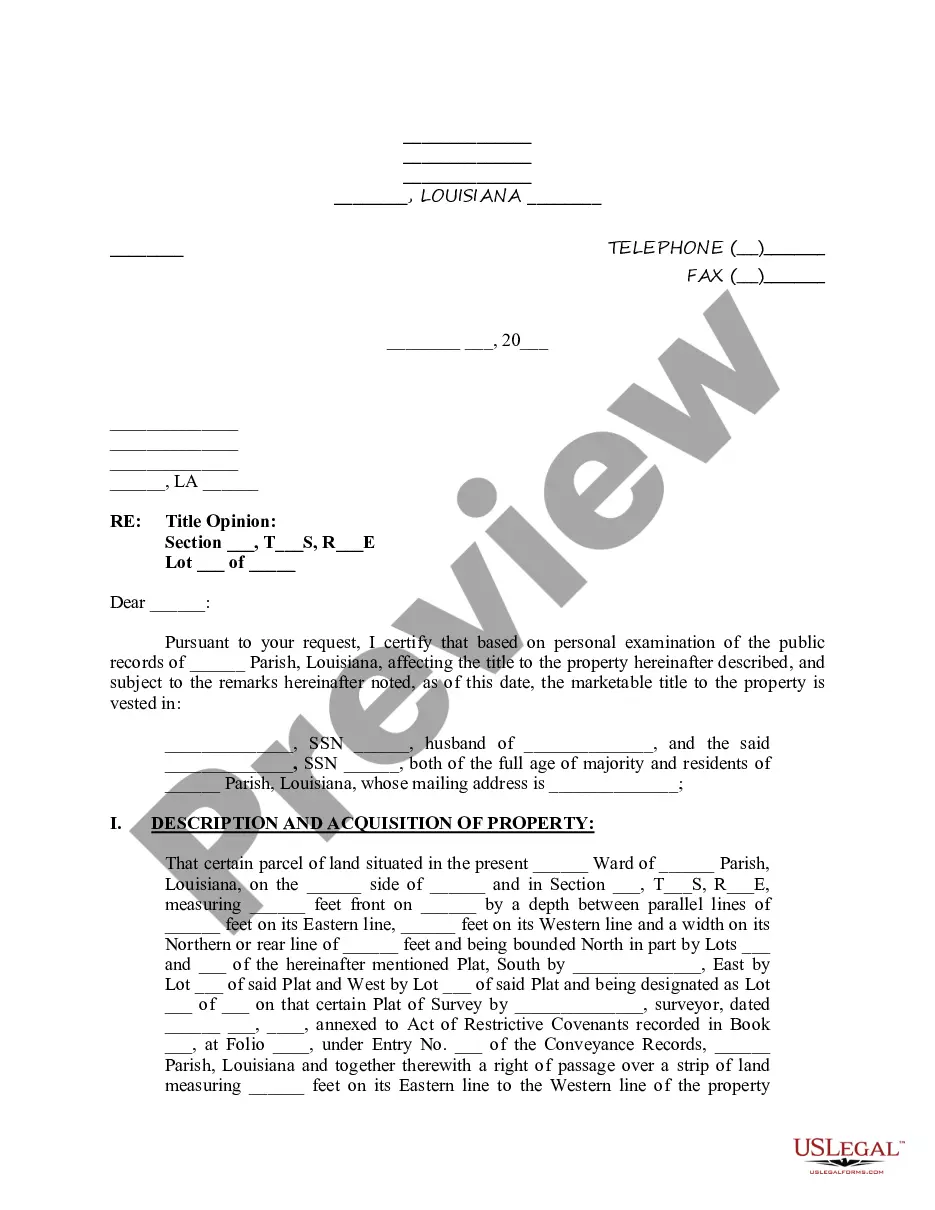
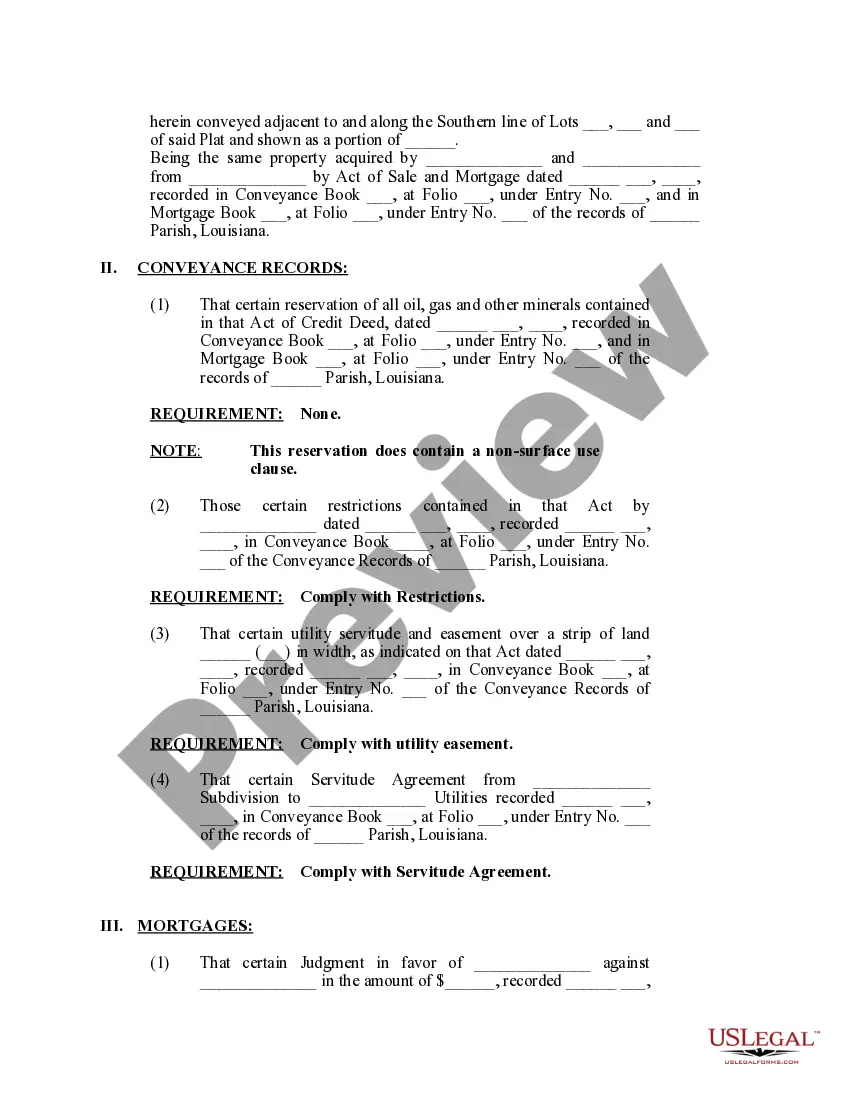
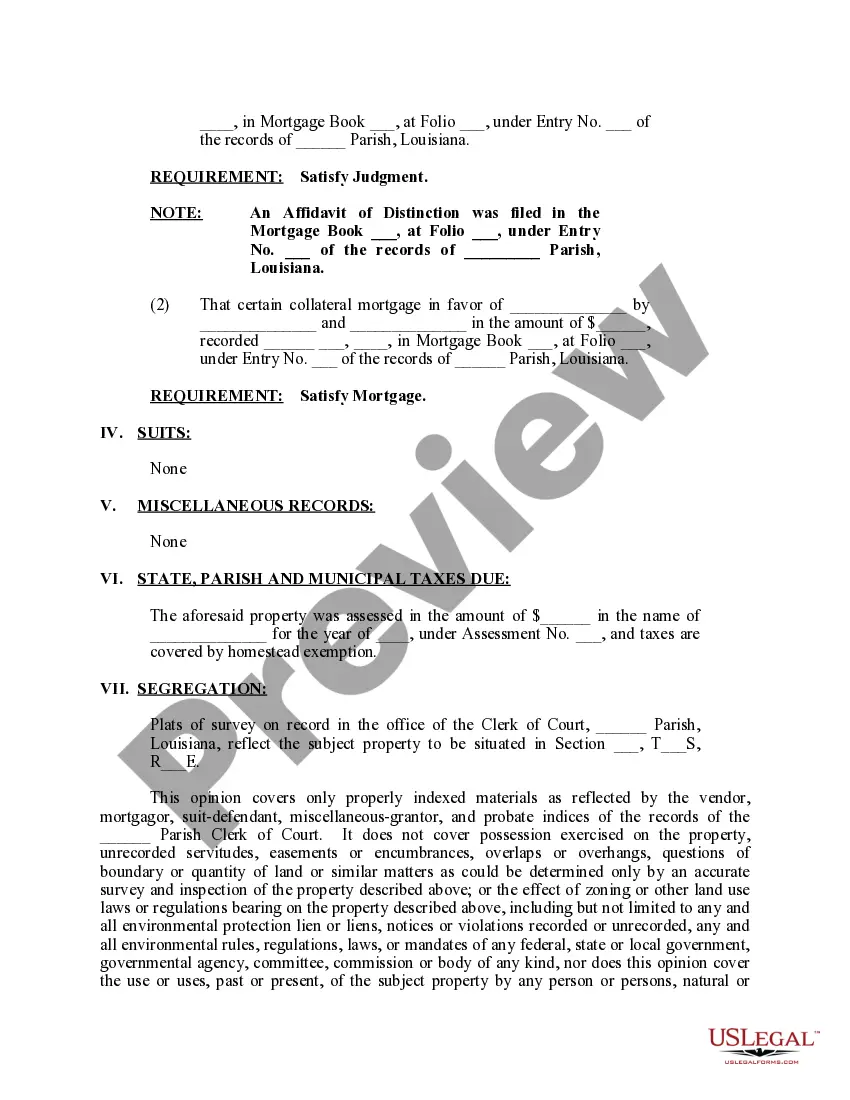
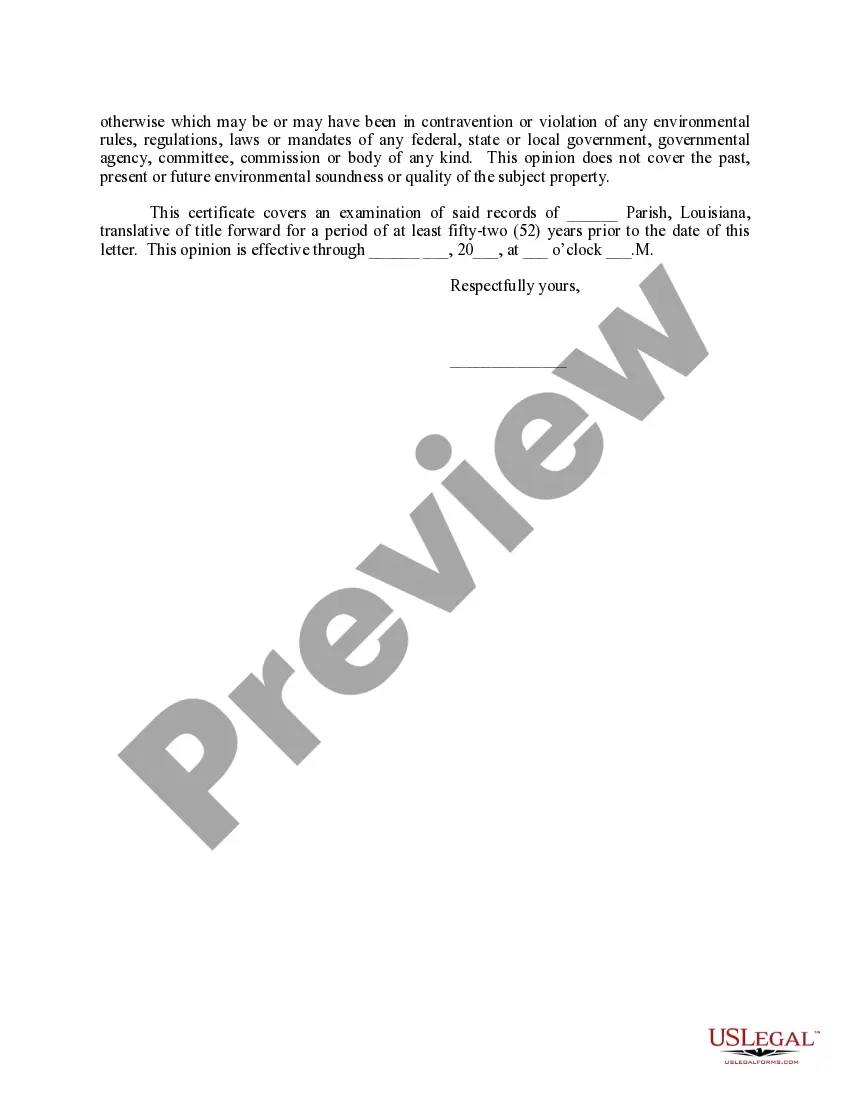
How to fill out Louisiana Title Opinion Of Attorney Letter To Individual?
Locating a reliable source for the latest and suitable legal templates is a significant part of dealing with bureaucracy.
Identifying the correct legal documents requires precision and carefulness, which is why it's essential to obtain Title Attorney Job Description samples solely from trustworthy providers, like US Legal Forms. An incorrect template can squander your time and delay your situation. With US Legal Forms, your concerns are minimal. You can access and verify all pertinent details regarding the document’s applicability and significance for your circumstances and in your jurisdiction.
After obtaining the form on your device, you can modify it using the editor or print it out to fill in manually. Eliminate the hassle associated with your legal documents. Explore the vast US Legal Forms collection to discover legal templates, verify their relevance to your situation, and download them immediately.
- Use the catalog navigation or search bar to locate your template.
- Examine the form’s details to determine if it meets the criteria of your state and locality.
- Preview the form, if available, to confirm it is the exact one you are seeking.
- Return to the search to find the suitable document if the Title Attorney Job Description does not align with your needs.
- Once you are confident about the form’s applicability, download it.
- If you are a registered user, click Log in to verify and access your chosen templates in My documents.
- If you do not have an account yet, click Buy now to acquire the template.
- Select the pricing option that suits your requirements.
- Proceed with the registration to complete your purchase.
- Finish your purchase by choosing a payment method (credit card or PayPal).
- Choose the file format for downloading the Title Attorney Job Description.
Form popularity
FAQ
The salary of a title attorney can vary based on experience, location, and the size of the firm they work for. On average, title attorneys in the United States earn between $70,000 and $120,000 annually. Those with extensive experience or who work in high-demand areas may earn even more. Reviewing the title attorney job description can provide insights into the skills and qualifications that may influence earning potential.
Becoming a title attorney requires earning a law degree and passing the bar exam in your state. After gaining a solid foundation in real estate law, many aspiring title attorneys seek specialized training or internships in title companies or law firms. Practical experience in handling title issues is essential, as it prepares you for the complexities of the job. A clear understanding of the title attorney job description will guide you through your educational and career choices.
To become a title specialist, you typically need a high school diploma, though many employers prefer candidates with a college degree in a related field. Gaining experience through internships or entry-level positions in real estate or law can be beneficial. Additionally, pursuing relevant certifications can enhance your knowledge and skills in title management. Familiarizing yourself with the title attorney job description will help you understand the necessary qualifications for this career path.
When addressing a lawyer, you can use 'Attorney' or 'Counselor,' depending on the context. In formal settings, you may refer to them as 'Mr.' or 'Ms.' followed by their last name unless they prefer 'Esq.' Using the correct title enhances professionalism, which is a key aspect of the title attorney job description.
To write the title of a lawyer correctly, start with their full name followed by appropriate designations like 'JD' or 'Esq.' For instance, you would write 'John Smith, Esq.' This format is standard and helps convey their professional status, which is an important element in any title attorney job description.
Writing a lawyer title requires clarity and professionalism. You should include the lawyer's name followed by their qualifications, such as 'John Smith, JD' or 'Jane Doe, Esq.' This format is not only clear but also aligns with the standards found in the title attorney job description, presenting the individual as a credible legal professional.
Lawyers typically use citation styles that best suit their legal documents, which may not strictly adhere to MLA or APA formats. Instead, legal writing often follows specific formats designed for clarity and precision, such as the Bluebook. Understanding these nuances is important for anyone interested in the title attorney job description, as effective communication is essential in law.
The job description of a title agent involves examining property titles to ensure they are clear of disputes or claims. Title agents often work closely with real estate transactions, providing essential services such as title searches and issuing title insurance. This role is vital in protecting buyers and lenders from potential legal issues, making it a key aspect of the title attorney job description.
Lawyers often use 'JD' or 'Esq' after their names, but they serve different purposes. 'JD' stands for Juris Doctor, indicating that the individual has completed law school. On the other hand, 'Esq' is short for Esquire, a title that signifies a licensed attorney. Understanding these titles is helpful when looking into the title attorney job description.
It is not inherently illegal for an employer to withhold a job description, though it may be viewed as unprofessional. A well-defined Title attorney job description can benefit both the employee and employer by aligning expectations and responsibilities. If you feel uncertain about your duties, it is reasonable to ask for clarification or to obtain a formal job description from your employer.