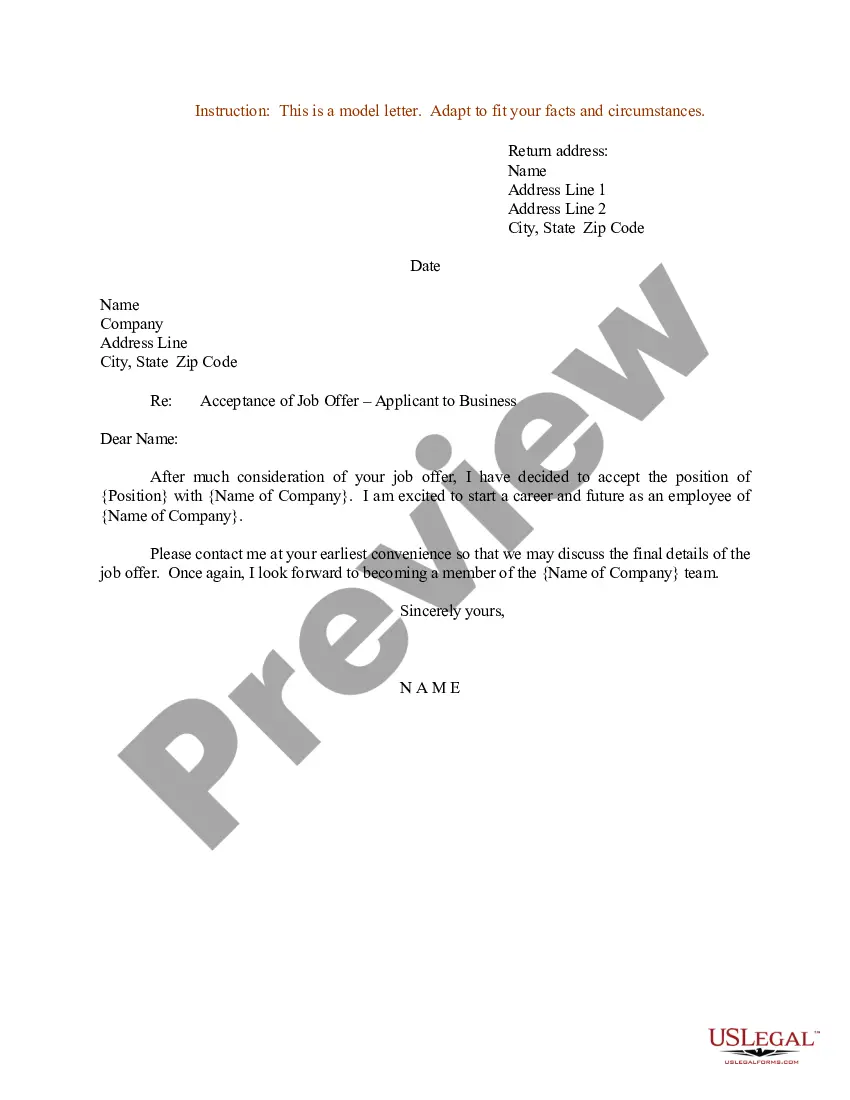
Motion Suppress Uslegal Form
Description
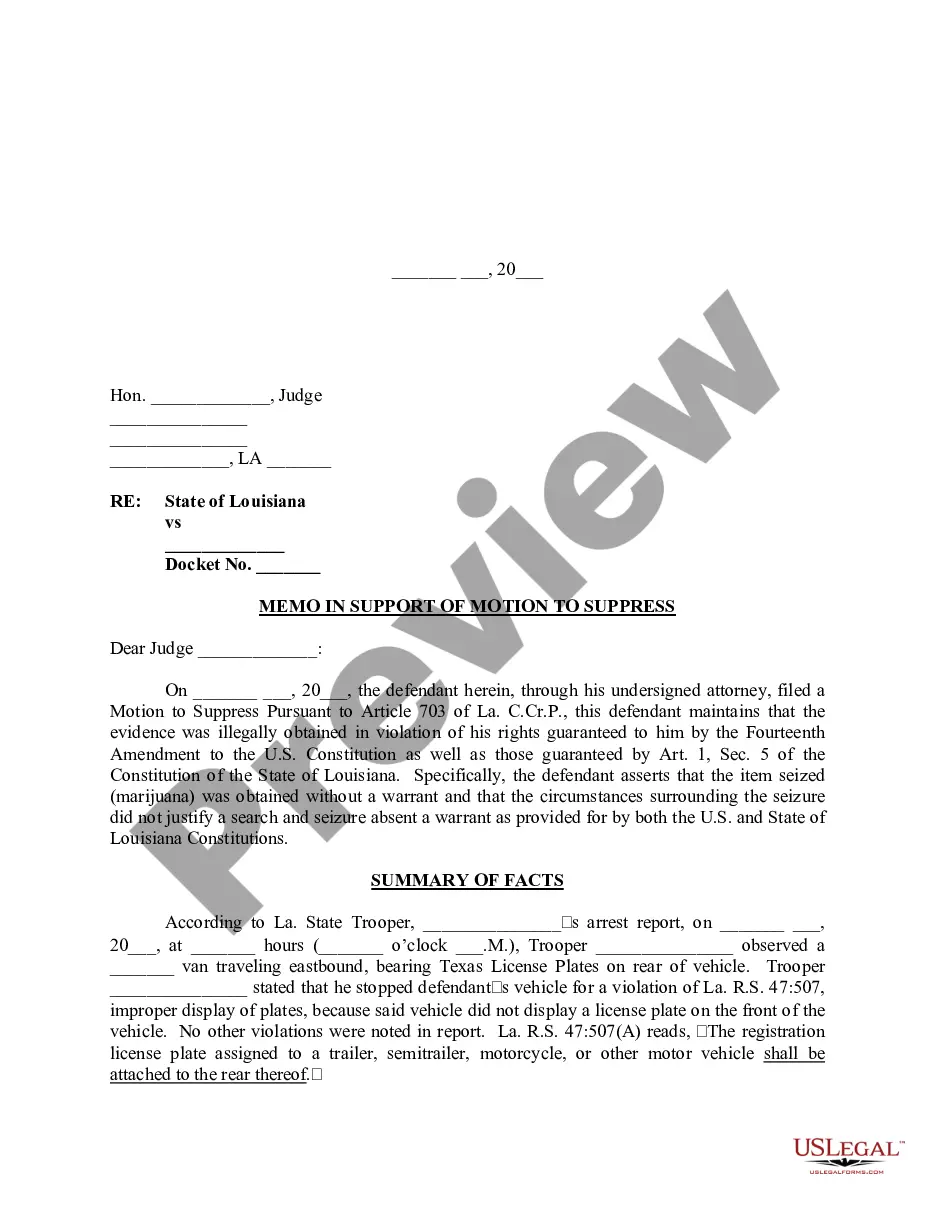
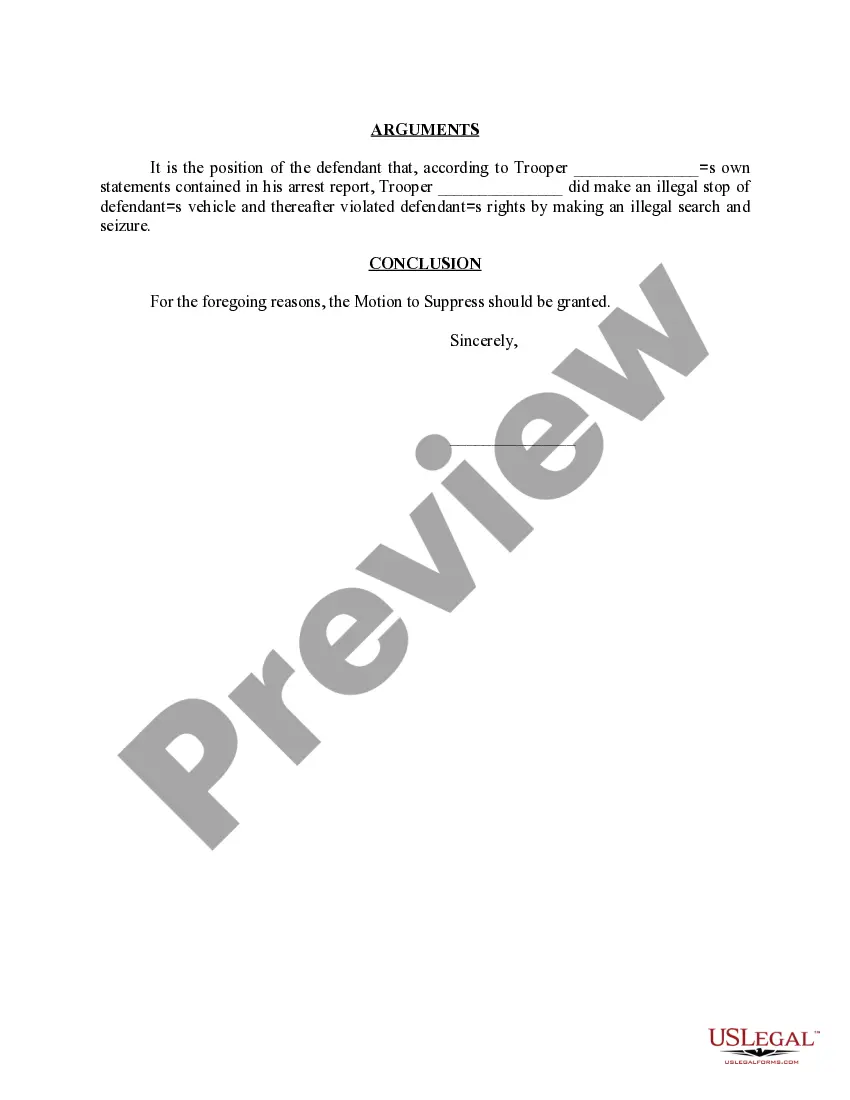
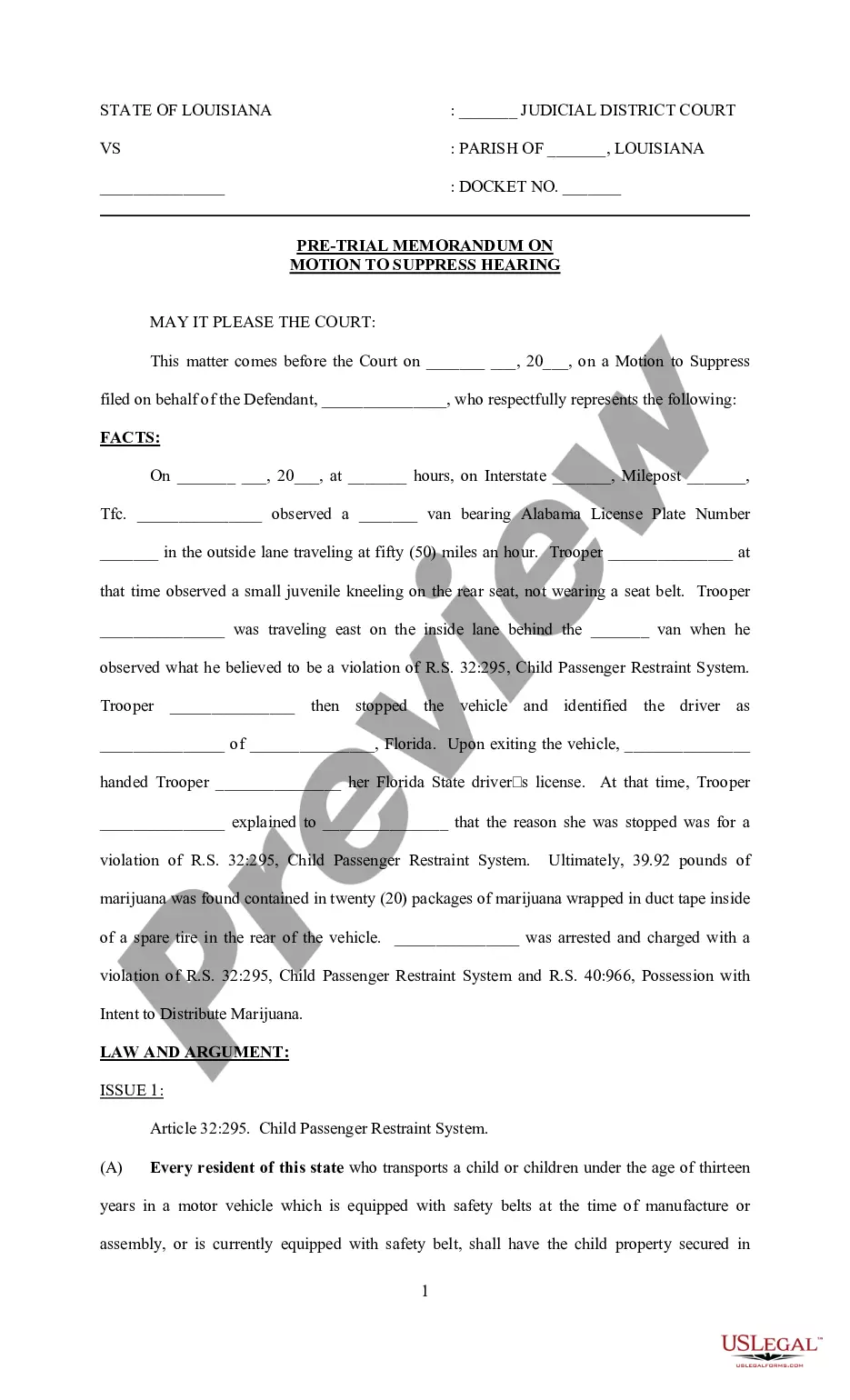
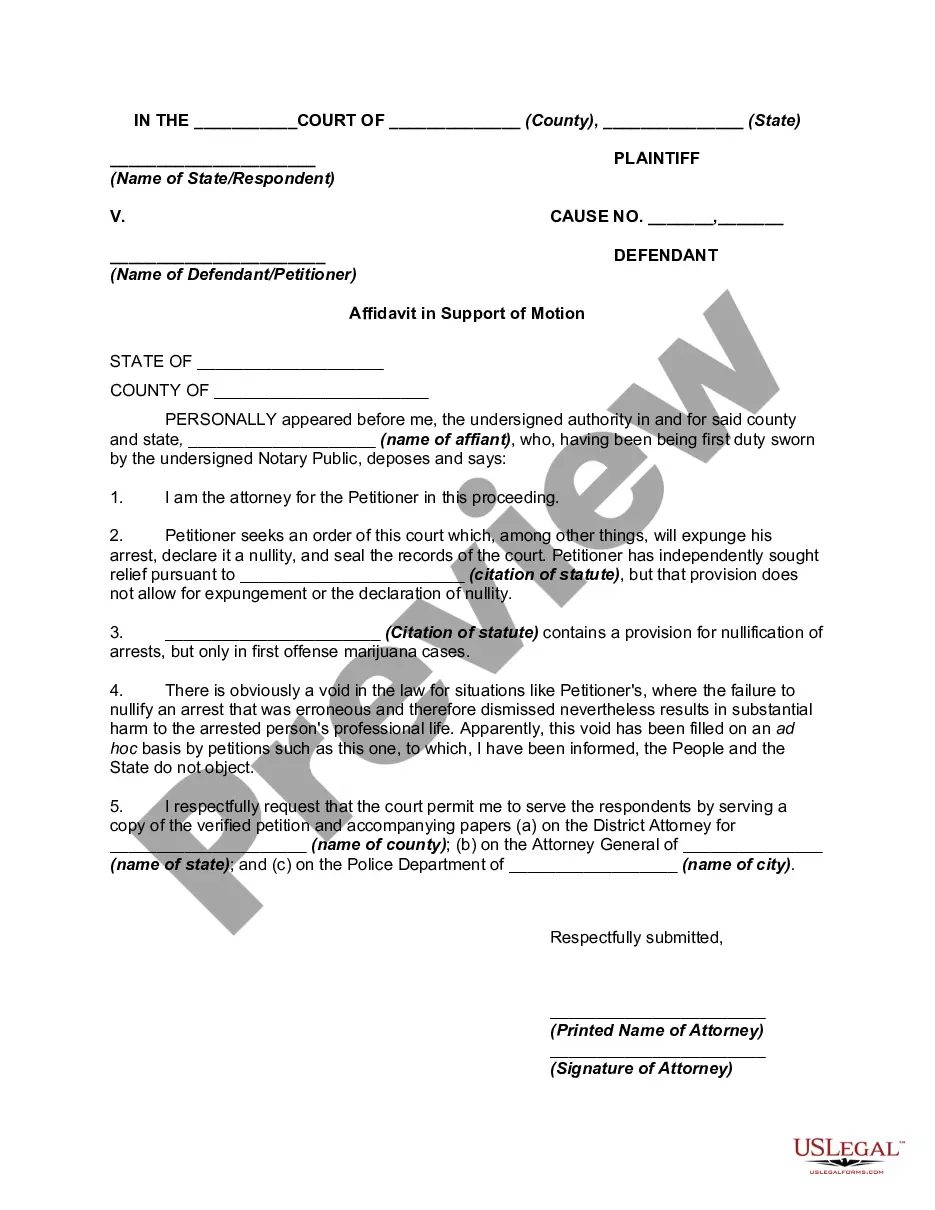
Get your form ready online
Our built-in tools help you complete, sign, share, and store your documents in one place.
Make edits, fill in missing information, and update formatting in US Legal Forms—just like you would in MS Word.
Download a copy, print it, send it by email, or mail it via USPS—whatever works best for your next step.
Sign and collect signatures with our SignNow integration. Send to multiple recipients, set reminders, and more. Go Premium to unlock E-Sign.
If this form requires notarization, complete it online through a secure video call—no need to meet a notary in person or wait for an appointment.
We protect your documents and personal data by following strict security and privacy standards.

Make edits, fill in missing information, and update formatting in US Legal Forms—just like you would in MS Word.

Download a copy, print it, send it by email, or mail it via USPS—whatever works best for your next step.

Sign and collect signatures with our SignNow integration. Send to multiple recipients, set reminders, and more. Go Premium to unlock E-Sign.

If this form requires notarization, complete it online through a secure video call—no need to meet a notary in person or wait for an appointment.

We protect your documents and personal data by following strict security and privacy standards.
Looking for another form?






Form popularity
FAQ
Writing a good motion involves clarity, precision, and legal soundness. Start with a clear introduction that outlines your request, followed by a structured body that supports your claims with facts and legal reasoning. Leverage resources like the Motion suppress uslegal form to ensure your motion adheres to legal standards, making it more persuasive and effective.
The standard of proof for a motion to suppress typically lies with the party making the motion. They must demonstrate that the evidence was obtained in violation of constitutional rights. This often requires presenting clear facts that substantiate the claim, which can be effectively organized using a Motion suppress uslegal form to strengthen your presentation.
To make a motion to suppress, define the evidence you want to exclude and establish why it should not be admitted. Use the Motion suppress uslegal form for specific guidance and formatting. Present your arguments clearly and concisely, highlighting legal precedents that support your case. This increases the chances of a favorable ruling.
Filing your own motion in court can seem daunting, but it is manageable. Begin by drafting your motion according to court guidelines and using a Motion suppress uslegal form to assist you with the structure. Once completed, you need to file the motion with the appropriate court clerk and serve copies to the involved parties. Always check local rules to ensure compliance.
Writing a motion to dismiss evidence involves several key steps. First, clearly state the legal basis for your request to exclude the evidence. Include relevant facts that support your position, while also using a Motion suppress uslegal form to structure your arguments effectively. This ensures your motion is clear and meets the court's requirements.
A motion is a formal request made to a court. For instance, a motion to suppress evidence is a common example where a party seeks to exclude certain evidence from trial. This type of motion highlights important legal principles and can significantly affect the outcome of a case. You can use a Motion suppress uslegal form to ensure the process aligns with judicial expectations.
A motion to suppress in Virginia similarly seeks to exclude evidence believed to be obtained illegally. Individuals often file this motion when they believe that improper procedures were used during investigations. To make your case stronger and clearly present your legal arguments, using the Motion suppress uslegal form can provide you with the necessary framework to follow in Virginia.
In Texas, a motion to dismiss must clearly state the grounds for dismissal, including legal reasons such as lack of jurisdiction or failure to state a claim. The motion should also adhere to procedural rules set by the court. To streamline this process, consider using the Motion suppress uslegal form, which provides a structured approach to ensure your motion meets all necessary legal requirements.
A motion to suppress evidence in Texas seeks to exclude specific evidence from a trial. This motion argues that the evidence was obtained in violation of constitutional rights, such as unlawful search and seizure. By using the Motion suppress uslegal form, you can clearly outline your arguments, making it easier for the court to understand why this evidence should be kept out of the trial.
A motion to retain in Texas is a formal request made to the court to keep a case active. This motion often occurs when there are concerns about delaying a trial or when an attorney seeks to avoid dismissal of a case due to inaction. Utilizing the Motion suppress uslegal form can help you structure your request effectively, ensuring it meets all court requirements.