Fraud For Housing
Description
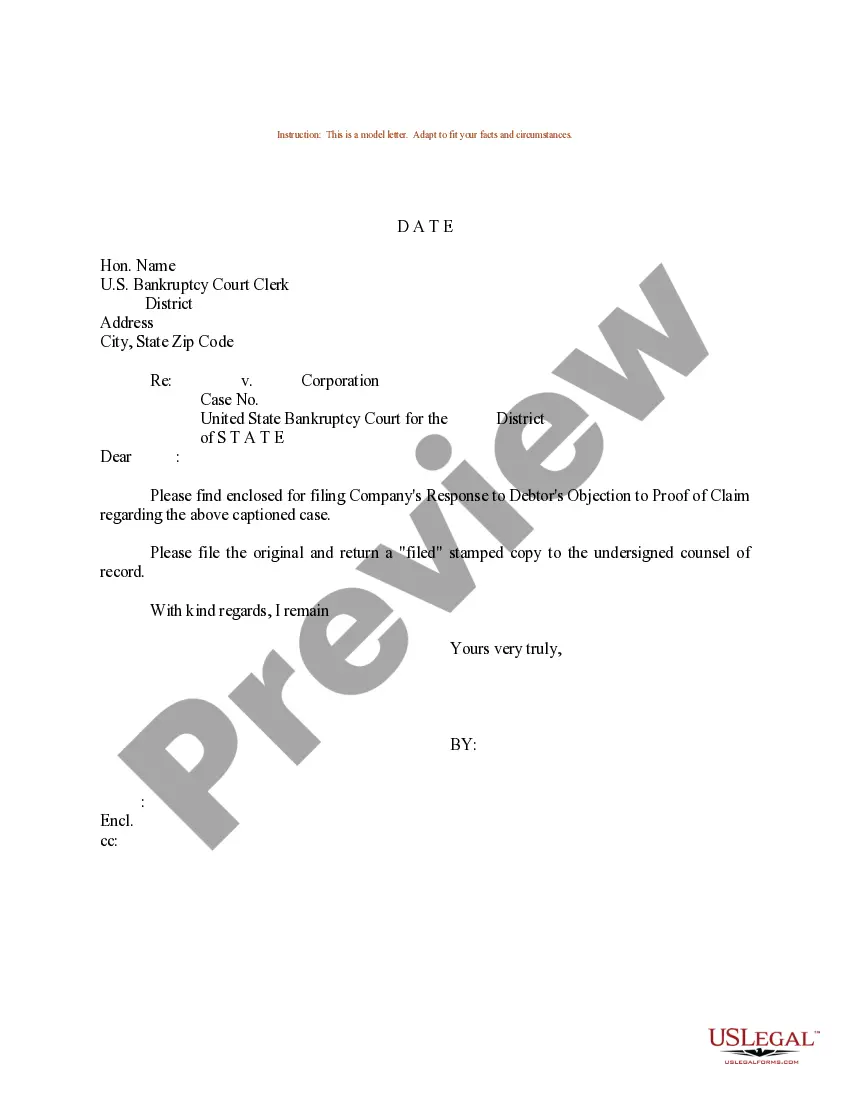
Get your form ready online
Our built-in tools help you complete, sign, share, and store your documents in one place.
Make edits, fill in missing information, and update formatting in US Legal Forms—just like you would in MS Word.
Download a copy, print it, send it by email, or mail it via USPS—whatever works best for your next step.
Sign and collect signatures with our SignNow integration. Send to multiple recipients, set reminders, and more. Go Premium to unlock E-Sign.
If this form requires notarization, complete it online through a secure video call—no need to meet a notary in person or wait for an appointment.
We protect your documents and personal data by following strict security and privacy standards.

Make edits, fill in missing information, and update formatting in US Legal Forms—just like you would in MS Word.

Download a copy, print it, send it by email, or mail it via USPS—whatever works best for your next step.

Sign and collect signatures with our SignNow integration. Send to multiple recipients, set reminders, and more. Go Premium to unlock E-Sign.

If this form requires notarization, complete it online through a secure video call—no need to meet a notary in person or wait for an appointment.

We protect your documents and personal data by following strict security and privacy standards.
Looking for another form?



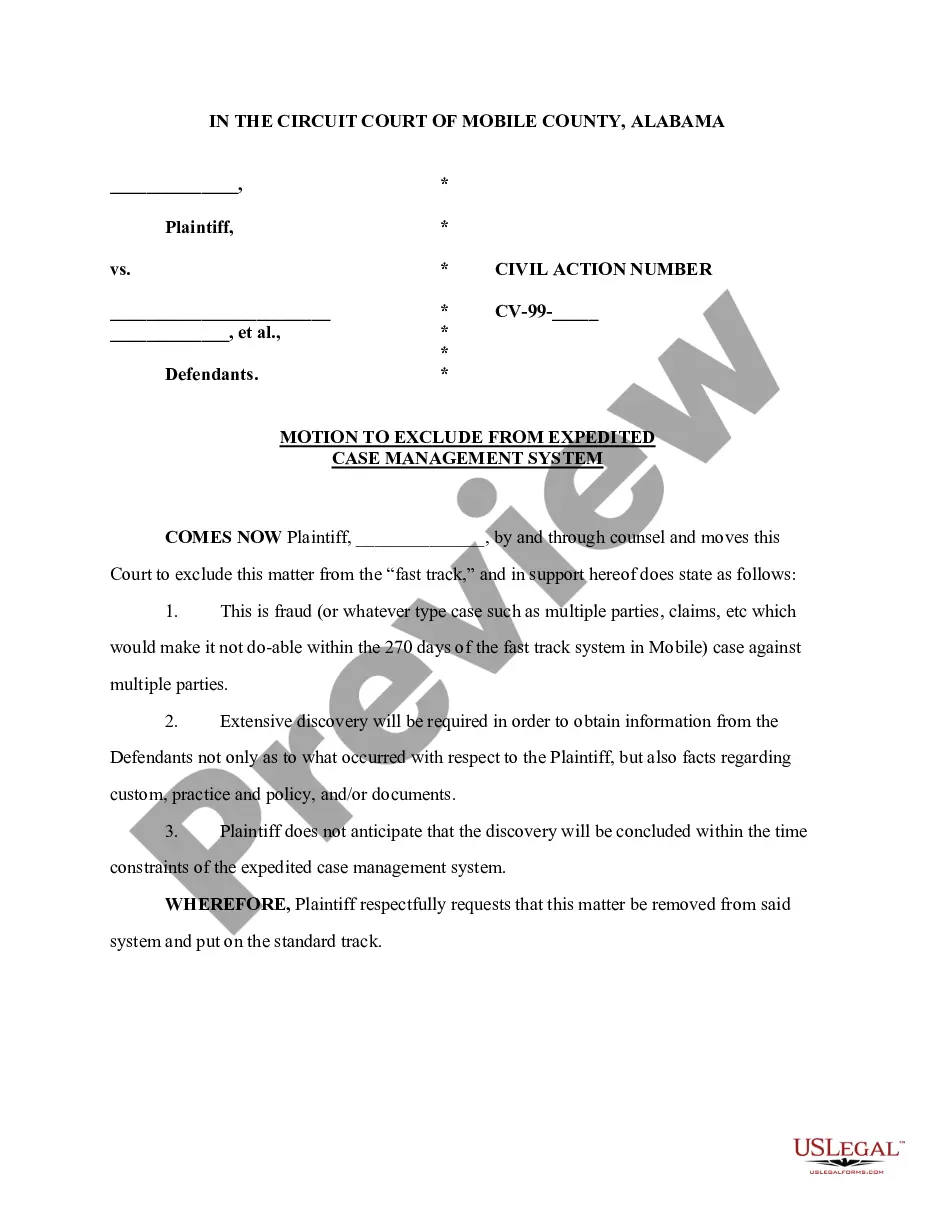


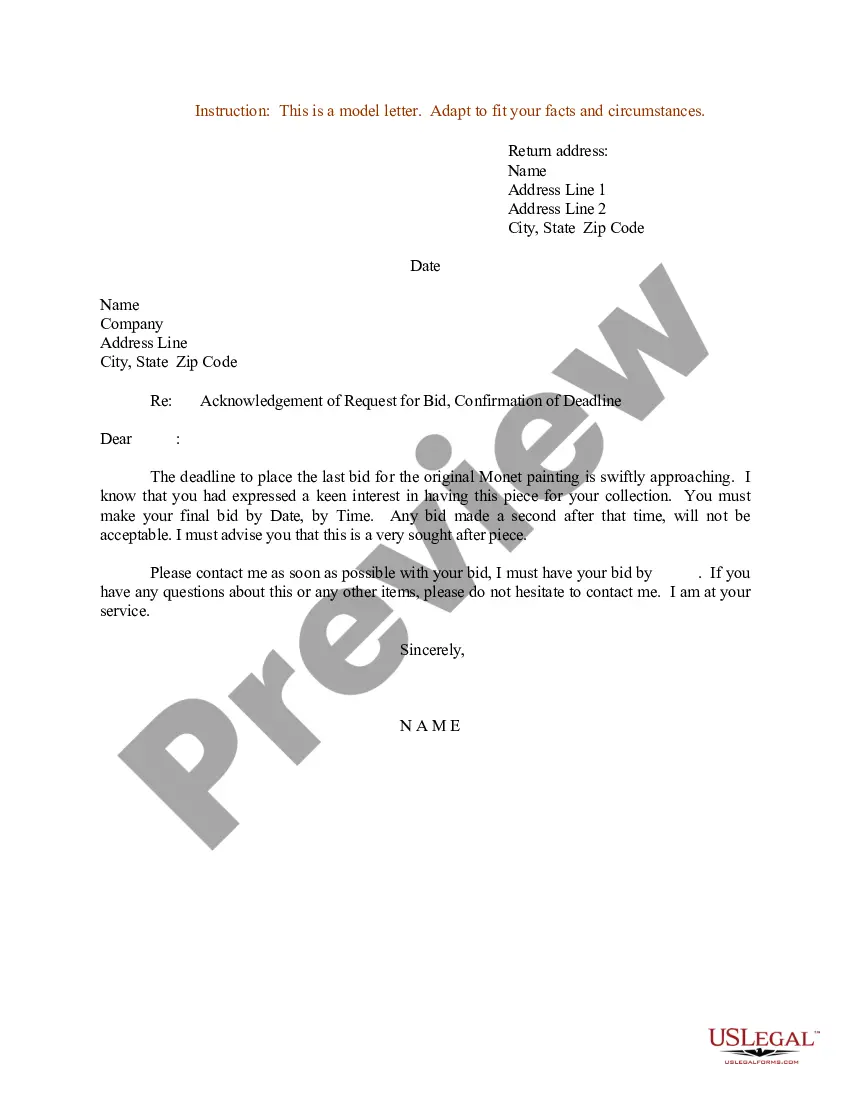

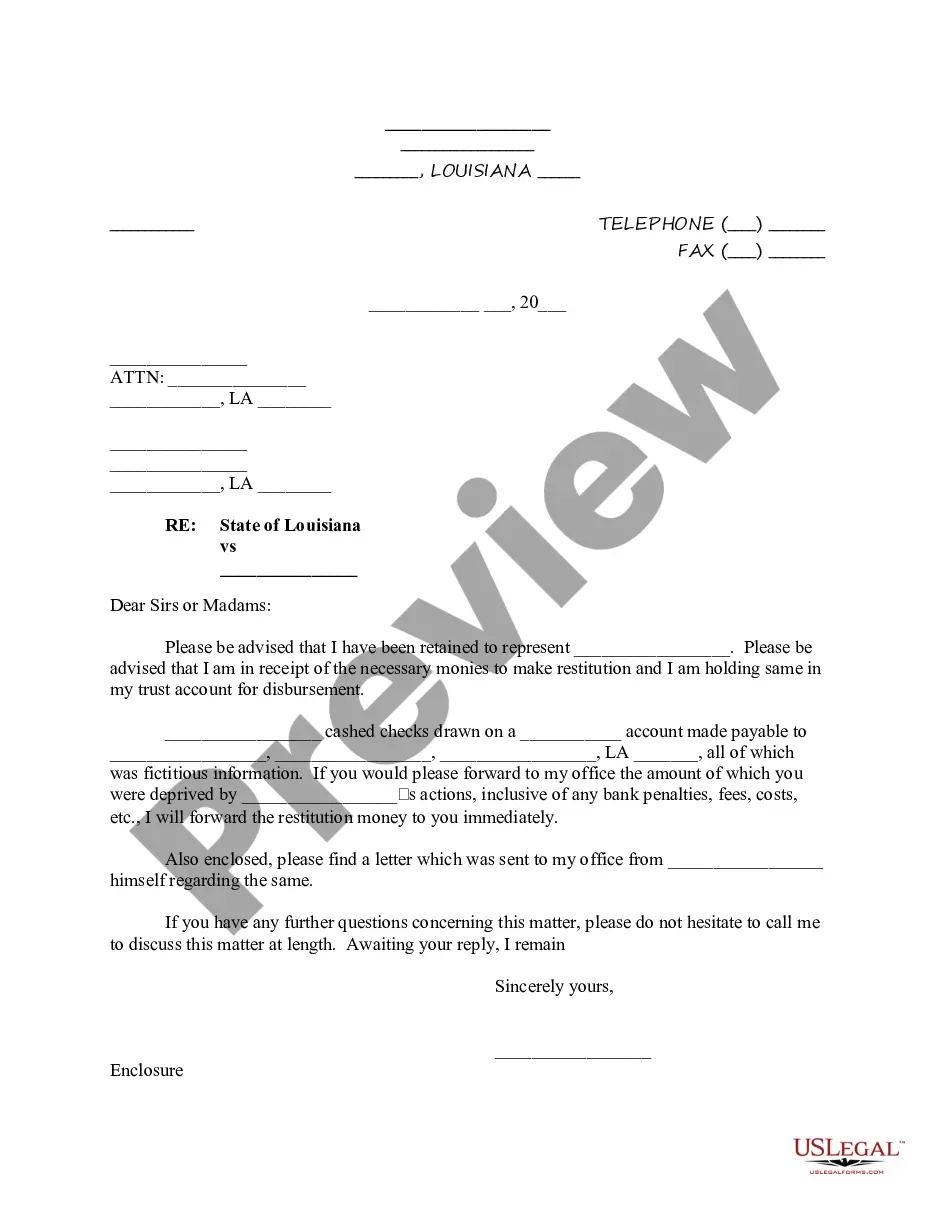
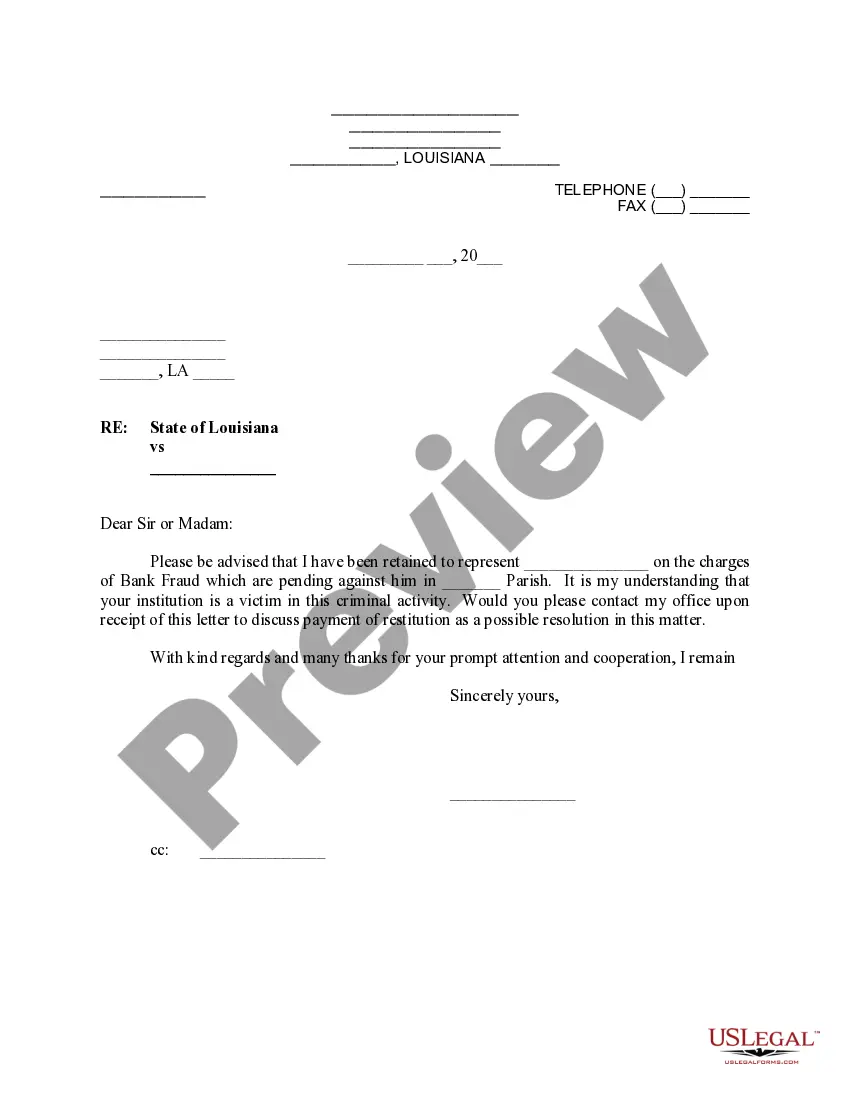
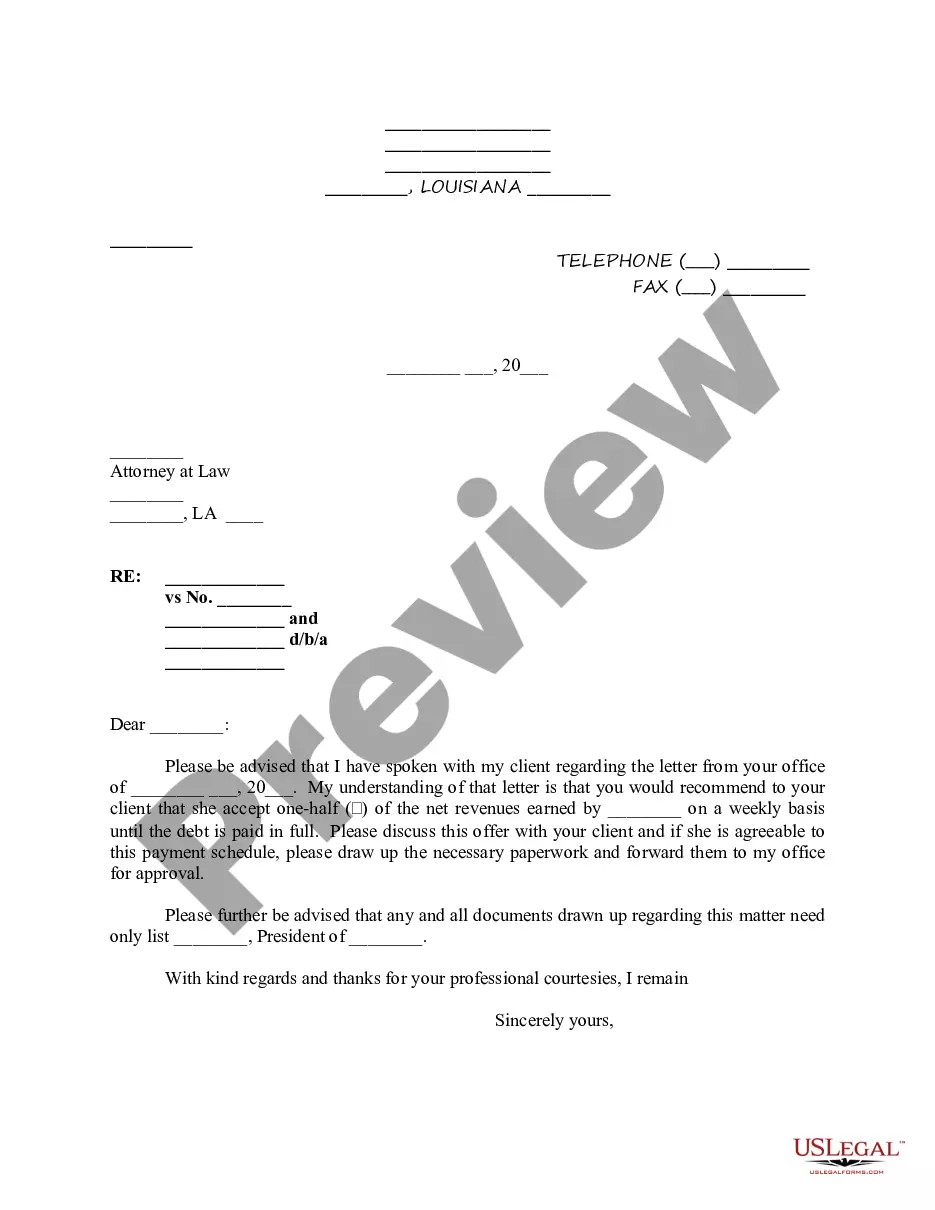
How to fill out Louisiana Follow-up Letter To Bank Regarding Restitution Offer In Bank Fraud Case?
- Log in to your US Legal Forms account if you're a returning user. Ensure your subscription is active; if not, renew it based on your chosen payment plan.
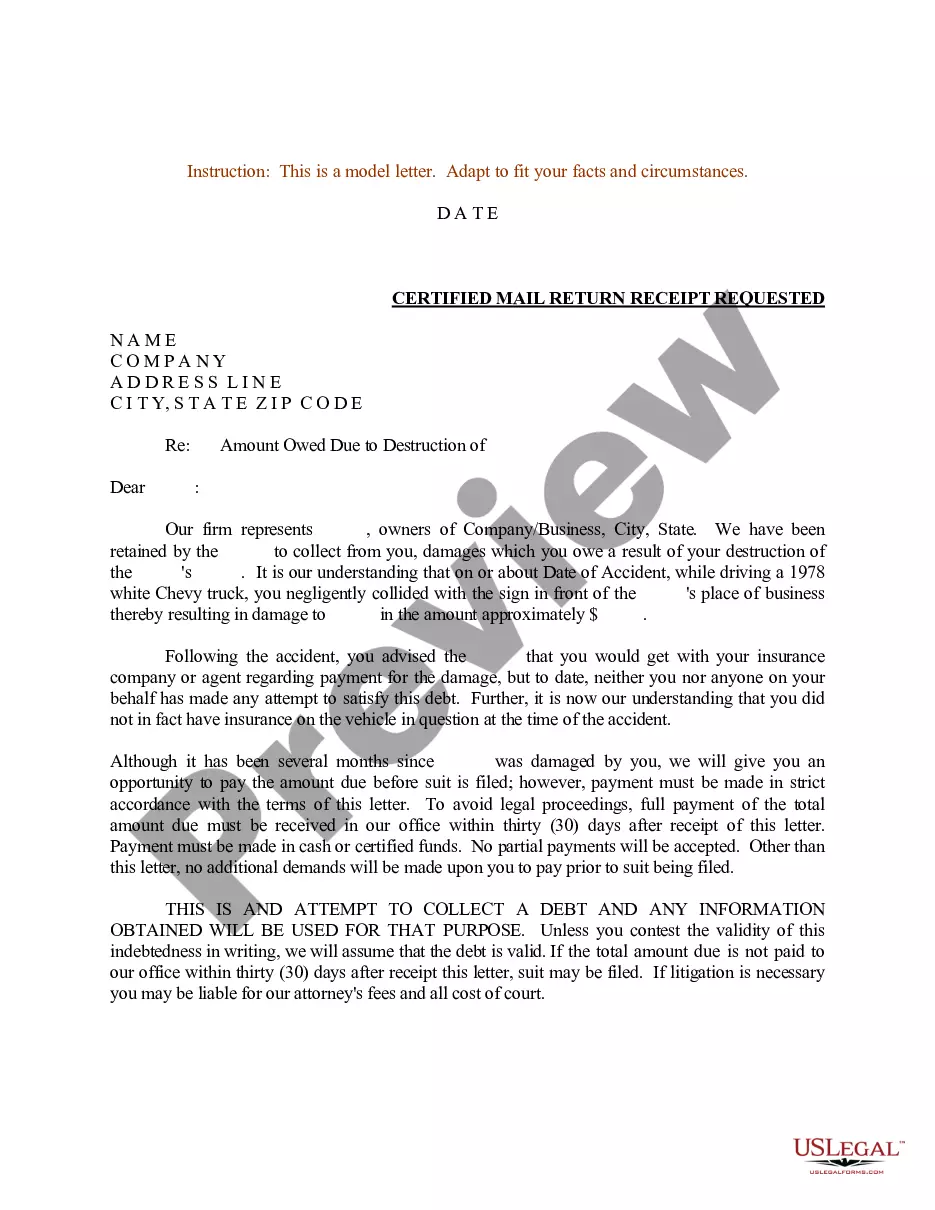
- Preview the document details and descriptions carefully to make sure you select the appropriate form that aligns with your requirements and local regulations.
- If you need a different form, use the search feature to find the suitable template. Verify that it meets your needs before proceeding.
- Purchase the form by clicking the 'Buy Now' button and selecting your preferred subscription plan. Registration is necessary for access to the form library.
- Complete your transaction by entering your payment details via credit card or PayPal, securing your subscription.
- Download the completed form to your device, allowing for easy access in the 'My Forms' section of your profile whenever necessary.
By following these steps, you'll streamline your process of obtaining essential legal forms, helping you address issues related to fraud for housing effectively.
Start today by exploring the extensive resources at US Legal Forms, and ensure your legal documents are accurate and reliable!
Form popularity
FAQ
Fraud for a house encompasses a variety of illegal actions aimed at acquiring property through dishonest means. This may involve falsifying documents, misrepresenting property conditions, or engaging in deceptive financing practices. When faced with potential fraud for a house, utilizing resources and documentation services from a platform like US Legal Forms can provide essential support in preventing and addressing these issues.
Fraud for housing refers to any fraudulent act that leads to obtaining housing benefits or properties under false pretenses. This can include providing inaccurate financial information, using false identities, or misrepresenting eligibility for housing assistance. Recognizing and addressing fraud for housing helps maintain the integrity of the housing market and protects consumers from deceitful practices.
Fraud for profit typically involves schemes designed to generate financial gain through deceptive practices, while fraud for housing specifically targets the residential real estate market. In the context of fraud for housing, individuals may gain unauthorized access to housing benefits or misrepresent their financial situation to secure housing. Understanding this distinction is crucial, especially when navigating legal concerns related to property and assets.
To report suspicious activity or fraud for housing, you can directly contact the Denver Housing Authority through their official website or phone line. Provide as much detail as possible about the alleged fraud, including any evidence you may have. Prompt reporting can assist authorities in addressing fraudulent activities effectively, ensuring the safety and security of housing in your community.
Property fraud for housing usually involves unauthorized individuals claiming ownership or attempting to sell a property without consent. These schemes often include falsified documents, like titles or contracts, leading to financial loss for unsuspecting buyers. Engaging a reliable platform, like uslegalforms, can help you draft proper agreements and verify property legitimacy.
Fraud activities for housing encompass any deceptive action intended to secure an unlawful gain, affecting the rightful owner or potential buyers. Typical fraud activities include manipulating property appraisals, falsifying rental agreements, or misrepresenting property repairs. Recognizing these schemes is crucial for protecting yourself and your investments.
Fraud can be understood at three levels: individual, organizational, and systemic. Individual fraud occurs when one person commits deceptive acts for personal gain. Organizational fraud typically involves businesses or institutions that enact misleading practices to deceive clients or regulators. Systemic fraud refers to widespread dishonest practices that can become embedded within societal processes. By recognizing these levels, individuals can better identify and combat fraud in housing situations.
The three primary categories for fraud and abuse in housing include financial fraud, document fraud, and misrepresentation. Financial fraud may involve schemes like falsifying income to obtain loans or benefits. Document fraud focuses on the creation or alteration of important papers, making it harder to trace legitimate transactions. Misrepresentation often occurs when an individual deliberately provides misleading information to gain housing advantages. Each category plays a crucial role in understanding how fraud for housing can manifest.
Fraud in housing can generally be classified into three main categories: fraud for housing, mortgage fraud, and rental fraud. Each class targets different aspects of real estate transactions and deceives various parties involved. For instance, fraud for housing typically involves misrepresenting personal financial information to secure housing benefits or loans unlawfully. Understanding these classes helps individuals recognize potential pitfalls in housing deals.