Mississippi Petition to Sell Real Estate by Executor
Overview of this form
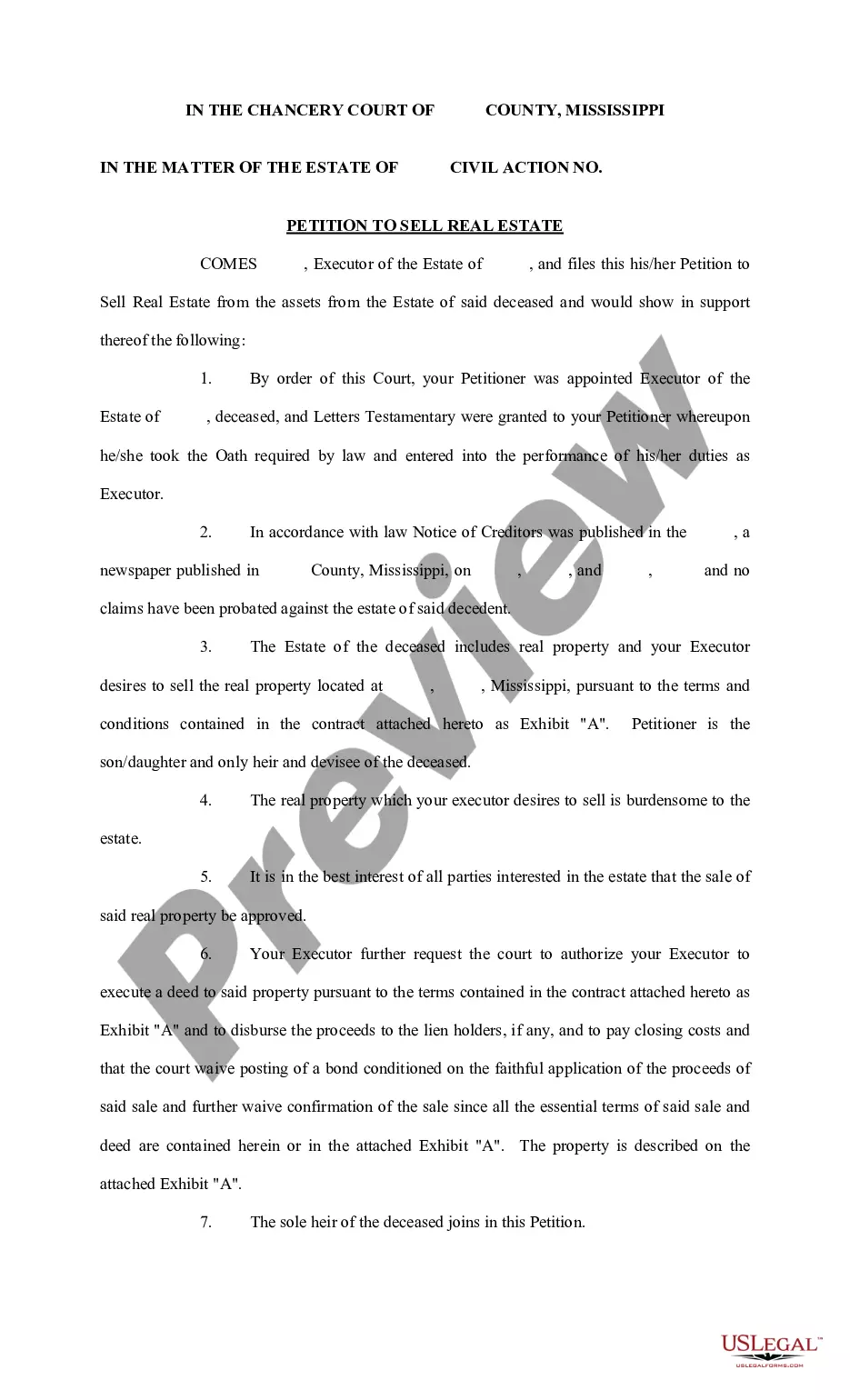
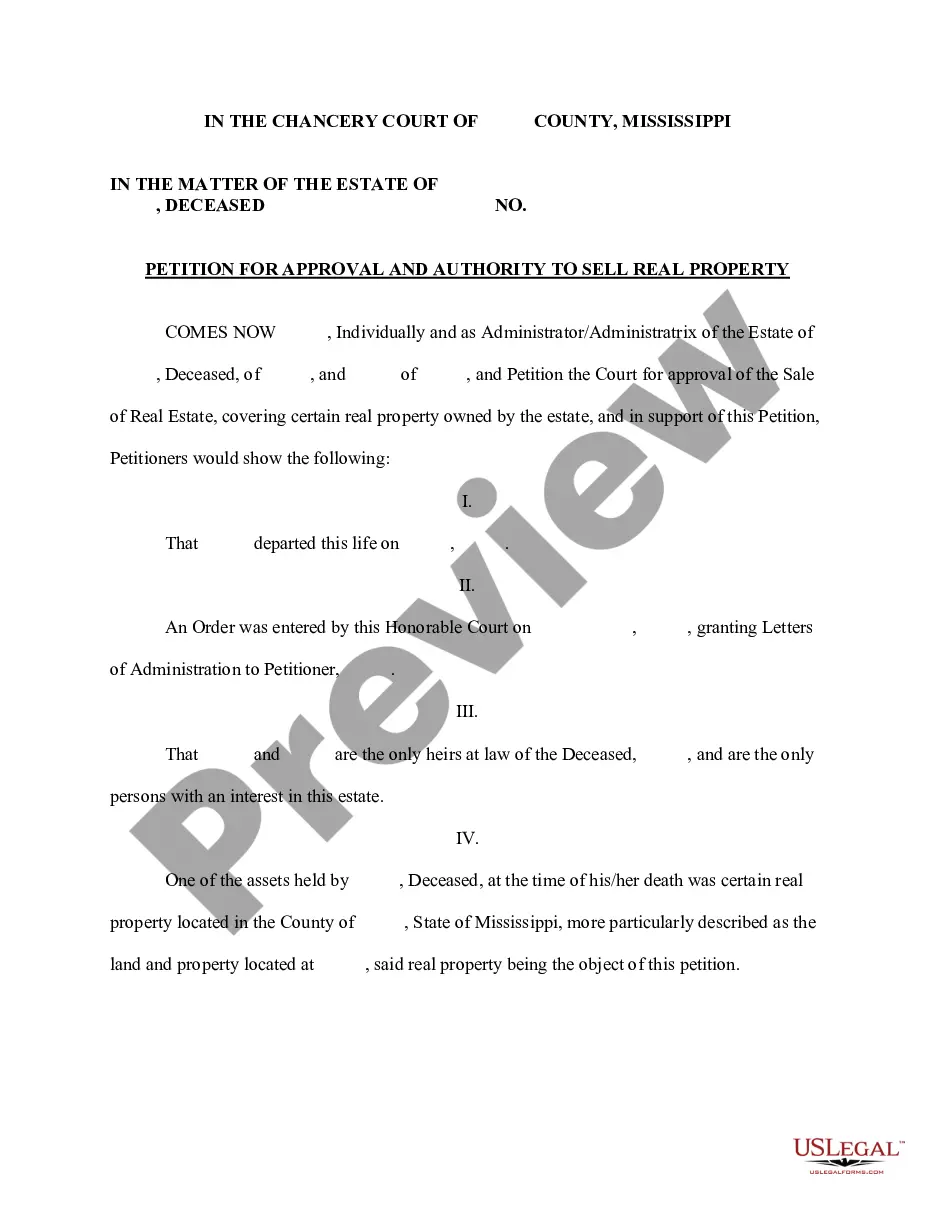
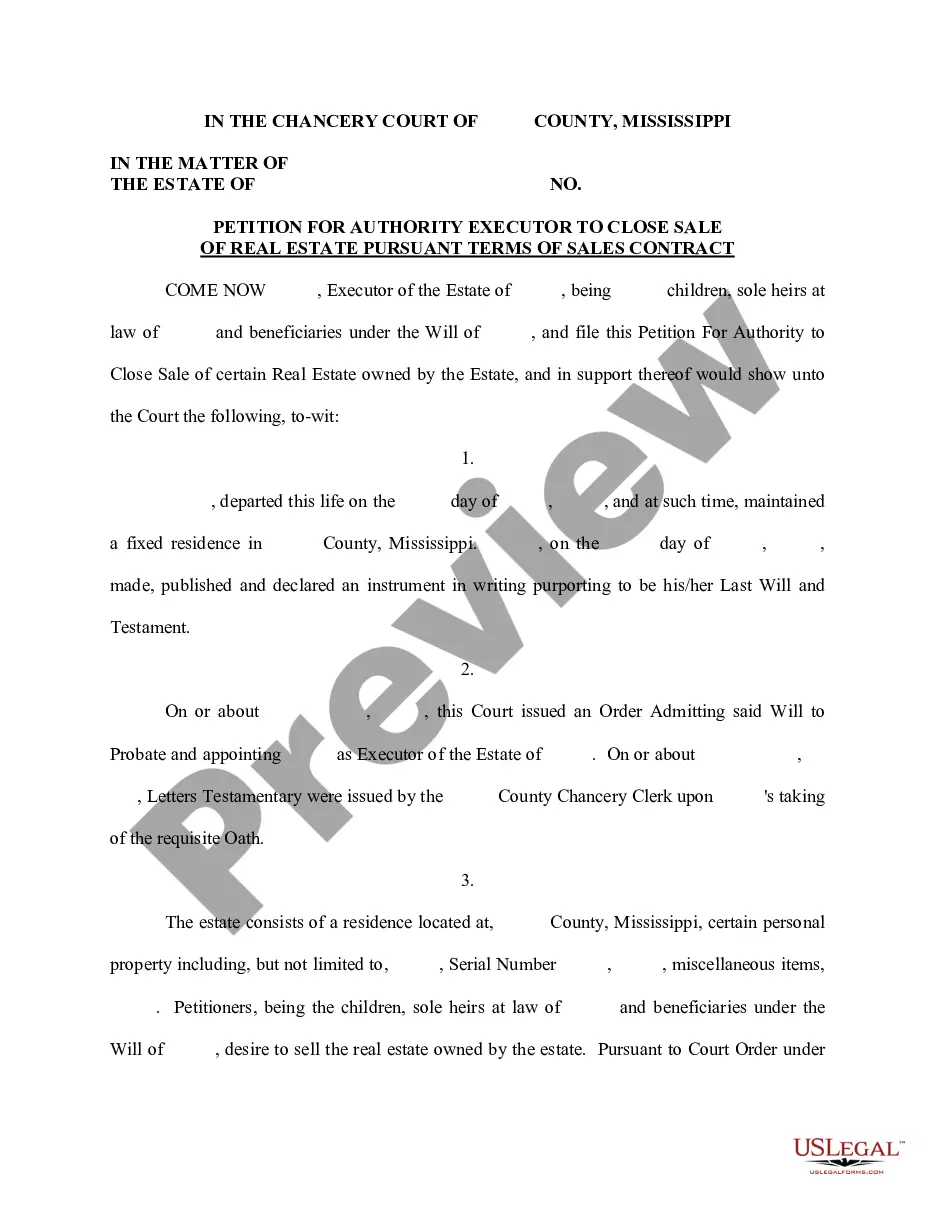
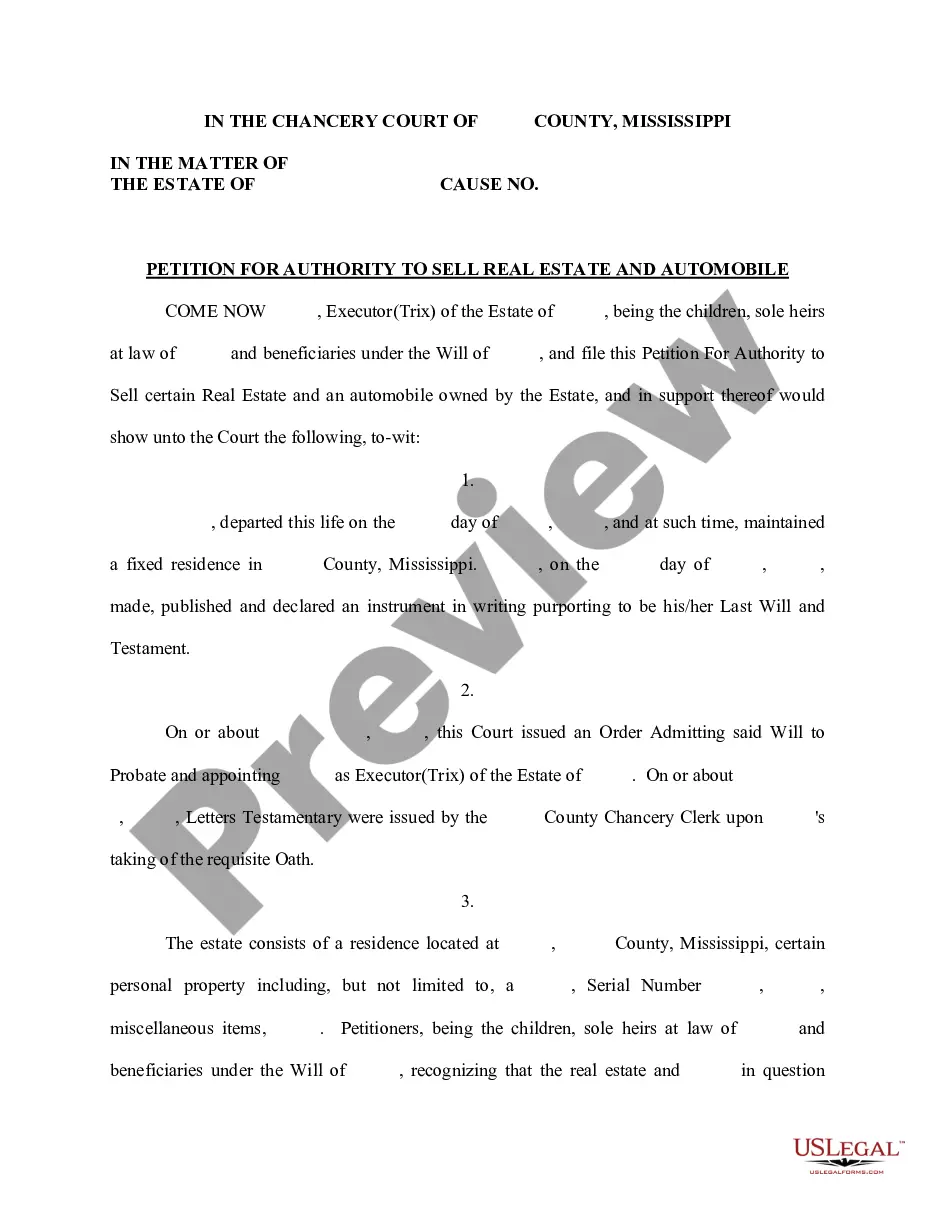
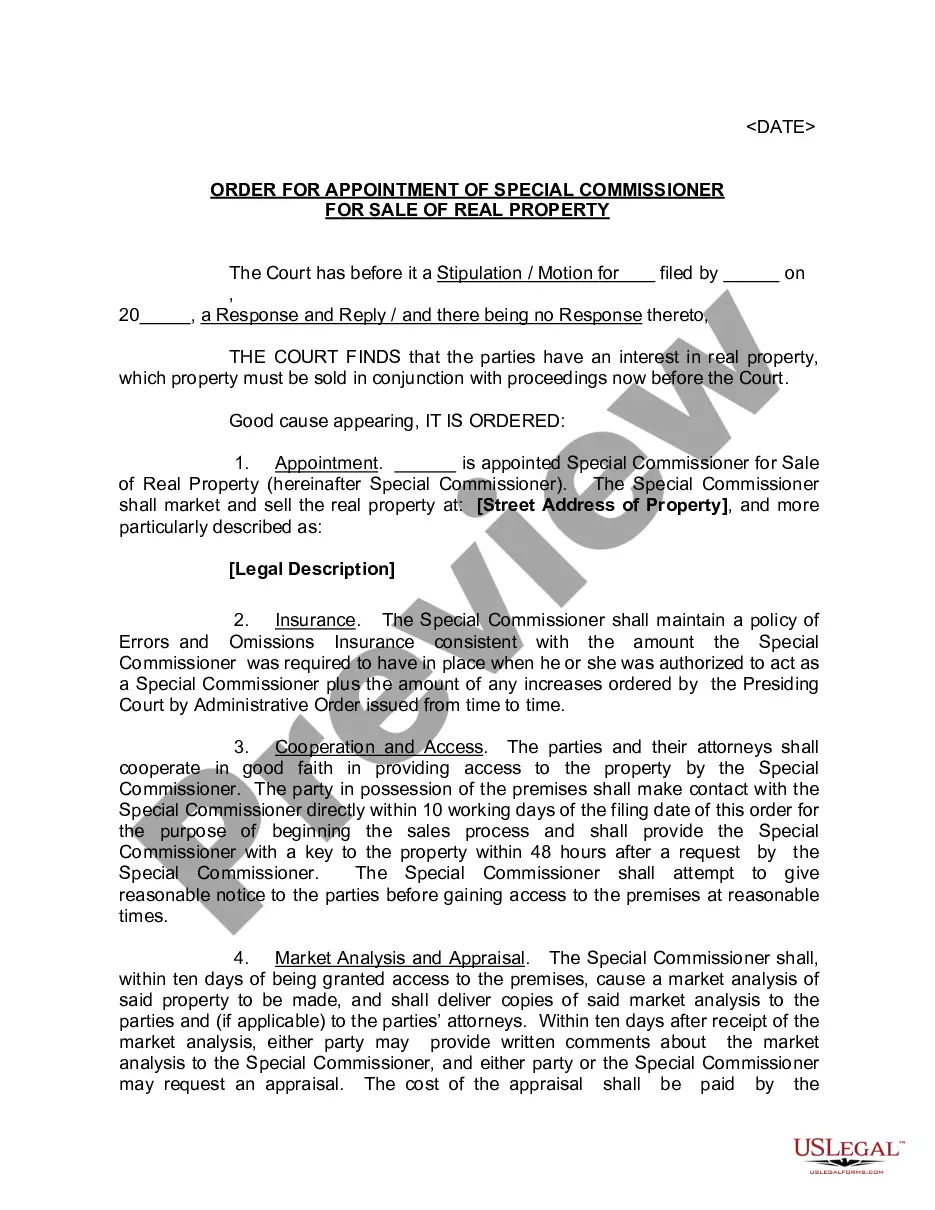
The Petition to Sell Real Estate by Executor is a legal document used by an executor of an estate to request court approval for the sale of real property. This form is essential for initiating the legal process of selling estate assets, distinguishing it from other real estate sales forms due to its judicial requirement. Proper use of this form allows the executor to manage estate assets effectively and ensure that any burdensome properties can be sold to benefit the estate and its beneficiaries.
Form components explained
- Identification of the real property intended for sale.
- Statement detailing why the property is considered burdensome to the estate.
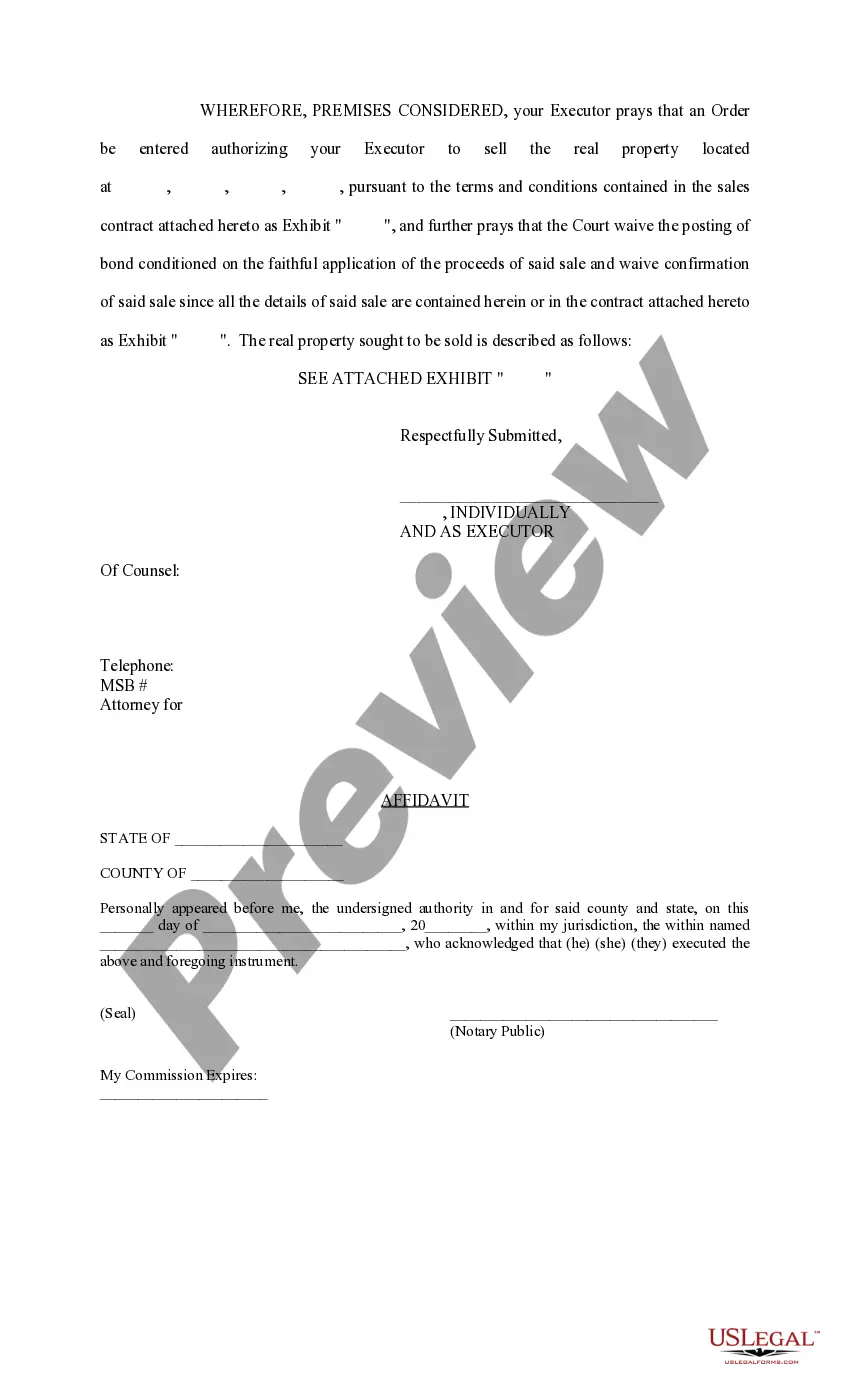
- Request for court authorization for the executor to execute a deed and disburse proceeds.
- Consent from the sole heir for the sale of the property.
- Attachment of a detailed contract (Exhibit A) related to the sale.
When this form is needed
This form should be used when an executor needs to sell real estate that is part of a deceased person's estate. Situations may include: the property generating ongoing expenses, the need to settle outstanding debts, or the desire to liquidate assets for the benefit of the heirs. It is a crucial step in ensuring that the estate is settled in a timely and efficient manner.
Who this form is for
This form is intended for:
- Executors or personal representatives appointed to manage a deceased individual's estate.
- Individuals seeking to sell real estate as part of estate administration.
- Heirs involved in the estate who support the sale decision.
How to complete this form
- Identify and clearly describe the real property you wish to sell.
- Specify why selling the property is in the best interest of the estate.
- Obtain consent from any necessary heirs or beneficiaries.
- Attach the sale contract as Exhibit A, detailing terms of the sale.
- Submit the completed petition to the appropriate probate court.
Notarization requirements for this form
This form does not typically require notarization unless specified by local law. It is always best to consult the court or a legal professional to ensure compliance with jurisdictional rules regarding notarization.
Get your form ready online
Our built-in tools help you complete, sign, share, and store your documents in one place.
Make edits, fill in missing information, and update formatting in US Legal Forms—just like you would in MS Word.
Download a copy, print it, send it by email, or mail it via USPS—whatever works best for your next step.
Sign and collect signatures with our SignNow integration. Send to multiple recipients, set reminders, and more. Go Premium to unlock E-Sign.
If this form requires notarization, complete it online through a secure video call—no need to meet a notary in person or wait for an appointment.
We protect your documents and personal data by following strict security and privacy standards.

Make edits, fill in missing information, and update formatting in US Legal Forms—just like you would in MS Word.

Download a copy, print it, send it by email, or mail it via USPS—whatever works best for your next step.

Sign and collect signatures with our SignNow integration. Send to multiple recipients, set reminders, and more. Go Premium to unlock E-Sign.

If this form requires notarization, complete it online through a secure video call—no need to meet a notary in person or wait for an appointment.

We protect your documents and personal data by following strict security and privacy standards.
Common mistakes to avoid
- Not providing a clear justification for the sale of the property.
- Failing to include the necessary attachments, such as Exhibit A.
- Not obtaining the required consent from beneficiaries or heirs.
- Incomplete property descriptions or failure to clarify property burdens.
- Neglecting to verify state-specific requirements for filing.
Why complete this form online
- Immediate access to downloadable templates drafted by licensed attorneys.
- Convenient editing features to tailor the form to specific circumstances.
- Reduced processing time, allowing for quicker legal proceedings.
- Secure storage and retrieval of important legal documents.
Looking for another form?
Form popularity
FAQ
The Executor of an Estate is allowed to sell property owned by the deceased person, as long as there are no surviving joint owners or clauses in the Will that prevent selling the property.
In the best of circumstances, the Mississippi probate process usually takes 4 to 6 months. This would only be possible if the estate was fairly simple, all interested parties are agreeable, and documents are signed and returned to the probate attorney in a timely manner.
File the will with the probate court. Take control of the probate timeline. Check if the estate qualifies for streamlined probate. Don't hire an agent until the court names you as executor.
The terms of the Independent Administration of Estates Act do not avoid probate, but they do allow an executor to sell an estate's real estate without probate court approval under some circumstances.
The executor can sell property without getting all of the beneficiaries to approve.Once the executor is named there is a person appointed, called a probate referee, who will appraise the estate assets.
According to estate planning attorney Adam Ansari, it is legal for an executor to purchase the home instead of selling it, as long as the executor purchases the property for fair market value and all of the beneficiaries agree with the terms of the sale.
Once the COURT appoints you as executor, you will record an affidavit of death of joint tenant to get your mother's name of the property. Then, when you get an order for final distribution, you will record a certified copy to get the property into the names of the beneficiaries under the will.