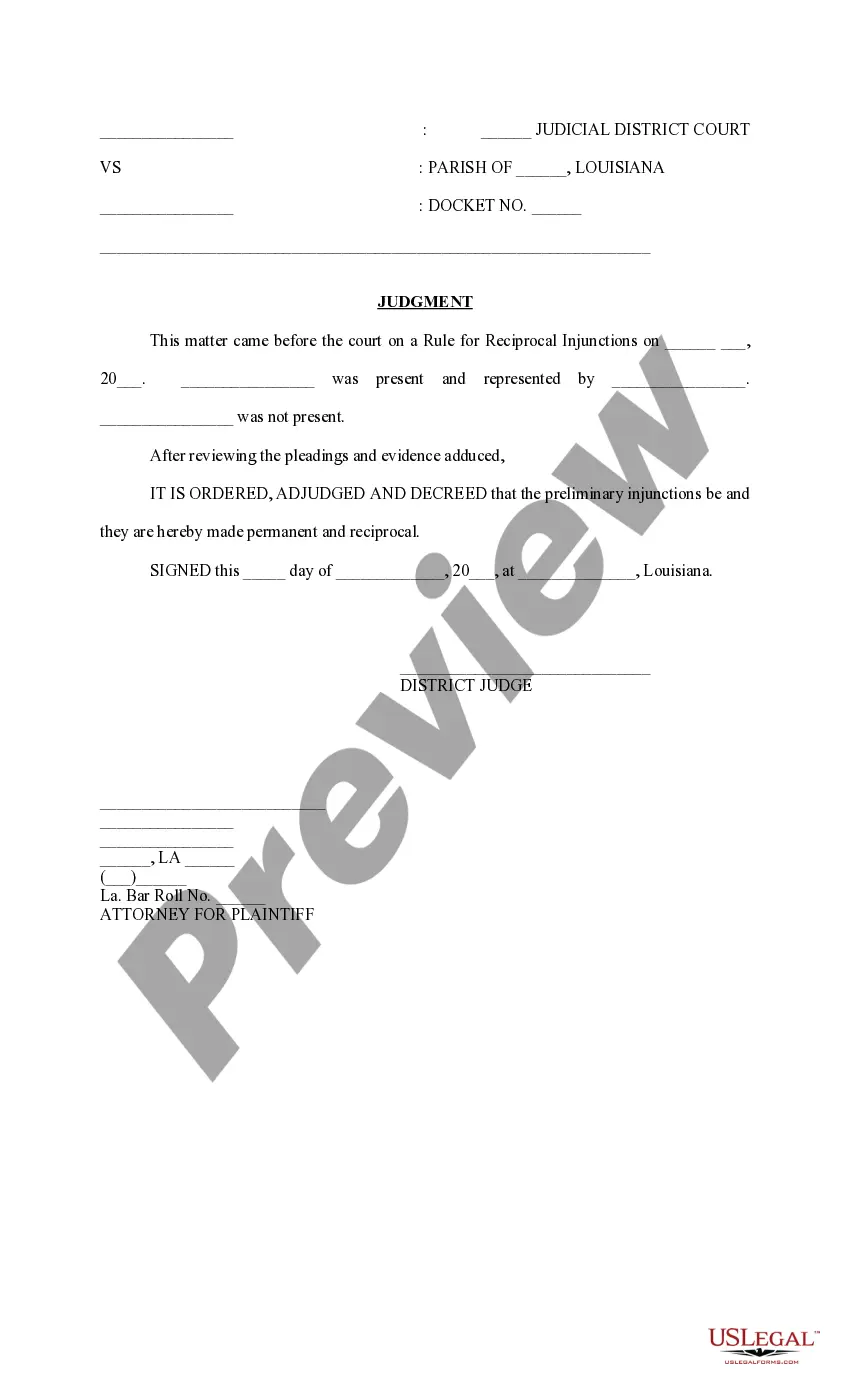
Injunction Without Firearm Restriction
Description
Get your form ready online
Our built-in tools help you complete, sign, share, and store your documents in one place.
Make edits, fill in missing information, and update formatting in US Legal Forms—just like you would in MS Word.
Download a copy, print it, send it by email, or mail it via USPS—whatever works best for your next step.
Sign and collect signatures with our SignNow integration. Send to multiple recipients, set reminders, and more. Go Premium to unlock E-Sign.
If this form requires notarization, complete it online through a secure video call—no need to meet a notary in person or wait for an appointment.
We protect your documents and personal data by following strict security and privacy standards.

Make edits, fill in missing information, and update formatting in US Legal Forms—just like you would in MS Word.

Download a copy, print it, send it by email, or mail it via USPS—whatever works best for your next step.

Sign and collect signatures with our SignNow integration. Send to multiple recipients, set reminders, and more. Go Premium to unlock E-Sign.

If this form requires notarization, complete it online through a secure video call—no need to meet a notary in person or wait for an appointment.

We protect your documents and personal data by following strict security and privacy standards.
Looking for another form?

How to fill out Louisiana Judgment On Rule For Reciprocal Injunctions?
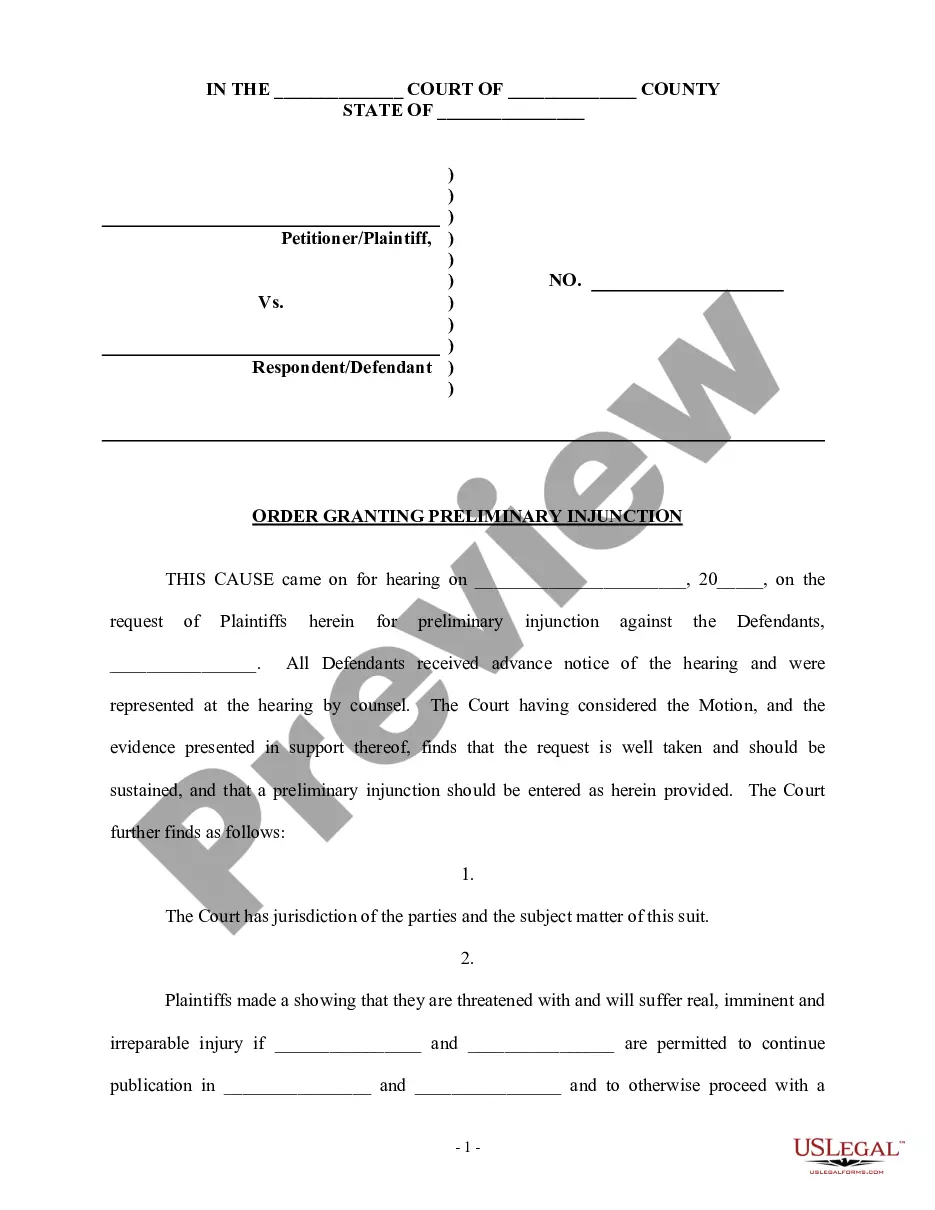
The Injunction Without Firearm Restriction displayed on this page is a reusable official template crafted by experienced attorneys in accordance with national and local regulations.
For over 25 years, US Legal Forms has offered individuals, companies, and lawyers more than 85,000 validated, state-specific documents for any business and personal scenario. It’s the fastest, easiest, and most reliable method to obtain the forms you require, as the service ensures bank-level data security and anti-malware safeguards.
Select the format you prefer for your Injunction Without Firearm Restriction (PDF, DOCX, RTF) and download the sample to your device. Print the template to fill it out manually or use an online multifunctional PDF editor to swiftly and accurately complete and sign your form with a valid signature. Use the same document again whenever necessary. Access the My documents tab in your profile to redownload any previously saved documents. Register with US Legal Forms to have verified legal templates for all of life’s circumstances at your fingertips.
- Search for the document you require and examine it.
- Browse through the file you sought and preview it or review the form description to ensure it meets your requirements. If it doesn’t, use the search bar to find the correct one. Click Buy Now once you have identified the template you need.
- Register and Log In.
- Choose the pricing option that fits your needs and create an account. Use PayPal or a credit card for a quick payment. If you already possess an account, Log In and verify your subscription to proceed.
- Obtain the editable template.
Form popularity
FAQ
For an injunction without firearm restriction, you need compelling evidence to support your claims. This evidence may include witness statements, photographs, documents, or any relevant records that illustrate the threat or harm you face. You should aim to establish a substantial link between the evidence and your need for the injunction. USLegalForms provides tools and templates that can help you organize and present your evidence effectively.
When seeking an injunction without firearm restriction, you need to consider four key factors: likelihood of success on the merits, potential for irreparable harm, balance of equities, and the public interest. You must show that you have a strong chance of winning your case, that you will suffer harm that cannot be repaired, and that the benefits of granting the injunction outweigh any drawbacks. Moreover, the court will evaluate how the injunction impacts the community at large. Utilizing resources like USLegalForms can simplify this process.
To obtain an injunction without firearm restriction, you must demonstrate a clear and present danger of harm. This involves showing that your situation requires immediate intervention to prevent further damage or injury. Additionally, you should provide evidence that the harm you face is likely to occur without the injunction. It’s crucial to present your case clearly, and platforms like USLegalForms can assist you in preparing the necessary documentation.
Yes, an injunction can be granted even if there is no possession involved. The court focuses on the potential threat of harm or the need for protection, rather than physical possession of items. In cases where you seek an injunction without firearm restriction, it is vital to present compelling evidence that justifies the need for the injunction. Utilizing platforms like uslegalforms can assist you in navigating the legal requirements effectively.
Having a restraining order may complicate your ability to obtain a gun license. Generally, laws vary by state, but many jurisdictions impose restrictions on individuals with active restraining orders. However, you can still explore options for an injunction without firearm restriction to potentially alleviate these limitations. Consulting with a legal professional can help clarify your specific situation and guide you through the process.
When seeking an injunction without firearm restriction, the petitioner must demonstrate a clear and convincing standard of proof. This means you need to provide substantial evidence that supports your claims. Courts require proof that you will suffer irreparable harm without the injunction, and that the harm outweighs any potential harm to the other party. It's essential to present your case effectively to enhance your chances of obtaining the injunction.
The purpose of the hearing is for the judge to decide whether or not to issue a final injunction. The judge decides the time period for the injunctions. If both parties appear and want to proceed, the judge can listen to both parties, witnesses, and review the evidence.
Our advice is to certainly avoid any location you believe the alleged victim could be. Under the standard used in Wisconsin, an individual may be in violation of the 72-hour no contact order even if he doesn't have actual, physical contact with the alleged victim. Importantly, the victim can waive the no contact order.
In other words, when a person is arrested for a crime of domestic abuse, they are forbidden from contacting the victim for three days. The victim does not have to do anything to request a no contact order; it happens automatically.
However, if an individual finds himself or herself under arrest for domestic abuse, he or she also needs to be aware of Wisconsin's no-contact law. As its name implies, this law essentially requires an arrested individual to avoid contacting his or her alleged victim after being released from police custody.