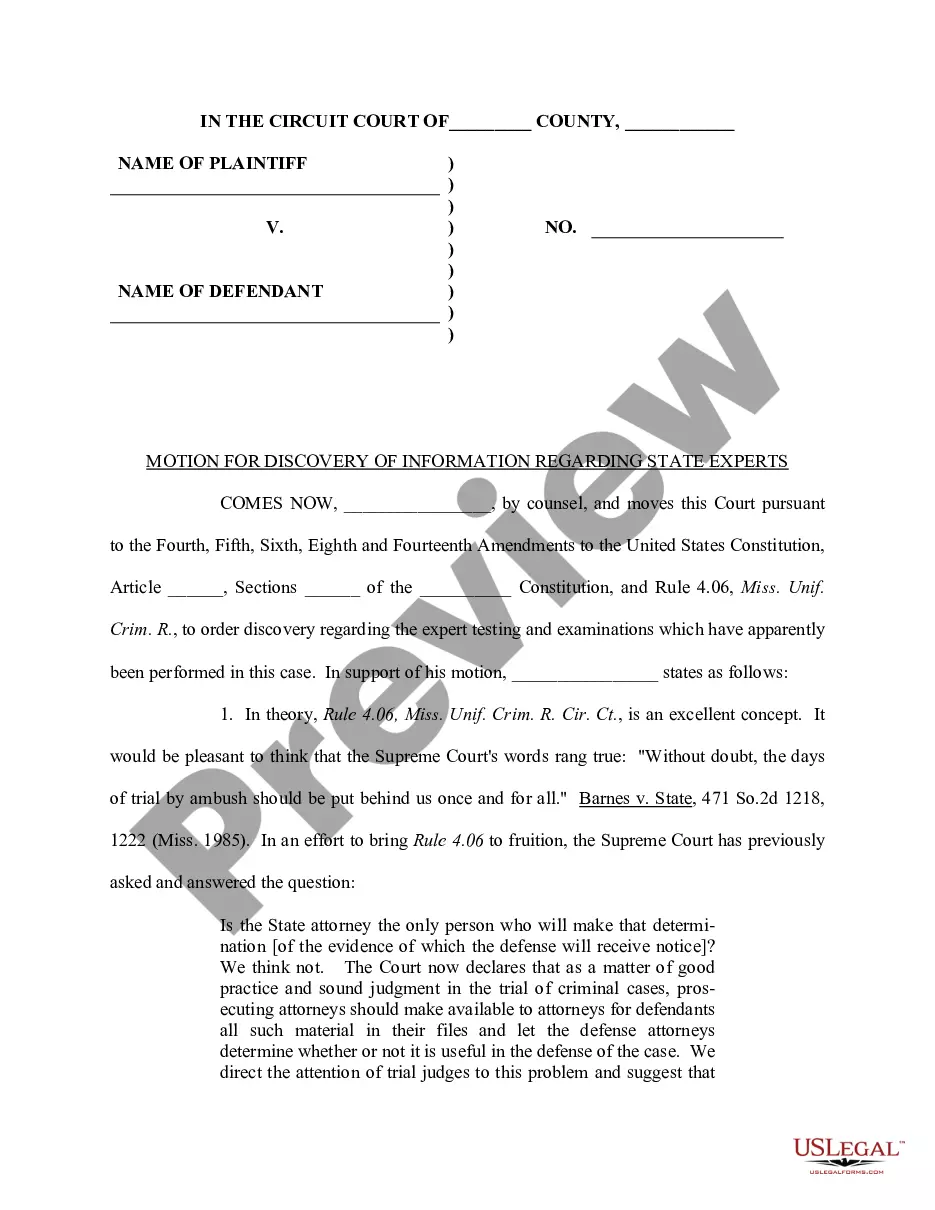
Motion For Discovery Example With Solution
Description
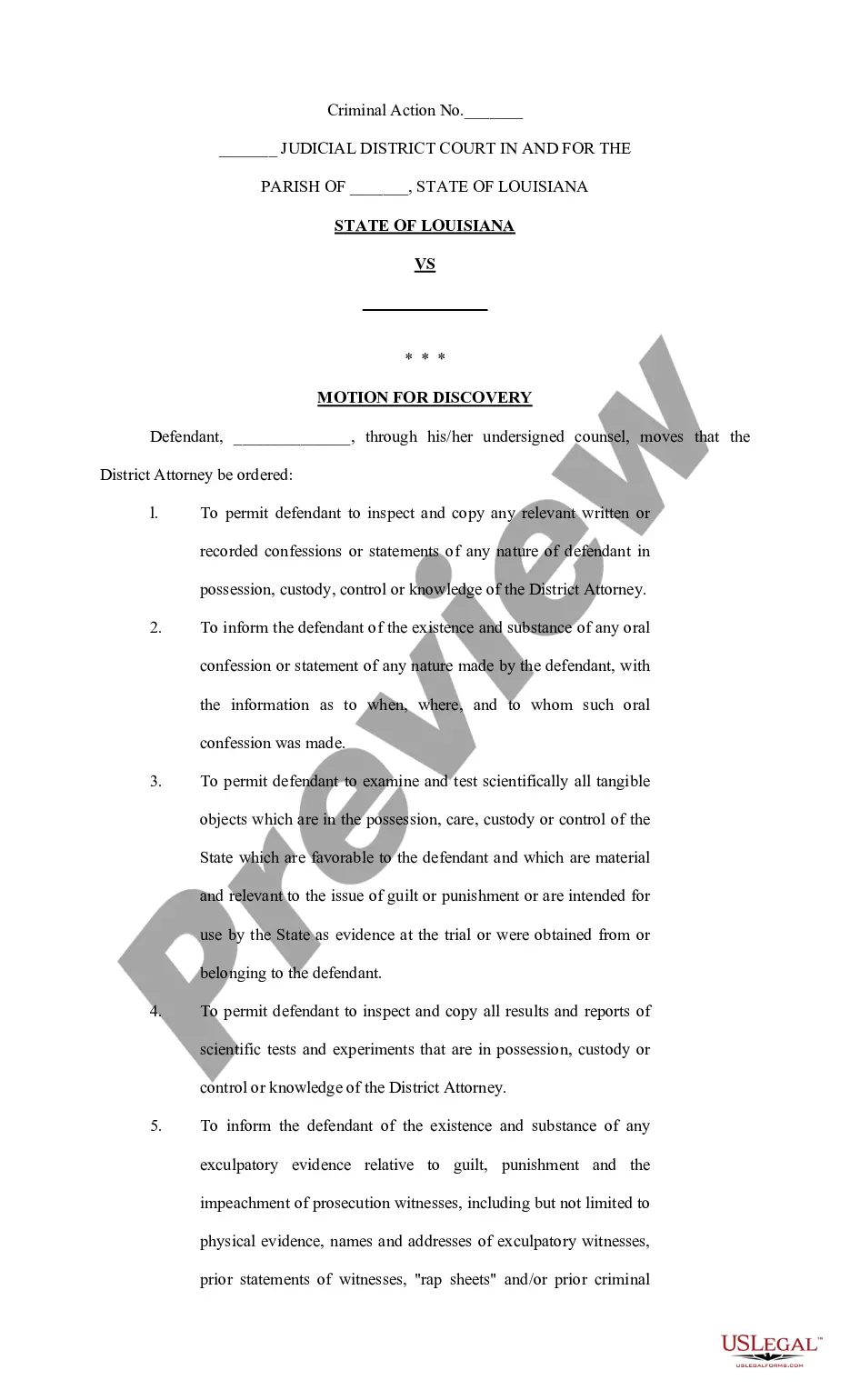
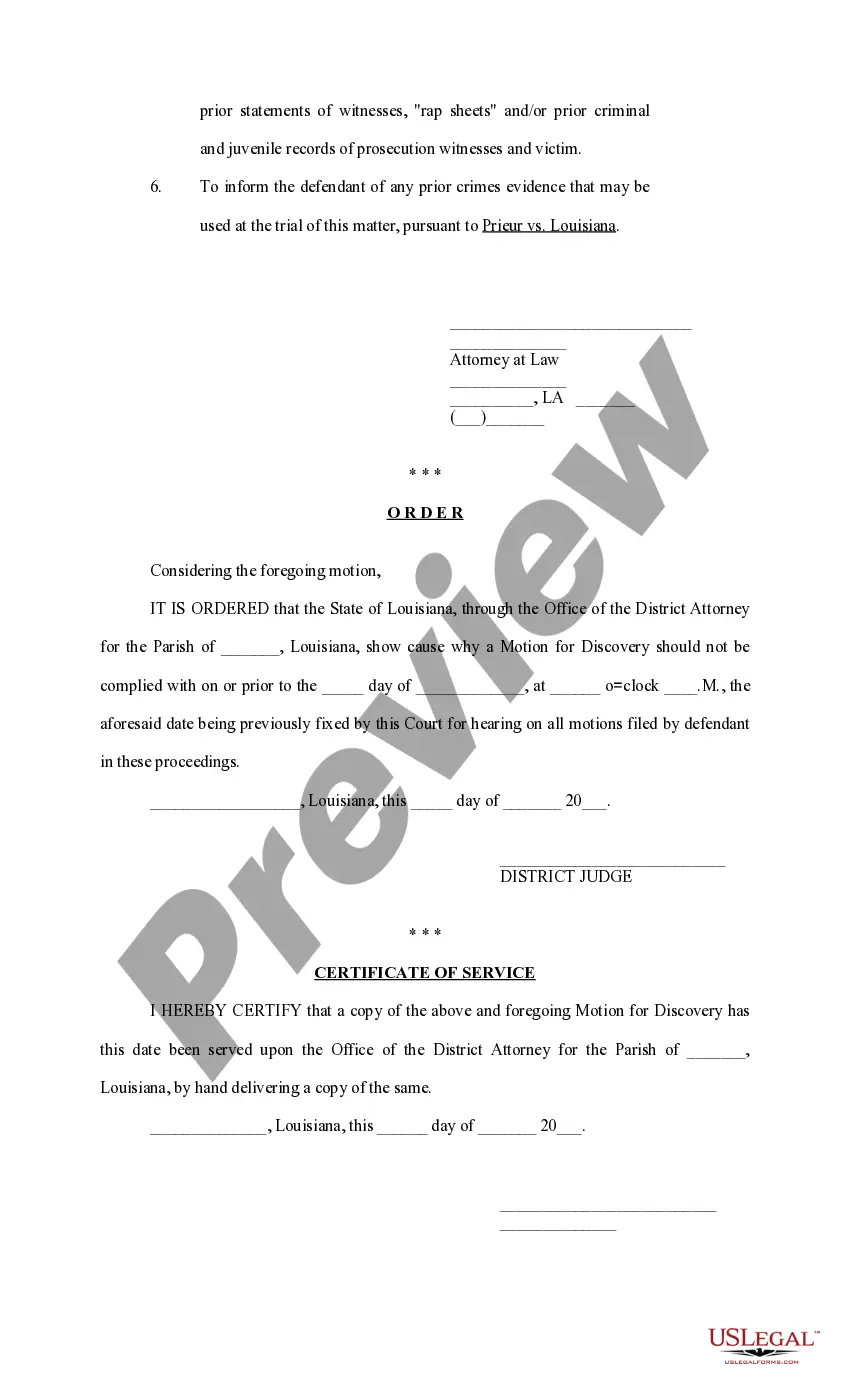
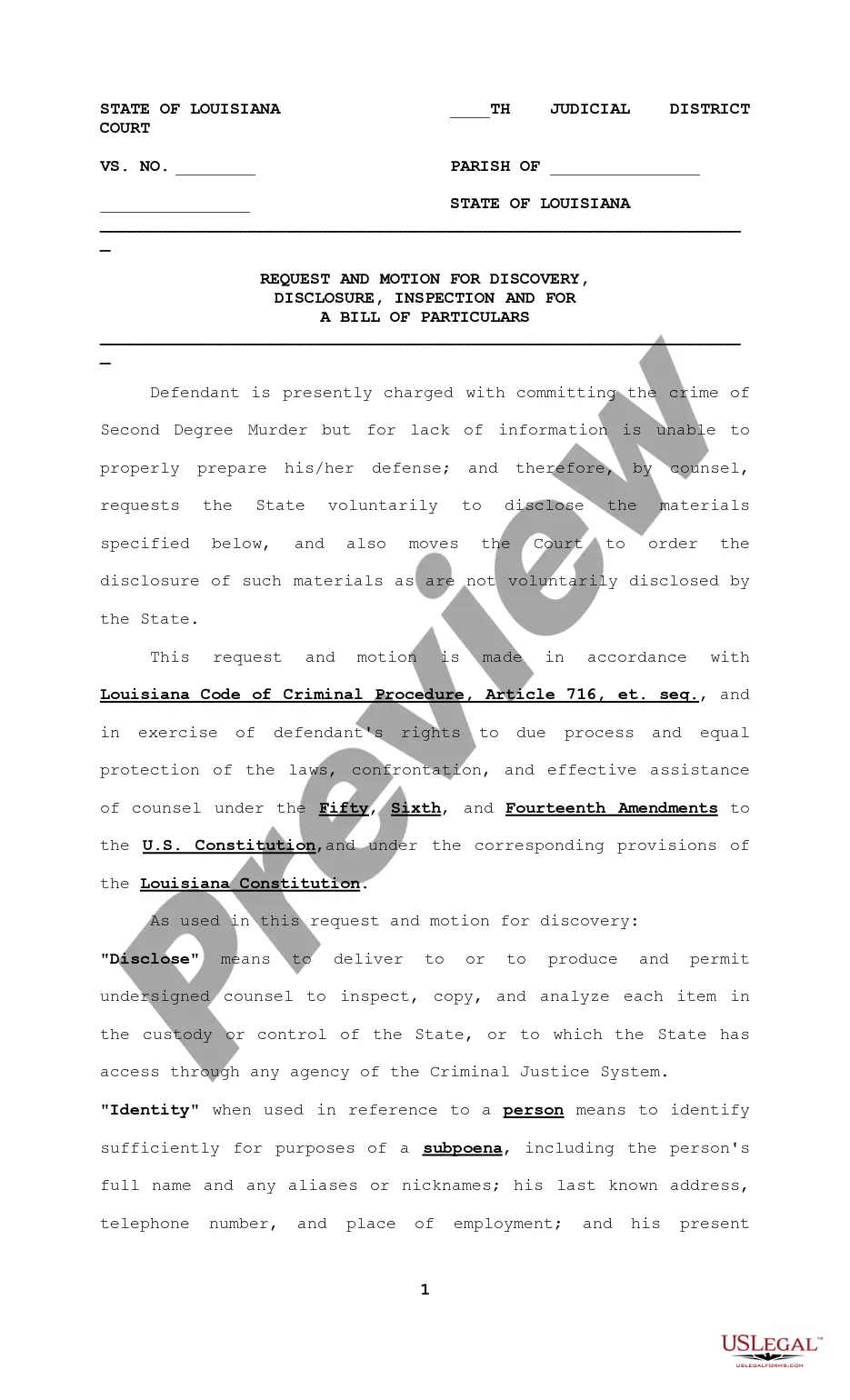
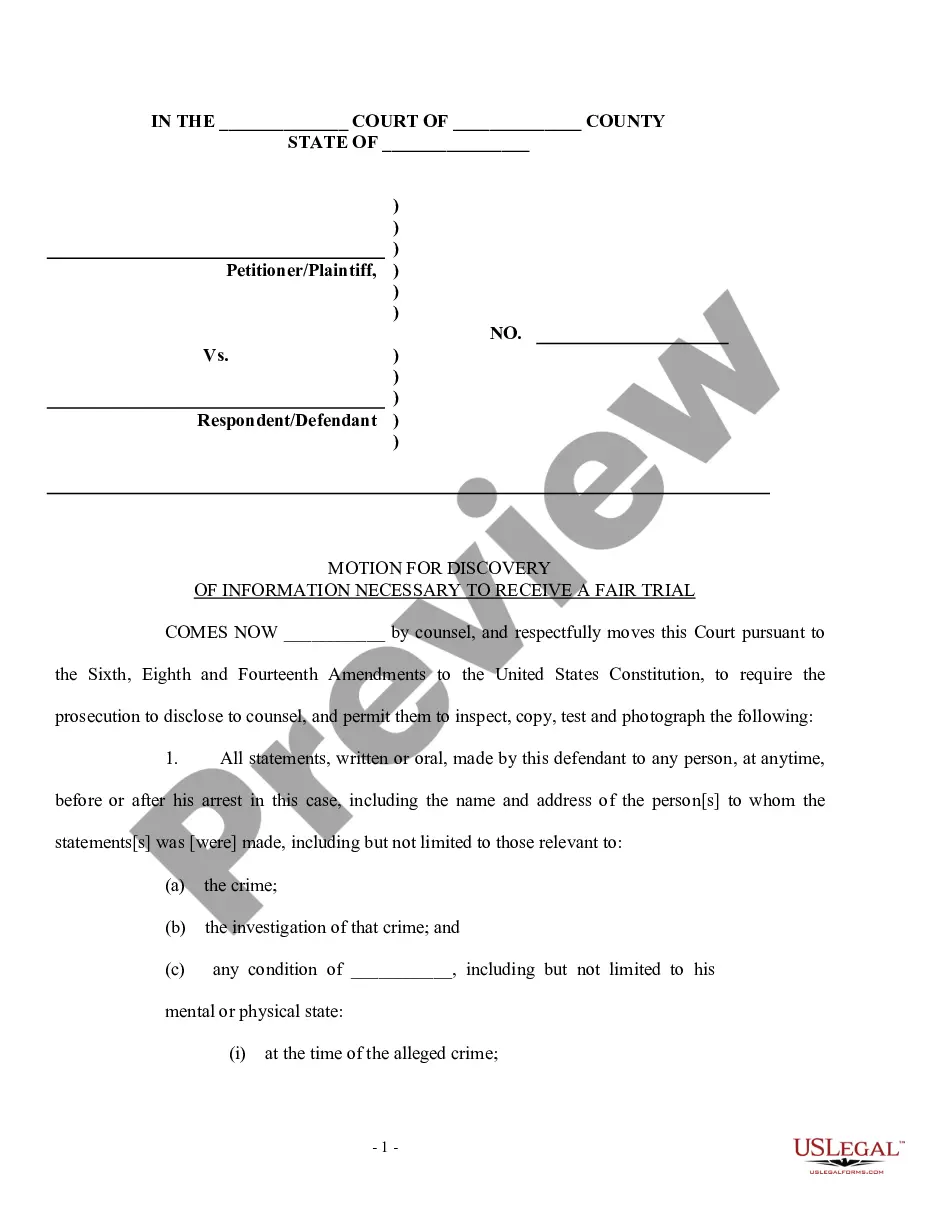
Get your form ready online
Our built-in tools help you complete, sign, share, and store your documents in one place.
Make edits, fill in missing information, and update formatting in US Legal Forms—just like you would in MS Word.
Download a copy, print it, send it by email, or mail it via USPS—whatever works best for your next step.
Sign and collect signatures with our SignNow integration. Send to multiple recipients, set reminders, and more. Go Premium to unlock E-Sign.
If this form requires notarization, complete it online through a secure video call—no need to meet a notary in person or wait for an appointment.
We protect your documents and personal data by following strict security and privacy standards.

Make edits, fill in missing information, and update formatting in US Legal Forms—just like you would in MS Word.

Download a copy, print it, send it by email, or mail it via USPS—whatever works best for your next step.

Sign and collect signatures with our SignNow integration. Send to multiple recipients, set reminders, and more. Go Premium to unlock E-Sign.

If this form requires notarization, complete it online through a secure video call—no need to meet a notary in person or wait for an appointment.

We protect your documents and personal data by following strict security and privacy standards.
Looking for another form?




How to fill out Louisiana Motion For Discovery?
Utilizing legal document examples that adhere to federal and local regulations is essential, and the internet provides numerous choices to select from.
However, what is the benefit of squandering time looking for the appropriate Motion For Discovery Example With Solution template online when the US Legal Forms digital library already has such formats gathered in one location.
US Legal Forms is the largest online legal repository, featuring over 85,000 fillable documents designed by attorneys for various business and personal scenarios.
Examine the template utilizing the Preview feature or through the text outline to verify it fulfills your requirements.
- They are straightforward to navigate, with all documents categorized by state and intended use.
- Our specialists keep abreast of legislative changes, ensuring that your documents are always current and compliant when you receive a Motion For Discovery Example With Solution from our site.
- Acquiring a Motion For Discovery Example With Solution is quick and effortless for both existing and new customers.
- If you have an account with an active subscription, Log In and save the document sample you require in the preferred format.
- If you are new to our platform, adhere to the guidelines outlined below.
Form popularity
FAQ
Writing a simple motion involves several key elements. Begin with a heading that clearly states the motion's nature, like 'Motion for Discovery Example with Solution.' Include a statement of relevant facts and the legal grounds upon which your motion rests. End with a request for specific action and make sure to review the local court rules for any required format or filing instructions.
To write a legal motion sample, start with a clear title that indicates the motion's purpose, such as 'Motion for Discovery Example with Solution.' Next, introduce a statement of the facts relevant to your case. Then, outline the legal basis for your request, followed by the specific relief sought. Finally, conclude with a signature line and attach any necessary supporting documents.
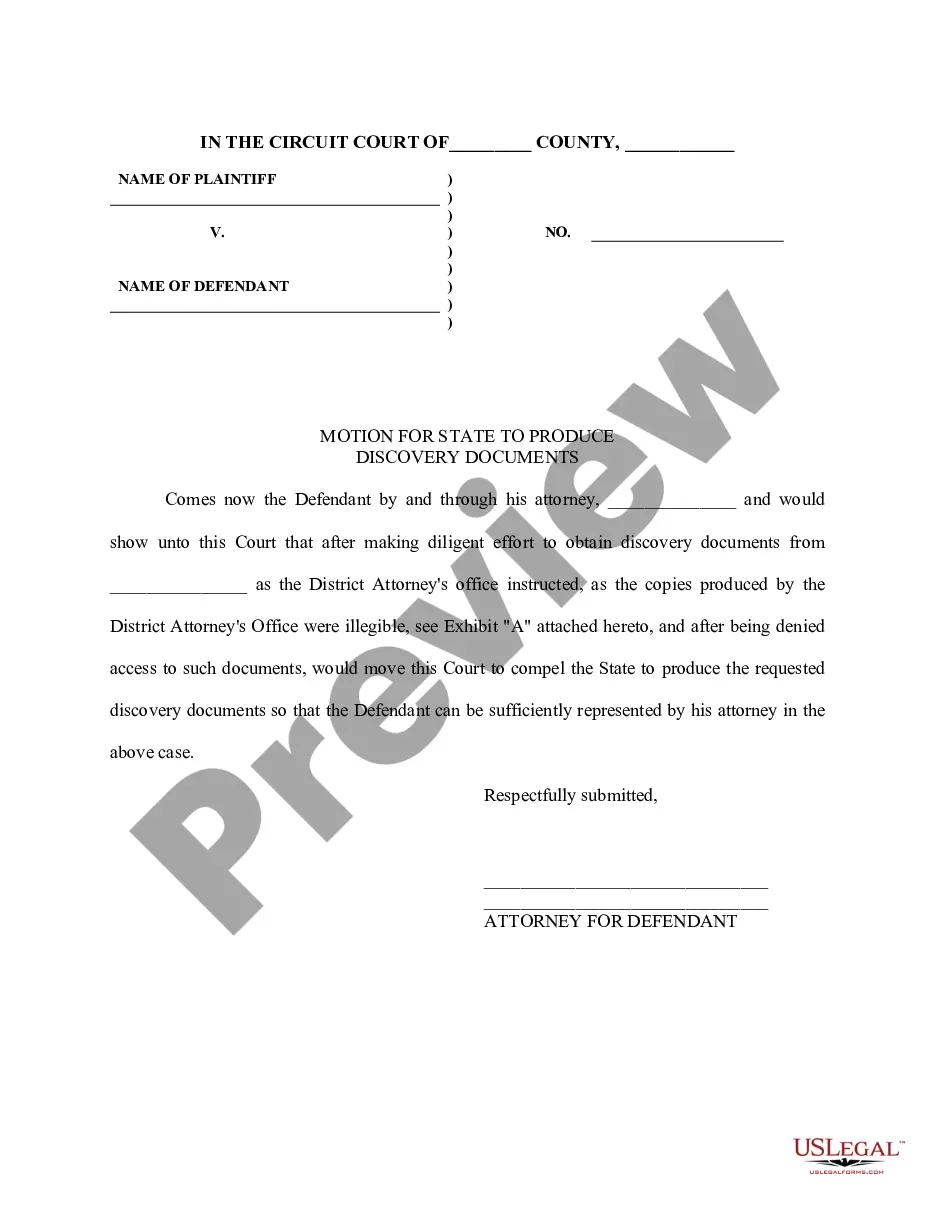
Examples of discovery motions include motions to compel, motions for protective orders, and motions for the examination of witnesses. These motions help ensure fair access to evidence and maintain the integrity of the discovery process. For a comprehensive understanding, exploring a motion for discovery example with solution can greatly assist you in crafting effective motions.
The three most common pretrial motions include motions to dismiss, motions for summary judgment, and motions in limine. Each of these motions serves a critical role in shaping the trial and may require a strong understanding of discovery rules. Familiarizing yourself with a motion for discovery example with solution will help you better prepare for these pretrial challenges.
Discovery motions are formal requests made to the court to compel or limit discovery. These motions often address issues such as non-compliance with discovery requests or disputes over the relevance of documents. Reviewing a motion for discovery example with solution equips you with the knowledge needed to handle these situations confidently.
The four main types of discovery are interrogatories, depositions, requests for production of documents, and requests for admissions. Each type serves a distinct purpose in uncovering facts related to a case. Utilizing a motion for discovery example with solution can guide you through these various methods and enhance your understanding of the overall process.
The most common form of discovery is the interrogatory, which involves one party asking written questions to another party. This process allows for gathering essential information relevant to the case. Ensuring that you understand the motion for discovery example with solution can help you navigate this phase effectively.
When writing a motion for discovery example with solution, it is crucial to clearly state the purpose of your motion and outline the specific requests you are making. Begin with a proper heading, followed by a clearly defined introduction that explains the context. Next, detail the facts and reasons that justify your requests, ensuring your language is straightforward. Finally, conclude with a courteous request to the court, detailing what you hope to achieve with your motion.
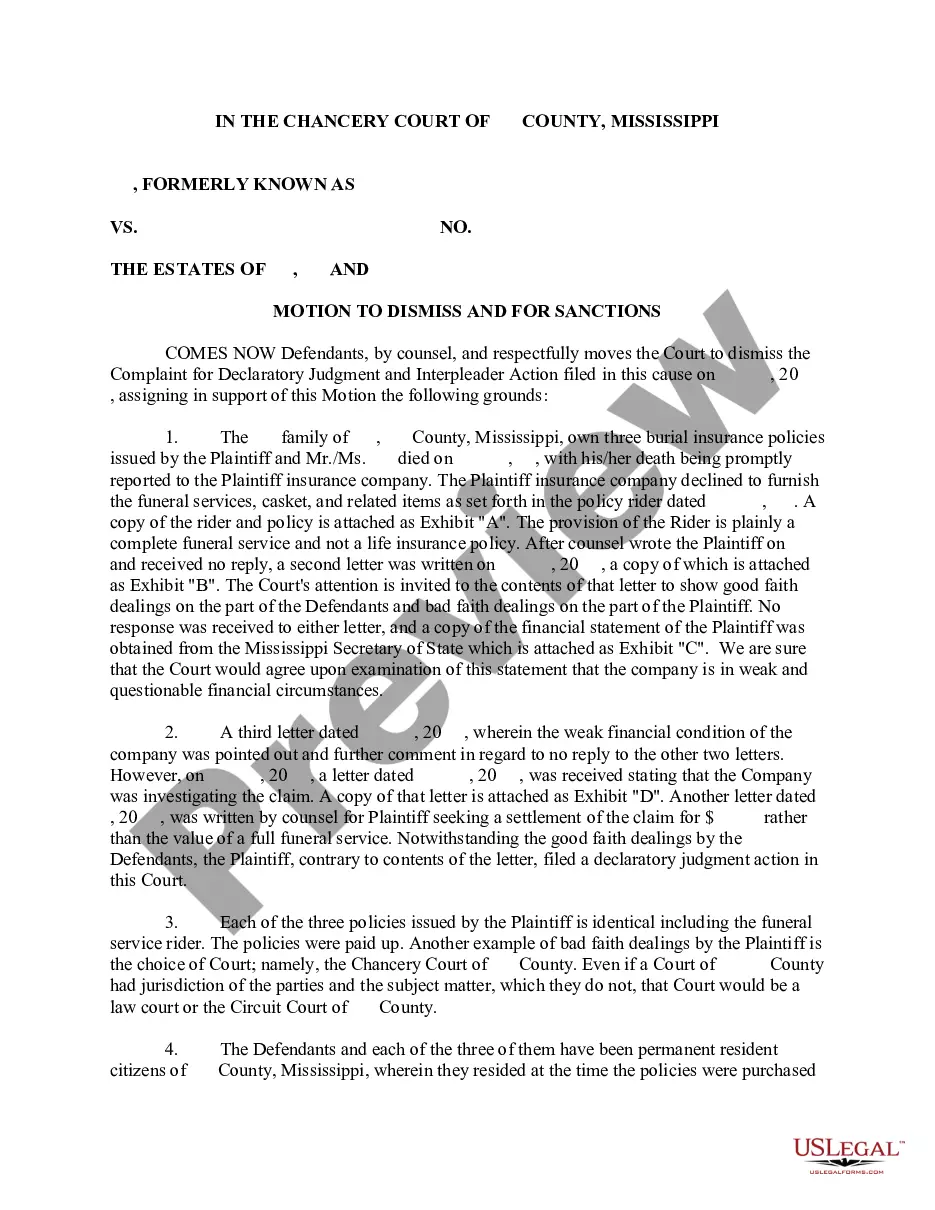
A motion for discovery example with solution typically refers to the process of requesting evidence from the opposing party in a legal case. For instance, if you are involved in a personal injury case, you might request medical records or other documents that support your claims. This process aids in gathering essential information to strengthen your case. By understanding various discovery methods, you can better prepare yourself for the legal process.
Many cases tend to settle after the discovery phase because this process sheds light on both parties' strengths and weaknesses. A motion for discovery example with solution can provide valuable insights, leading to informed negotiations. Often, the evidence gathered during discovery encourages parties to resolve disputes without proceeding to trial. Consequently, utilizing resources like US Legal Forms can enhance your understanding of motions for discovery and facilitate better outcomes in your case.