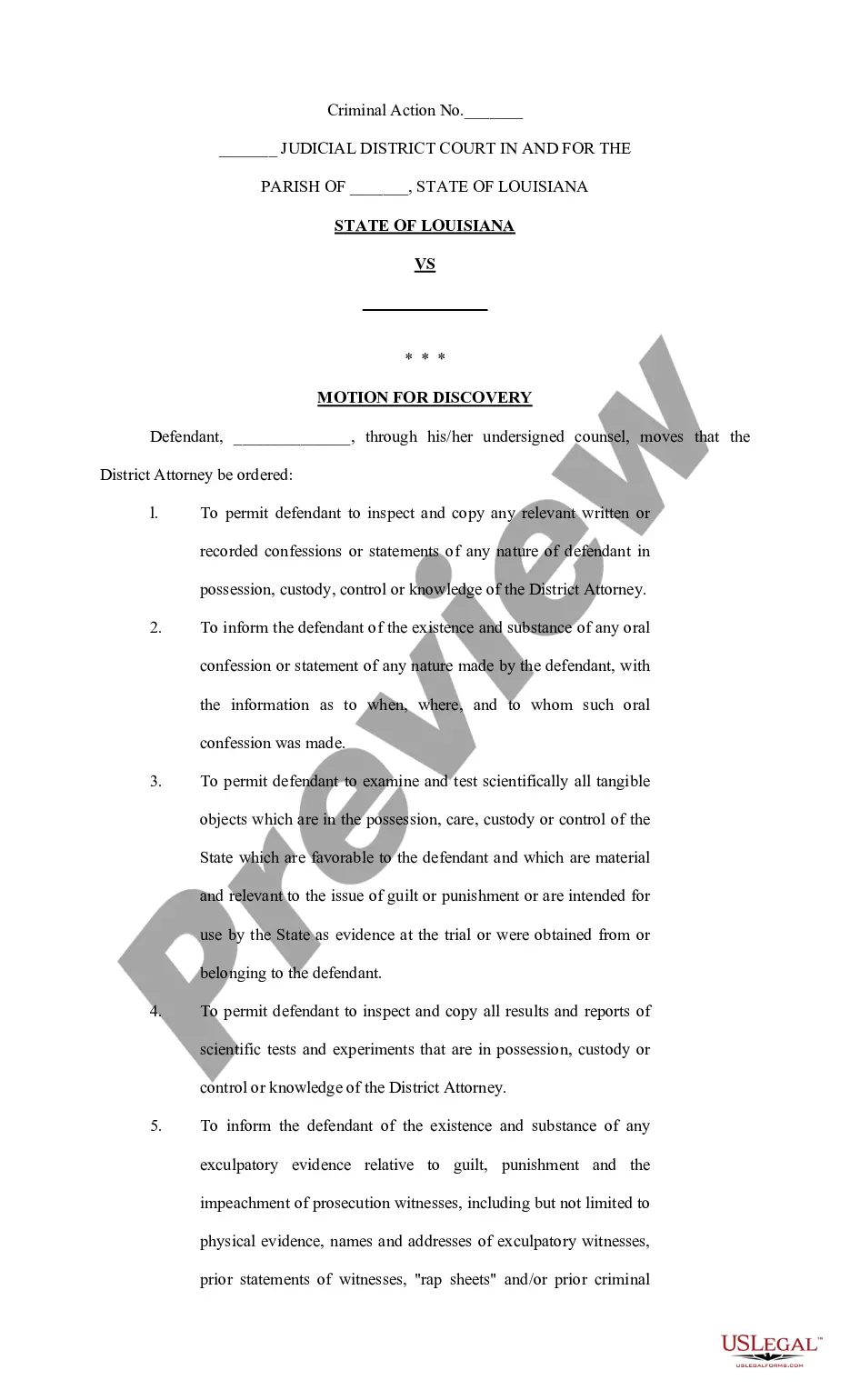
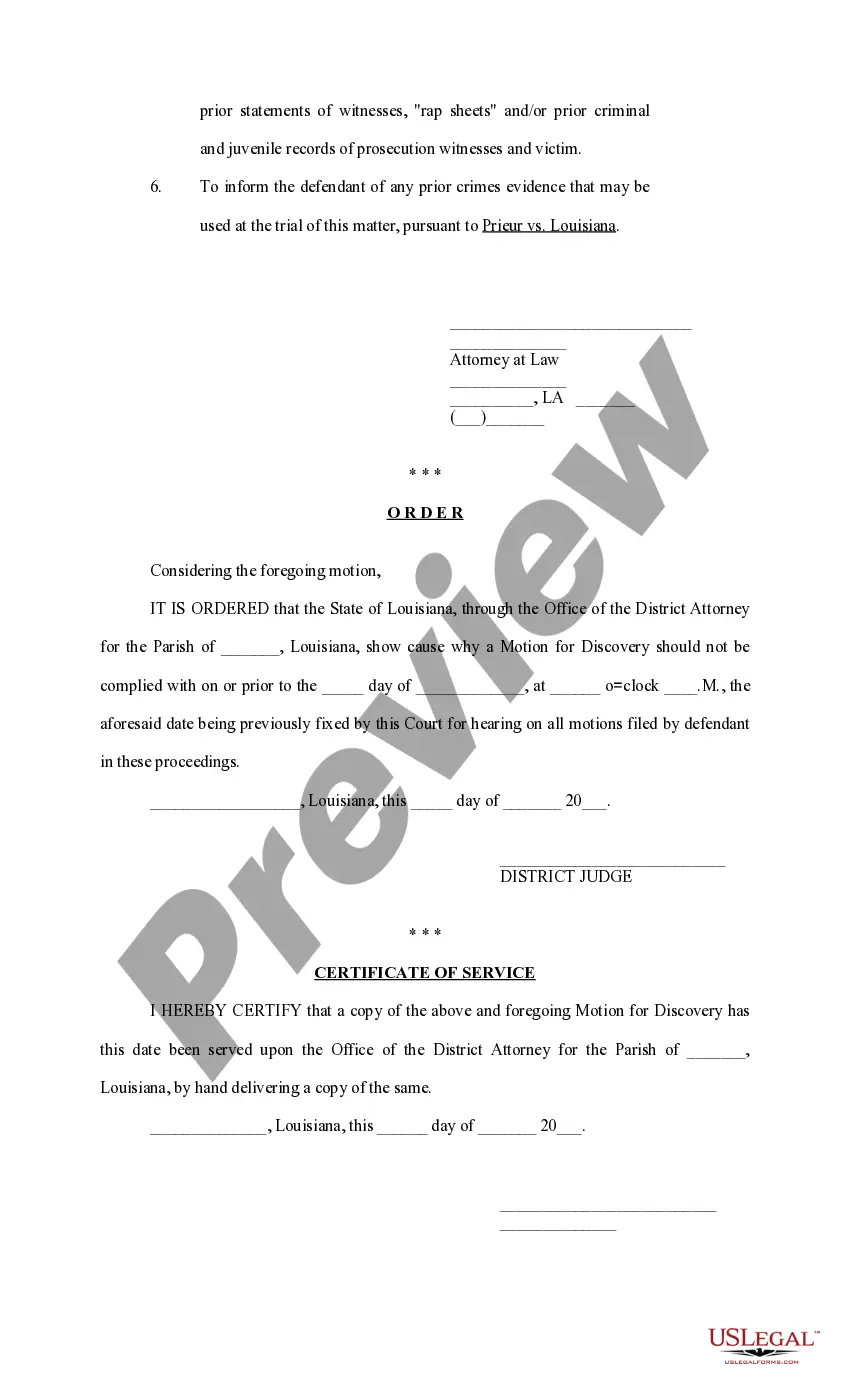
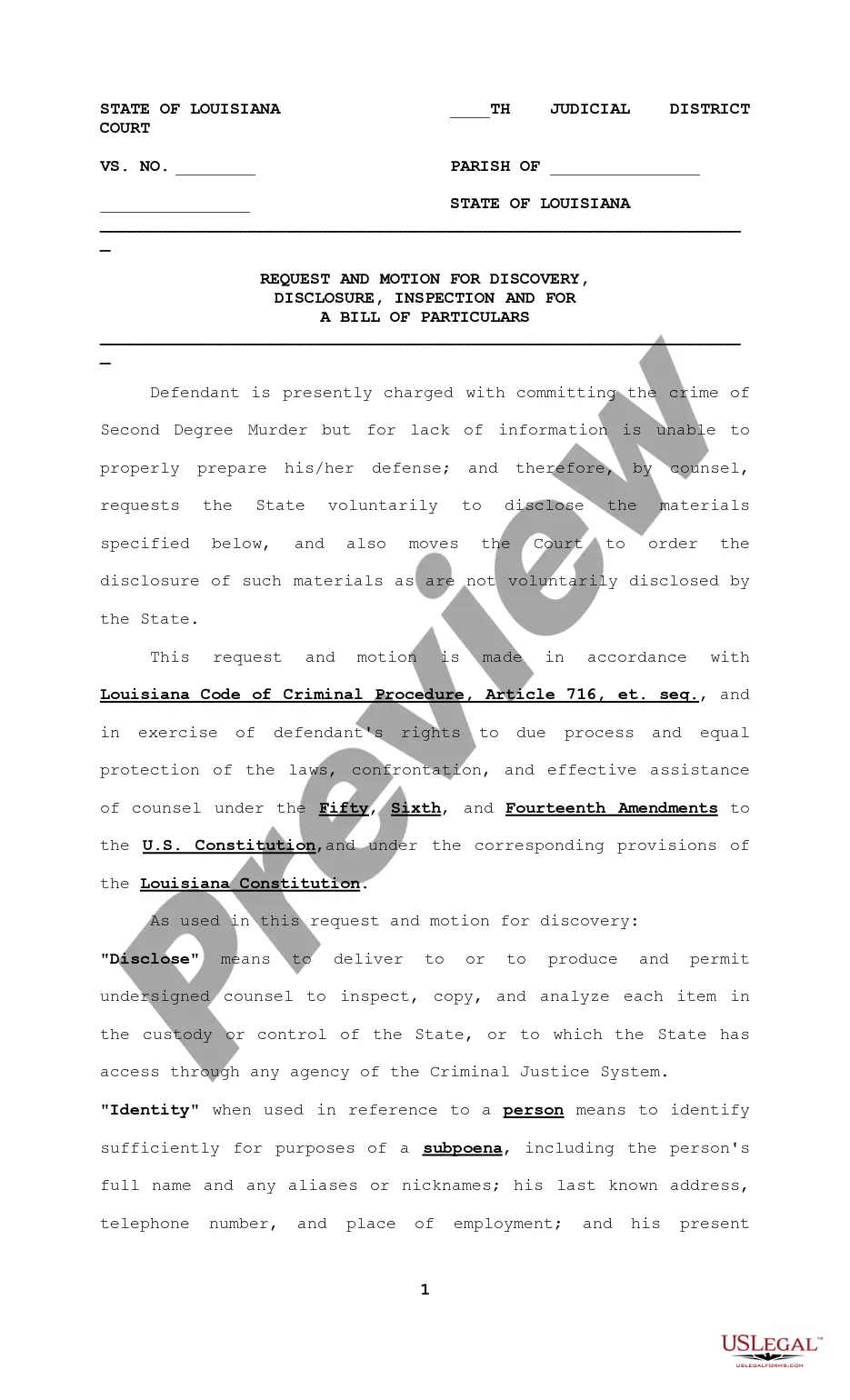
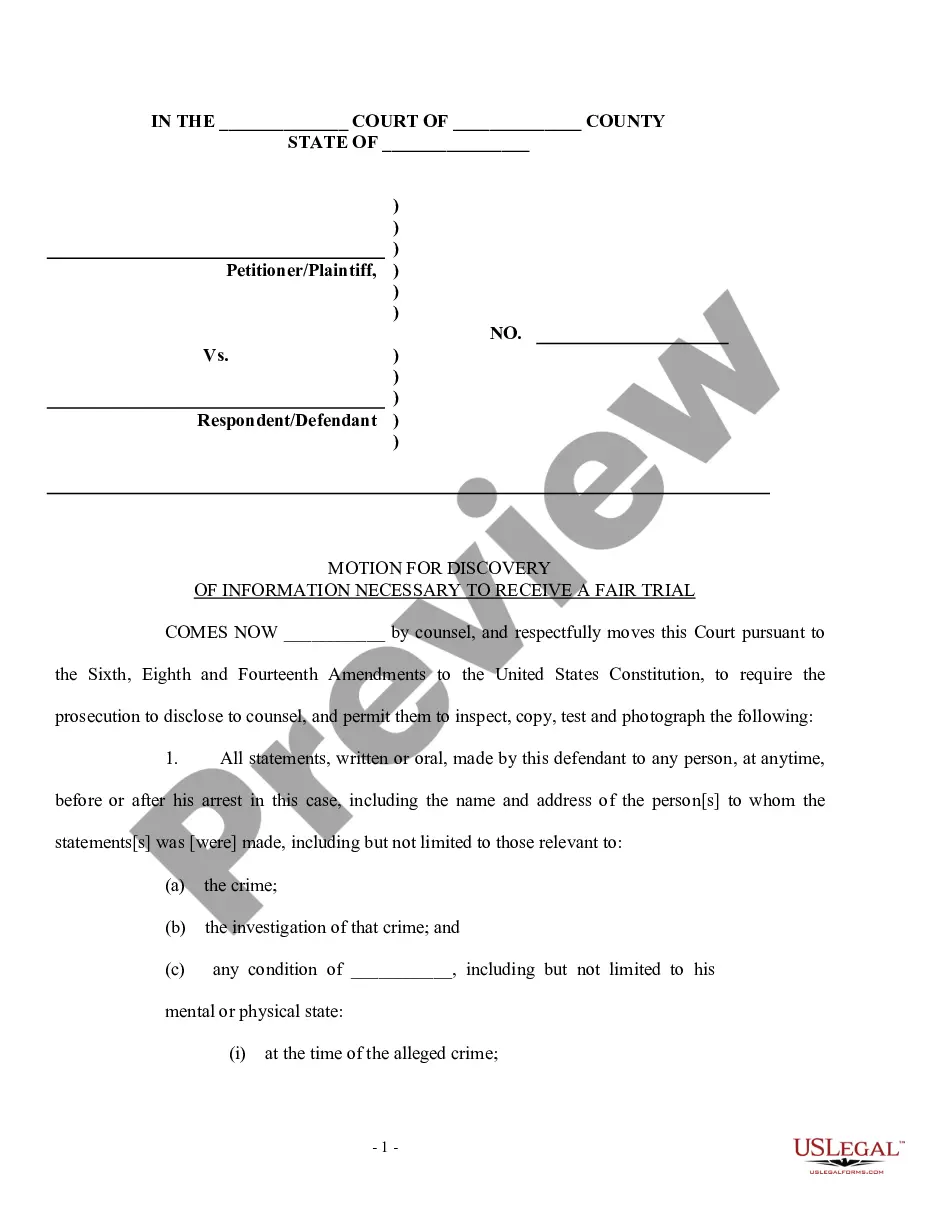
Motion For Discovery Example With Explanation
Description
Get your form ready online
Our built-in tools help you complete, sign, share, and store your documents in one place.
Make edits, fill in missing information, and update formatting in US Legal Forms—just like you would in MS Word.
Download a copy, print it, send it by email, or mail it via USPS—whatever works best for your next step.
Sign and collect signatures with our SignNow integration. Send to multiple recipients, set reminders, and more. Go Premium to unlock E-Sign.
If this form requires notarization, complete it online through a secure video call—no need to meet a notary in person or wait for an appointment.
We protect your documents and personal data by following strict security and privacy standards.

Make edits, fill in missing information, and update formatting in US Legal Forms—just like you would in MS Word.

Download a copy, print it, send it by email, or mail it via USPS—whatever works best for your next step.

Sign and collect signatures with our SignNow integration. Send to multiple recipients, set reminders, and more. Go Premium to unlock E-Sign.

If this form requires notarization, complete it online through a secure video call—no need to meet a notary in person or wait for an appointment.

We protect your documents and personal data by following strict security and privacy standards.
Looking for another form?





How to fill out Louisiana Motion For Discovery?
Acquiring legal documents that comply with federal and state regulations is essential, and the web provides countless choices to select from.
However, what’s the benefit of squandering time looking for the right Motion For Discovery Example With Explanation template online if the US Legal Forms online repository already has those documents gathered in one location.
US Legal Forms is the largest digital legal library with more than 85,000 customizable forms created by lawyers for any professional and personal situation.
Utilize the Preview feature or the text outline to review the template and verify it satisfies your requirements.
- They are easy to navigate with all documents categorized by state and purpose.
- Our experts keep track of legal changes, ensuring your form is current and compliant when you obtain a Motion For Discovery Example With Explanation from our site.
- Getting a Motion For Discovery Example With Explanation is quick and straightforward for both existing and new users.
- If you already possess an account with an active subscription, Log In and save the document template you need in the appropriate format.
- If you are new to our platform, follow these steps.
Form popularity
FAQ
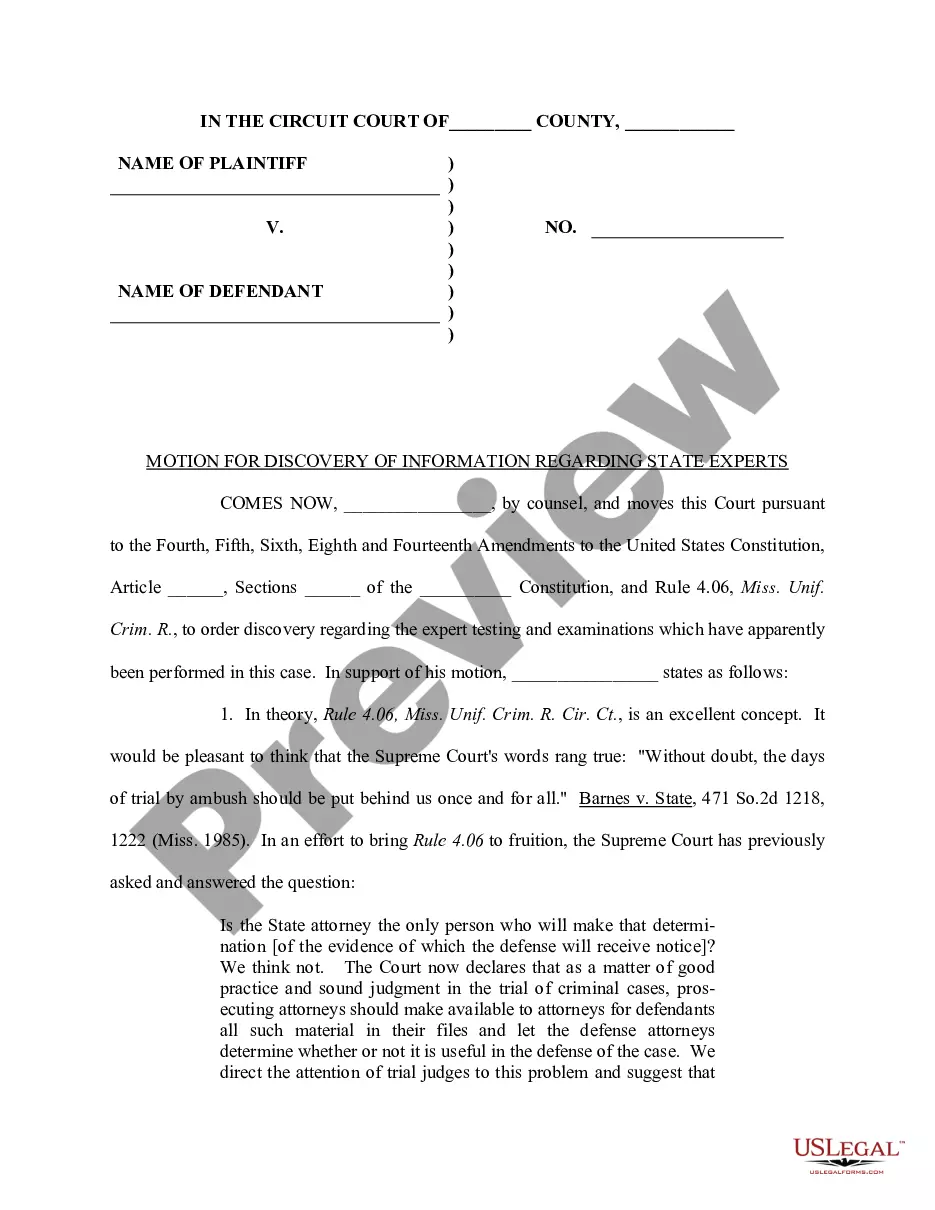
Writing a motion requires clarity and precision. Start by stating the purpose of the motion clearly, followed by a brief introduction that outlines the facts and legal basis for your request. You can use a motion for discovery example with explanation to illustrate your point, as it provides insight into how to format and phrase your motion effectively. Consider utilizing the US Legal Forms platform; it offers templates and resources that simplify this process and help ensure your motion meets legal standards.
When you are in court, avoid speaking in a disrespectful or confrontational manner. Phrases that undermine the authority of the court or question the judge's intelligence can lead to negative consequences. Stay focused on the facts of the case and present your arguments respectfully. Using a well-structured 'Motion for Discovery Example with Explanation' can help keep your communication clear and professional.
To write a motion effectively, start with a clear and concise title, such as 'Motion for Discovery Example with Explanation.' Begin with an introduction that outlines the purpose of the motion. Include supporting arguments and relevant facts, ensuring each point is easy to understand. Finally, conclude with a clear request for the court's action, which enhances the clarity of your motion.
Discovery motions refer to various formal requests made during the discovery phase. These include motions to compel, motions to quash, and motions for protective orders. Each motion addresses specific issues related to the disclosure of information. A motion for discovery example with explanation can provide clarity on how these motions function in the broader context of your legal case.
The three most common pretrial motions include motions to dismiss, motions for summary judgment, and motions for discovery. These motions serve essential purposes in shaping cases before trial. A motion for discovery example with explanation highlights how these pretrial motions can establish crucial guidelines for the evidence that will be presented. Understanding their significance prepares you for effective legal navigation.
The four main types of discovery include interrogatories, requests for admission, depositions, and requests for production of documents. Each type plays a vital role in uncovering relevant facts and evidence. For instance, depositions allow attorneys to question witnesses directly, which can be crucial for case development. Exploring a motion for discovery example with explanation can further illustrate these types.
Interrogatories are often the most common form of discovery used in cases. They involve written questions that one party sends to another, which must be answered under oath. This approach allows for clear and documented responses that can shape further legal actions. A motion for discovery example with explanation can provide insight into how interrogatories function and why they are beneficial.
Discovery motions can include requests for interrogatories, depositions, and requests for production of documents. Each motion serves a distinct purpose, aiding in the search for necessary information. A motion for discovery example with explanation can illustrate these different forms and their relevance in your legal strategy. Understanding these motions helps ensure you’re fully prepared for legal proceedings.
Typically, both parties benefit from the discovery process. It allows them to gather critical information that influences case strategy. The party that prepares adequately and utilizes motions for discovery effectively often gains an advantage. A well-documented motion for discovery example with explanation can clarify how each side can leverage this phase.
Many cases do settle after the discovery phase concludes. Discovery helps both parties assess the strengths and weaknesses of their cases, often leading to more informed negotiations. Once each side understands the evidence and arguments, they may choose to settle rather than proceed to trial. Using a motion for discovery example with explanation can enhance your understanding of why settlements often occur at this stage.