Motion For Discovery Example With Discovery
Description
Get your form ready online
Our built-in tools help you complete, sign, share, and store your documents in one place.
Make edits, fill in missing information, and update formatting in US Legal Forms—just like you would in MS Word.
Download a copy, print it, send it by email, or mail it via USPS—whatever works best for your next step.
Sign and collect signatures with our SignNow integration. Send to multiple recipients, set reminders, and more. Go Premium to unlock E-Sign.
If this form requires notarization, complete it online through a secure video call—no need to meet a notary in person or wait for an appointment.
We protect your documents and personal data by following strict security and privacy standards.

Make edits, fill in missing information, and update formatting in US Legal Forms—just like you would in MS Word.

Download a copy, print it, send it by email, or mail it via USPS—whatever works best for your next step.

Sign and collect signatures with our SignNow integration. Send to multiple recipients, set reminders, and more. Go Premium to unlock E-Sign.

If this form requires notarization, complete it online through a secure video call—no need to meet a notary in person or wait for an appointment.

We protect your documents and personal data by following strict security and privacy standards.
Looking for another form?


How to fill out Louisiana Motion For Discovery?
It's clear that you cannot transform into a legal authority instantly, nor can you swiftly acquire the ability to draft a Motion For Discovery Example With Discovery without possessing a specialized skill set.
Drafting legal documents is an arduous task that necessitates particular education and expertise.
So why not delegate the creation of the Motion For Discovery Example With Discovery to the professionals.
You can regain access to your forms anytime from the My documents section. If you're a returning customer, you can simply Log In, and find and download the template from the same section.
Regardless of what your documents are for—be it financial, legal, or personal—our platform caters to all your needs. Experience US Legal Forms today!
- Access the form you require using the search bar located at the top of the page.
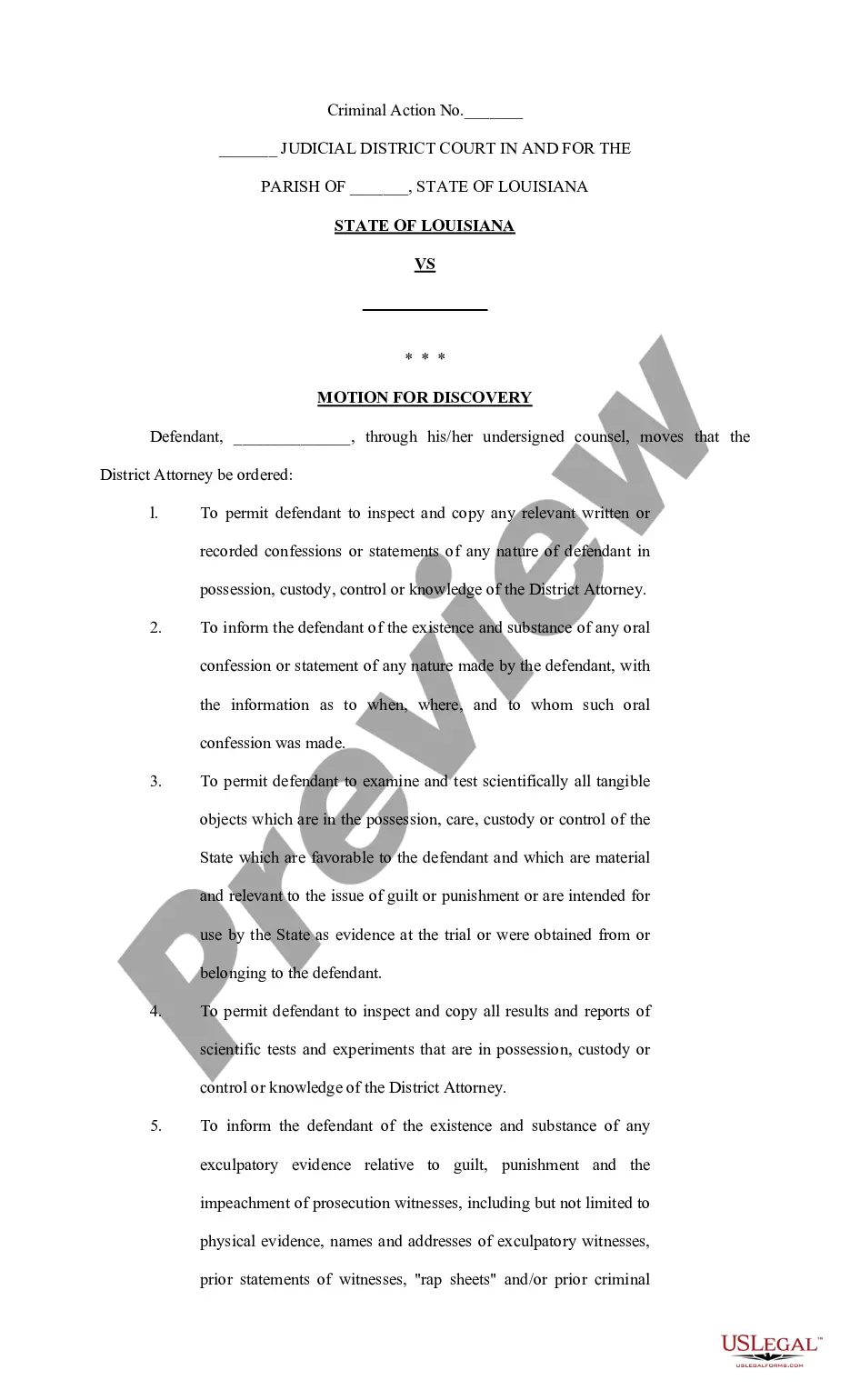
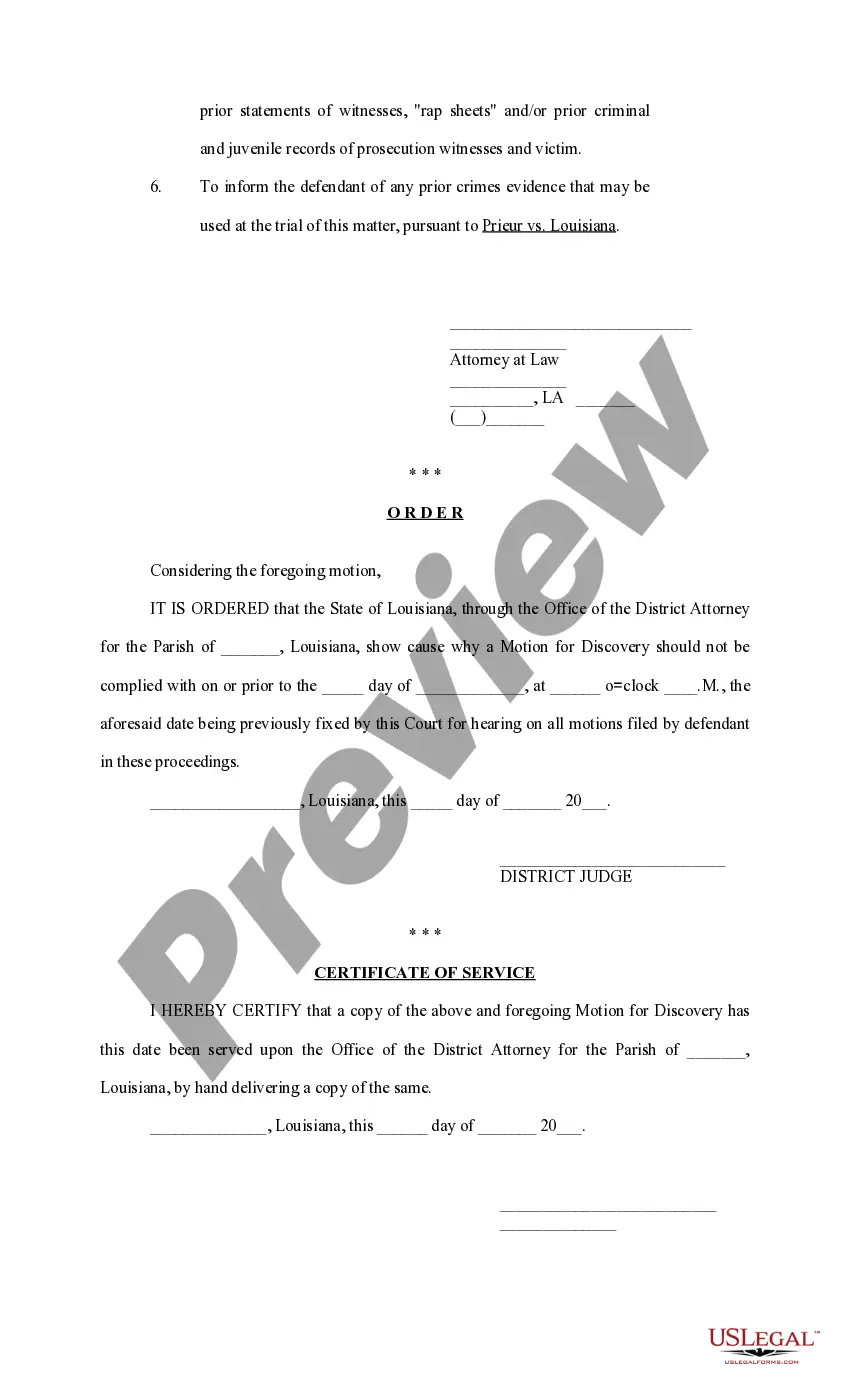
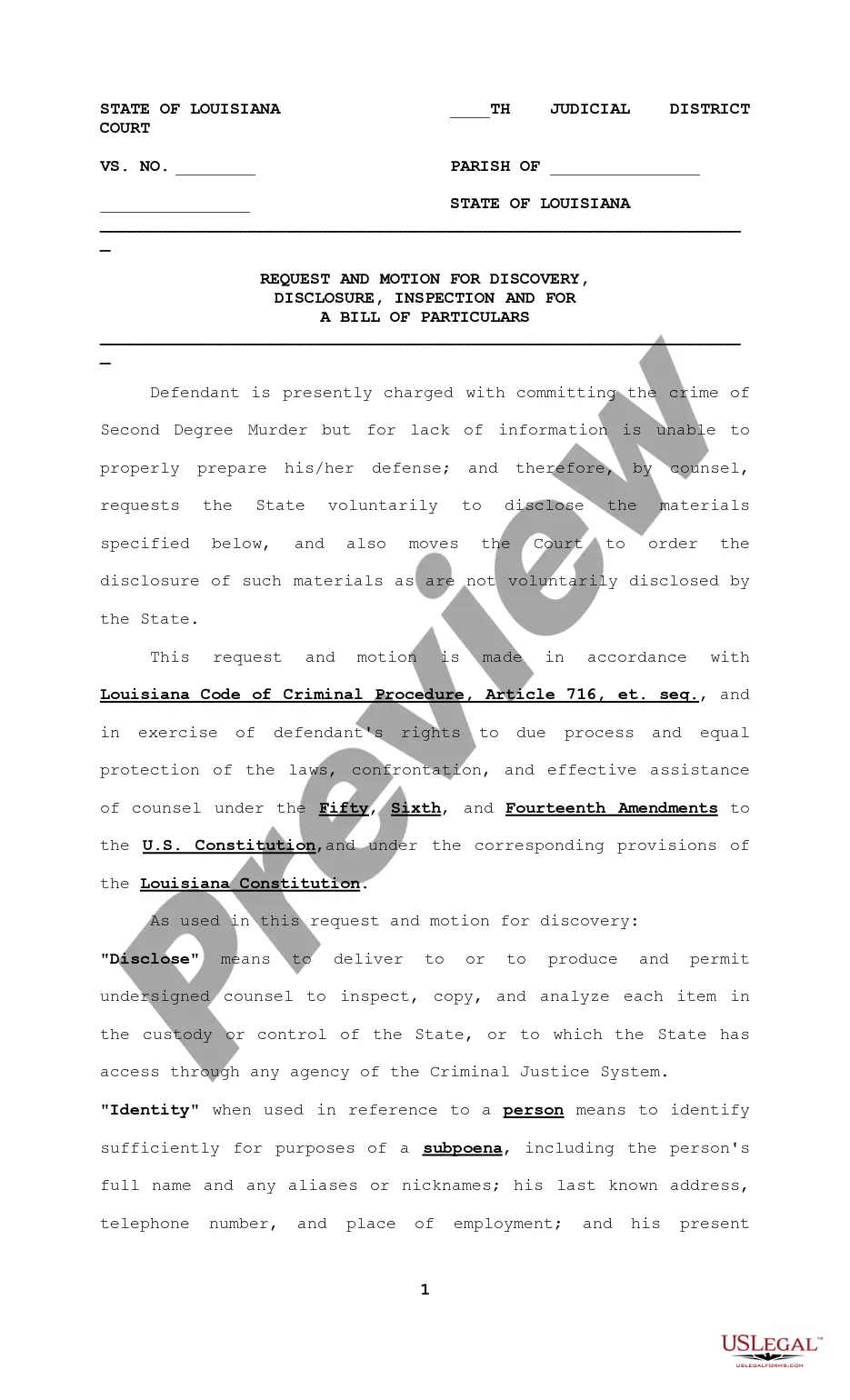
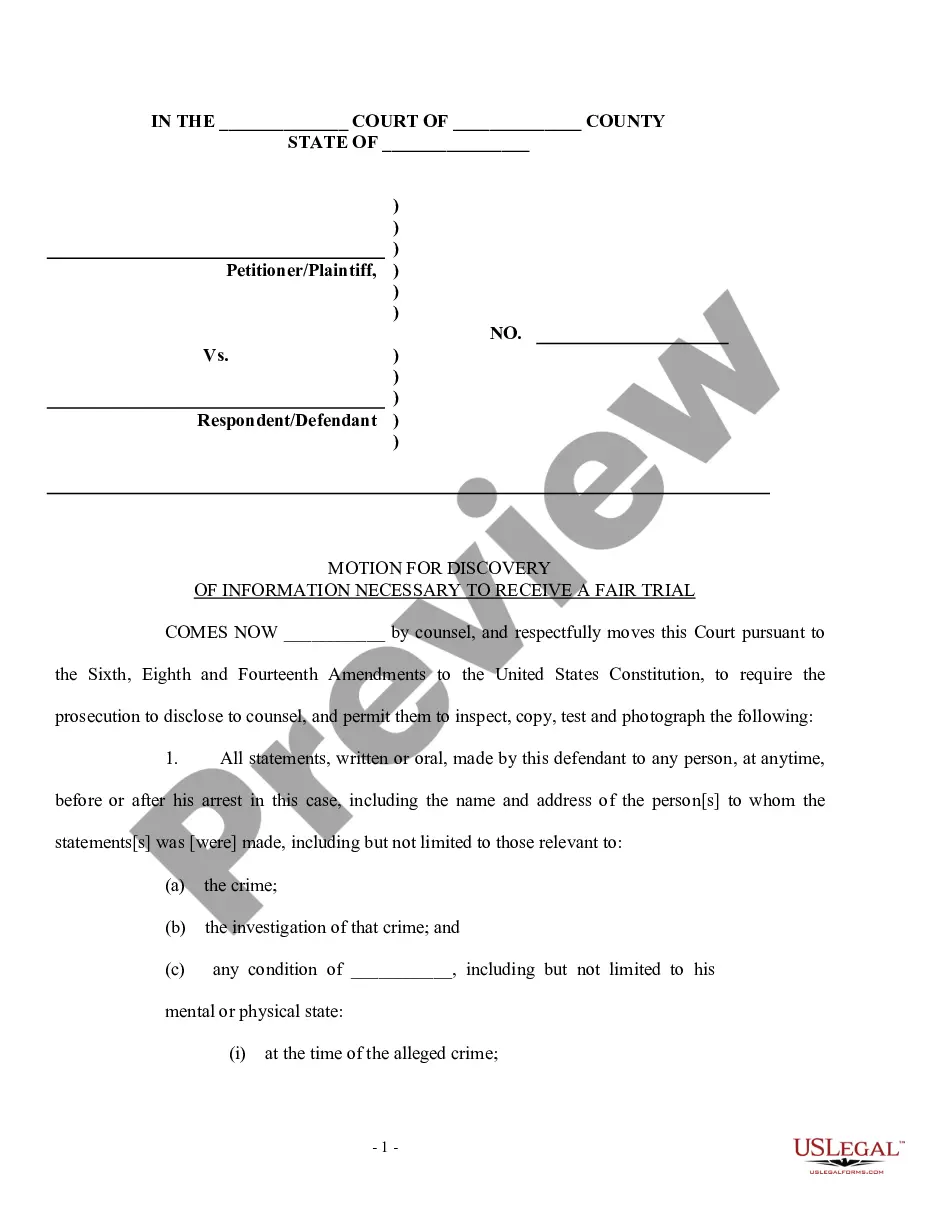
- Preview it (if this option is available) and review the accompanying description to determine if the Motion For Discovery Example With Discovery meets your needs.
- Restart your search if you're in need of another template.
- Sign up for a complimentary account and choose a subscription plan to acquire the template.
- Select Buy now. Once the payment is completed, you can download the Motion For Discovery Example With Discovery, fill it out, print it, and send or mail it to the appropriate individuals or organizations.
Form popularity
FAQ
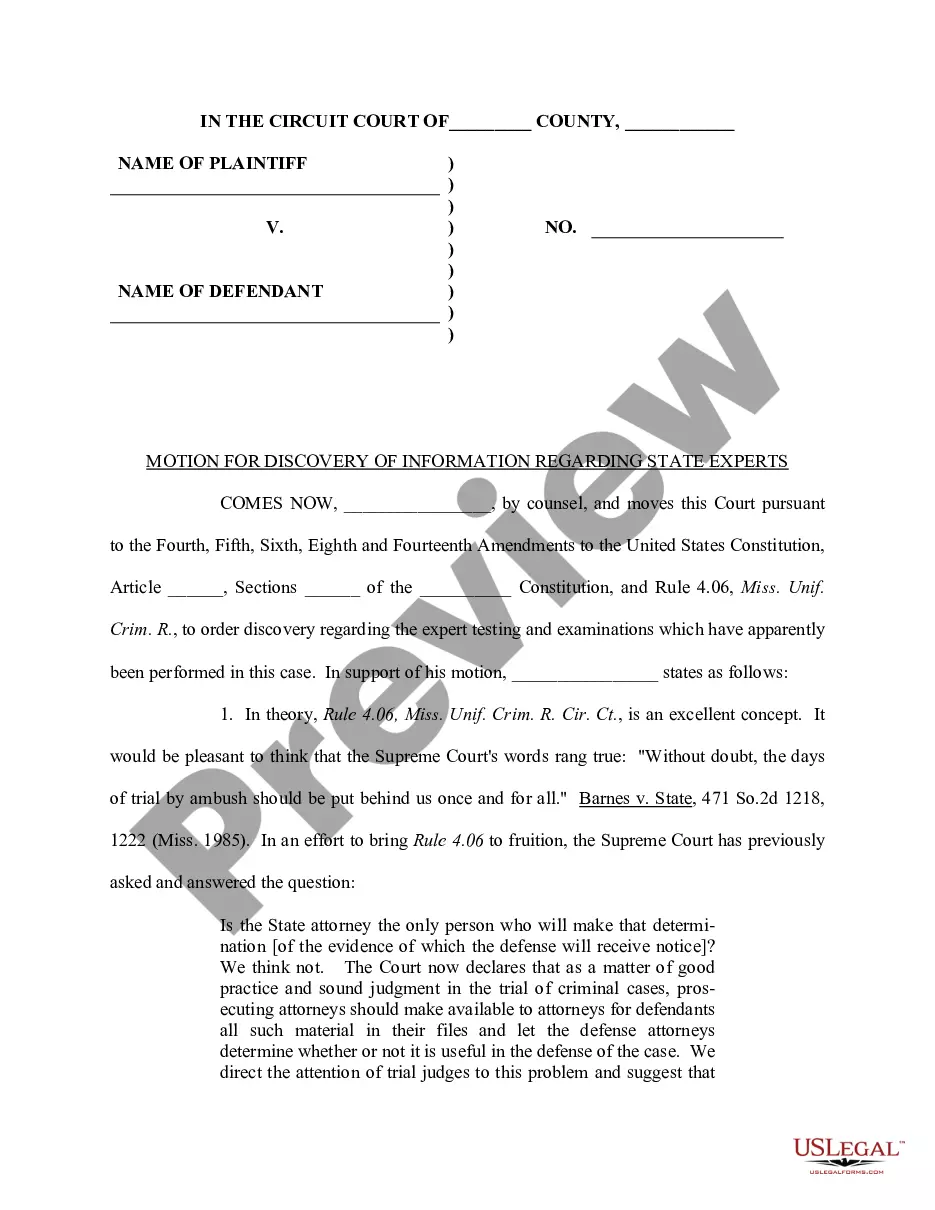
To write a Motion to Compel discovery, start by clearly stating the legal basis for your motion. Include details about the original discovery requests and the responses received, or lack thereof. It's essential to demonstrate how the requested information is relevant and necessary to your case. For a practical Motion for discovery example with discovery, you might explore templates available on US Legal Forms, which can guide you in structuring your motion effectively.
Yes, you can combine a motion to compel discovery in California. This legal strategy may enhance your chances of obtaining the necessary documents or information. When filing a motion for discovery, you may cite a motion for discovery example with discovery to support your request. Using platforms like US Legal Forms can help you prepare these documents correctly, ensuring compliance with local laws and procedures.
The most common form of discovery is written interrogatories, where one party submits questions to the other for answers under oath. This method is effective for gathering basic information and clarifying issues before trial. When you explore a motion for discovery example with discovery, you can appreciate how interrogatories facilitate a smoother discovery process.
The four types of discovery include interrogatories, requests for production of documents, requests for admissions, and depositions. Each type serves a fundamental purpose in uncovering relevant information essential for legal proceedings. Utilizing a motion for discovery example with discovery can guide you through these types, ensuring thorough investigation and preparation.
Discovery motions are formal requests made to the court concerning the disclosure of information or evidence during the discovery phase. They may include motions to compel, motions for protective orders, or motions to enforce subpoenas. Ensuring you have a clear motion for discovery example with discovery can simplify the process of acquiring needed materials.
An example of discovery includes interrogatories, which are written questions one party must answer under oath. Other forms encompass requests for documents and depositions, where parties gather information before a trial. Utilizing a motion for discovery example with discovery enhances your ability to obtain necessary evidence efficiently.
Writing a motion involves clearly stating your request, providing legal grounds, and including supporting evidence. Begin with a heading that identifies the court and case number. Then, detail your request and rationale, ensuring your motion for discovery example with discovery includes relevant facts that justify your position.
The three most common pretrial motions are motions to dismiss, motions for summary judgment, and discovery motions. Each serves a unique purpose in the legal process, addressing various issues before a trial begins. Specifically, discovery motions play a crucial role by ensuring both parties share necessary information to prepare their cases.
Examples of discovery motions include requests to compel discovery, motions for protective orders, and motions to quash subpoenas. These motions help to enforce the rights of the parties involved during the discovery phase of litigation. When you seek a 'motion for discovery example with discovery,' you may find these motions essential for gathering evidence.