Louisiana Cotton Fields
Description

Get your form ready online
Our built-in tools help you complete, sign, share, and store your documents in one place.
Make edits, fill in missing information, and update formatting in US Legal Forms—just like you would in MS Word.
Download a copy, print it, send it by email, or mail it via USPS—whatever works best for your next step.
Sign and collect signatures with our SignNow integration. Send to multiple recipients, set reminders, and more. Go Premium to unlock E-Sign.
If this form requires notarization, complete it online through a secure video call—no need to meet a notary in person or wait for an appointment.
We protect your documents and personal data by following strict security and privacy standards.

Make edits, fill in missing information, and update formatting in US Legal Forms—just like you would in MS Word.

Download a copy, print it, send it by email, or mail it via USPS—whatever works best for your next step.

Sign and collect signatures with our SignNow integration. Send to multiple recipients, set reminders, and more. Go Premium to unlock E-Sign.

If this form requires notarization, complete it online through a secure video call—no need to meet a notary in person or wait for an appointment.

We protect your documents and personal data by following strict security and privacy standards.
Looking for another form?
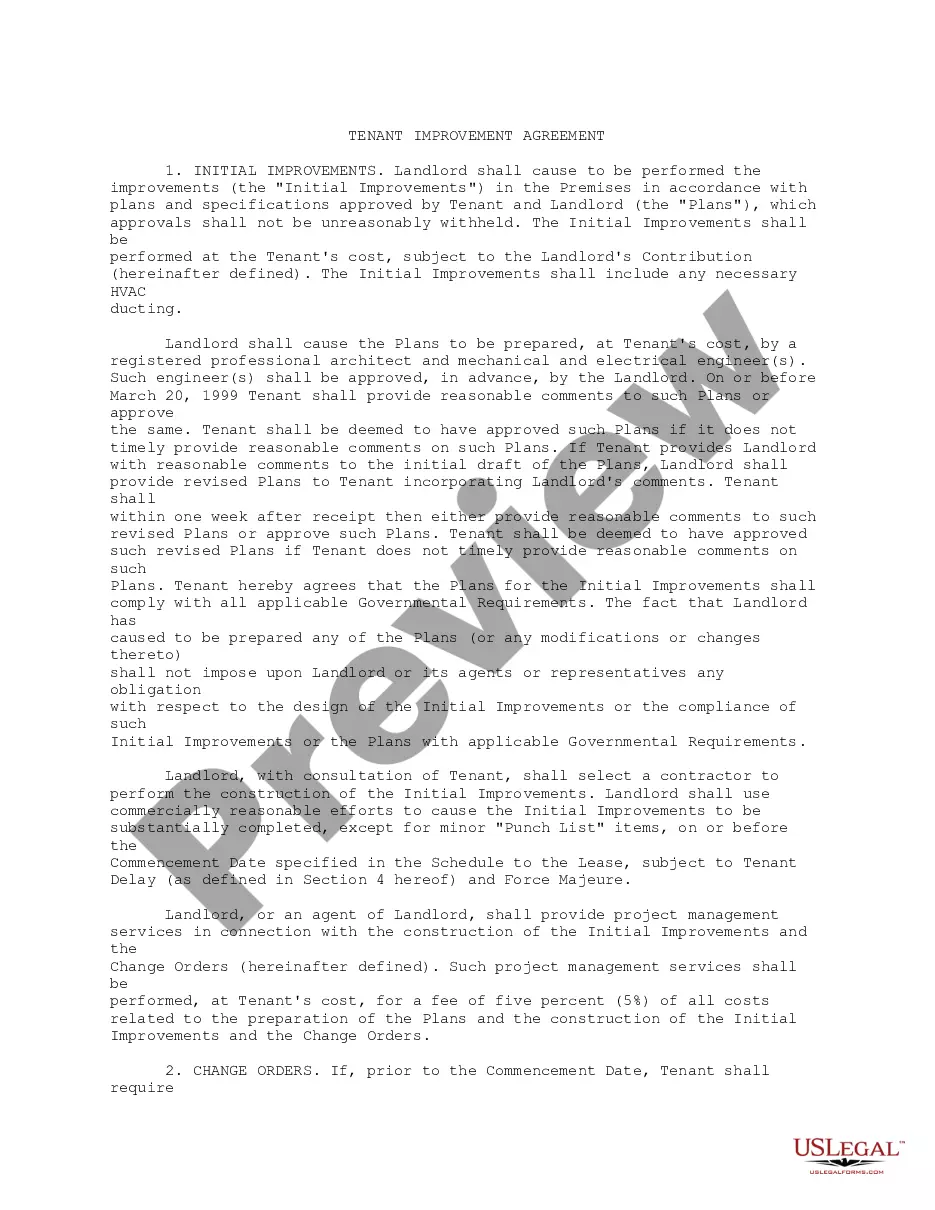







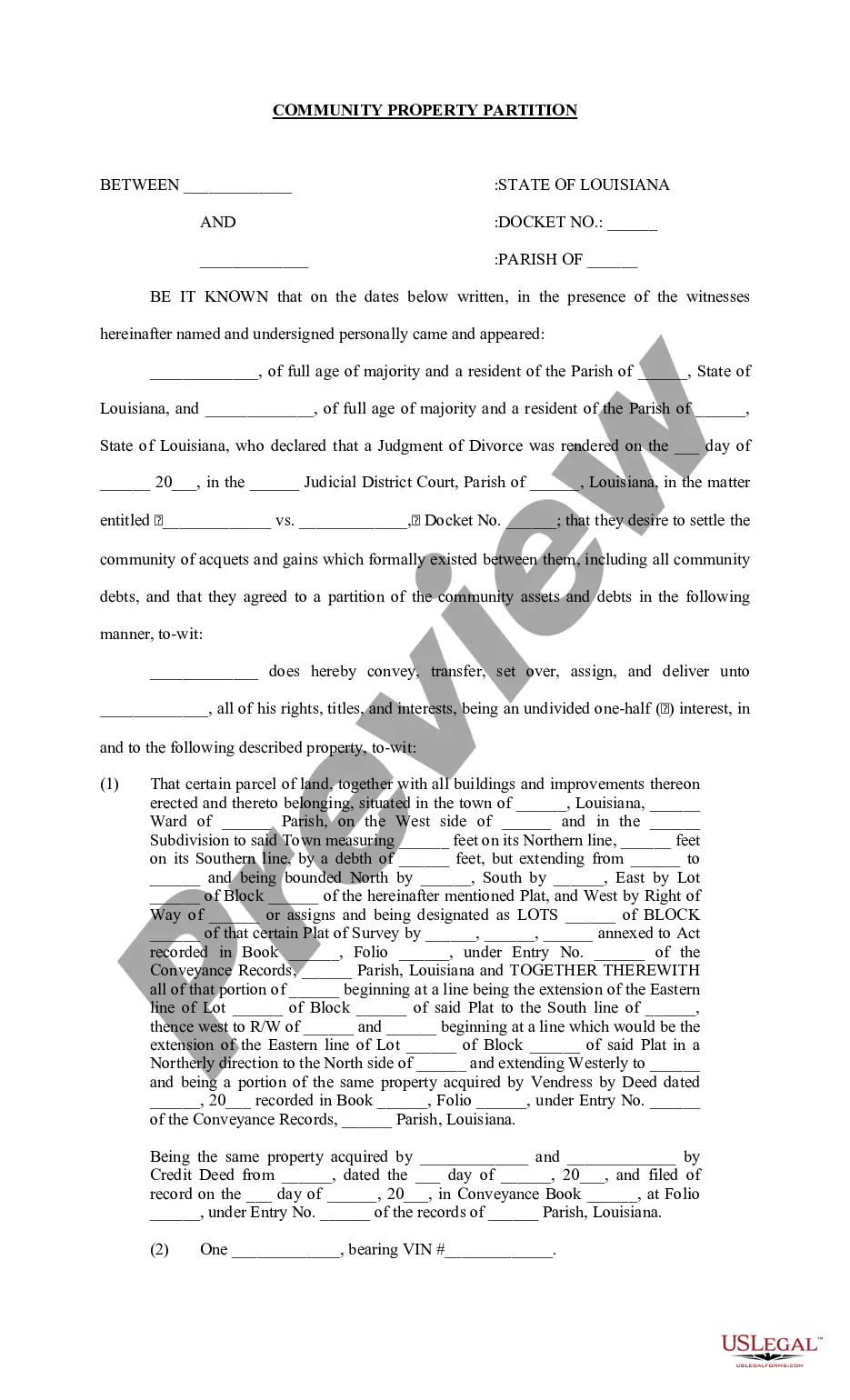
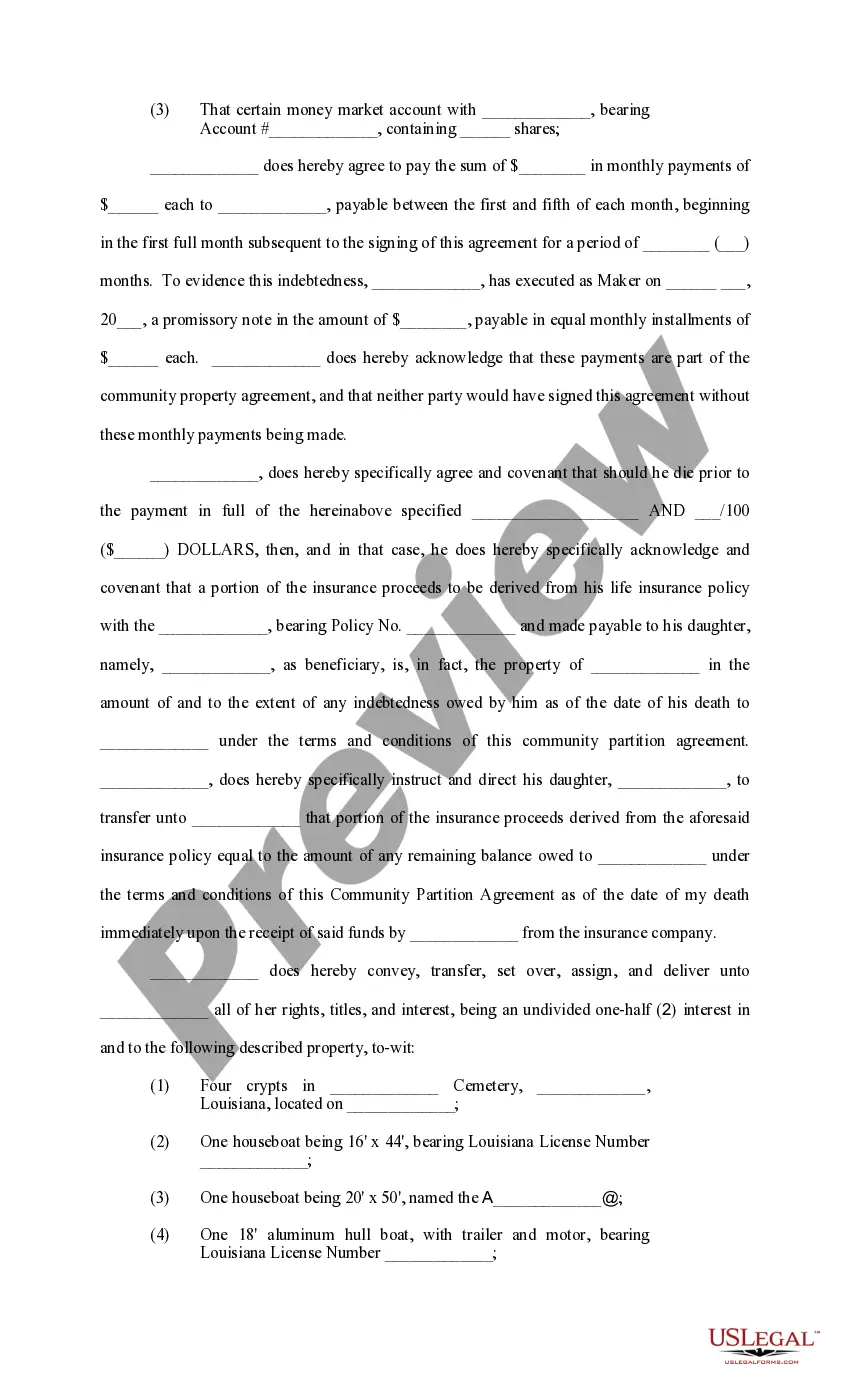
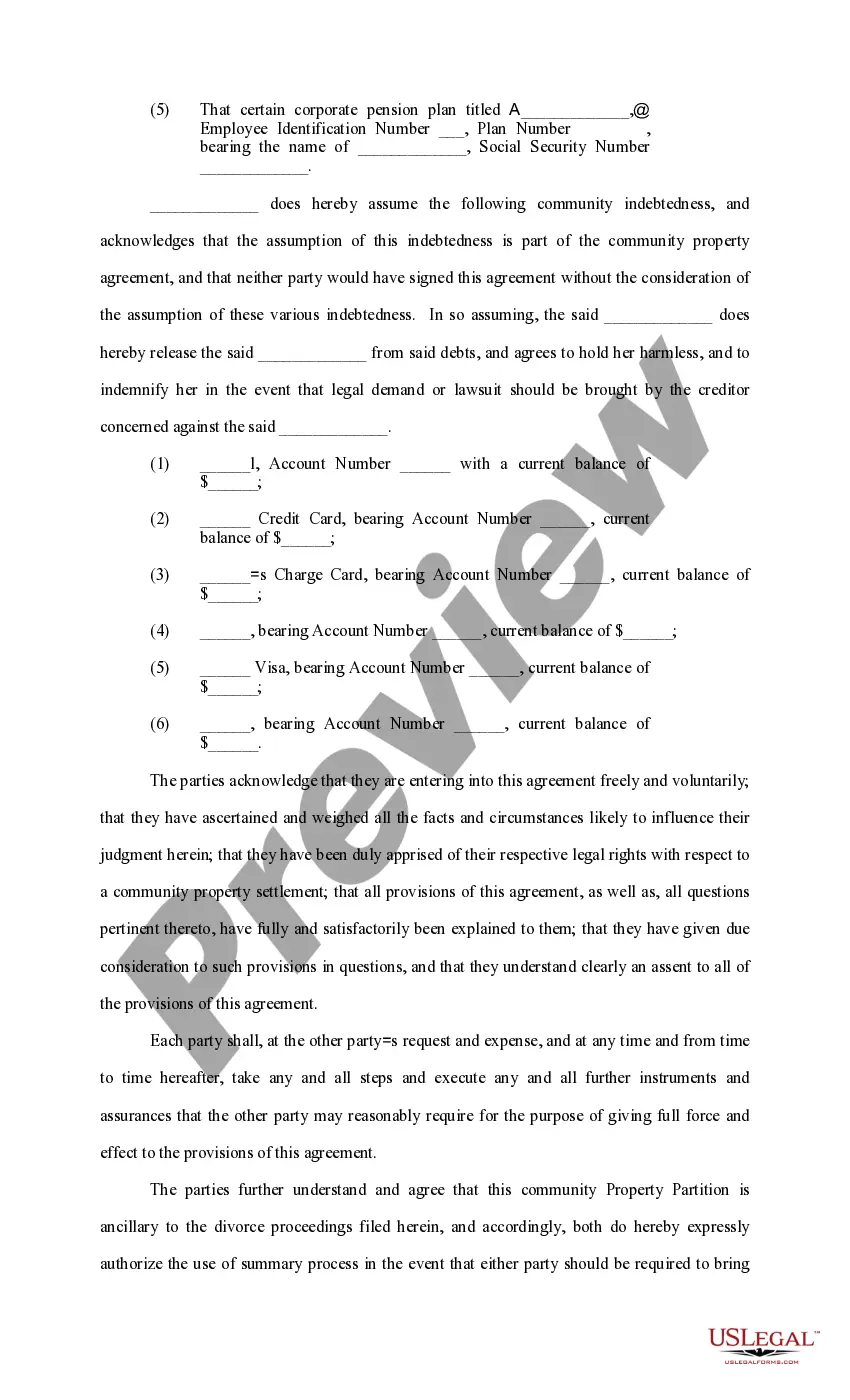
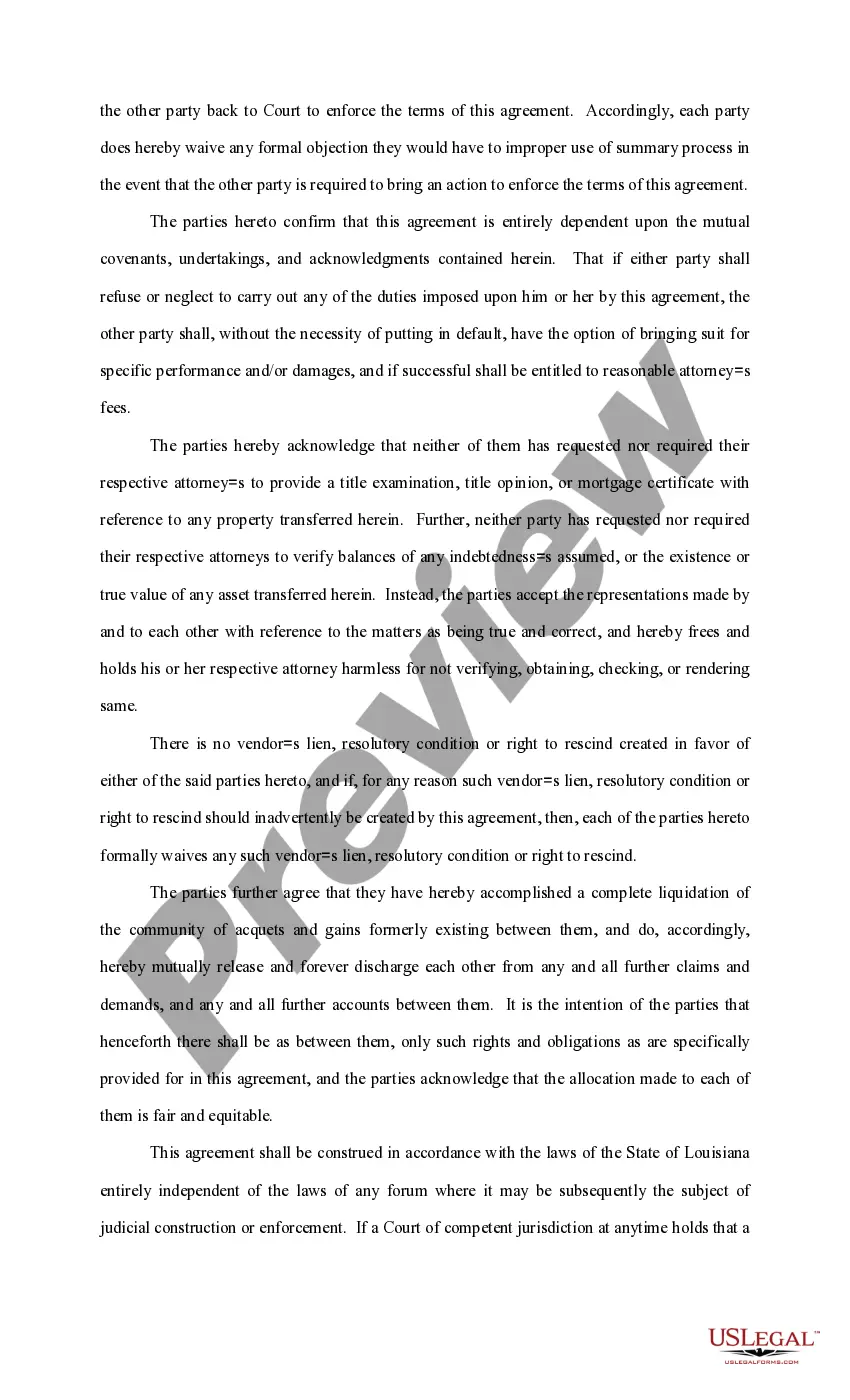
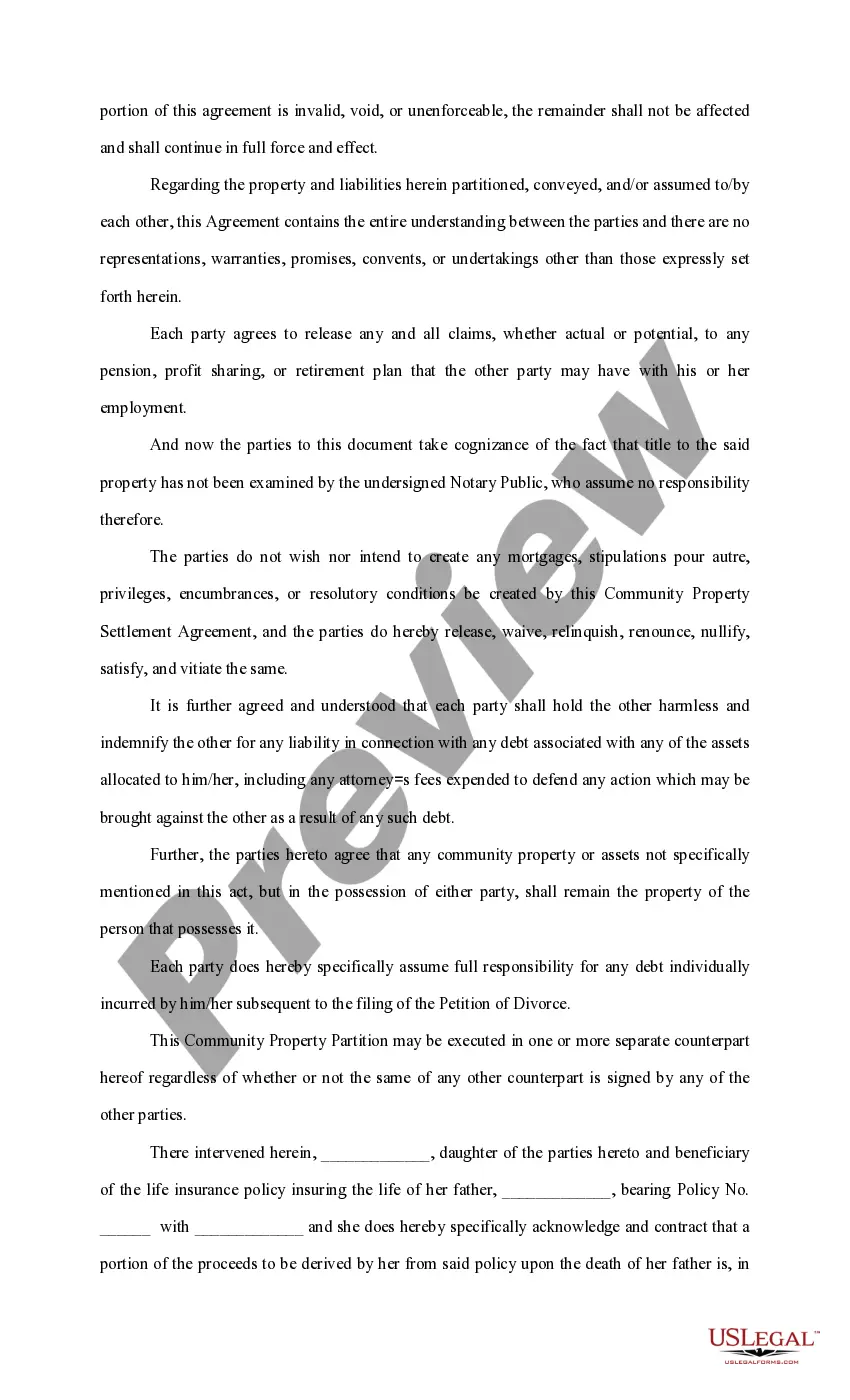
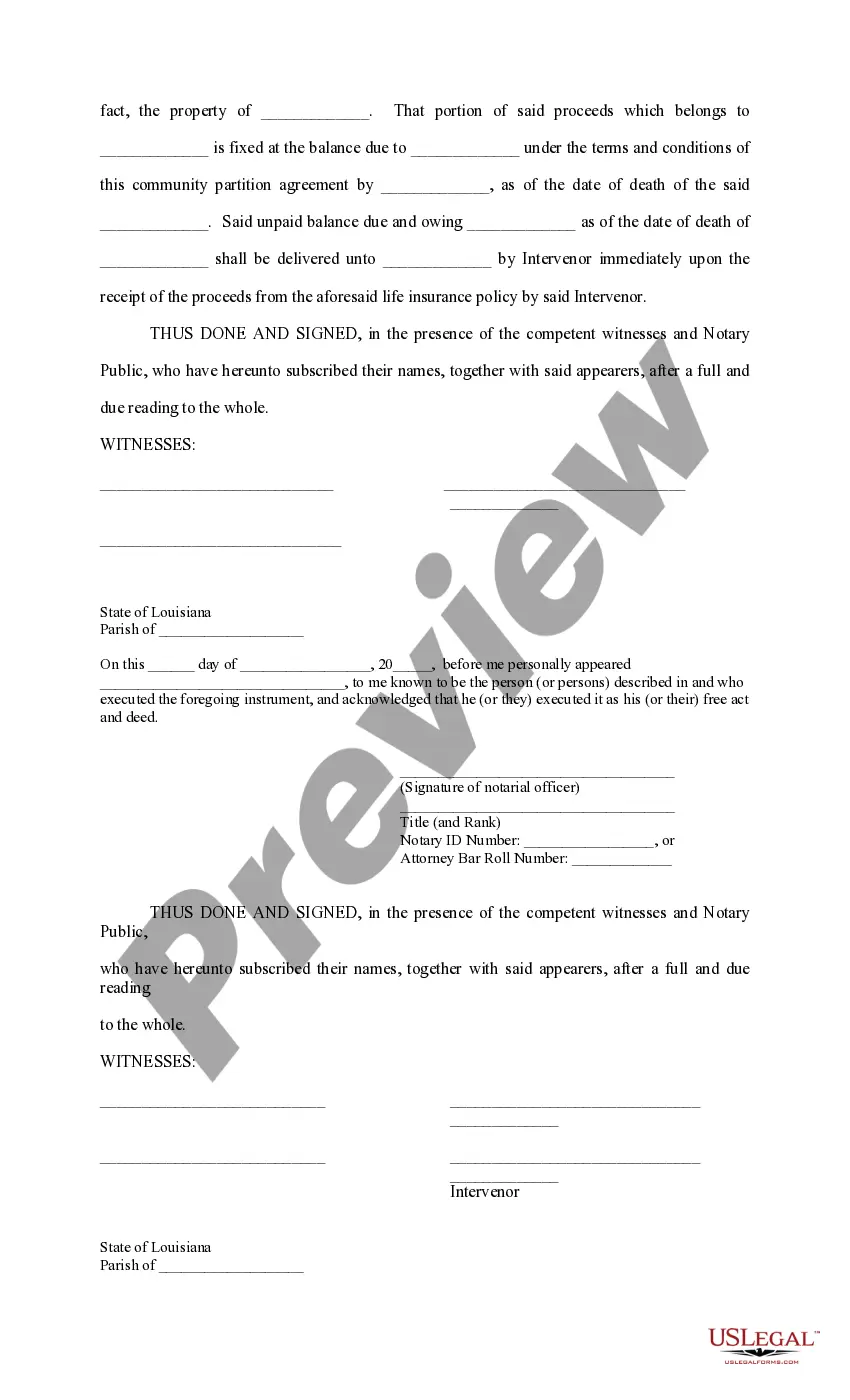
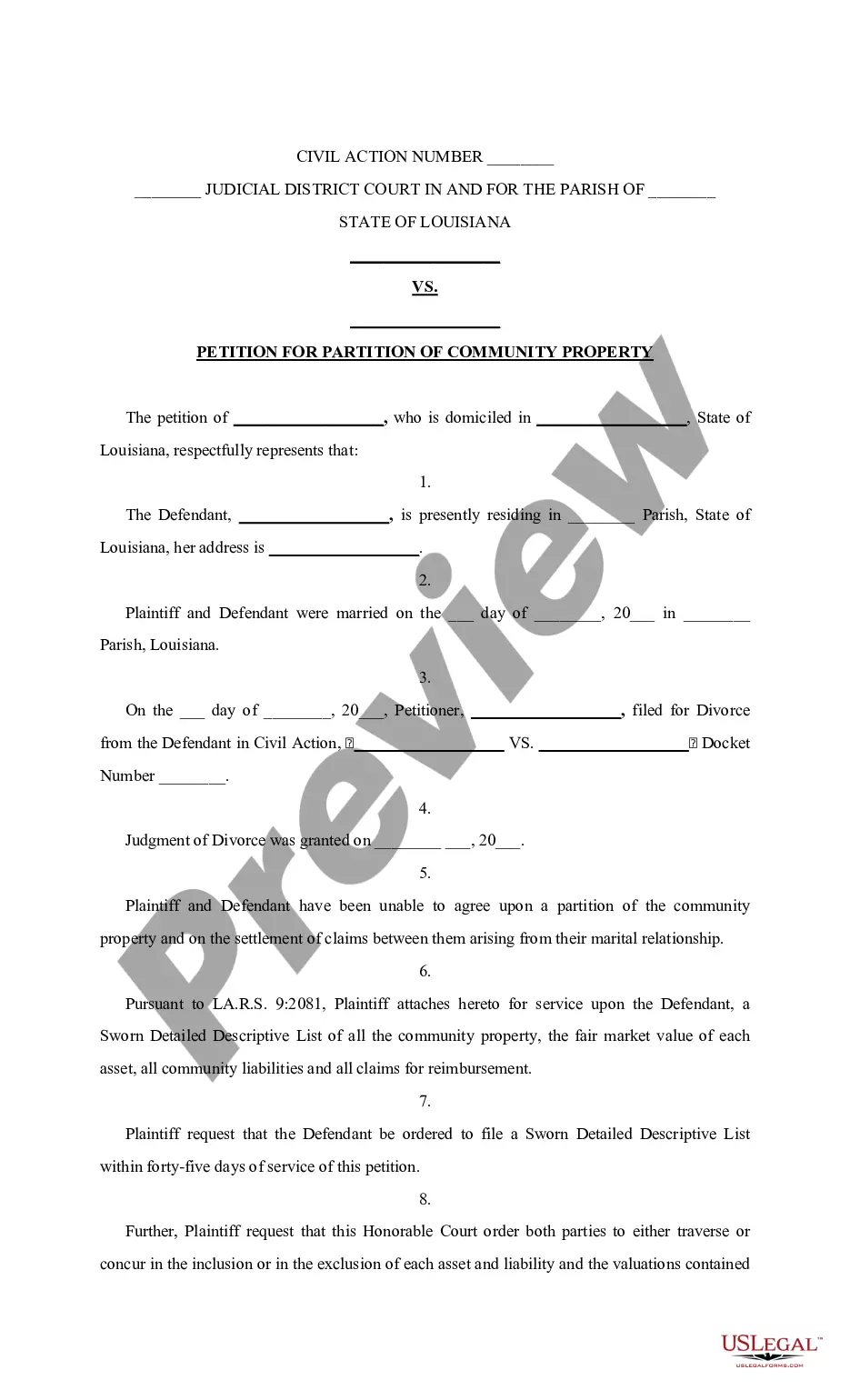
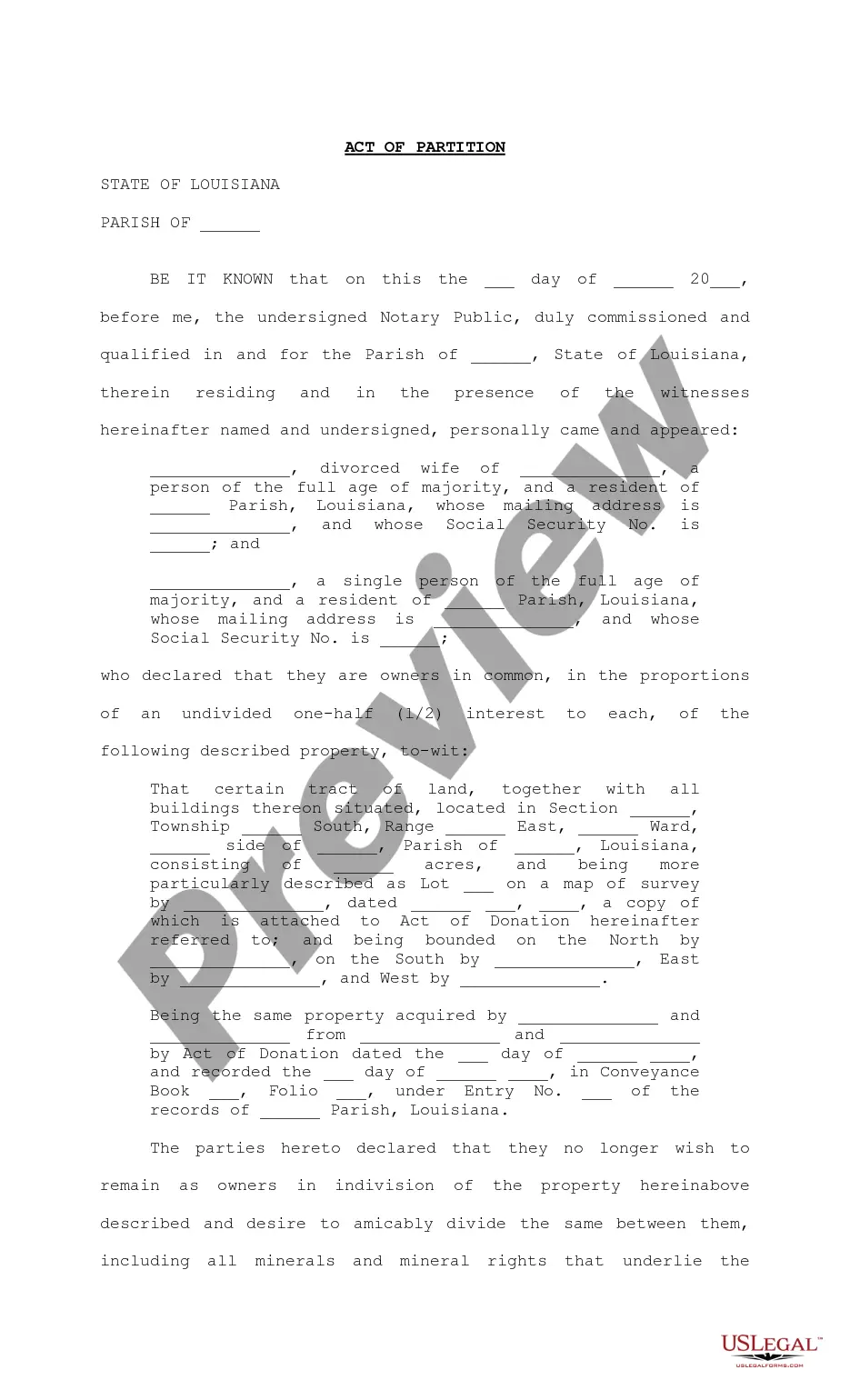
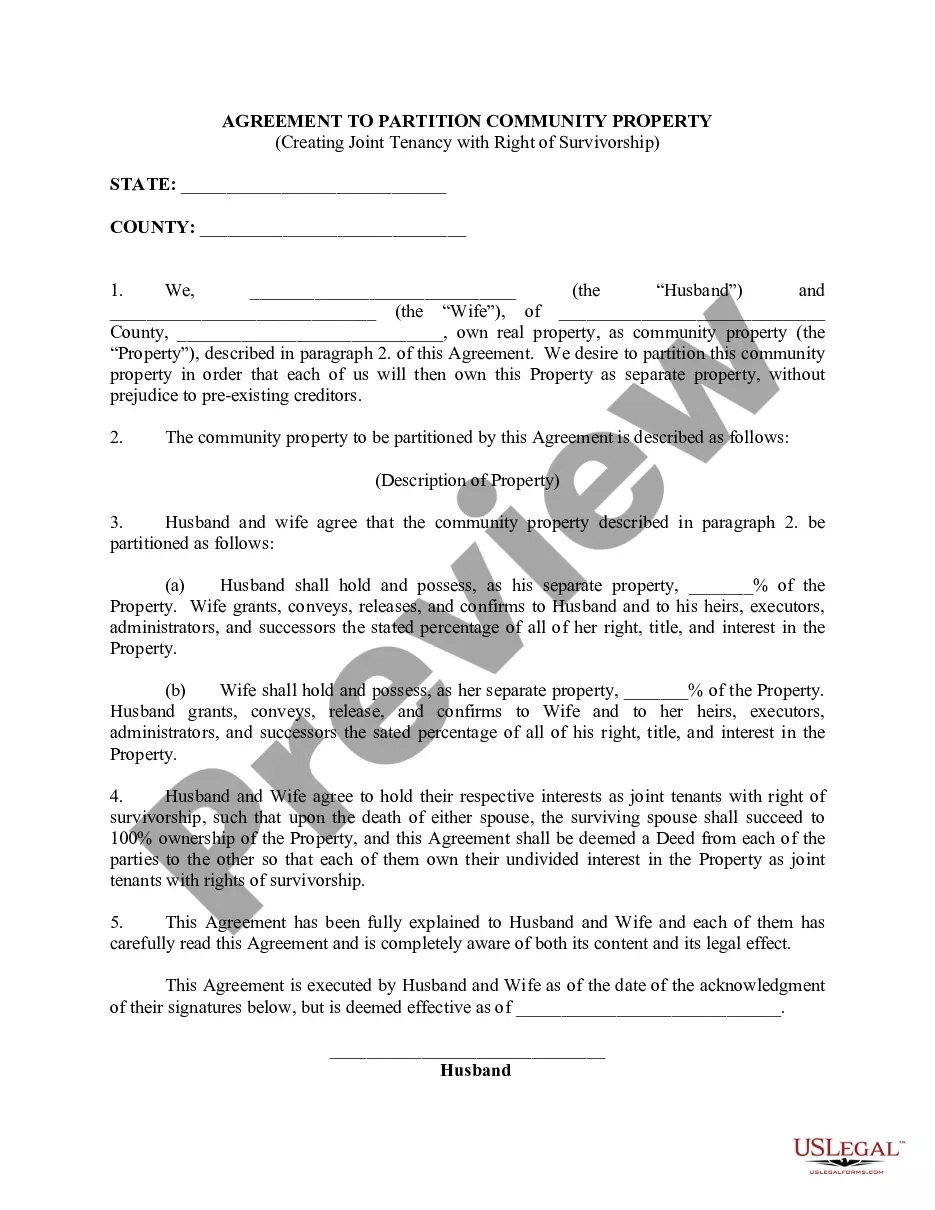
How to fill out Louisiana Community Property Partition?
- If you’re a returning user, start by logging into your account and locate the required form. Confirm that your subscription is active—if it’s expired, renew according to your chosen payment plan.
- For first-time users, browse the Preview mode and read the form descriptions carefully to ensure you select a template that meets your local requirements, particularly focusing on those related to Louisiana cotton fields.
- If the form doesn’t meet your needs, utilize the Search feature at the top of the page to find another suitable template.
- Once you find the correct document, proceed to purchase it by clicking the Buy Now button and selecting your preferred subscription plan. Ensure you register for an account to unlock the full resources available.
- Complete your purchase by entering your payment details via credit card or PayPal.
- After payment, download the document to your device. You can also access it anytime from the My Forms section of your profile.
In conclusion, US Legal Forms provides a powerful tool to streamline your document preparation, especially for specialized areas like Louisiana cotton fields. With an extensive library containing over 85,000 fillable forms, you’re empowered to handle legal paperwork accurately and efficiently.
Start your legal journey today by visiting US Legal Forms and finding the perfect document to suit your needs!
Form popularity
FAQ
While many crops are grown in Louisiana, cotton remains one of the most profitable per acre, particularly when market conditions are favorable. Other potential high-profit crops include soybeans and corn, depending on the soil quality and climate. Each crop's profitability hinges on careful planning and market dynamics. If you're looking for guidance on selecting the right crops, US Legal Forms offers valuable resources and insights.
In Louisiana cotton fields, the yield per acre can vary, but on average, farmers harvest between 500 to 1,200 pounds of cotton. Factors affecting yield include seed variety, environmental conditions, and farming practices. Increasing yield requires effective management and regular monitoring throughout the growing season. Utilizing resources like US Legal Forms can aid you in optimizing your farming methods.
The profit from one acre of cotton in Louisiana can range significantly based on yield and market prices. Generally, you might expect a profit of around $300 to $600 per acre after accounting for expenses. Factors such as pest management and weather conditions can influence your final profit margin. Consulting platforms like US Legal Forms can help you understand costs and profit projections better.
Starting a cotton field in Louisiana involves selecting the right seeds suited for your region's climate and soil. You'll want to prepare your land by tilling and removing any weeds or debris, ensuring it has proper drainage. Once you plant your seeds, keep an eye on their growth and provide adequate water and nutrients. For additional assistance in the process, platforms like US Legal Forms can offer valuable resources and guidance.
The size of a regular farm can vary widely, often depending on the type of farming and location. Small farms may be just a few acres, while larger operations can span hundreds of acres. In Louisiana, many farmers focus on cultivating specific crops like those found in Louisiana cotton fields, which might influence the average farm size in different regions.
The IRS does not set a strict minimum acreage to define a farm, but it looks at whether the land is used for profit-oriented agriculture. Typically, a farm must generate income from selling agricultural products, such as those cultivated in Louisiana cotton fields, regardless of its size. This distinction can be essential for tax purposes and defining your farming activities.
There is no specific minimum acreage defined by Louisiana law to classify a property as a farm. Generally, any size property used for agricultural purposes can be considered a farm, including those growing Louisiana cotton fields. However, certain programs or financial incentives might have acreage requirements, so it's wise to check for those specifics.
In Louisiana, a farm is defined as any land where agricultural activities occur, such as growing crops or raising livestock. It can vary in size and structure and often includes areas dedicated to specialized crops, including Louisiana cotton fields. Understanding this definition can help you determine if your property qualifies as a farm under state laws.
If you experience an issue with a company in Louisiana, you can file a complaint with the Louisiana Attorney General’s Office. You will typically need to provide details about your experience and any relevant documents. This step is crucial to ensure accountability, especially in industries related to agriculture or cotton production, where practices might impact Louisiana cotton fields.
To register as a farm in Louisiana, you need to complete the registration process through the Louisiana Department of Agriculture and Forestry. This often involves filling out the necessary forms, providing documentation about your land, and possibly your farming practices, particularly if you plan to cultivate crops like Louisiana cotton fields. Being officially registered can help you access certain benefits and resources available to farmers in the state.