Improper Rent Ordinance For Renters
Description

Get your form ready online
Our built-in tools help you complete, sign, share, and store your documents in one place.
Make edits, fill in missing information, and update formatting in US Legal Forms—just like you would in MS Word.
Download a copy, print it, send it by email, or mail it via USPS—whatever works best for your next step.
Sign and collect signatures with our SignNow integration. Send to multiple recipients, set reminders, and more. Go Premium to unlock E-Sign.
If this form requires notarization, complete it online through a secure video call—no need to meet a notary in person or wait for an appointment.
We protect your documents and personal data by following strict security and privacy standards.

Make edits, fill in missing information, and update formatting in US Legal Forms—just like you would in MS Word.

Download a copy, print it, send it by email, or mail it via USPS—whatever works best for your next step.

Sign and collect signatures with our SignNow integration. Send to multiple recipients, set reminders, and more. Go Premium to unlock E-Sign.

If this form requires notarization, complete it online through a secure video call—no need to meet a notary in person or wait for an appointment.

We protect your documents and personal data by following strict security and privacy standards.
Looking for another form?








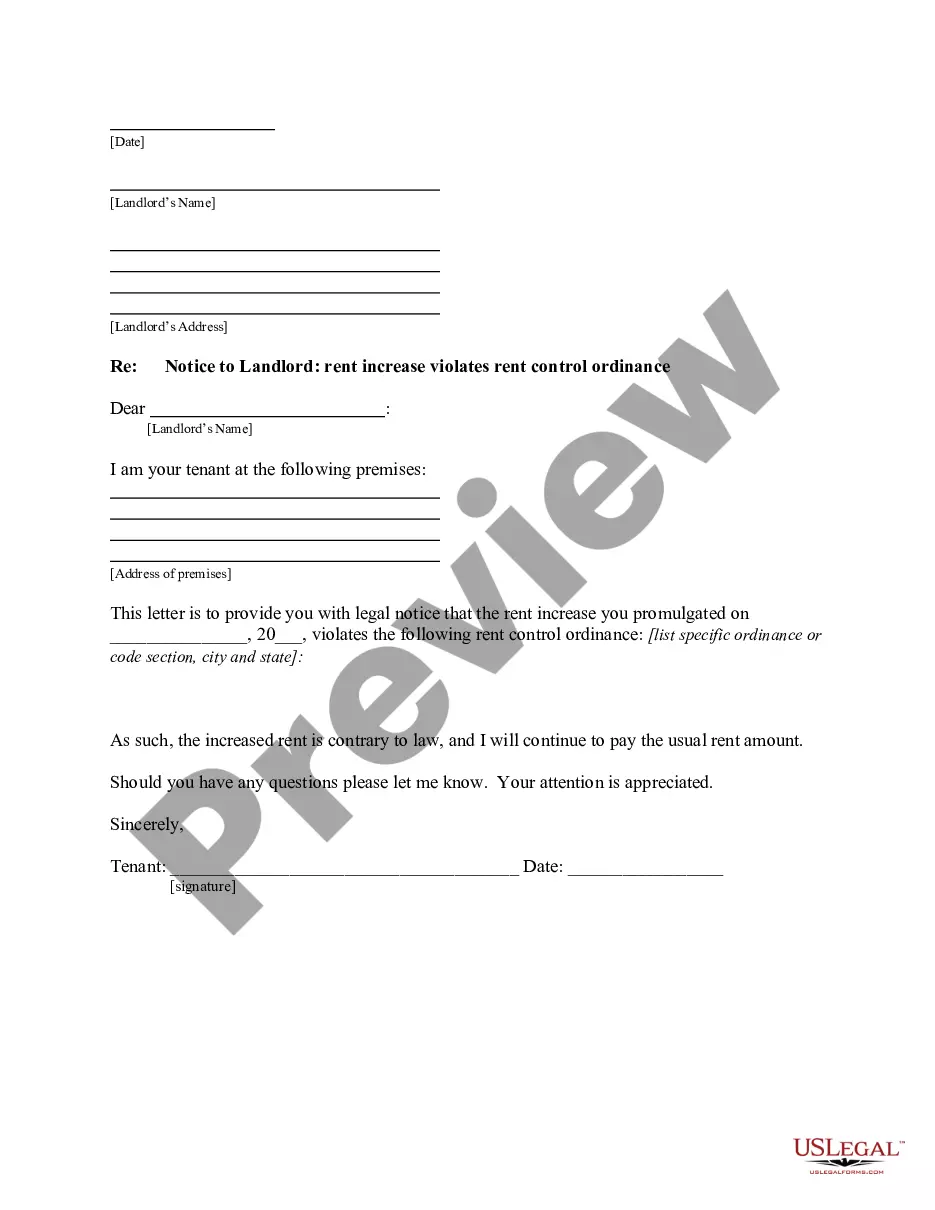
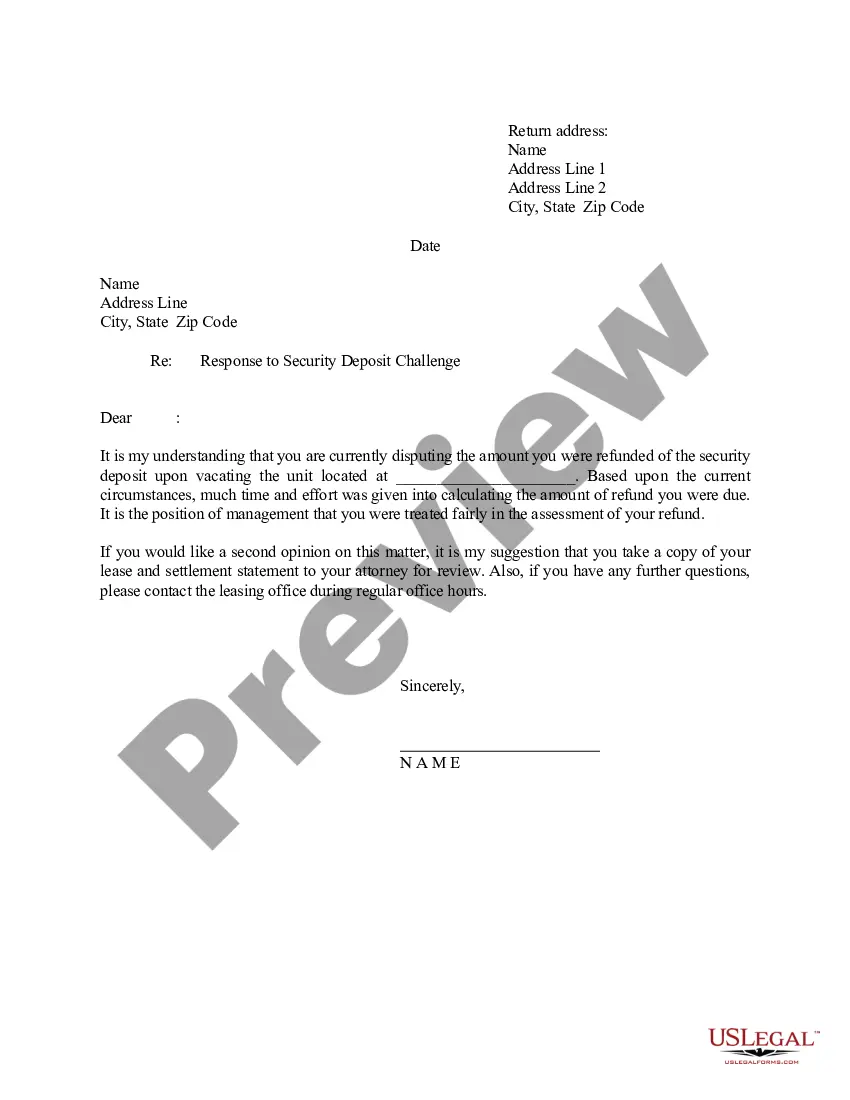
How to fill out Louisiana Letter From Tenant To Landlord Containing Notice To Landlord To Withdraw Improper Rent Increase Due To Violation Of Rent Control Ordinance?
- Log in to your US Legal Forms account if you are a returning user. If your subscription is expired, renew it as needed.
- For new users, visit the US Legal Forms website and take a moment to assess the available templates. Use the Preview mode to verify that the document meets your local jurisdiction's requirements.
- If you find discrepancies in your search, utilize the Search tab to locate the appropriate template that fits your criteria.
- Select the document you wish to purchase by clicking the 'Buy Now' button. Choose a suitable subscription plan and create an account for access.
- Complete your purchase by entering your payment information, whether by credit card or PayPal.
- Finally, download your completed form to your device. You can access it anytime through the 'My Forms' section of your profile.
After following these steps, you'll be equipped with the necessary documents to tackle improper rent ordinances with confidence. US Legal Forms not only streamlines the process but also empowers you with the right tools for effective legal navigation.
Explore US Legal Forms today and ensure your rental rights are protected with precision and ease!
Form popularity
FAQ
Dealing with a toxic landlord can be challenging, but there are steps you can take to manage the situation. Start by documenting all interactions and incidents that reflect their behavior, especially if they violate the improper rent ordinance for renters. Open communication may help, but if the situation does not improve, consider seeking legal guidance through platforms like UsLegalForms to explore your options for resolution. Taking proactive steps can lead to a healthier rental experience.
Landlord negligence occurs when a landlord fails to fulfill their responsibilities, leading to tenant harm or unsafe conditions. Examples include ignoring essential repairs or not addressing safety issues, which can violate the improper rent ordinance for renters. If you believe your landlord is negligent, you have the right to address the issue legally. Taking action can protect your rights and living conditions.
If you experience emotional distress due to your landlord's actions, you may have grounds to sue. To do this, gather evidence showing how the improper rent ordinance for renters affected your mental health or well-being. Document your communications with your landlord and seek legal advice to navigate the process effectively. This approach increases your chances of achieving a favorable resolution.
In Ohio, renters have several important rights that protect them under the law. Firstly, your landlord must provide a safe living environment without any harmful defects. Moreover, renters can seek legal recourse if an improper rent ordinance for renters is violated, allowing you to stand up for fair treatment. It's essential to understand these rights to ensure you maintain a beneficial relationship with your landlord.
Tennessee law does not specify a maximum percentage for rent increases. Therefore, landlords can raise rent to any amount unless limited by the terms of your lease. If you feel that an increase violates an improper rent ordinance for renters, it is essential to seek legal advice to understand your options.
Landlords in Tennessee are generally not responsible for repairs that result from tenant misuse or neglect. Additionally, they do not have to provide services not included in the lease agreement. Understanding these limitations can be vital when navigating issues related to improper rent ordinance for renters.
In Tennessee, landlords typically have a reasonable time frame to fix issues depending on the severity of the problem. For example, urgent repairs like water leaks should be addressed promptly, while non-urgent matters may take longer. If the landlord fails to make necessary repairs, you might have a case for an improper rent ordinance for renters, which may require legal documentation.
In Tennessee, there is no statewide limit on how much a landlord can raise rent unless stated in your lease agreement. However, if the increase seems excessive, it may qualify as an improper rent ordinance for renters. Always check your lease terms and, if necessary, consult legal resources for assistance.
As a renter in Tennessee, you have the right to a habitable living environment, which includes necessary repairs and safety features. You can also challenge any improper rent ordinances that may affect your lease agreement. Understanding these rights is crucial for protecting yourself against any unfair treatment by your landlord.
To effectively fight against your landlord regarding improper rent ordinance for renters, begin by documenting all communications and issues. Next, you may file a complaint with the local housing authority or seek legal advice to understand your rights better. Consider using resources like USLegalForms to find legal documents that can help you present your case.