Trust Account For Investment
Description

Get your form ready online
Our built-in tools help you complete, sign, share, and store your documents in one place.
Make edits, fill in missing information, and update formatting in US Legal Forms—just like you would in MS Word.
Download a copy, print it, send it by email, or mail it via USPS—whatever works best for your next step.
Sign and collect signatures with our SignNow integration. Send to multiple recipients, set reminders, and more. Go Premium to unlock E-Sign.
If this form requires notarization, complete it online through a secure video call—no need to meet a notary in person or wait for an appointment.
We protect your documents and personal data by following strict security and privacy standards.

Make edits, fill in missing information, and update formatting in US Legal Forms—just like you would in MS Word.

Download a copy, print it, send it by email, or mail it via USPS—whatever works best for your next step.

Sign and collect signatures with our SignNow integration. Send to multiple recipients, set reminders, and more. Go Premium to unlock E-Sign.

If this form requires notarization, complete it online through a secure video call—no need to meet a notary in person or wait for an appointment.

We protect your documents and personal data by following strict security and privacy standards.
Looking for another form?








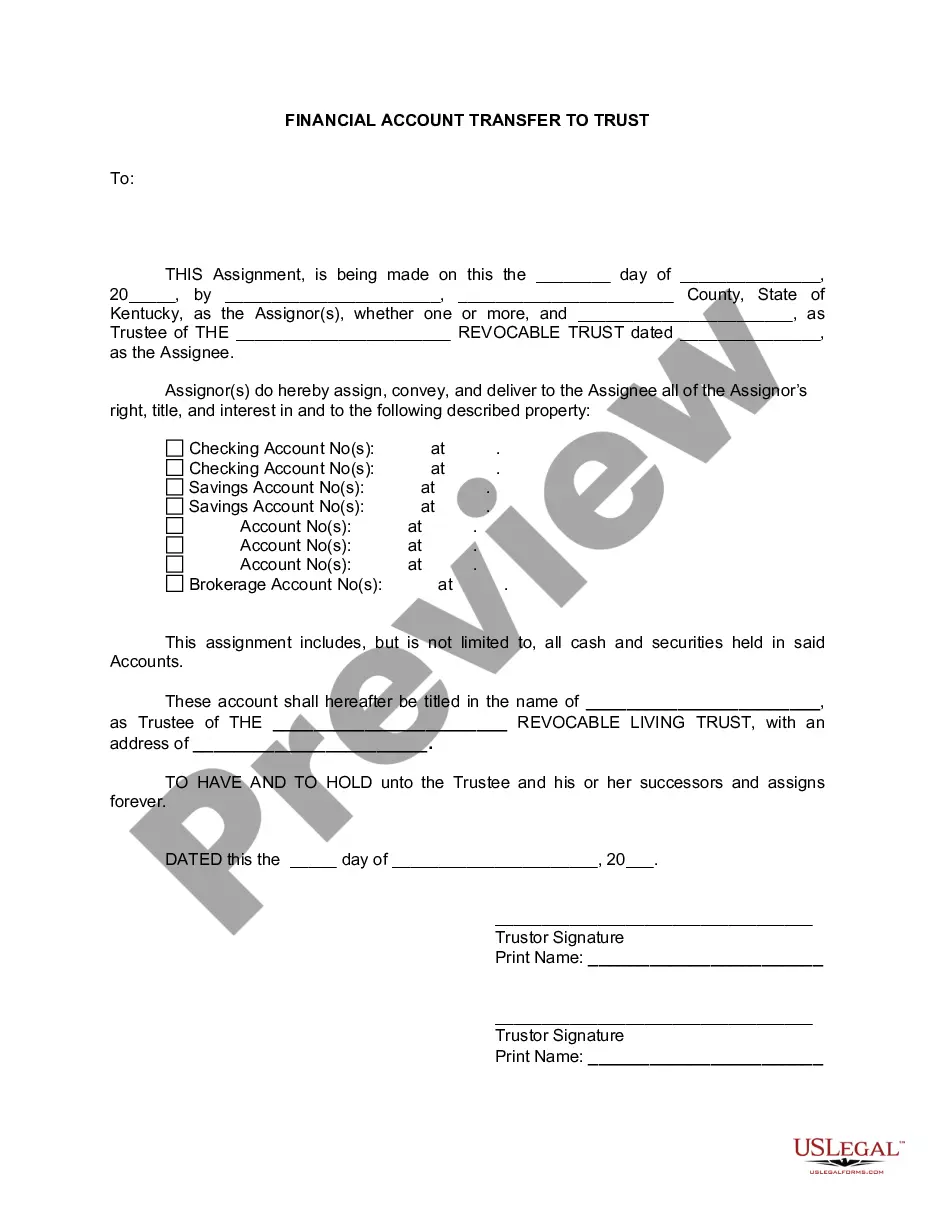
How to fill out Kentucky Financial Account Transfer To Living Trust?
- Start by visiting the US Legal Forms website and exploring the Trust Account forms available.
- Preview the templates to confirm they meet your needs and comply with local regulations.
- If necessary, utilize the search function to find additional forms that may be relevant to your situation.
- Select the form you need and click the 'Buy Now' button. Choose your preferred subscription plan during this process.
- Complete your purchase by entering your payment details or using a PayPal account.
- Once the transaction is complete, download the form to your device for easy access.
- You can find your downloaded documents anytime in the 'My Forms' section of your account.
Establishing a trust account for investment through US Legal Forms streamlines the process, allowing for quick access to a robust library of over 85,000 legal forms. With their easy-to-navigate platform and expert support, you can ensure that your legal documents are accurate and compliant.
Don’t hesitate to simplify your investing journey; visit US Legal Forms today and take the first step towards securing your trust account.
Form popularity
FAQ
A common example of a trust account is a revocable living trust. This type of trust allows you to manage your investments during your lifetime while designating beneficiaries for after your passing. Such trust accounts for investment help in the seamless transfer of wealth and can protect your assets. US Legal Forms offers the necessary tools and templates to establish such accounts effectively.
Filling out a trust fund requires careful attention to detail. You need to provide information about the assets, beneficiaries, and trustee. When you create a trust account for investment, ensure that all sections are complete and accurately reflect your intentions. Platforms like US Legal Forms provide easy-to-use templates to make this process straightforward and organized.
Yes, you can set up a trust fund by yourself. However, it is important to understand the legal requirements involved. A trust account for investment can be established with the right documents and proper guidance. Utilizing platforms like US Legal Forms can simplify this process, offering templates and resources to help you create an effective trust fund.
The best bank for opening a trust account for investment varies based on your financial situation and requirements. Banks like Vanguard and Fidelity stand out for their strong investment platforms and customer service. Consider the fees associated with each bank and their access to investment resources. Uslegalforms can assist you in navigating these options, ensuring you select the right bank for your trust account.
Numerous banks offer trust accounts for investment. Notable options include Wells Fargo, Citibank, and TD Bank, each providing unique features and services. When choosing a bank, consider their fees, interest rates, and the level of customer support available. It’s important to find a bank that fits your investment style and provides the necessary tools for managing your trust account.
Yes, Chase Bank does offer trust accounts for investment. They provide various options that cater to different trust types, making it easier to manage your assets. With their robust financial services, you can enjoy added benefits such as investment options and financial advice. This can make Chase a strong contender for managing your trust account.
Selecting the best bank for a trust account for investment depends on your specific needs. Generally, consider banks that offer strong interest rates, low fees, and extensive financial services. Research options like Bank of America or Wells Fargo, which are known for providing solid trust account features. Ultimately, choose a bank that aligns with your investment goals and provides easy access to your funds.
A trust investment account is a financial arrangement where assets are held in trust for the benefit of one or more beneficiaries. Essentially, it allows a trustee to manage investments on behalf of the beneficiaries while providing certain legal protections. This type of account can help you achieve your financial goals by ensuring proper asset management. Using uslegalforms for guidance can simplify the process of setting up and maintaining a trust account for investment.
While a trust account for investment offers security, it can also have drawbacks. One major disadvantage is the potential for limited access to funds. Trust accounts often have strict withdrawal rules, which can restrict liquidity. Additionally, management fees and taxes can reduce overall returns, making it essential to weigh these factors before committing.
Having a trust can be beneficial, but there are some potential downfalls as well. One major issue could be the complexity in trust management, which may lead to miscommunication among family members. Additionally, there's the risk of higher costs due to management fees and legal expenses. So, when considering a trust account for investment, weigh these factors against your long-term financial goals.