Name Deed Tenants For A House
Description



Get your form ready online
Our built-in tools help you complete, sign, share, and store your documents in one place.
Make edits, fill in missing information, and update formatting in US Legal Forms—just like you would in MS Word.
Download a copy, print it, send it by email, or mail it via USPS—whatever works best for your next step.
Sign and collect signatures with our SignNow integration. Send to multiple recipients, set reminders, and more. Go Premium to unlock E-Sign.
If this form requires notarization, complete it online through a secure video call—no need to meet a notary in person or wait for an appointment.
We protect your documents and personal data by following strict security and privacy standards.

Make edits, fill in missing information, and update formatting in US Legal Forms—just like you would in MS Word.

Download a copy, print it, send it by email, or mail it via USPS—whatever works best for your next step.

Sign and collect signatures with our SignNow integration. Send to multiple recipients, set reminders, and more. Go Premium to unlock E-Sign.

If this form requires notarization, complete it online through a secure video call—no need to meet a notary in person or wait for an appointment.

We protect your documents and personal data by following strict security and privacy standards.
Looking for another form?










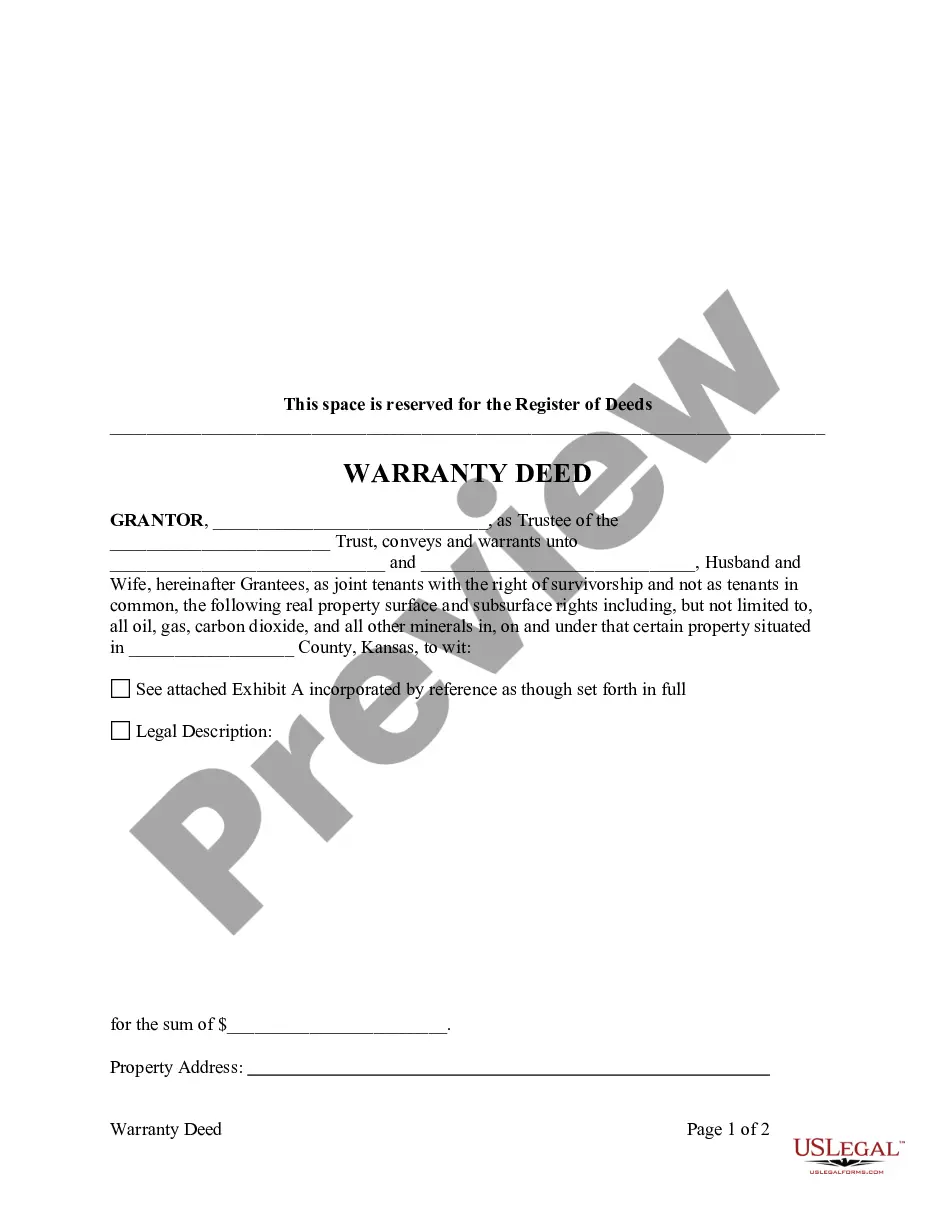
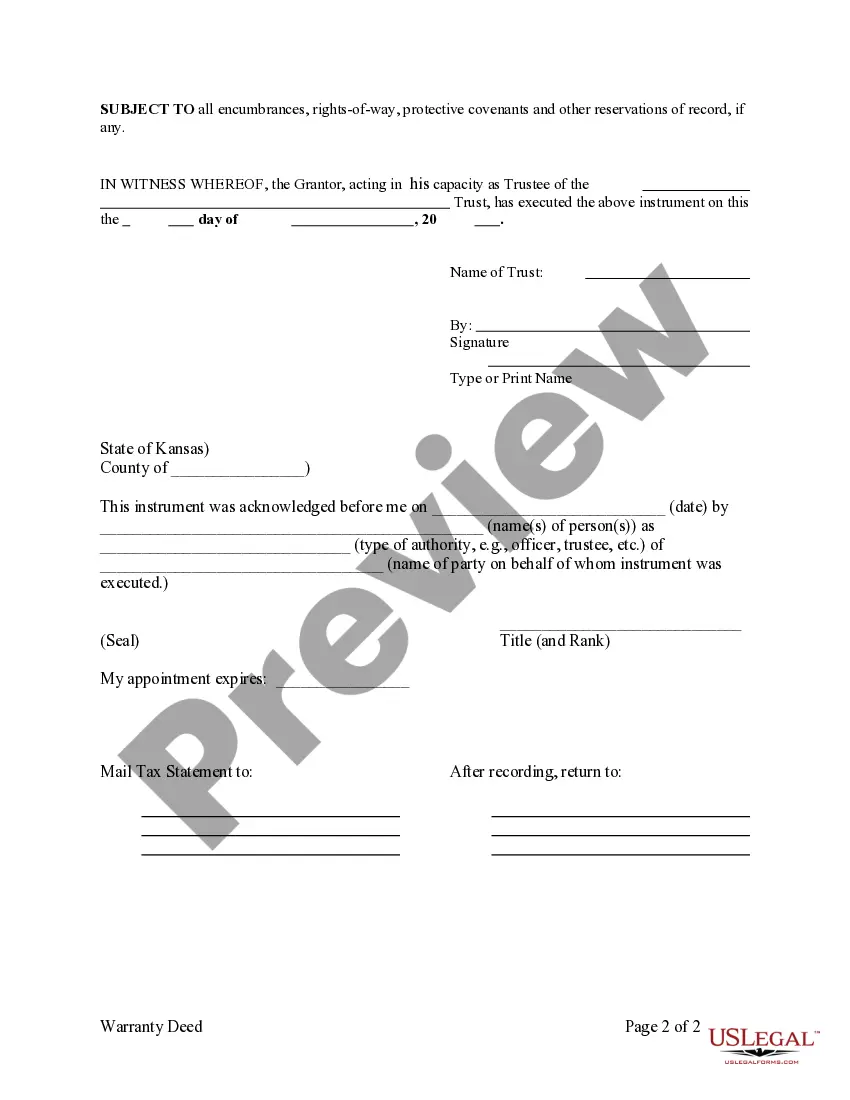
How to fill out Kansas Warranty Deed - Trust To Husband And Wife?
- Log in to your US Legal Forms account if you are a returning user, ensuring your subscription is active.
- For first-time users, start by checking the Preview mode and reviewing the form description to confirm it meets your requirements and local laws.
- If the available template doesn't fit, utilize the Search bar to find another form that matches your needs.
- Once you find the correct document, click on the Buy Now button and select your preferred subscription plan, while registering for an account for full access.
- Complete your purchase by entering your credit card information or logging into PayPal.
- Download your newly obtained form and save it on your device. You can revisit it anytime from the My Forms section of your account.
By following these steps, you can efficiently navigate through the US Legal Forms platform to acquire the right template for naming deed tenants for a house. Their extensive library, with over 85,000 legal documents, ensures you have exactly what you need.
Don’t hesitate to start your journey with US Legal Forms today, and ensure your legal processes are swift and hassle-free!
Form popularity
FAQ
You do not necessarily need a lawyer to add someone to a deed, but it can be beneficial. A legal professional can help ensure that all documents are correctly filled out and filed, avoiding potential mistakes. However, for straightforward cases, many individuals successfully complete the process on their own. If you're uncertain, consider consulting a platform like uslegalforms to guide you as you establish new name deed tenants for a house.
Adding a name to a deed can take anywhere from a few days to several weeks, depending on local regulations and processing times. You need to prepare a new deed, have it signed, and file it with your local government office. The timeline can be influenced by the efficiency of the clerk’s office. If you’re unsure how to navigate this process, platforms like uslegalforms can provide the necessary documentation to speed things up.
A key disadvantage of joint tenancy ownership is that all owners have equal rights to the property. This means that if one owner wants to sell their share, it may complicate matters for the others. Additionally, joint tenancy can create issues if one owner passes away, as the property will automatically transfer to the remaining owners. Therefore, consider your options carefully before designating joint tenancy as a form of name deed tenants for a house.
You can typically add someone to your deed without refinancing, depending on your mortgage terms. This process usually involves filing a new deed with the county clerk's office, which identifies both parties as owners. However, it's essential to check with your lender to ensure there are no restrictions. This way, you can expand the pool of name deed tenants for a house effectively.
Yes, your parents can put you on the deed to their house. They can do this by creating a new deed that includes your name. This process allows you to become a legal owner of the property alongside them. However, it’s a good idea to consult with a legal expert to understand the tax implications and rights associated with being a name deed tenant for a house.
When your name is not on the deed of the house, you do not have legal ownership of the property. This means you may have no rights in the event of a sale or dispute. Additionally, if the owner passes away, the property will not automatically transfer to you. It's crucial to understand the implications of your name not being listed as a deed tenant for a house.
Avoiding joint ownership may be wise for several reasons. It can lead to disputes over property management and decisions, where differing opinions can create tension among co-owners. Additionally, one owner's creditors can claim against the property, impacting the other owner's financial security. When figuring out how to name deed tenants for a house, it might be beneficial to assess if joint ownership aligns with your objectives.
One significant disadvantage of joint tenancy is its lack of control over the property. All owners must agree on major decisions, which can be challenging if circumstances change. Moreover, joint tenants can expose themselves to liability from each other's actions, which may complicate ownership. Understanding how to name deed tenants for a house involves recognizing these potential drawbacks.
Joint tenancy is often referred to as a 'poor man's will' because it provides a straightforward way to transfer property upon death. Unlike traditional wills, it bypasses probate, making it quicker and less costly. This approach appeals to many who seek to avoid the complexities of estate planning. If you want to efficiently name deed tenants for a house, consider how this could simplify your plans.
Joint tenancy can lead to complications. When a co-owner passes away, their share automatically transfers to the other tenant, which might not align with their wishes. Furthermore, if one tenant incurs debt or faces legal issues, their ownership stake may be affected, putting the entire property at risk. If you're considering how to name deed tenants for a house, weigh these risks carefully.