Tenant Landlord Failure For Lease
Description


Get your form ready online
Our built-in tools help you complete, sign, share, and store your documents in one place.
Make edits, fill in missing information, and update formatting in US Legal Forms—just like you would in MS Word.
Download a copy, print it, send it by email, or mail it via USPS—whatever works best for your next step.
Sign and collect signatures with our SignNow integration. Send to multiple recipients, set reminders, and more. Go Premium to unlock E-Sign.
If this form requires notarization, complete it online through a secure video call—no need to meet a notary in person or wait for an appointment.
We protect your documents and personal data by following strict security and privacy standards.

Make edits, fill in missing information, and update formatting in US Legal Forms—just like you would in MS Word.

Download a copy, print it, send it by email, or mail it via USPS—whatever works best for your next step.

Sign and collect signatures with our SignNow integration. Send to multiple recipients, set reminders, and more. Go Premium to unlock E-Sign.

If this form requires notarization, complete it online through a secure video call—no need to meet a notary in person or wait for an appointment.

We protect your documents and personal data by following strict security and privacy standards.
Looking for another form?





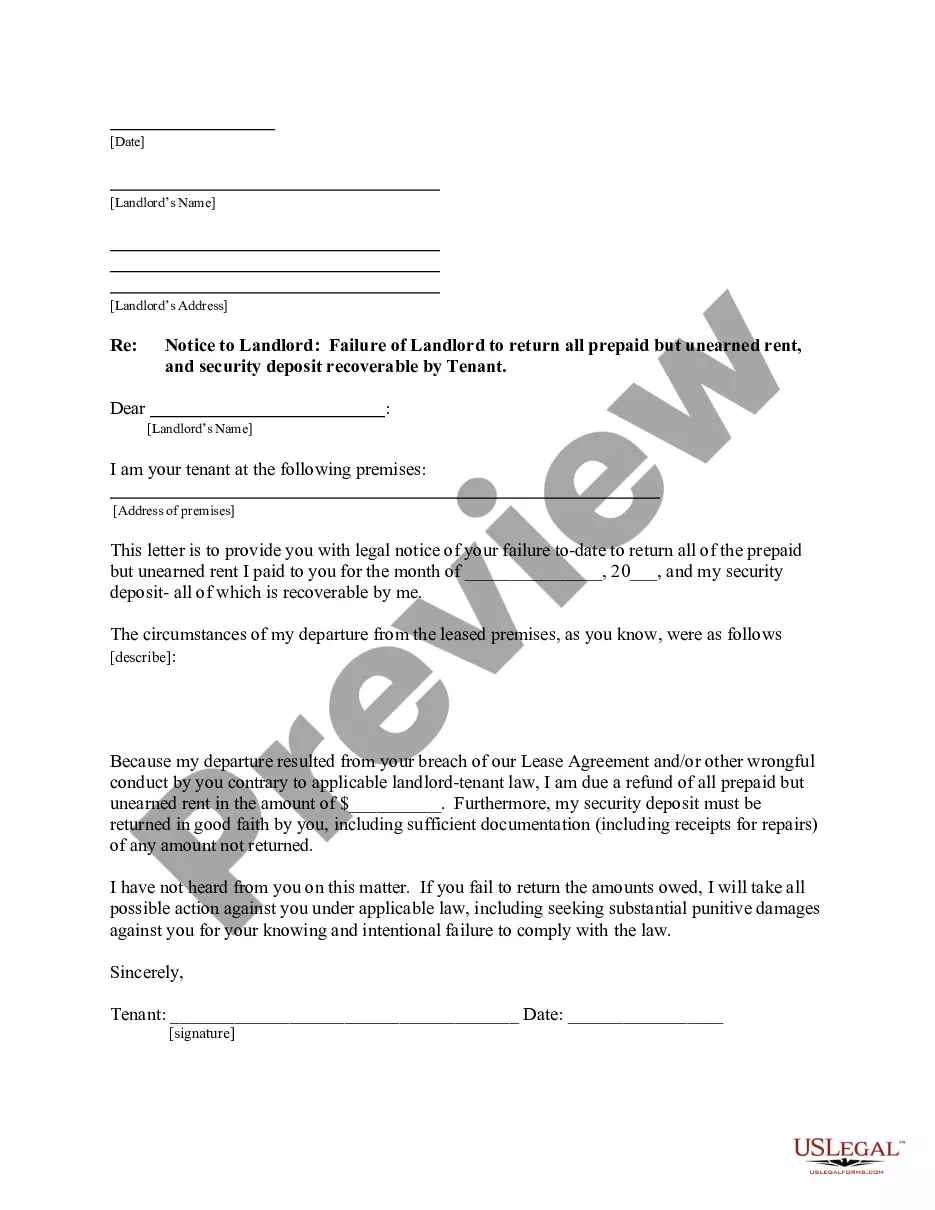
How to fill out Indiana Letter From Tenant To Landlord For Failure Of Landlord To Return All Prepaid And Unearned Rent And Security Recoverable By Tenant?
- Log into your US Legal Forms account if you’re a returning user, and ensure your subscription is active to access necessary templates.
- For first-time users, start by reviewing the description and preview mode of the document to confirm it fits your specific legal requirements.
- If the desired form does not meet your needs, utilize the search feature to find another appropriate template.
- Purchase the document by clicking the Buy Now button and selecting the preferred subscription plan, which requires account registration.
- Complete your transaction using your credit card or PayPal for a seamless purchase experience.
- Download the chosen form to your device, enabling easy access to complete and edit it at your convenience. You can also revisit it anytime in the My Forms section of your account.
By following these steps, you’ll ensure you’re equipped with the proper documentation to safeguard your rights in any tenant-landlord situation.
Start your journey with US Legal Forms today to effortlessly manage your legal document needs!
Form popularity
FAQ
Yes, you can sue your landlord for breaking the lease if they fail to uphold their obligations. It is essential to gather evidence and document how the landlord's actions breached the contract. Legal action can be a lengthy process, so consider mediation or negotiation first to resolve the issue amicably, thus avoiding tenant landlord failure for lease. US Legal Forms can provide useful templates to support your case.
Landlords often fear issues such as property damage, lost rent, and encountering problem tenants. They worry about the financial implications of tenant eviction and the risks associated with tenant landlord failure for lease. Understanding these fears can improve the tenant-landlord relationship, creating a more harmonious living situation. Accessing resources like those from US Legal Forms can help address these challenges proactively.
If a landlord violates a lease, it usually allows the tenant to take remedial action, including possibly terminating the lease. Tenants can also seek damages related to their loss or issues caused by the landlord's failure to comply. Documenting violations thoroughly is crucial to support your case and reduce the chances of tenant landlord failure for lease. Consulting with US Legal Forms can provide guidance on how to proceed effectively.
Landlords typically begin by issuing a notice to address the breach of contract, which serves as a formal warning. If the issue is not resolved, landlords often proceed to terminate the lease and may seek eviction. This action highlights the importance of adhering to lease terms to avoid tenant landlord failure for lease. Legal resources, such as those provided by US Legal Forms, can assist in navigating this process.
In most cases, it is not illegal for landlords to operate without a written lease, but it can lead to conflicts. A verbal agreement may exist, but it becomes challenging to enforce terms without documentation. It is beneficial for both parties to establish clear expectations through a written lease to reduce the risk of tenant landlord failure for lease. Utilizing US Legal Forms can help ensure the lease covers all essential points.
When speaking with a landlord, it's wise to avoid confrontational language or making accusations. Instead, focus on constructive dialogue that addresses your needs. Avoid saying anything that could be construed as a threat or ultimatum. Maintaining a positive tone helps prevent tenant landlord failure for lease and fosters a more cooperative relationship.
To settle disputes between tenants, open communication can often ease tension. Encourage all parties to discuss their concerns calmly and respectfully. Mediation can be a helpful step if direct communication fails. In some cases, documenting agreements with the help of a service like US Legal Forms can solidify terms and prevent future tenant landlord failure for lease.
Writing a letter to request breaking your lease starts with clearly stating your reasons and including essential details. You should mention the lease terms, any issues encountered, and your desire to terminate the agreement. It's crucial to reference any tenant landlord failure for lease points relevant to your situation. Using templates from US Legal Forms can guide you in structuring your letter effectively.
In North Carolina, uninhabitable living situations include severe issues like plumbing failures, lack of heating, or hazardous conditions like mold. These circumstances can severely affect a tenant's quality of life and signal a tenant landlord failure for lease. Tenants have the right to live in safe and sanitary conditions, and understanding these standards can empower you to take action. If you encounter these issues, consider seeking legal support through tools like US Legal Forms.
When faced with a landlord who won't address necessary repairs in North Carolina, your first step should be to document everything. Send a written request detailing the issues and any relevant lease provisions. If the landlord continues to ignore your concerns, you could pursue remedies such as withholding rent or seeking repairs independently, while keeping tenant landlord failure for lease in mind. Using resources like US Legal Forms may help you navigate your options effectively.