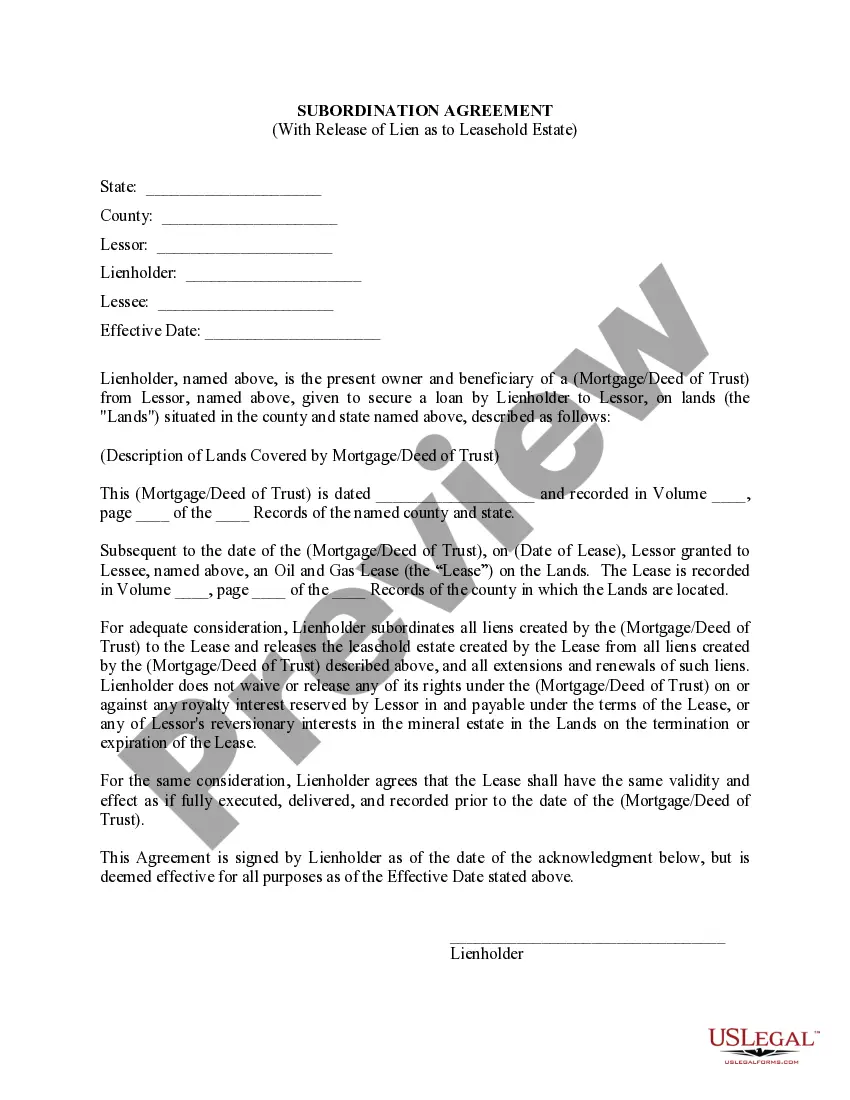
Fillable Subordination Agreement Form
Description
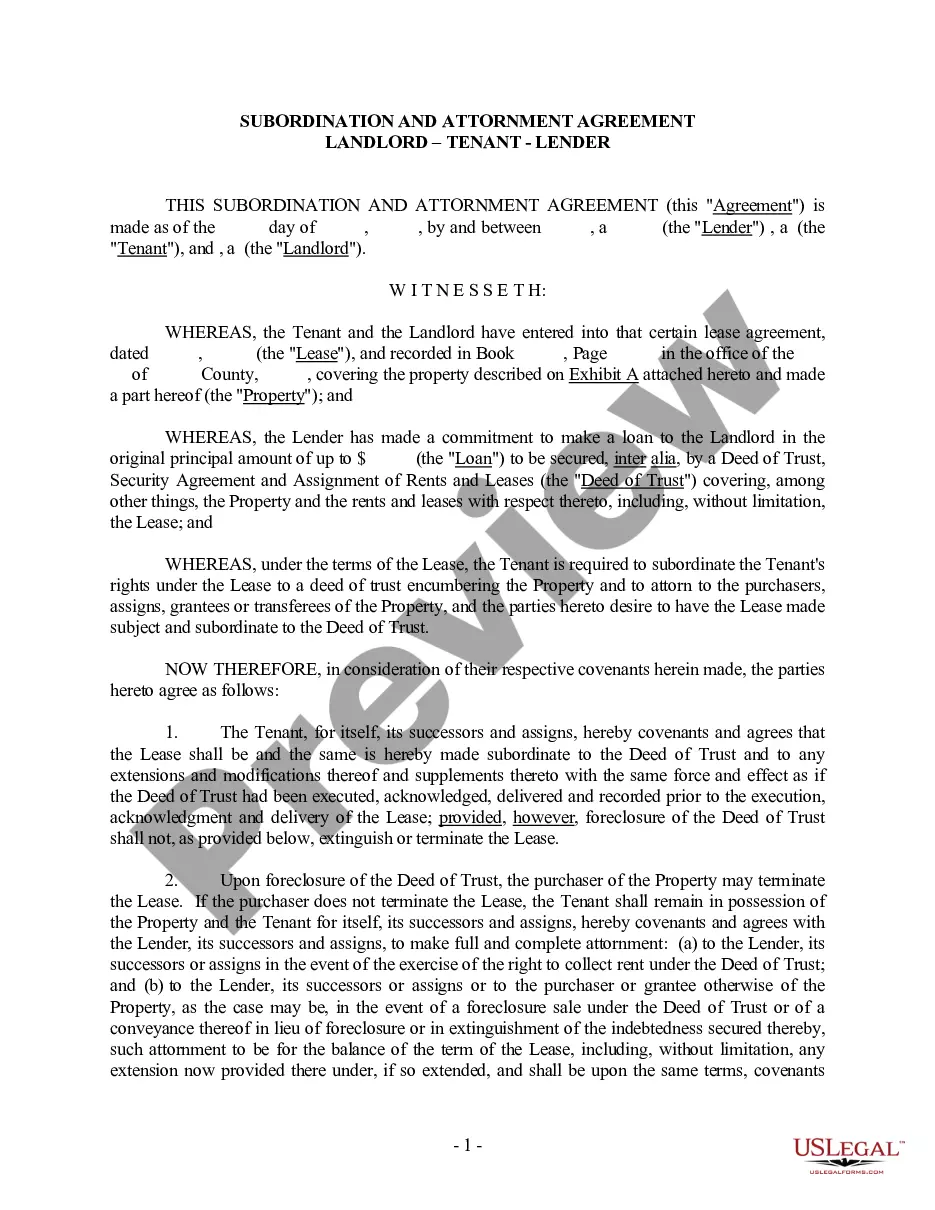
Get your form ready online
Our built-in tools help you complete, sign, share, and store your documents in one place.
Make edits, fill in missing information, and update formatting in US Legal Forms—just like you would in MS Word.
Download a copy, print it, send it by email, or mail it via USPS—whatever works best for your next step.
Sign and collect signatures with our SignNow integration. Send to multiple recipients, set reminders, and more. Go Premium to unlock E-Sign.
If this form requires notarization, complete it online through a secure video call—no need to meet a notary in person or wait for an appointment.
We protect your documents and personal data by following strict security and privacy standards.

Make edits, fill in missing information, and update formatting in US Legal Forms—just like you would in MS Word.

Download a copy, print it, send it by email, or mail it via USPS—whatever works best for your next step.

Sign and collect signatures with our SignNow integration. Send to multiple recipients, set reminders, and more. Go Premium to unlock E-Sign.

If this form requires notarization, complete it online through a secure video call—no need to meet a notary in person or wait for an appointment.

We protect your documents and personal data by following strict security and privacy standards.
Looking for another form?









How to fill out Illinois Lease Subordination Agreement?
Whether you frequently handle documents or occasionally need to submit a legal report, it is crucial to have a valuable resource where all samples are interconnected and current.
The first action you should take with a Fillable Subordination Agreement Form is to verify that it is the latest version, as it determines its eligibility for submission.
If you wish to streamline your search for the most recent document examples, seek them out on US Legal Forms.
To acquire a form without an account, follow these steps: Use the search bar to locate the desired form. Examine the Fillable Subordination Agreement Form preview and description to confirm it meets your requirements. After verifying the form, simply click Buy Now. Choose a subscription plan that suits your needs. Create an account or Log In to your existing one. Enter your bank card information or PayPal account to finalize the purchase. Select the document format for download and verify it. Eliminate any confusion when managing legal documents. All your templates will be sorted and validated with an account at US Legal Forms.
- US Legal Forms is a repository of legal documents featuring nearly any sample you might require.
- Search for the templates you seek, evaluate their relevance immediately, and learn more about their applications.
- With US Legal Forms, you gain access to over 85,000 form templates across various sectors.
- Discover the Fillable Subordination Agreement Form samples in just a few clicks and save them at any time in your account.
- A profile on US Legal Forms provides convenient access to all the samples you need with greater ease and fewer complications.
- Simply click Log In in the site header and navigate to the My documents section containing all the forms you need at your fingertips, removing the need to spend time searching for the ideal template or assessing its relevance.
Form popularity
FAQ
Subordination (the S in SNDA) The hotel manager agrees to subordinate its hotel management agreement and any other interests in certain respects to the lender's lien.
Example of a Subordination AgreementThe business files for bankruptcy and its assets are liquidated at market value$900,000. The senior debtholders will be paid in full, and the remaining $230,000 will be distributed among the subordinated debtholders, typically for 50 cents on the dollar.
Subordination agreement is a contract which guarantees senior debt will be paid before other subordinated debt if the debtor becomes bankrupt.
Subordination agreements are prepared by your lender. The process occurs internally if you only have one lender. When your mortgage and home equity line or loan have different lenders, both financial institutions work together to draft the necessary paperwork.
A subordination agreement is a legal document that establishes one debt as ranking behind another in priority for collecting repayment from a debtor. The priority of debts can become extremely important when a debtor defaults on payments or declares bankruptcy.