5 Day Notice For Rent
Description

Get your form ready online
Our built-in tools help you complete, sign, share, and store your documents in one place.
Make edits, fill in missing information, and update formatting in US Legal Forms—just like you would in MS Word.
Download a copy, print it, send it by email, or mail it via USPS—whatever works best for your next step.
Sign and collect signatures with our SignNow integration. Send to multiple recipients, set reminders, and more. Go Premium to unlock E-Sign.
If this form requires notarization, complete it online through a secure video call—no need to meet a notary in person or wait for an appointment.
We protect your documents and personal data by following strict security and privacy standards.

Make edits, fill in missing information, and update formatting in US Legal Forms—just like you would in MS Word.

Download a copy, print it, send it by email, or mail it via USPS—whatever works best for your next step.

Sign and collect signatures with our SignNow integration. Send to multiple recipients, set reminders, and more. Go Premium to unlock E-Sign.

If this form requires notarization, complete it online through a secure video call—no need to meet a notary in person or wait for an appointment.

We protect your documents and personal data by following strict security and privacy standards.
Looking for another form?









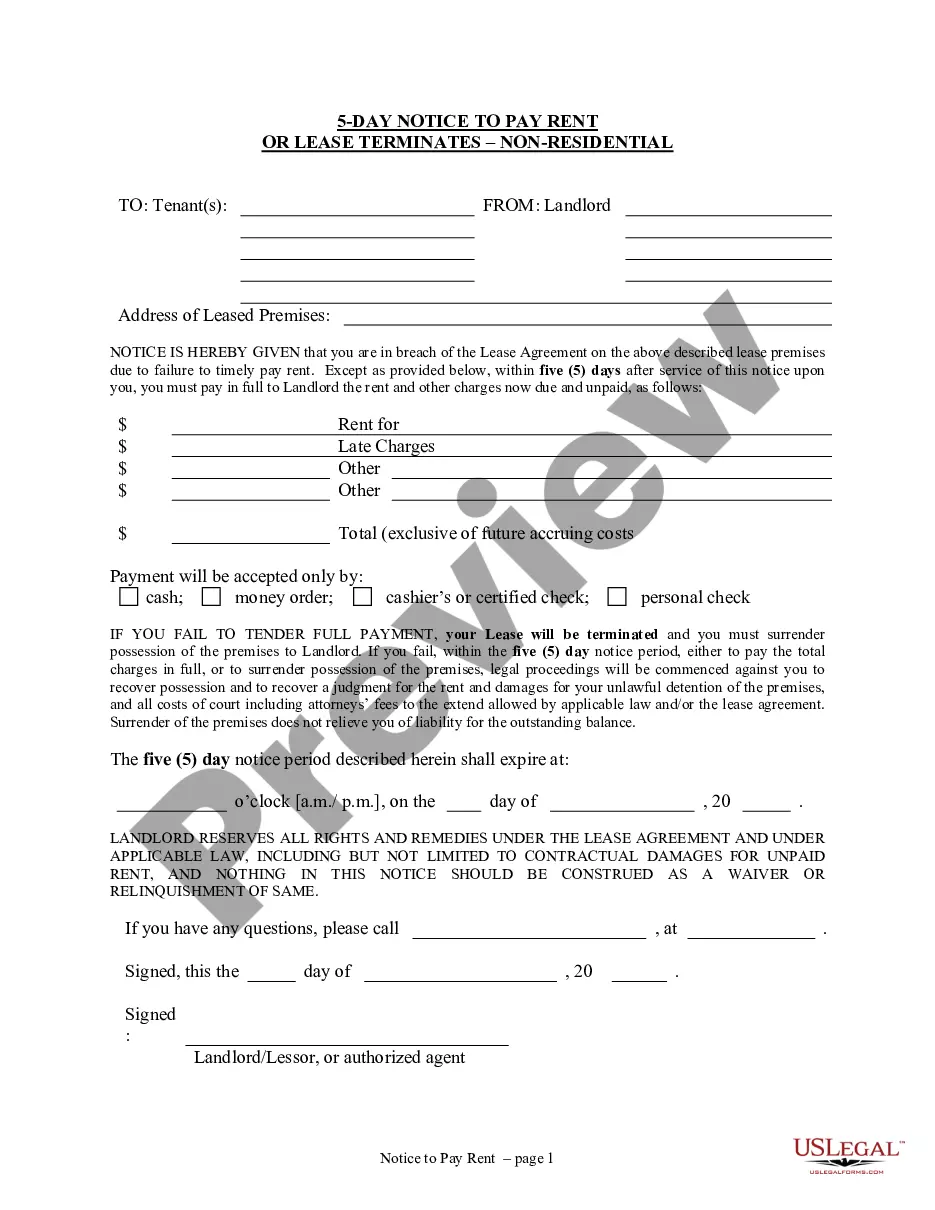
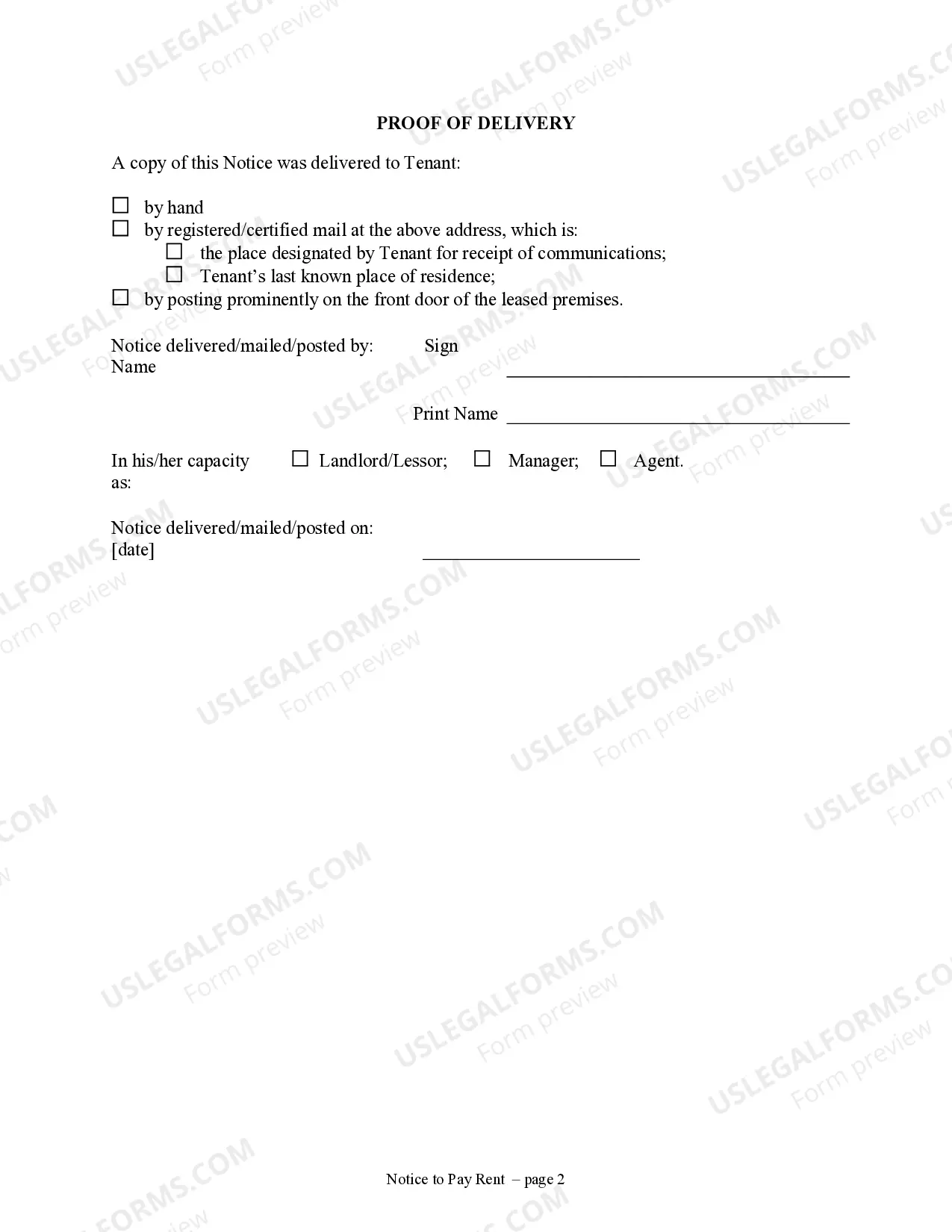
How to fill out Illinois 5 Day Notice To Pay Rent Or Lease Terminates - Nonresidential Or Commercial?
- Log into your existing US Legal Forms account. Ensure your subscription is active; if not, renew it as per your payment plan.
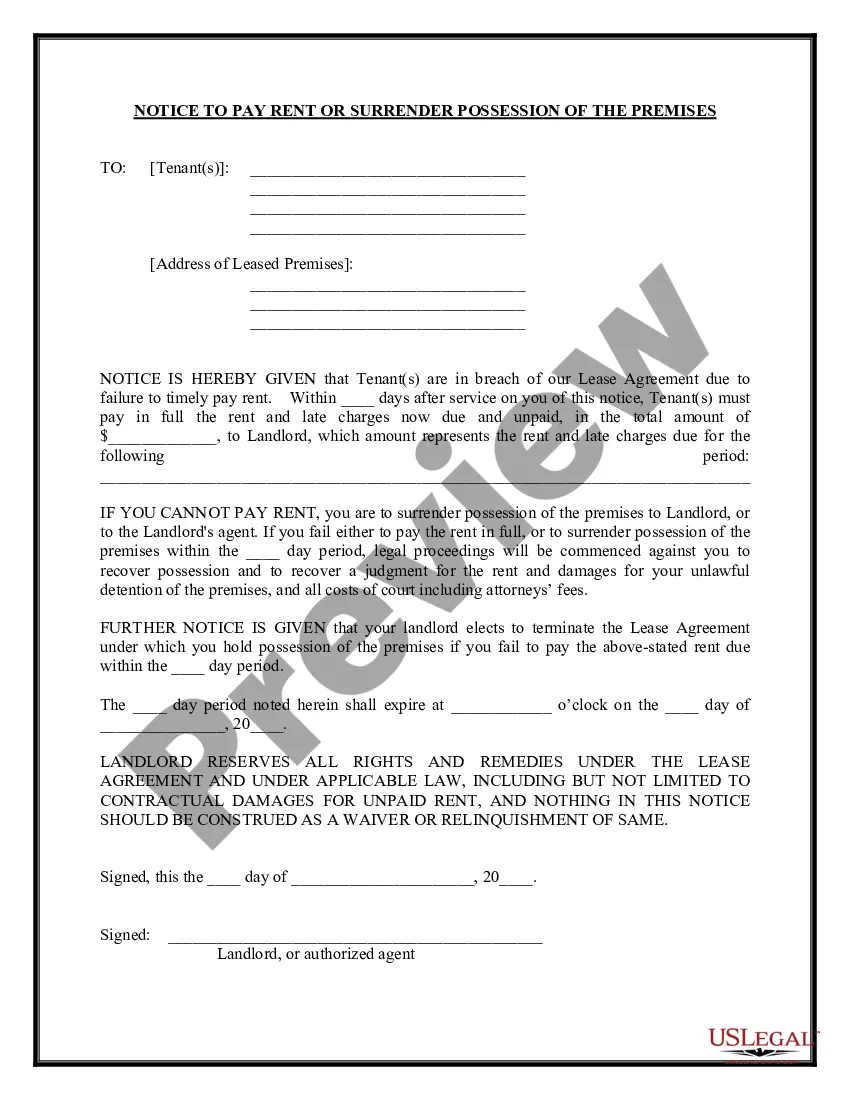
- Preview and review available templates to find the specific 5 day notice for rent that meets your local jurisdiction’s requirements.
- If you need a different template, utilize the Search feature to find any legal forms that match your needs.
- Select the appropriate document by clicking the 'Buy Now' button. Choose a subscription plan that suits you. You'll need to create an account for access.
- Complete your purchase by entering your payment details or using PayPal to finalize your transaction.
- Download the completed form easily to your device and find it in the 'My Forms' section for future reference.
US Legal Forms equips users with a comprehensive selection of legal documents, making it simple to generate the 5 day notice for rent with confidence.
Get started with US Legal Forms today and empower your legal processes efficiently!
Form popularity
FAQ
The eviction process in Vermont can take several weeks to months, depending on the circumstances. After issuing a notice, such as the 5 day notice for rent, a landlord must file a court complaint if the tenant does not comply. Court schedules can vary, which may impact how quickly the eviction is finalized. Being prepared and informed about the process can help smooth the way.
In Vermont, a tenant must typically provide a 30-day written notice before leaving a rental property. However, if you have a lease agreement that specifies different terms, those must be followed. Understanding the nuances of your lease can help avoid misunderstandings. It is also wise to consult platforms like US Legal Forms for guidance on proper notice procedures.
Vermont has specific eviction laws that protect both landlords and tenants. Generally, landlords must provide a valid reason for eviction and issue a proper notice, such as a 5 day notice for rent for unpaid rent. Familiarizing yourself with these laws can help ensure that you follow the correct legal procedures. For more in-depth legal knowledge, consider resources like US Legal Forms.
Explaining an eviction can be approached by outlining the reasons behind the action clearly and honestly. It's beneficial to address any specific lease terms that were violated, such as non-payment of rent. Providing context can humanize the situation, yet it’s also essential to keep the explanation factual and straightforward. This transparency can foster a better understanding from all parties involved.
A concise sentence for eviction could be, 'This letter serves as a formal notice of eviction due to non-payment of rent, requiring your immediate attention.' Such a statement makes it clear and direct, ensuring that the tenant understands the situation. Ensuring clarity in communication can prevent misunderstandings later in the eviction process.
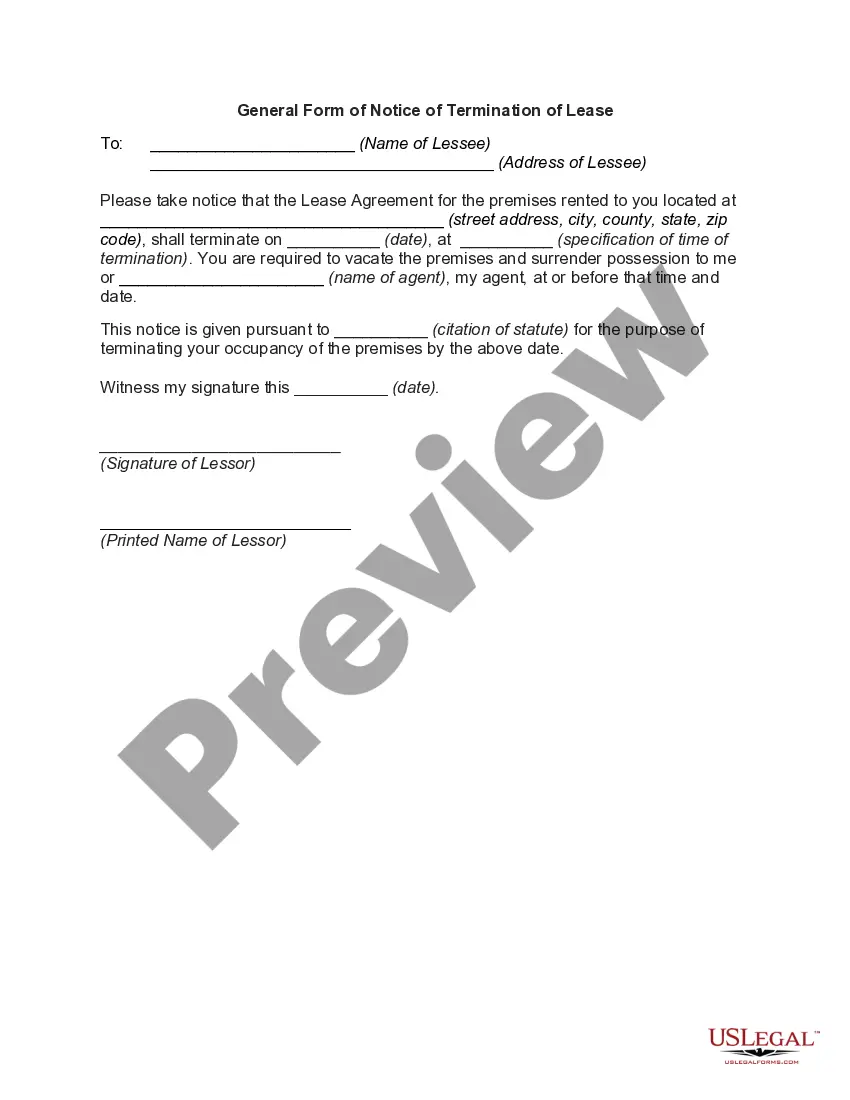
A sample eviction letter typically includes the landlord's information, the tenant’s details, and a clear statement of the reason for eviction. It may also contain the date by which the tenant must leave and a reference to any previous notices issued, like a 5-day notice for rent. You can find numerous templates online that simplify this process, ensuring all necessary legal aspects are covered.
In Vermont, the rules for eviction follow specific legal procedures. Landlords must provide proper notice to tenants before initiating the eviction process. Generally, a landlord must issue a notice to quit, which can vary in duration depending on the lease violation. Understanding these rules is vital for compliance, and using resources like UsLegalForms can help clarify these procedures.
Explaining a previous eviction involves being honest and straightforward about the circumstances. You can describe any challenges you faced at that time, but it’s crucial to focus on what you learned from the experience. Using this opportunity to demonstrate your growth can present a more positive picture. Remember to keep your explanation concise and avoid overemphasizing the event.
To write a letter explaining an eviction, you should begin by clearly stating the reason for the eviction, citing any relevant lease violations or unpaid rent. Include the date by which the tenant must vacate the property, and provide a short explanation of the eviction process. Using a well-structured template from platforms like UsLegalForms can simplify this process and ensure that you cover all necessary points.
In Pennsylvania, a landlord must typically give a tenant a 5 day notice for rent if you are behind on payment. This notice informs you that you have five days to rectify the missed payment. If you do not respond, the landlord can then proceed with the eviction process in court. Familiarizing yourself with these timelines can help you manage your rental situation more effectively.