Hawaii Cesspool Bill
Description



Get your form ready online
Our built-in tools help you complete, sign, share, and store your documents in one place.
Make edits, fill in missing information, and update formatting in US Legal Forms—just like you would in MS Word.
Download a copy, print it, send it by email, or mail it via USPS—whatever works best for your next step.
Sign and collect signatures with our SignNow integration. Send to multiple recipients, set reminders, and more. Go Premium to unlock E-Sign.
If this form requires notarization, complete it online through a secure video call—no need to meet a notary in person or wait for an appointment.
We protect your documents and personal data by following strict security and privacy standards.

Make edits, fill in missing information, and update formatting in US Legal Forms—just like you would in MS Word.

Download a copy, print it, send it by email, or mail it via USPS—whatever works best for your next step.

Sign and collect signatures with our SignNow integration. Send to multiple recipients, set reminders, and more. Go Premium to unlock E-Sign.

If this form requires notarization, complete it online through a secure video call—no need to meet a notary in person or wait for an appointment.

We protect your documents and personal data by following strict security and privacy standards.
Looking for another form?








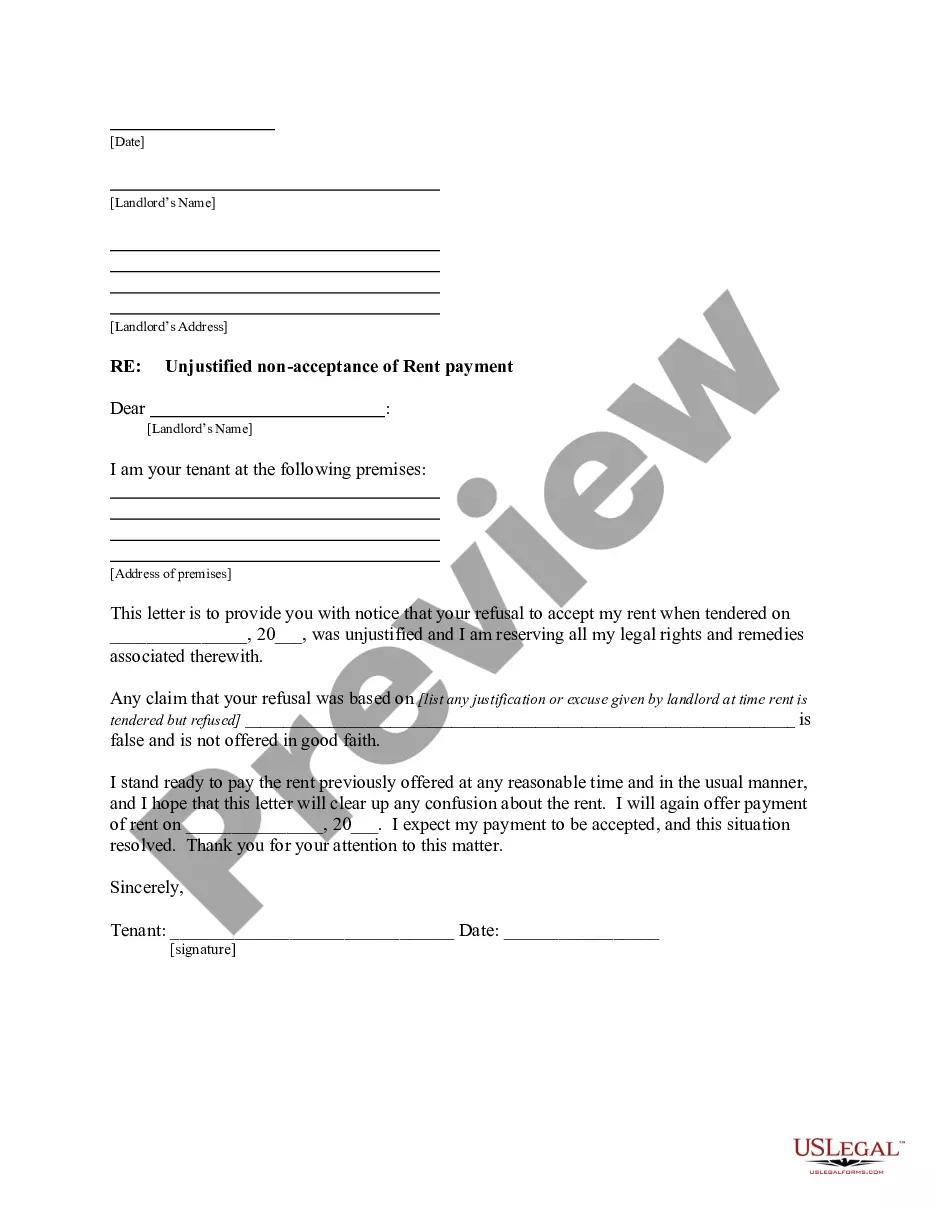
How to fill out Hawaii Letter From Tenant To Landlord Containing Notice To Cease Unjustified Nonacceptance Of Rent?
- For returning users, log in to your account and download the required form template by clicking the Download button. Ensure your subscription is active; if not, renew it based on your chosen plan.
- If this is your first time, start by browsing the available forms. Use the Preview mode to check the form's description and confirm it aligns with your jurisdiction's requirements.
- Should you find discrepancies with your initial choice, utilize the Search tab to explore alternative templates that better suit your needs.
- Once you've selected the right document, proceed to purchase it by clicking the Buy Now button, choosing your desired subscription plan, and creating an account to access the full library.
- Complete your purchase by entering your payment information through credit card or PayPal and proceed to download the form for your use.
- Access your downloaded documents anytime via the My Forms section in your profile.
In conclusion, leveraging US Legal Forms allows you to easily gather the necessary documents related to the Hawaii cesspool bill. Their robust collection and expert assistance ensure that you can manage your legal needs effectively.
Don't hesitate—start your journey with US Legal Forms today and simplify your document management process!
Form popularity
FAQ
Hawaii formally began banning new cesspools with the passage of the cesspool bill in 2016. This law reflects the state's commitment to clean water initiatives and protecting its unique natural resources. Property owners are now required to replace cesspools with approved systems by 2050. Staying informed about these regulations is crucial, and platforms like USLegalForms can help guide you through compliance and alternatives.
Under current regulations imposed by the Hawaii cesspool bill, cesspools are not allowed for new construction or major renovations. Existing cesspools are subject to strict monitoring and require replacement by a compliant septic system or other alternatives over time. The state aims to eliminate cesspools as a means of wastewater management, enhancing public health and environmental protection. By adhering to these laws, residents contribute to a healthier ecosystem.
Yes, cesspools that were already in use before the enactment of the Hawaii cesspool bill are often considered grandfathered. This means they may continue to operate under certain conditions until they are phased out or replaced. However, property owners are encouraged to transition to updated wastewater systems to comply with modern environmental standards. This transition helps maintain clean water and supports sustainable practices.
Cesspools function by collecting waste and allowing it to seep into the surrounding soil. In Hawaii, this means dealing with a unique environment, where groundwater contamination is a significant concern. When waste enters a cesspool, solids settle at the bottom, while liquids escape into the ground. With the Hawaii cesspool bill, the focus is now on promoting safer alternatives that prevent pollution and protect the water supply.
In Hawaii, the use of cesspools effectively halted in 2016, as the Hawaii cesspool bill became law. This legislation aimed to protect the state's water quality by imposing strict regulations on cesspool operations. Consequently, new cesspools are no longer permitted, and existing systems need to be replaced or upgraded. This change supports environmental health and community safety across the islands.
Filling an old cesspool typically involves several important steps to ensure safety and compliance. First, consult local guidelines, especially the Hawaii cesspool bill, to understand the rules for decommissioning. You will need to pump out any remaining waste, and then you can fill it with clean fill material like gravel or soil. Proper sealing and documentation are essential to avoid future issues and ensure that the area is safe.
Cesspools have several disadvantages that homeowners should consider. They can cause environmental harm by contaminating groundwater, which raises concerns under the Hawaii cesspool bill. Moreover, cesspools require frequent maintenance and can be costly to repair or replace if they fail. Homeowners might also face fines or restrictions if their cesspool does not meet current regulations.
The life expectancy of a cesspool can vary significantly, but on average, it lasts between 20 to 30 years. However, its longevity can be impacted by various factors, including maintenance practices and local regulations like the Hawaii cesspool bill. Regular inspections and proper care can extend its lifespan. Understanding these factors is crucial for homeowners to ensure compliance and avoid unexpected issues.
The Hawaii cesspool bill mandated that cesspools, which contribute to environmental pollution and public health issues, were banned effective January 1, 2016. This crucial legislation aims to improve water quality and promote better waste management practices throughout the islands. If you own property with a cesspool, it's essential to consider upgrading to a more environmentally friendly septic system. For more information and assistance on compliance, check out US Legal Forms to find the necessary forms and resources.
Converting a cesspool to a sewer connection is possible and often encouraged under the Hawaii cesspool bill. This transition helps mitigate environmental risks and improves public health. To navigate this process smoothly, consider consulting with professionals and using uslegalforms to handle any necessary paperwork and compliance documentation.