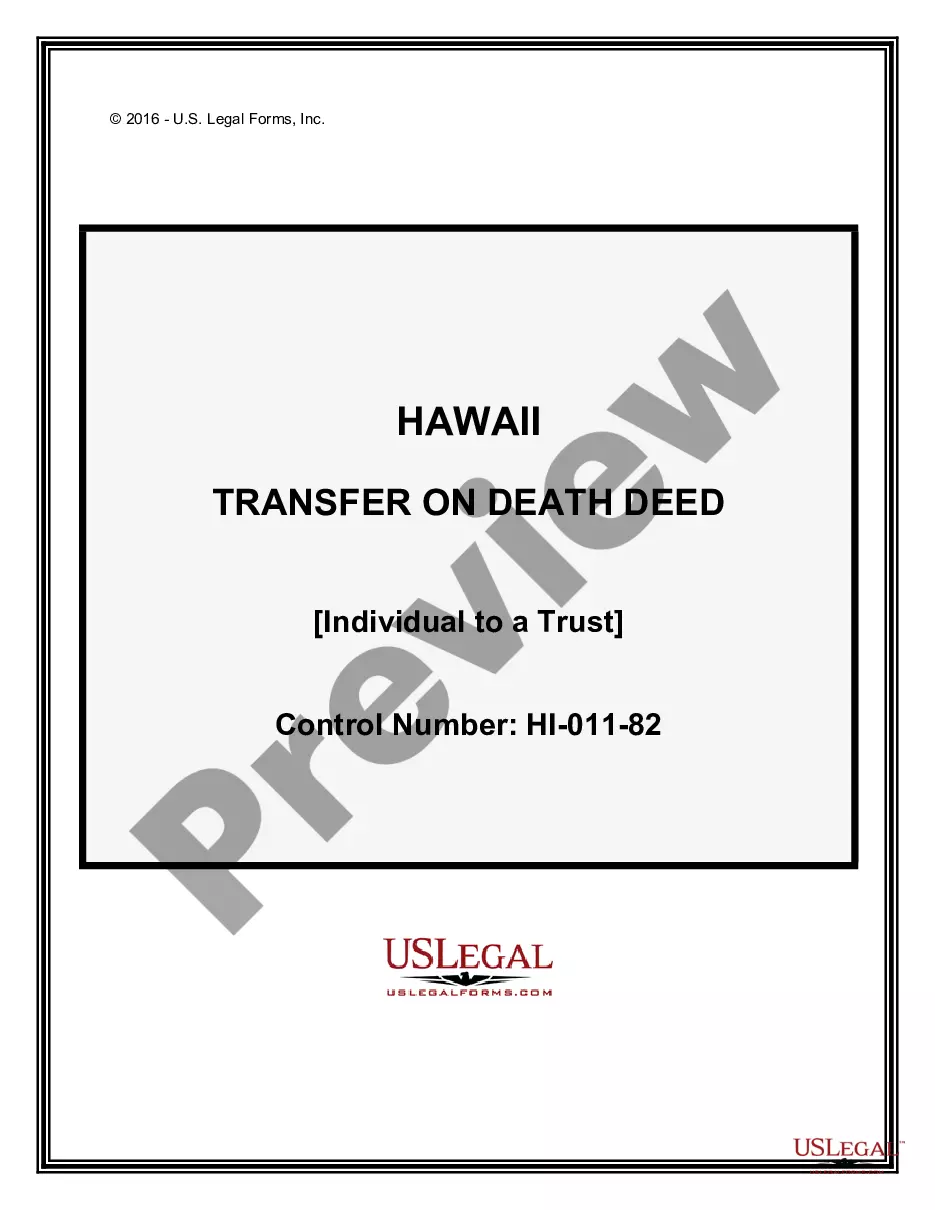
Transfer On Death Deed For House
Description

Get your form ready online
Our built-in tools help you complete, sign, share, and store your documents in one place.
Make edits, fill in missing information, and update formatting in US Legal Forms—just like you would in MS Word.
Download a copy, print it, send it by email, or mail it via USPS—whatever works best for your next step.
Sign and collect signatures with our SignNow integration. Send to multiple recipients, set reminders, and more. Go Premium to unlock E-Sign.
If this form requires notarization, complete it online through a secure video call—no need to meet a notary in person or wait for an appointment.
We protect your documents and personal data by following strict security and privacy standards.

Make edits, fill in missing information, and update formatting in US Legal Forms—just like you would in MS Word.

Download a copy, print it, send it by email, or mail it via USPS—whatever works best for your next step.

Sign and collect signatures with our SignNow integration. Send to multiple recipients, set reminders, and more. Go Premium to unlock E-Sign.

If this form requires notarization, complete it online through a secure video call—no need to meet a notary in person or wait for an appointment.

We protect your documents and personal data by following strict security and privacy standards.
Looking for another form?
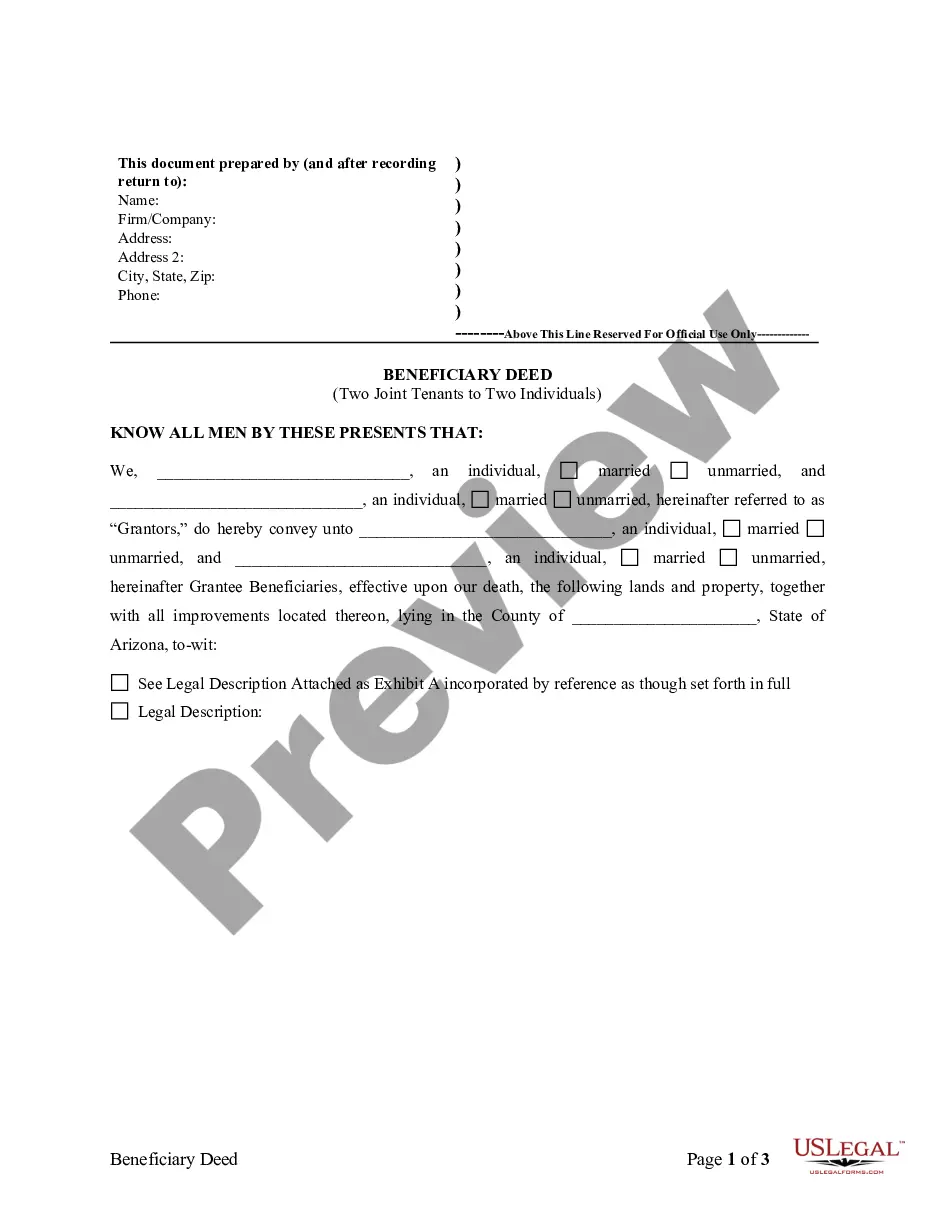
How to fill out Hawaii Transfer On Death Quitclaim Deed From Individual To A Trust?
- Log into your US Legal Forms account if you are a returning user, and ensure your subscription is active before downloading the necessary form template.
- If you're new, start by browsing the extensive range of forms. Use the Preview mode to confirm that the selected deed meets your specific requirements and adheres to your local laws.
- Search for additional templates if the initial choice does not fit. Utilize the Search tab to find the most appropriate form.
- Purchase the document by clicking on the 'Buy Now' button and selecting your preferred subscription plan; registration is required for full access.
- Complete your transaction by entering your payment details via credit card or PayPal.
- Download the deed form to your device, ensuring you can access it anytime through the 'My Forms' section in your profile.
Once you've obtained your Transfer on Death deed, you can easily complete it with the available online tools from US Legal Forms, ensuring a legally sound document tailored for your needs.
Empower yourself with the extensive resources offered by US Legal Forms to streamline the process of executing a Transfer on Death deed. Start your journey to a hassle-free property transfer today!
Form popularity
FAQ
While a transfer on death deed for house can simplify property transfers, it may also present challenges. If the property owner changes their mind about the beneficiary or wishes to alter the deed, they must follow specific legal processes to do so. Additionally, without proper documentation, misunderstandings can lead to disputes among heirs.
Choosing between a transfer on death deed for house and designating a beneficiary largely depends on your estate planning goals. A transfer on death deed clearly directs ownership to a specific individual while avoiding probate. On the other hand, a beneficiary designation may be suitable for various accounts but can complicate matters if multiple beneficiaries are involved.
The best way to transfer property after death is often through a transfer on death deed for house. This approach directly conveys ownership to the named beneficiary while eliminating the need for probate. Alternatively, setting up a living trust can also be an effective option, but it requires more oversight prior to death.
The primary benefit of a transfer on death deed for house is that it allows for easy transfer of ownership upon the owner’s death, bypassing probate. This means the new owner can quickly take possession without lengthy court processes. It also keeps the property within the family and removes the need for will planning in some cases.
A transfer on death deed for house may lack immediate control for the owner over the property. This type of deed does not provide asset protection from creditors, and it does not allow for real-time changes to beneficiaries. Additionally, beneficiaries must navigate the probate process if conflicting claims arise, which can complicate matters.
You are not required to hire a lawyer to create a transfer on death deed for house, as many states offer forms you can complete on your own. However, it's often beneficial to seek legal advice, especially if your situation is complex. A legal expert can ensure that your deed complies with your state’s laws and effectively accomplishes your goals.
A transfer on death deed for house does not automatically exempt your property from inheritance tax. While this type of deed allows your property to transfer to your designated beneficiary without going through probate, the beneficiary may still be responsible for inheritance tax depending on their situation. It's wise to consult with a tax professional to understand all possible implications before finalizing your transfer on death deed.
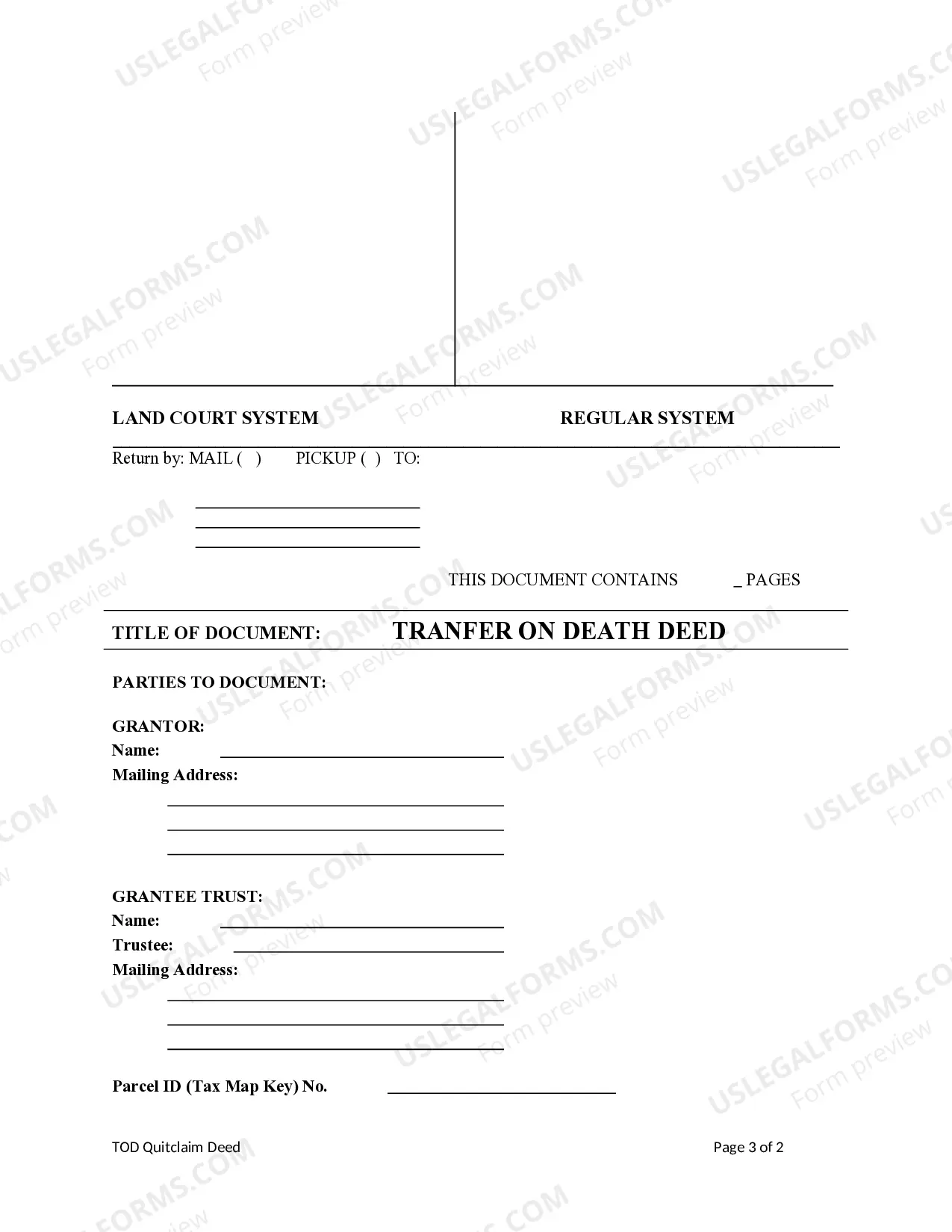
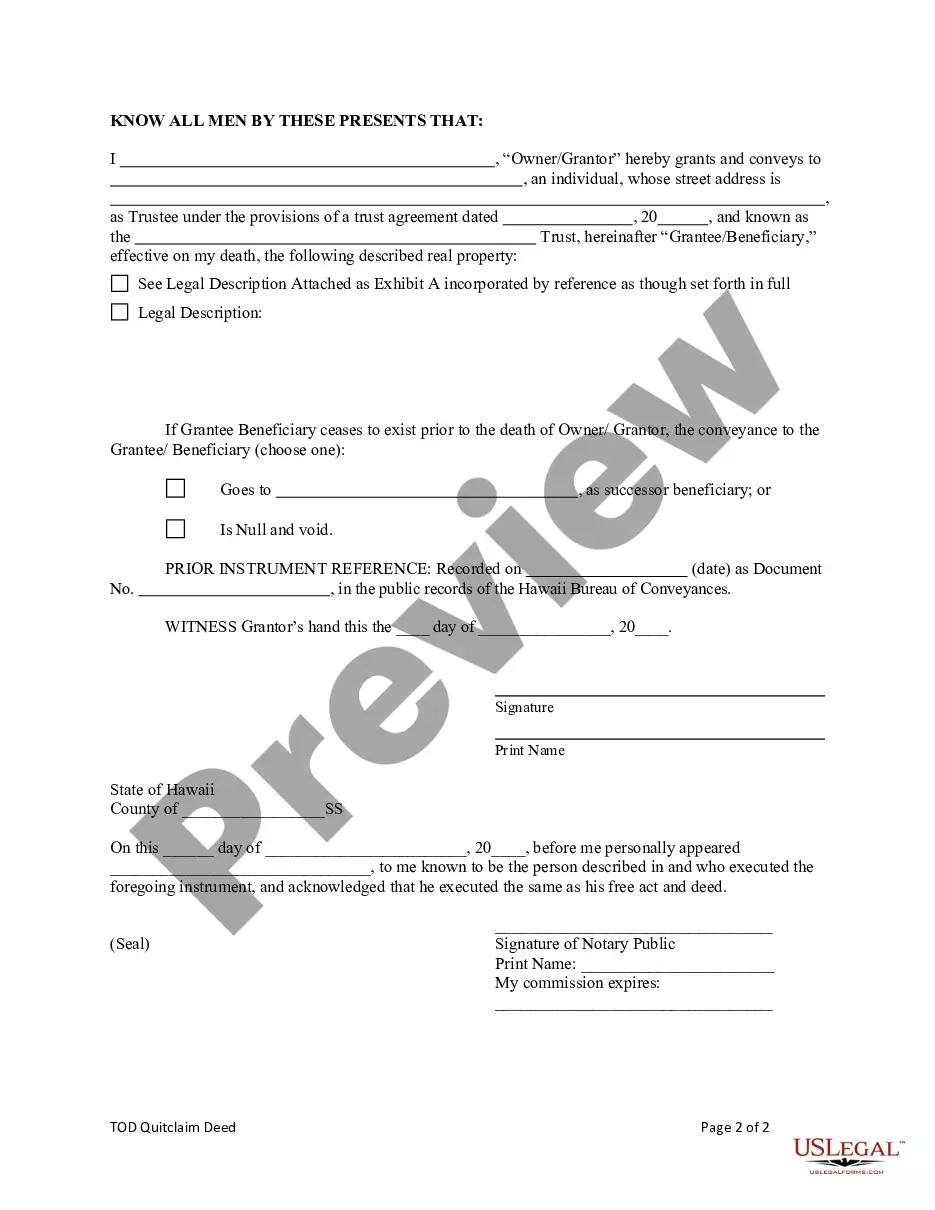
To write a transfer on death deed for a house, start by identifying the property and including details about the beneficiaries. Clearly state your intent to transfer ownership upon your death and include necessary signatures. Utilizing USLegalForms can simplify this process, as they provide templates and guidance that ensure compliance with state laws. Following these steps can help you create a valid and effective transfer deed.
To leave your house to your heirs most effectively, a transfer on death deed for house can be an ideal choice. It allows for a seamless transfer without the complications of probate. You can designate who receives the property, ensuring your wishes are followed. Additionally, using a reliable platform like USLegalForms can simplify the process, helping you create the deed correctly.
The best way to leave property upon death often depends on your specific circumstances. Many consider a transfer on death deed for house as an effective option due to its simplicity and direct transfer without needing probate. However, you might also explore options like trusts or wills, which can offer additional control over your estate. Evaluating your needs carefully can help you choose the right method.