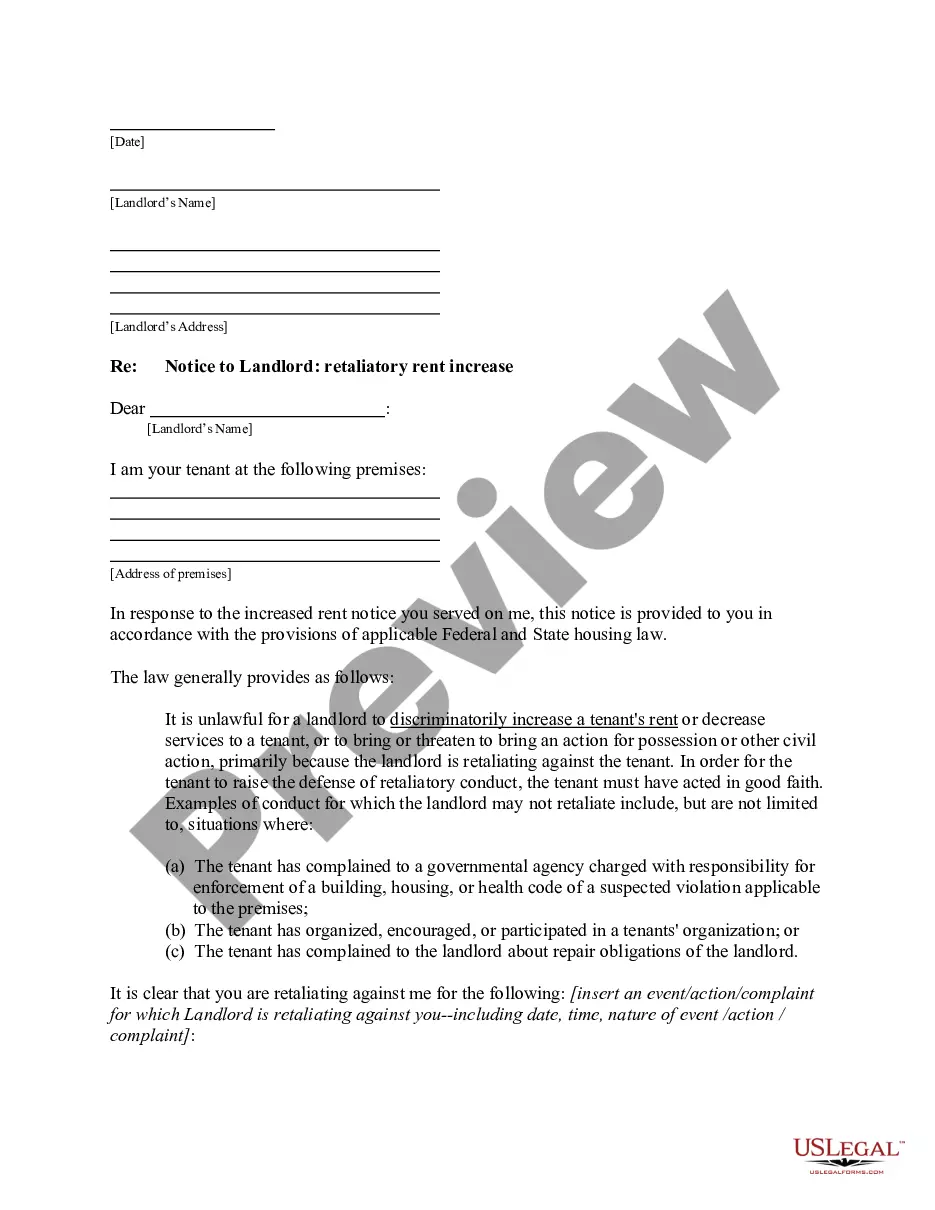
Tenant Letter For Rent Increase
Description
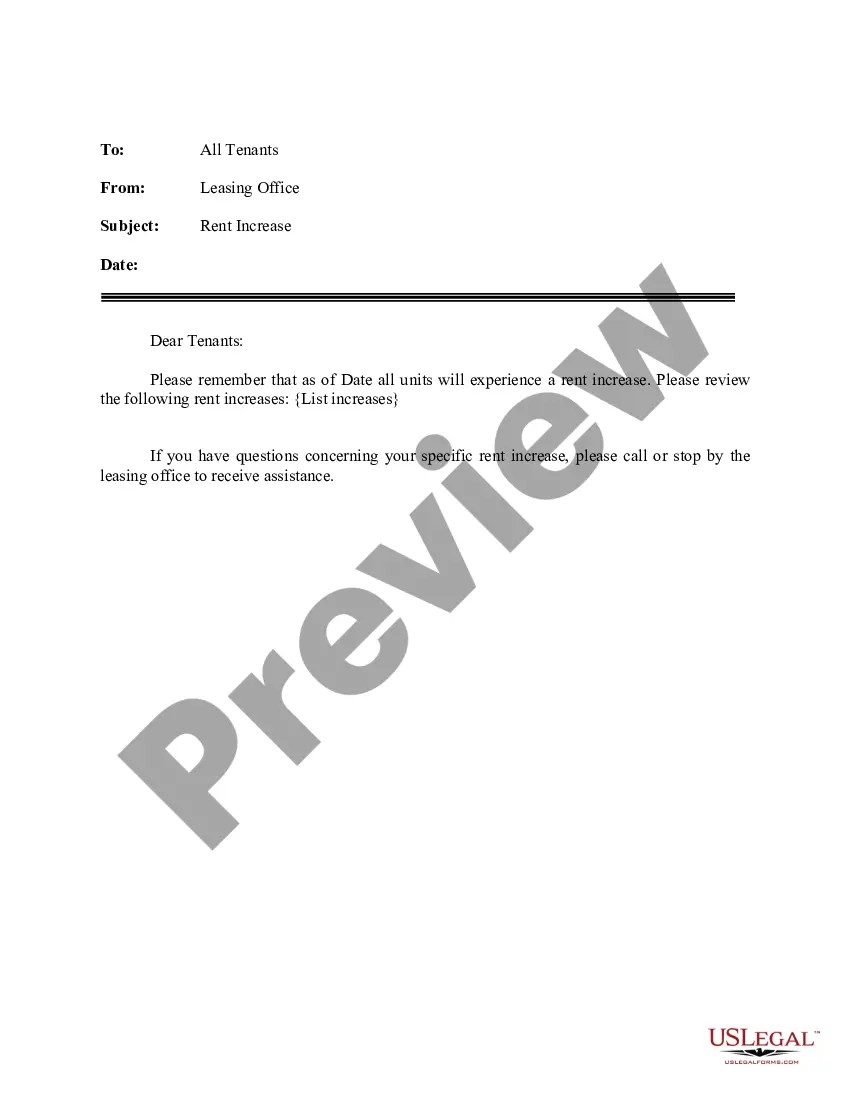


Get your form ready online
Our built-in tools help you complete, sign, share, and store your documents in one place.
Make edits, fill in missing information, and update formatting in US Legal Forms—just like you would in MS Word.
Download a copy, print it, send it by email, or mail it via USPS—whatever works best for your next step.
Sign and collect signatures with our SignNow integration. Send to multiple recipients, set reminders, and more. Go Premium to unlock E-Sign.
If this form requires notarization, complete it online through a secure video call—no need to meet a notary in person or wait for an appointment.
We protect your documents and personal data by following strict security and privacy standards.

Make edits, fill in missing information, and update formatting in US Legal Forms—just like you would in MS Word.

Download a copy, print it, send it by email, or mail it via USPS—whatever works best for your next step.

Sign and collect signatures with our SignNow integration. Send to multiple recipients, set reminders, and more. Go Premium to unlock E-Sign.

If this form requires notarization, complete it online through a secure video call—no need to meet a notary in person or wait for an appointment.

We protect your documents and personal data by following strict security and privacy standards.
Looking for another form?
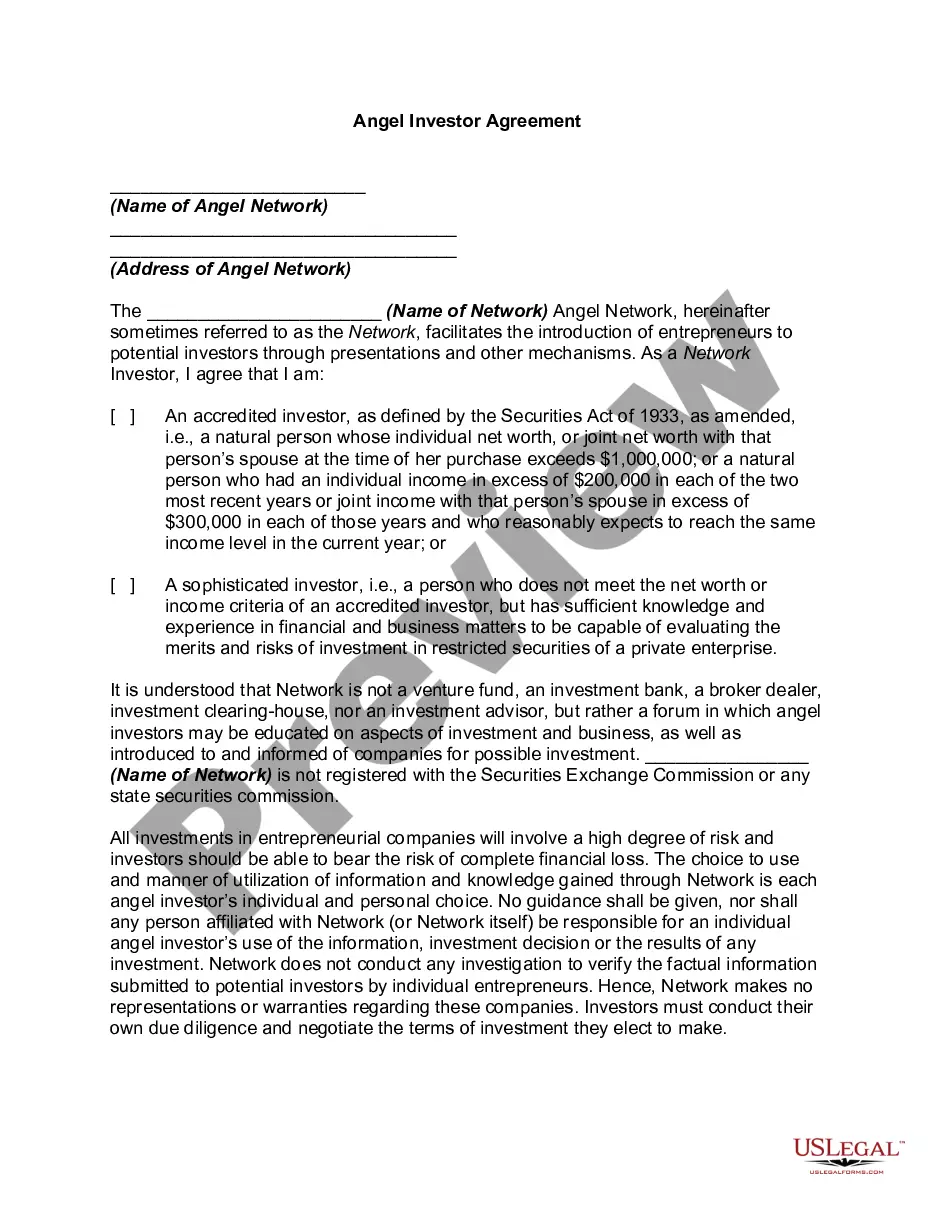
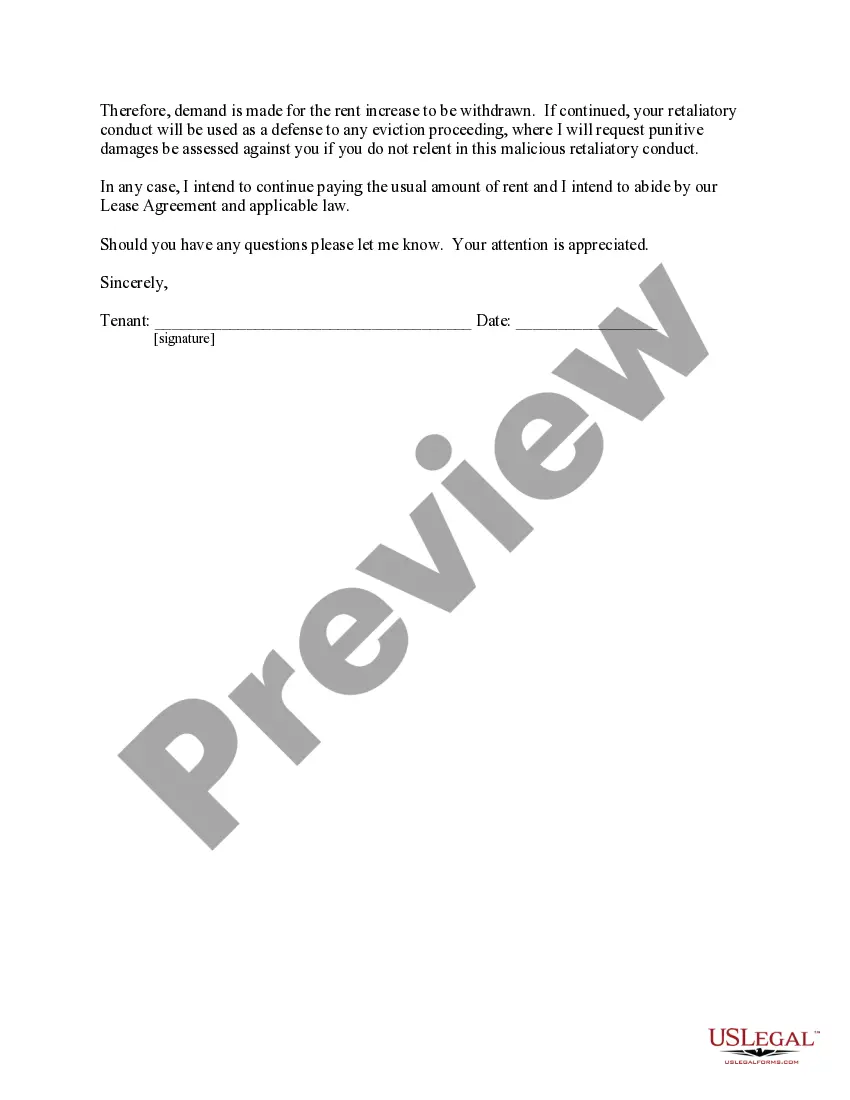
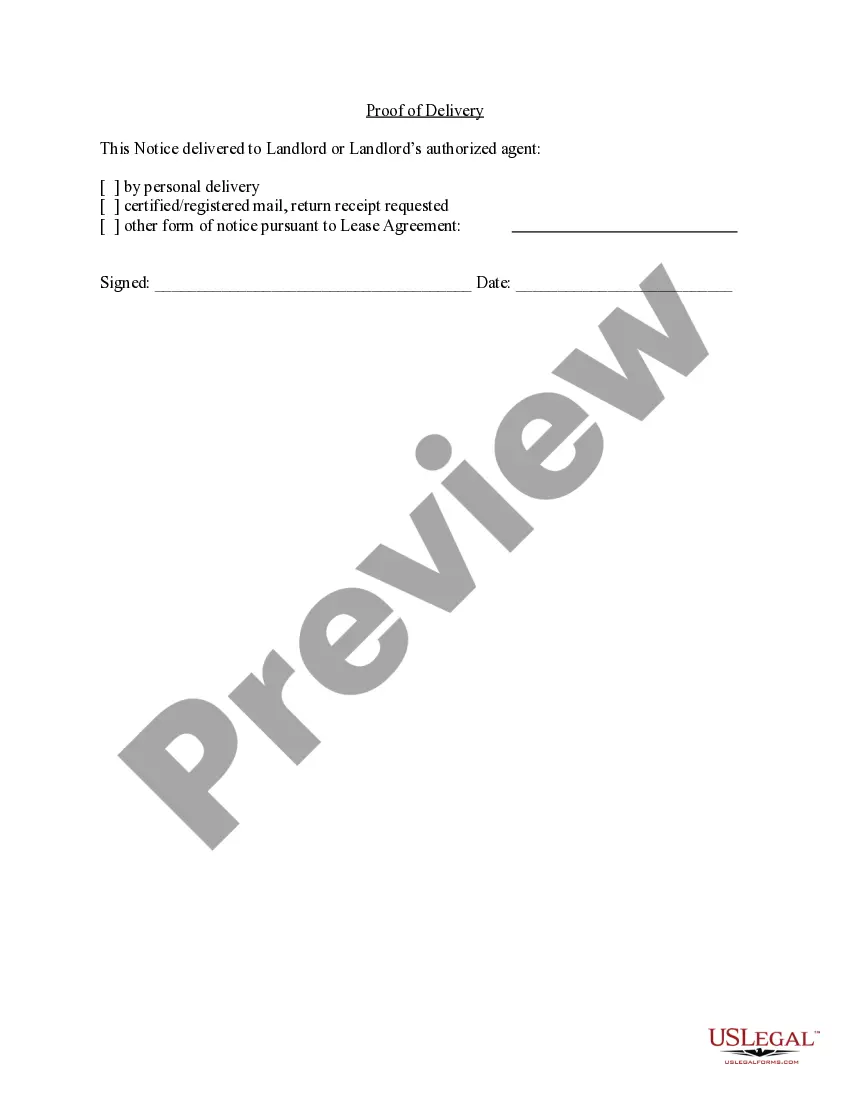
How to fill out Georgia Letter From Tenant To Landlord Containing Notice To Landlord To Withdraw Retaliatory Rent Increase?
Regardless of whether it's for professional reasons or personal issues, everyone must handle legal matters at some stage in their life.
Completing legal documents requires meticulous care, starting with choosing the appropriate form template. For instance, if you select an incorrect version of a Tenant Letter For Rent Increase, it will be rejected once submitted.
Once saved, you can fill out the form using editing software or print it and complete it by hand. With a comprehensive US Legal Forms catalog available, you won’t waste time searching for the right template online. Utilize the library’s easy navigation to find the suitable template for any occasion.
- It is therefore vital to find a reliable source of legal documents like US Legal Forms.
- If you need to obtain a Tenant Letter For Rent Increase template, follow these straightforward steps.
- Acquire the template you require by using the search bar or catalog browsing.
- Review the form’s details to confirm it aligns with your circumstances, state, and county.
- Select the form’s preview to examine it.
- If it's the wrong form, return to the search option to find the Tenant Letter For Rent Increase template you need.
- Obtain the template once it fulfills your criteria.
- If you already possess a US Legal Forms account, simply click Log in to access previously saved documents in My documents.
- In case you do not have an account yet, you can acquire the form by clicking Buy now.
- Select the appropriate pricing option.
- Complete the profile registration form.
- Choose your payment method: use a credit card or PayPal account.
- Select the document format you desire and download the Tenant Letter For Rent Increase.
Form popularity
FAQ
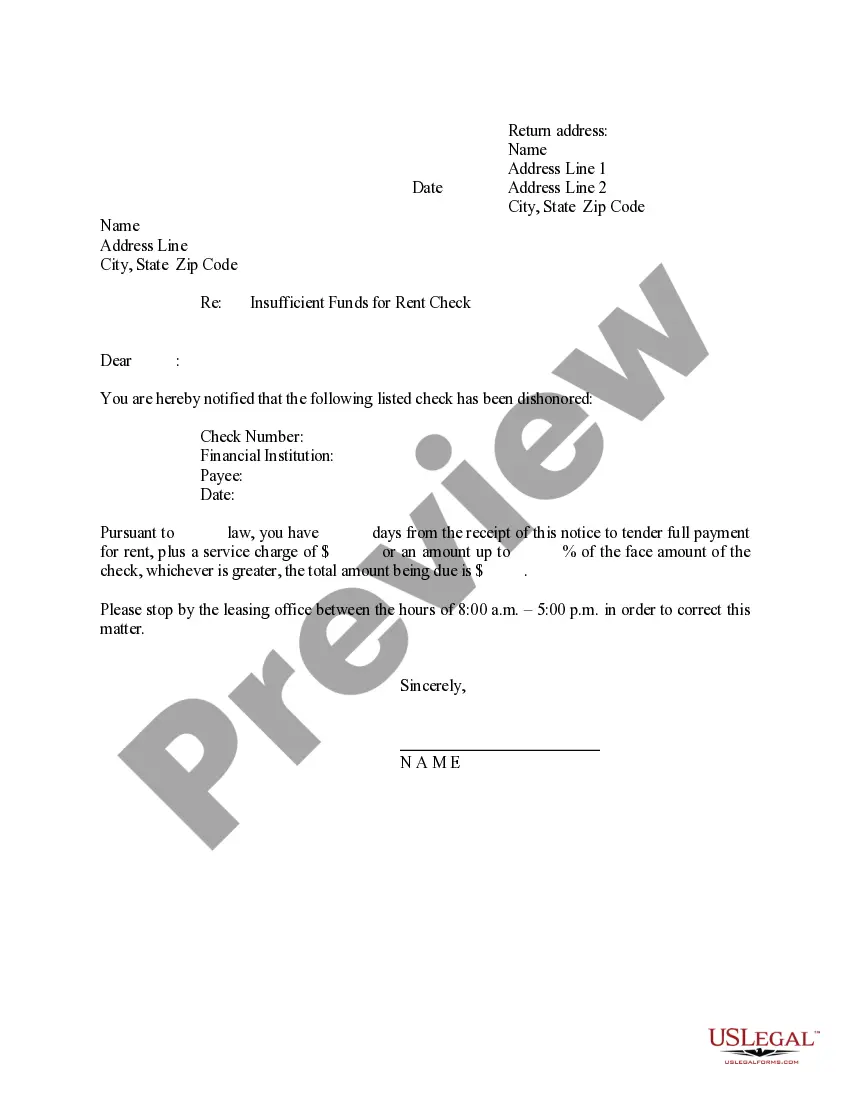
There is not a statewide law that places limits on how much a landlord can increase the rent when a lease is renewed. In fact, Texas law only allows cities to establish local rent control ordinances in certain cases.
The amount of notice your landlord has to give you to increase your rent depends on the length of your tenancy period. For example if your tenancy runs from month to month then your tenancy period is one month. If it runs quarter to quarter then your tenancy period is three months.
Rent Increase Notice 30 days in advance of renewal if a tenant has lived in the apartment less than one year and has less than a 12-month lease. 60 days in advance for a tenant who has lived in the apartment for one to two years or for a tenant with a lease term of between one and two years.
Texas Laws Regarding Rent Increase, Notices, and Fees Texas is unique in that landlords do not need to provide notice before raising the rent. However, it is typical in the state to give at least 30 days before increasing the rental rate on month-to-month or yearly leases.
Landlords must also give 30 days' notice before raising rental prices at the end of the lease term. This gives tenants time to either accept the rental increase or find a new rental.