Administrative Estate
Description

Get your form ready online
Our built-in tools help you complete, sign, share, and store your documents in one place.
Make edits, fill in missing information, and update formatting in US Legal Forms—just like you would in MS Word.
Download a copy, print it, send it by email, or mail it via USPS—whatever works best for your next step.
Sign and collect signatures with our SignNow integration. Send to multiple recipients, set reminders, and more. Go Premium to unlock E-Sign.
If this form requires notarization, complete it online through a secure video call—no need to meet a notary in person or wait for an appointment.
We protect your documents and personal data by following strict security and privacy standards.

Make edits, fill in missing information, and update formatting in US Legal Forms—just like you would in MS Word.

Download a copy, print it, send it by email, or mail it via USPS—whatever works best for your next step.

Sign and collect signatures with our SignNow integration. Send to multiple recipients, set reminders, and more. Go Premium to unlock E-Sign.

If this form requires notarization, complete it online through a secure video call—no need to meet a notary in person or wait for an appointment.

We protect your documents and personal data by following strict security and privacy standards.
Looking for another form?








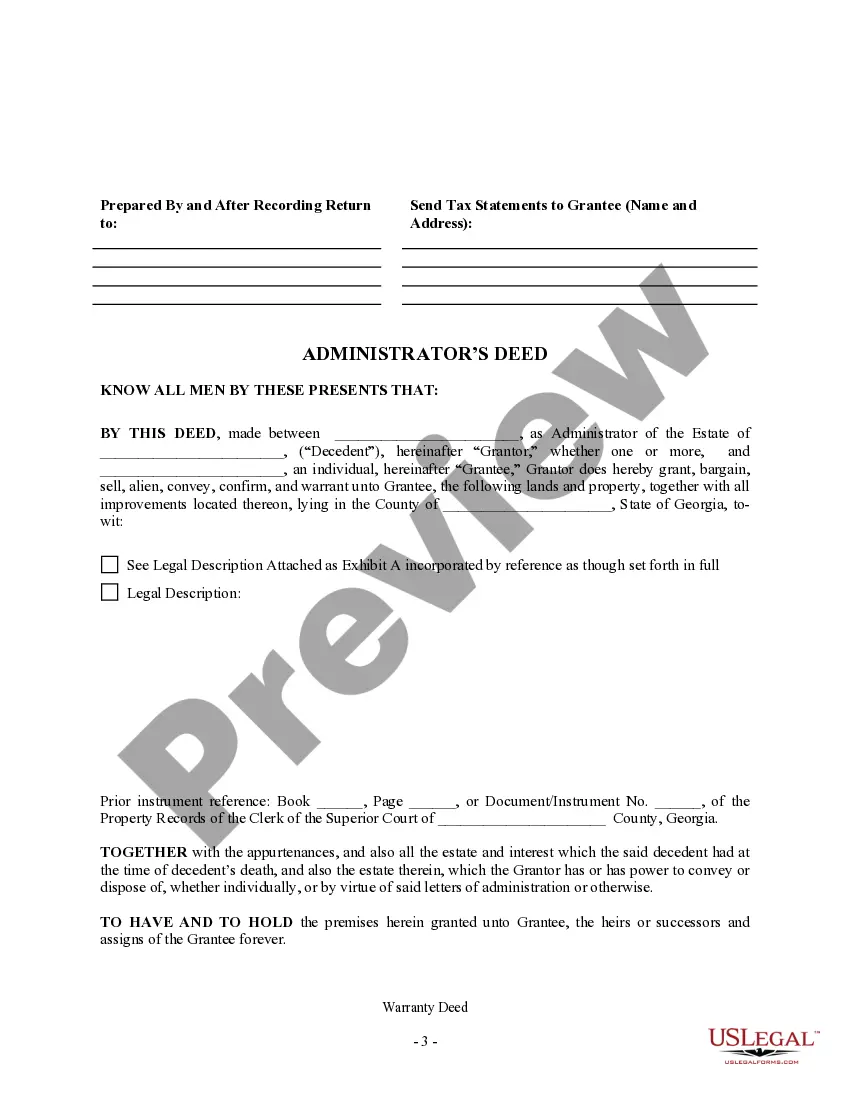
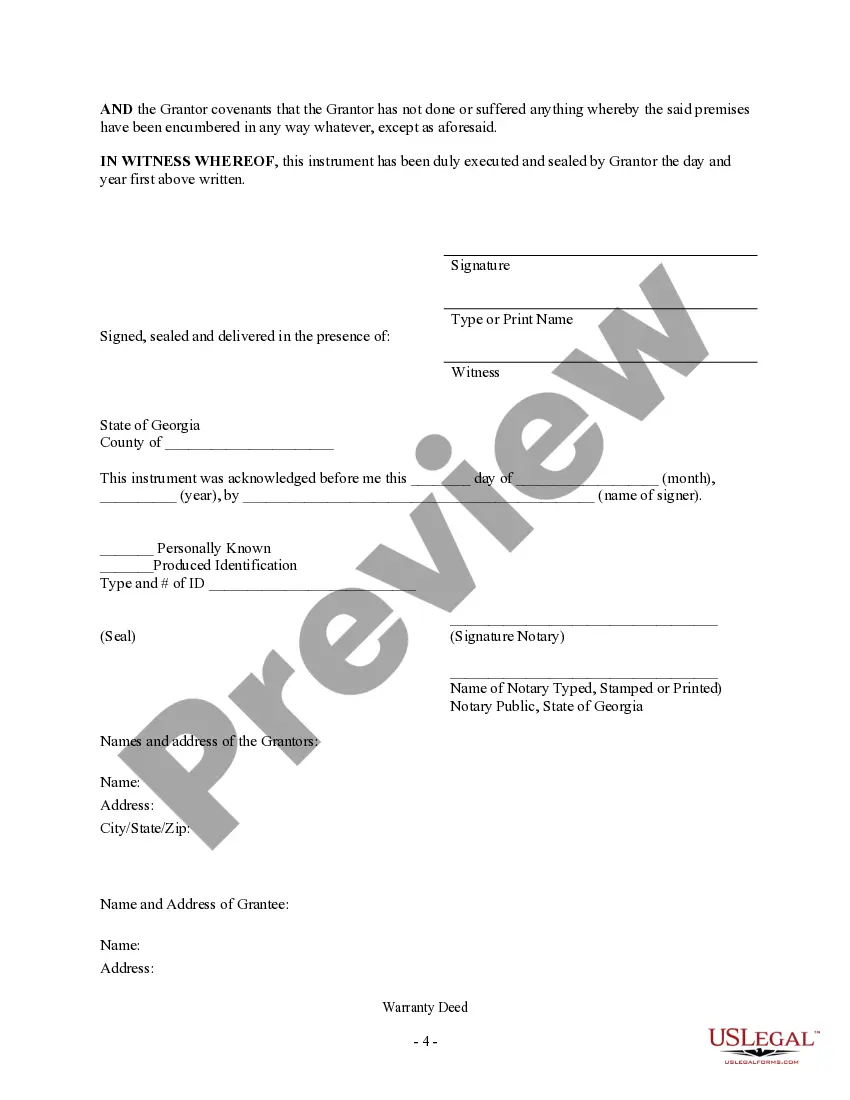
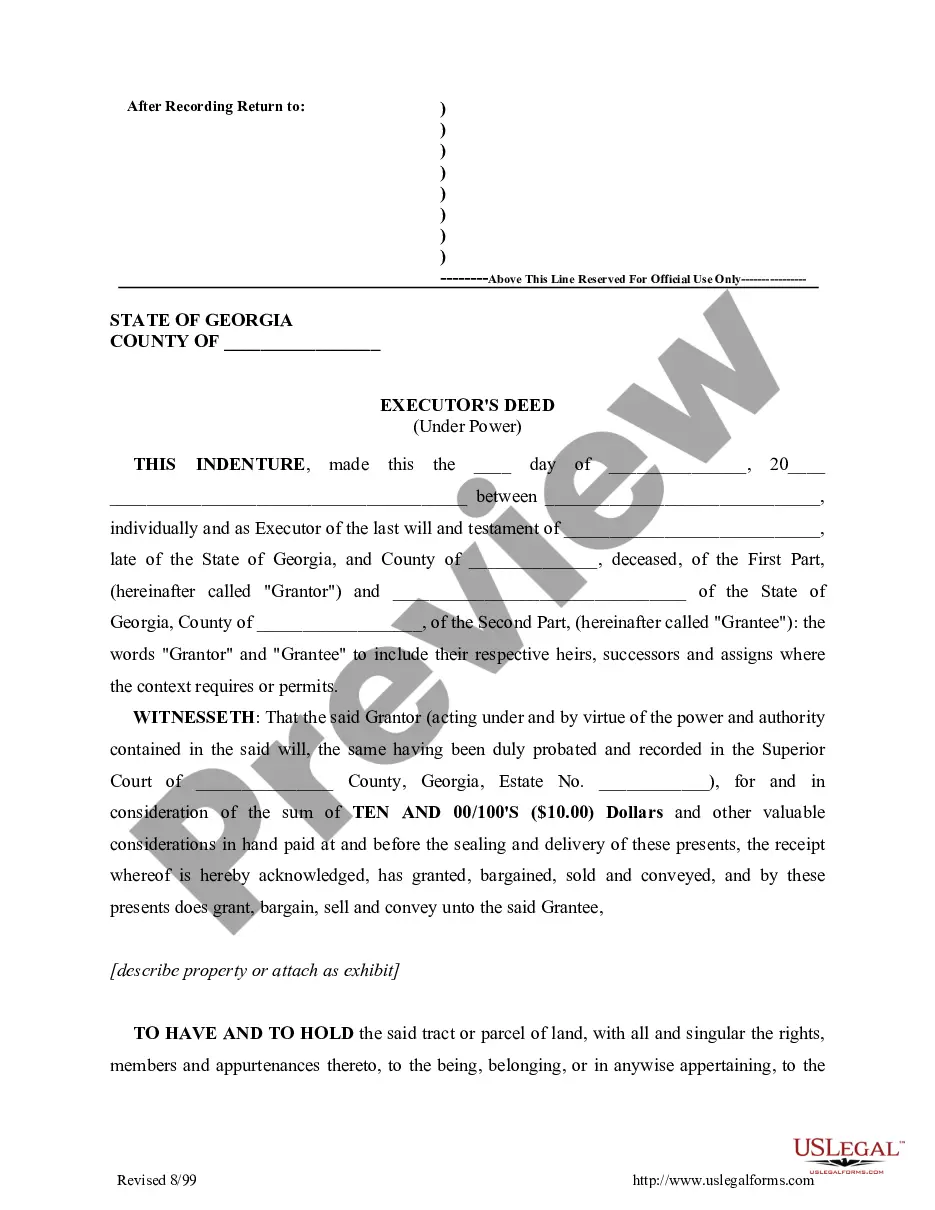
How to fill out Georgia Administrator's Deed?
- Log into your account if you’re a returning user, or create a new account if you’re using US Legal Forms for the first time.
- Explore the Preview mode for form descriptions to identify the correct administrative estate template that meets your requirements.
- Utilize the Search tab to find alternative templates if the first option doesn't fit your needs.
- Select the desired template and click on the 'Buy Now' button to choose your preferred subscription plan.
- Complete your purchase by entering your payment details or using PayPal for convenience.
- Download your form immediately after purchase and access it anytime in the 'My Forms' section of your account.
Following these steps ensures you have access to high-quality, legally sound documents tailored to your administrative estate needs. US Legal Forms stands out with its robust collection, making it easier than ever to manage your legal requirements.
Ready to streamline your legal documentation process? Visit US Legal Forms today and unlock the best solutions for your administrative estate needs!
Form popularity
FAQ
The purpose of a Letter of Administration is to grant the appointed administrator the authority to manage and settle an estate. This document verifies the administrator's identity and their legal capacity to handle the estate's financial matters. It plays a vital role in the successful navigation of the administrative estate process. With uslegalforms, you can confidently obtain a Letter of Administration tailored to your needs.
An administrative letter is a document issued by a probate court that officially designates someone to oversee an estate. It provides legal recognition of the administrator's authority to act on behalf of the estate. This letter is crucial for carrying out the responsibilities tied to the administrative estate. Use uslegalforms to access templates and guidance for obtaining an administrative letter efficiently.
The administrative process ensures that an estate is handled according to the law and in a fair manner. It involves collecting assets, paying debts, and distributing what remains to rightful heirs. This process provides clear guidelines, minimizing conflicts among beneficiaries. With uslegalforms, you can simplify each step of the administrative process for your administrative estate.
Once you receive a Letter of Administration, the appointed administrator can begin managing the estate. This includes gathering and valuing assets, settling debts, and distributing the remaining assets to beneficiaries. The process ensures that the wishes of the deceased are respected and that all legal obligations are met. Utilizing resources from uslegalforms can streamline these tasks for your administrative estate.
The administrative letter serves to officially appoint an administrator for an estate. This letter grants the administrator the authority to manage the deceased's assets and debts. It facilitates the process of administering the estate effectively, ensuring that all legal duties are fulfilled. With help from uslegalforms, you can easily obtain the necessary administrative letter for your administrative estate.
If the executor of a will does nothing, beneficiaries may experience delays in the estate's administration. In these situations, interested parties can petition the court to compel the executor to act or to appoint a new executor. It's vital to ensure the estate is managed efficiently, as this affects asset distribution and settlement of debts. US Legal Forms provides essential information and forms to address executor issues effectively.
If you have no one to serve as the executor of your will, you can ask the court to appoint an administrator. This person will handle the administrative tasks of your estate, ensuring that your wishes are honored. It’s often beneficial to communicate your wishes and the need for an executor to trusted relatives or friends, as it can simplify matters. Utilizing US Legal Forms can help you navigate this process with ease.
Typically, an estate can remain open as long as necessary to settle debts and distribute assets, but most states have timelines for closing estates. Generally, estates are closed within a year, but this period can be extended due to unique complexities. To ensure compliance and avoid unnecessary delays, consider consulting legal resources or professionals. US Legal Forms can guide you through estate management requirements effectively.
To apply for the administrator of an estate, start by gathering essential documents such as the death certificate and the will, if available. Next, file an application with the probate court in the jurisdiction where the deceased resided. If you seek guidance through this process, US Legal Forms offers resources and forms that simplify the steps necessary for becoming the estate's administrator, making it easier for you to fulfill your responsibilities.
An administrator has significant authority to manage the affairs of an administrative estate, including gathering assets, paying debts, and distributing property. However, their powers are regulated by the court and subject to applicable estate laws. Accountability is paramount, and administrators must act in the best interest of the estate and its beneficiaries. For those considering this role, our platform can provide essential guidance on your powers and obligations.