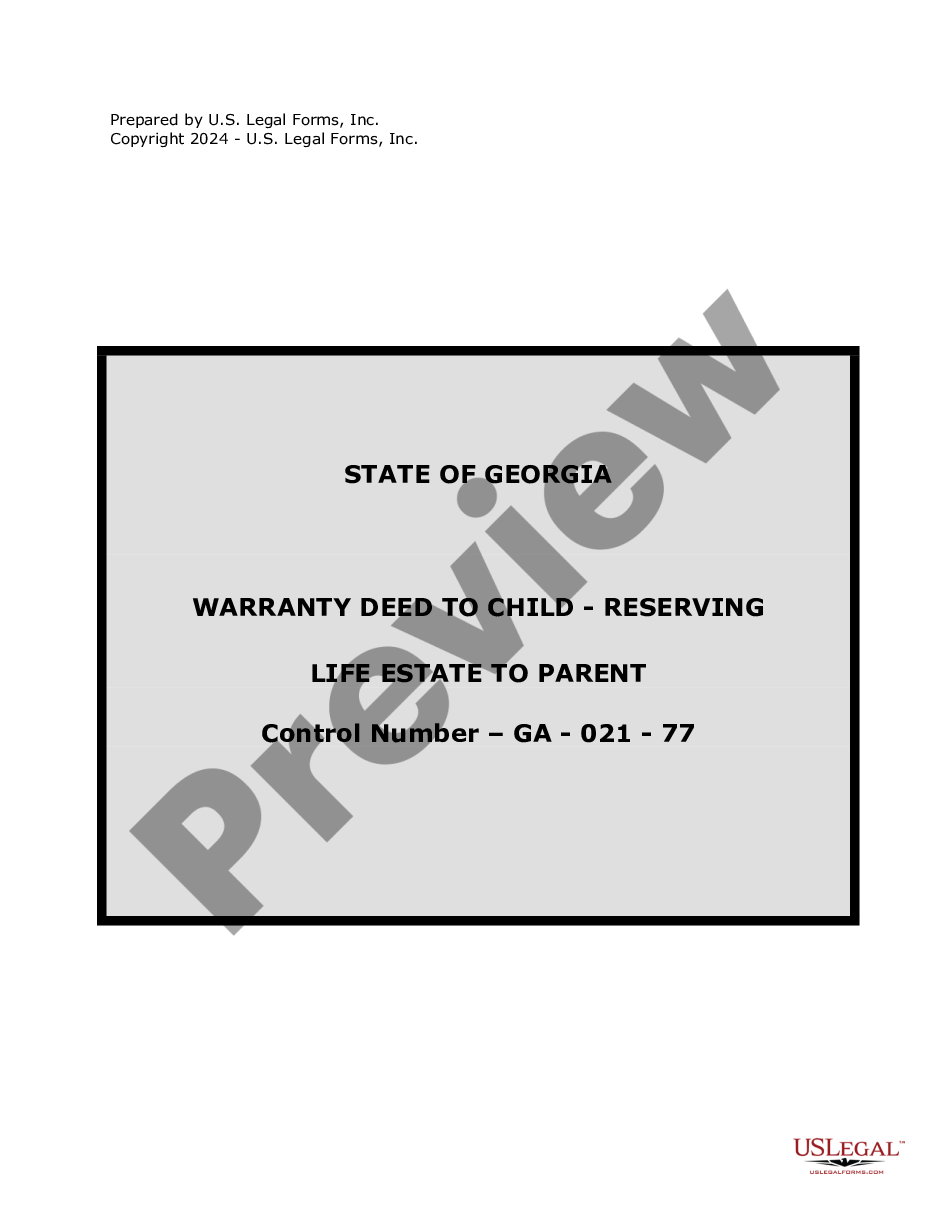
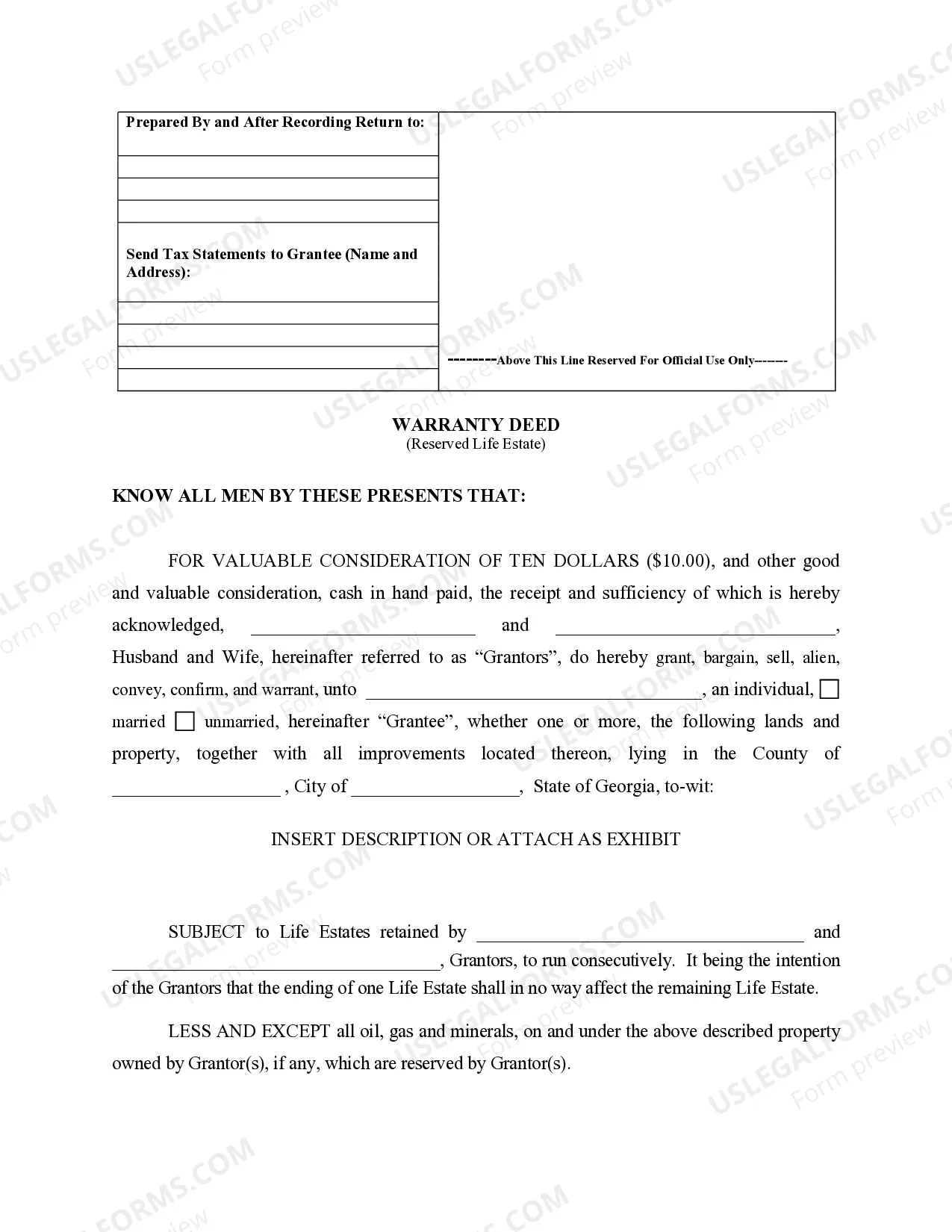
Georgia Life Estate With Reversionary Interest

Description
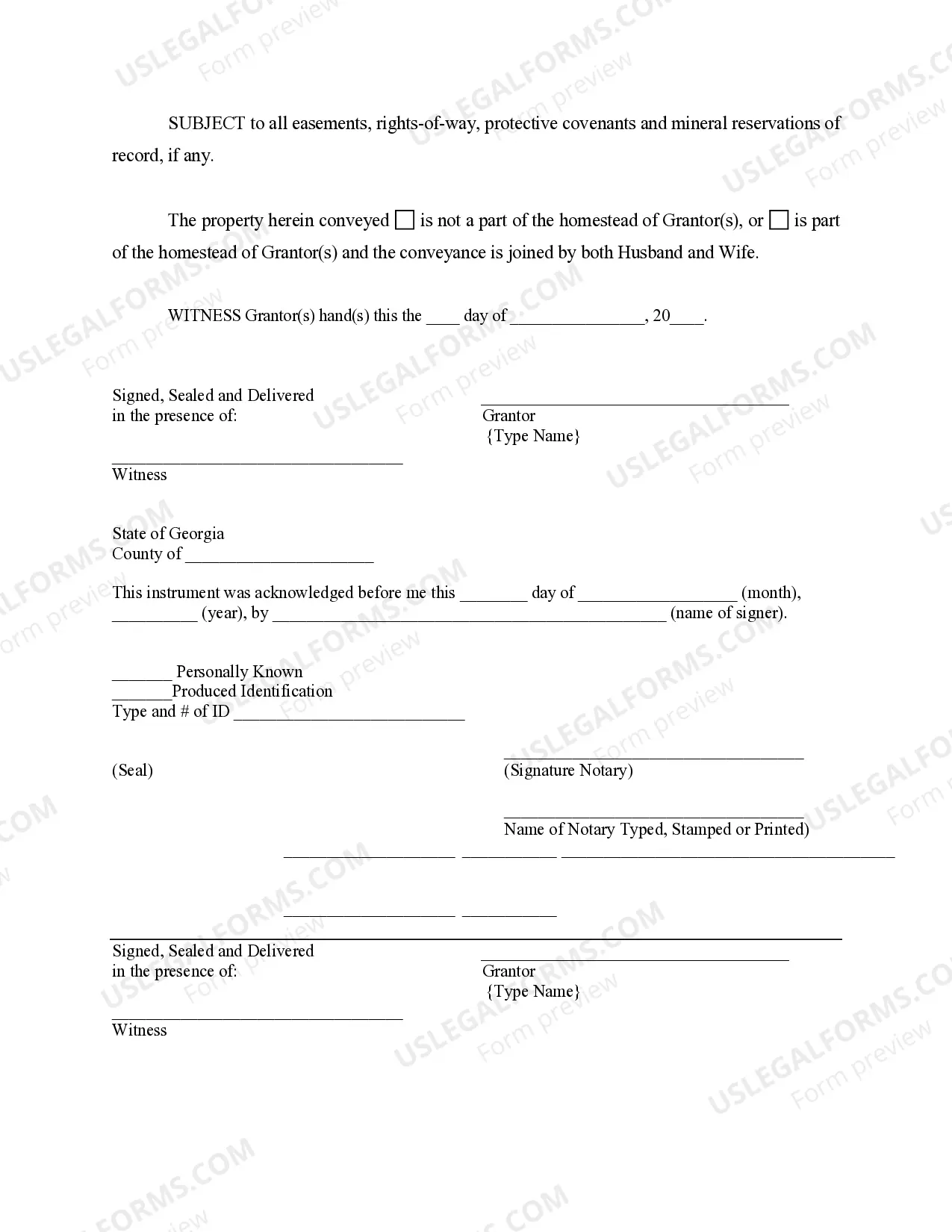
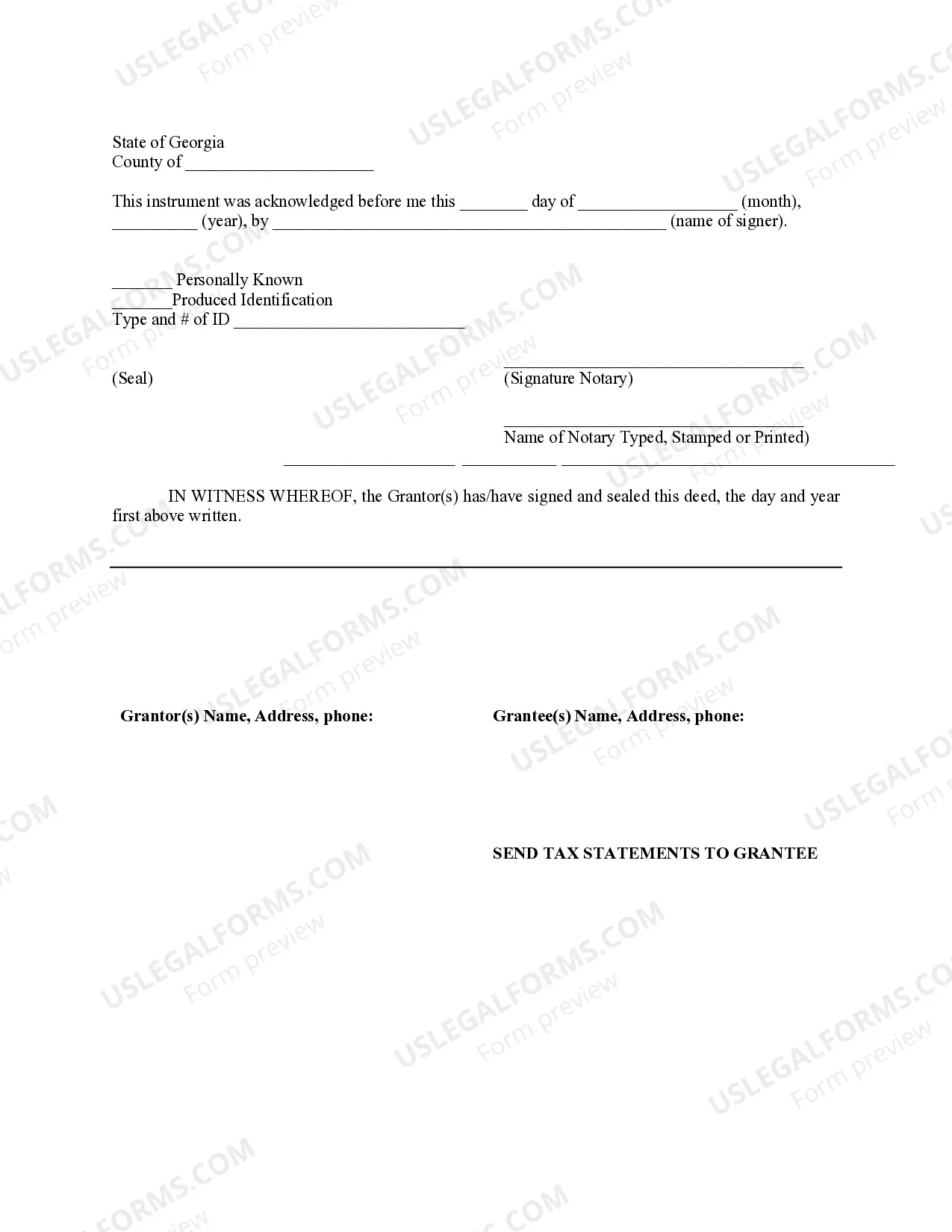
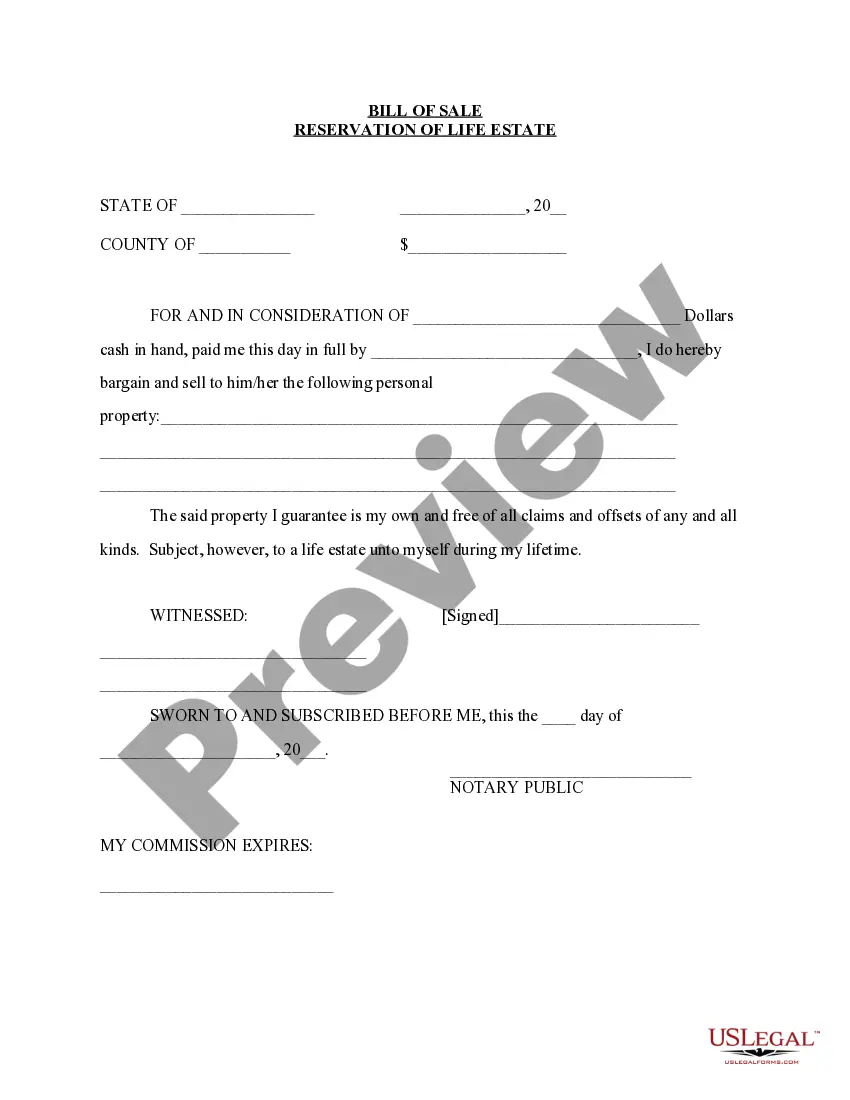
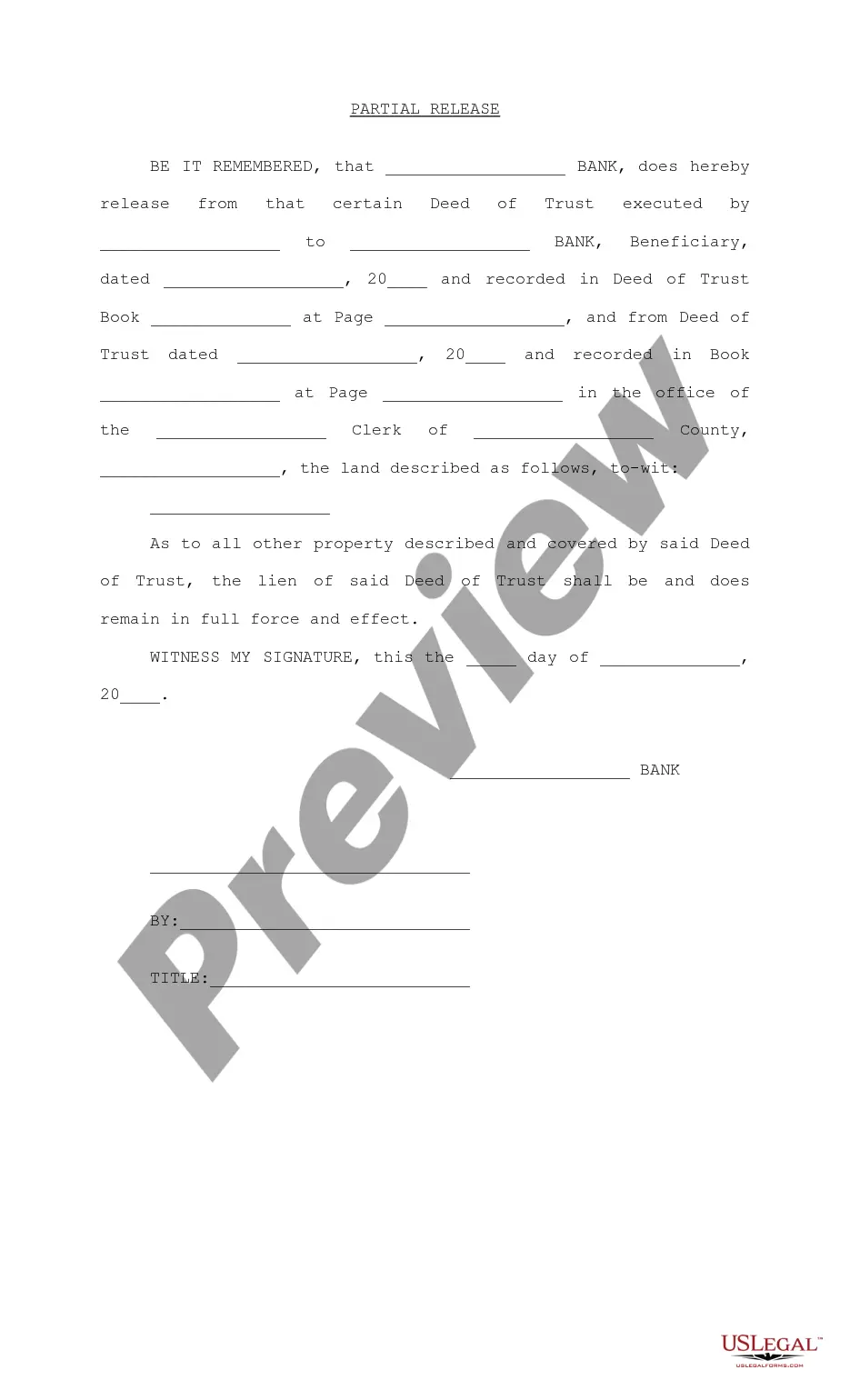
Get your form ready online
Our built-in tools help you complete, sign, share, and store your documents in one place.
Make edits, fill in missing information, and update formatting in US Legal Forms—just like you would in MS Word.
Download a copy, print it, send it by email, or mail it via USPS—whatever works best for your next step.
Sign and collect signatures with our SignNow integration. Send to multiple recipients, set reminders, and more. Go Premium to unlock E-Sign.
If this form requires notarization, complete it online through a secure video call—no need to meet a notary in person or wait for an appointment.
We protect your documents and personal data by following strict security and privacy standards.

Make edits, fill in missing information, and update formatting in US Legal Forms—just like you would in MS Word.

Download a copy, print it, send it by email, or mail it via USPS—whatever works best for your next step.

Sign and collect signatures with our SignNow integration. Send to multiple recipients, set reminders, and more. Go Premium to unlock E-Sign.

If this form requires notarization, complete it online through a secure video call—no need to meet a notary in person or wait for an appointment.

We protect your documents and personal data by following strict security and privacy standards.
Looking for another form?
How to fill out Georgia Warranty Deed To Child Reserving A Life Estate In The Parents?
Regardless of whether it’s for corporate objectives or personal needs, everyone encounters legal issues at some point in their life.
Completing legal paperwork requires meticulous scrutiny, starting with selecting the appropriate form template.
Once saved, you can complete the form using editing software or print it out and finish it manually. With an extensive catalog at US Legal Forms, you don't need to waste time searching for the correct template online. Take advantage of the library’s straightforward navigation to find the ideal template for any situation.
- Locate the template you require by utilizing the search bar or catalog navigation.
- Review the form’s details to verify it aligns with your situation, jurisdiction, and area.
- Click on the form’s preview to view it.
- If it is the wrong document, return to the search feature to find the Georgia Life Estate With Reversionary Interest template you need.
- Download the file if it satisfies your criteria.
- If you possess a US Legal Forms account, simply click Log in to access documents you have saved in My documents.
- If you haven’t created an account yet, you can download the form by selecting Buy now.
- Select the appropriate pricing choice.
- Complete the profile registration form.
- Choose your payment method: you can use a credit card or PayPal account.
- Select the document format you desire and download the Georgia Life Estate With Reversionary Interest.
Form popularity
FAQ
A reversionary interest refers to the right of a property owner to regain full ownership of their property after the expiration of a life estate. In the context of a Georgia life estate with reversionary interest, this means that once the life tenant passes away or the life estate ends, the property will revert back to the original owner or their heirs. This arrangement can provide clarity on property rights and helps manage expectations regarding future ownership. Understanding this concept is essential for anyone navigating the complexities of estate planning in Georgia.
The estate that accommodates both remainder and reversionary interests is typically known as a life estate. In this arrangement, one person holds the property for their lifetime, while another party, known as the remainderman, receives ownership after the life tenant passes away. This combination is commonly used in estate planning within Georgia, ensuring a smooth transition of property ownership for future generations.
A reversionary interest in a life estate means that the original property owner retains the right to regain ownership once the life tenant's right to use the property ends. This interest ensures that the property will revert back to the owner or their heirs after a specific event, like the death of the life tenant. Such arrangements are common in estate planning, including in Georgia, allowing for strategic management of family assets.
In Georgia, a life estate allows a person to use a property for their lifetime, after which the property reverts to the original owner or chosen heirs. You can create this type of arrangement through a will or a deed with specific language. It's important to consult with a legal expert to ensure everything is done correctly. Using platforms like US Legal Forms can help simplify this process with clear templates and guidance.
A life interest, like a Georgia life estate with reversionary interest, can limit the owner's flexibility in managing the property. For example, you cannot sell or mortgage the property without the consent of the life tenant. Additionally, you may incur maintenance costs without receiving any income from the property until the life tenant passes away. This arrangement can be complicated, and understanding the legal implications is crucial.
A reversionary life estate is a type of ownership arrangement where you grant someone else the right to use and occupy your property for their lifetime. When that person dies, the property automatically reverts back to you or your designated heirs. This arrangement is beneficial for those looking to maintain control over their property after the death of the life tenant. In Georgia, this is often established through a detailed legal process.
A reversionary interest occurs when a property owner transfers their property to another party but retains the right to regain ownership after a specified event. For instance, if you grant someone a Georgia life estate with reversionary interest, you might allow them to live in the house until they pass away. After their death, the property returns to you or your heirs. This setup can ensure that your property remains within your family.
Yes, Georgia recognizes life estates, including those with reversionary interests. This legal arrangement allows individuals to enjoy property rights during their lifetime while outlining clear future ownership. If you are considering creating a life estate in Georgia, using our legal forms can simplify the process and ensure you comply with relevant laws. Knowing your rights and responsibilities can lead to better estate planning.
In a Georgia life estate with reversionary interest, a reversion occurs when the ownership of the property automatically returns to the original grantor after the life tenant's death. In contrast, a remainder allows a third party to take ownership after the life tenant's death. Understanding these concepts helps clarify the distribution of property interests. It's crucial to consider these distinctions when planning your estate.