Examples Of Legal Life Estate

Description
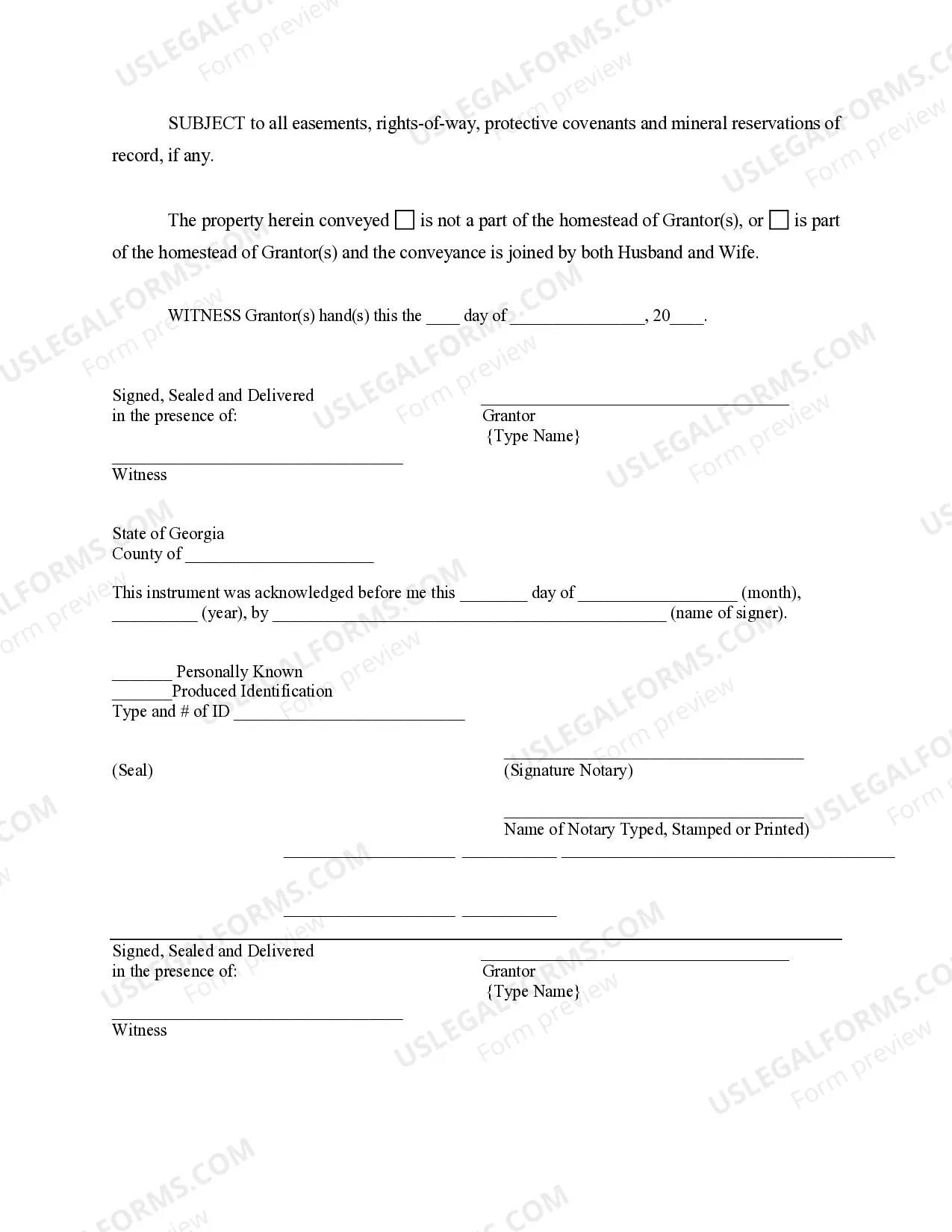
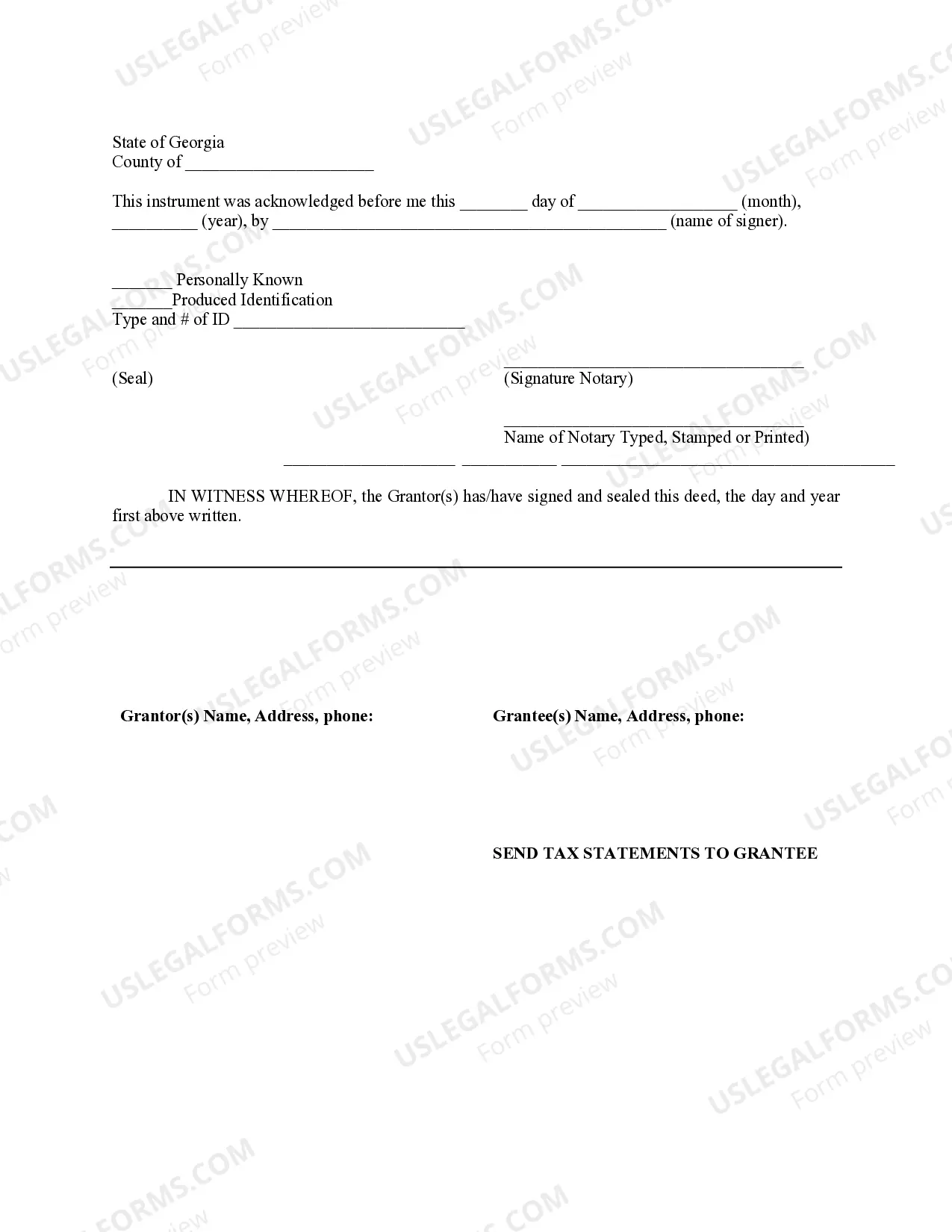
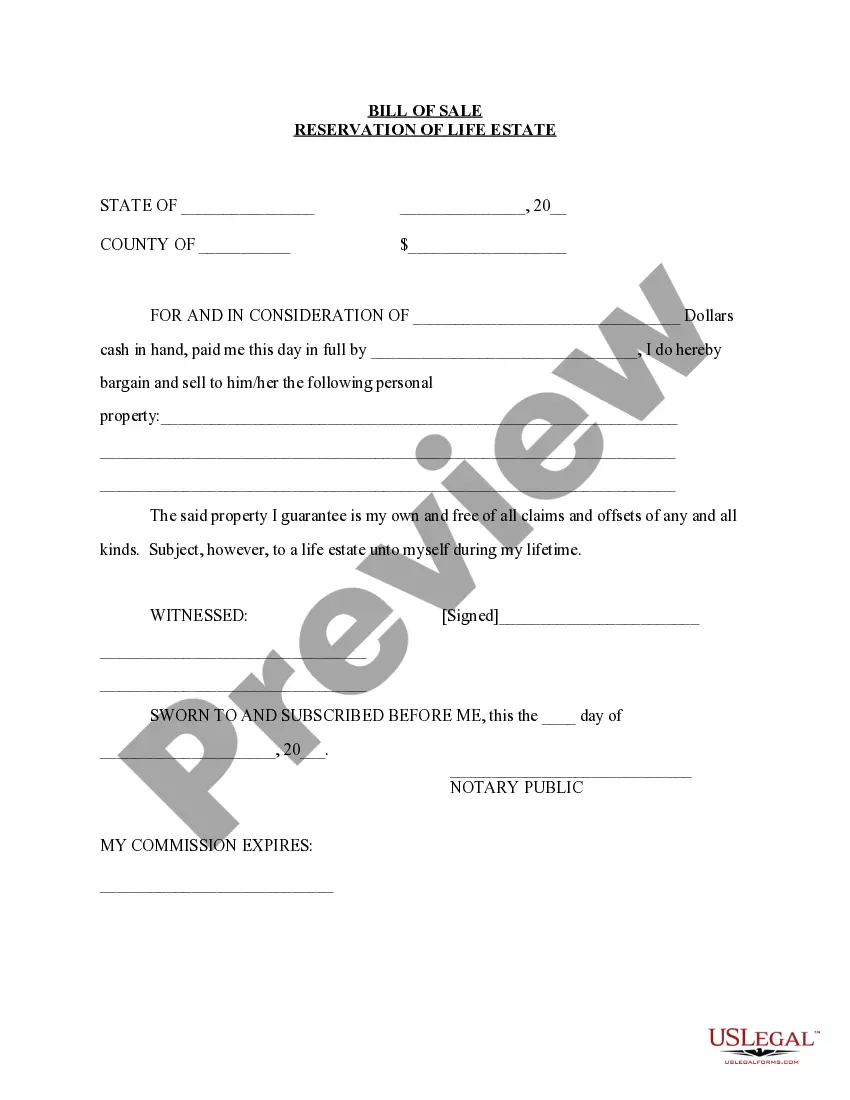
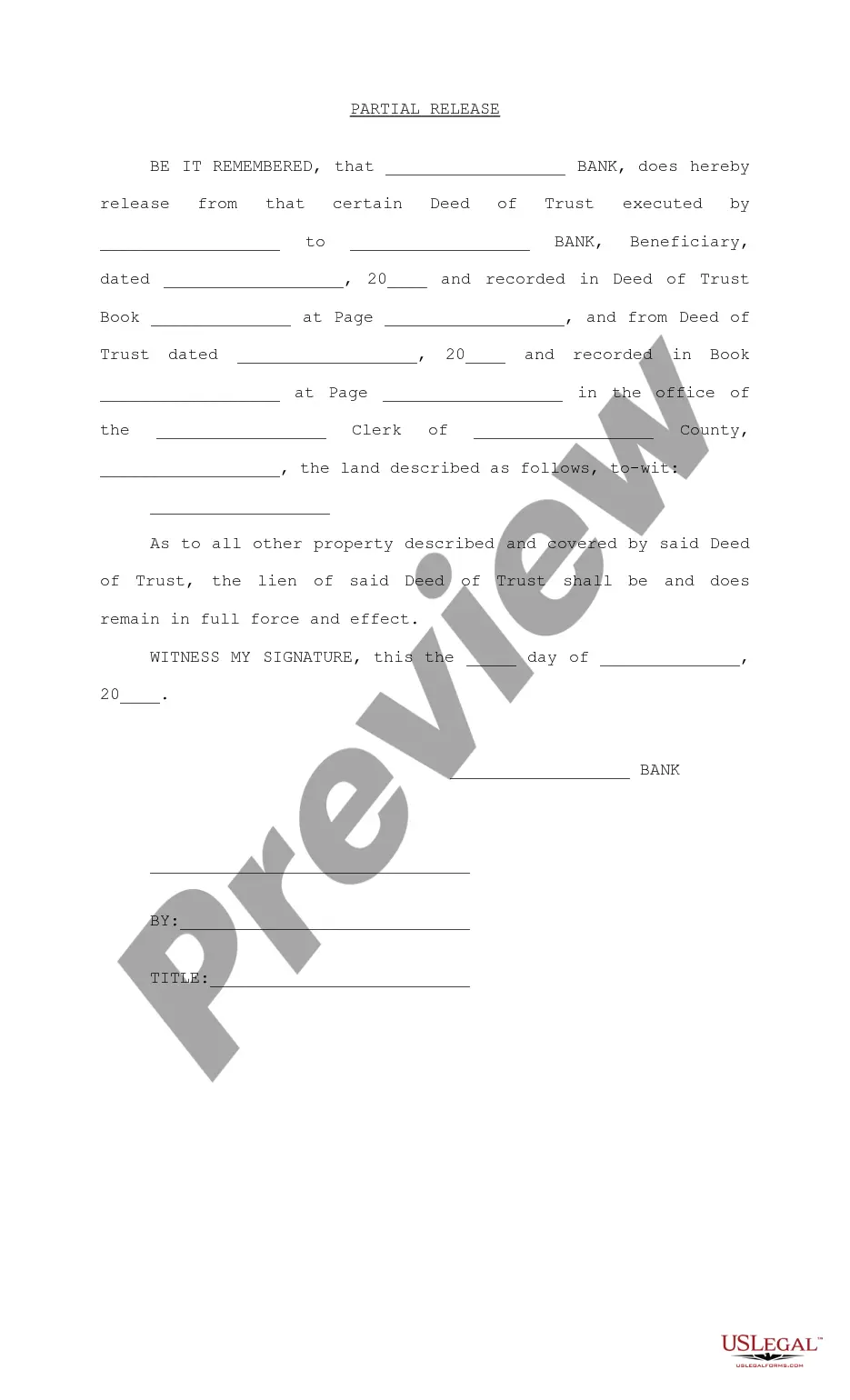
Get your form ready online
Our built-in tools help you complete, sign, share, and store your documents in one place.
Make edits, fill in missing information, and update formatting in US Legal Forms—just like you would in MS Word.
Download a copy, print it, send it by email, or mail it via USPS—whatever works best for your next step.
Sign and collect signatures with our SignNow integration. Send to multiple recipients, set reminders, and more. Go Premium to unlock E-Sign.
If this form requires notarization, complete it online through a secure video call—no need to meet a notary in person or wait for an appointment.
We protect your documents and personal data by following strict security and privacy standards.

Make edits, fill in missing information, and update formatting in US Legal Forms—just like you would in MS Word.

Download a copy, print it, send it by email, or mail it via USPS—whatever works best for your next step.

Sign and collect signatures with our SignNow integration. Send to multiple recipients, set reminders, and more. Go Premium to unlock E-Sign.

If this form requires notarization, complete it online through a secure video call—no need to meet a notary in person or wait for an appointment.

We protect your documents and personal data by following strict security and privacy standards.
Looking for another form?
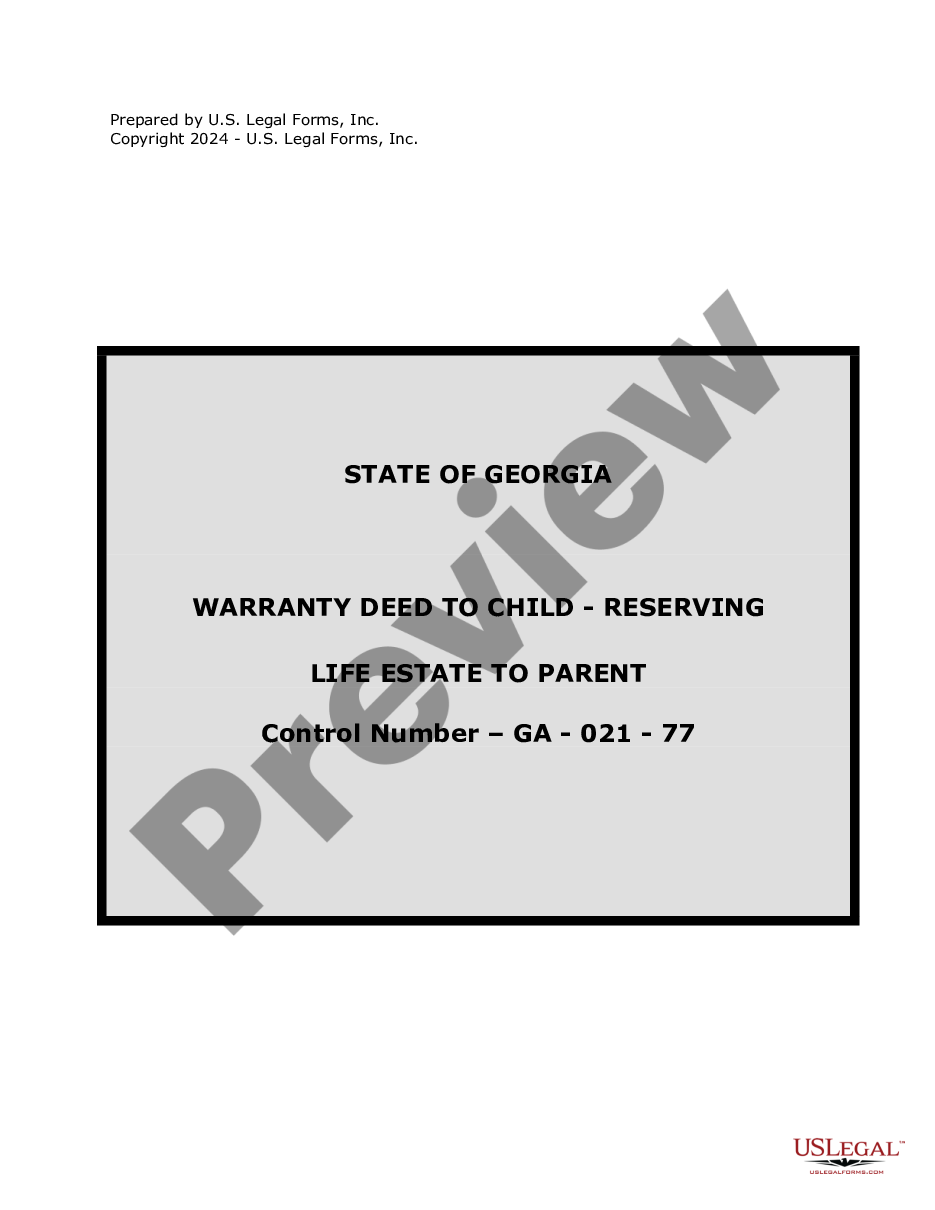
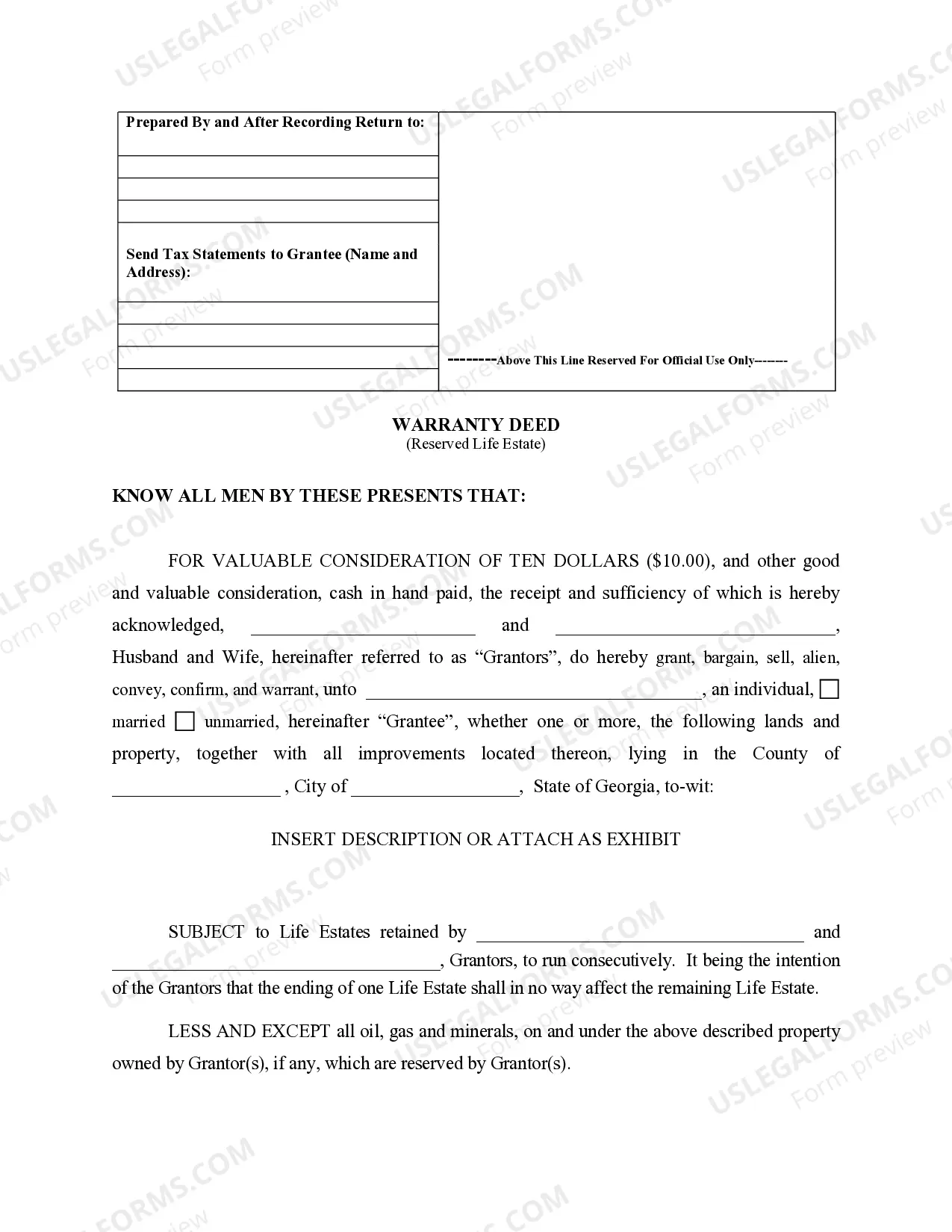
How to fill out Georgia Warranty Deed To Child Reserving A Life Estate In The Parents?
Legal documents administration can be overwhelming, even for seasoned professionals.
When you are looking for instances of legal life estates and lack the opportunity to spend searching for the correct and current version, the process may be stressful.
With US Legal Forms, you can.
If you hold a monthly subscription, Log In to your US Legal Forms account, look for the document, and obtain it.
Leverage the US Legal Forms online library, supported by 25 years of knowledge and dependability. Transform your daily document management into a smooth and user-friendly process today.
- Verify it is the correct document by previewing it and reviewing its details.
- Ensure that the template is recognized in your state or county.
- Click on Buy Now when you are prepared.
- Choose a subscription plan.
- Select the file format you need, then Download, complete, sign, print, and dispatch your documents.
- Utilize cutting-edge tools to fill out and manage your examples of legal life estate.
- Access a wealth of articles, tutorials, and guides relevant to your circumstances and needs.
- Save time and energy in searching for the documents you require, and use US Legal Forms' sophisticated search and Preview feature to locate examples of legal life estate and acquire them.
Form popularity
FAQ
To write a life estate, it is important to clearly outline the intentions of both the property owner and the beneficiary. Start by identifying the property and specifying that the estate is granted for the life of the individual, often referred to as the life tenant. Examples of legal life estate typically include language that stipulates the rights and responsibilities of the life tenant and any future beneficiaries, known as remaindermen. For those needing assistance, the US Legal Forms platform provides templates and guidance to help create a legally sound life estate document tailored to your needs.
To fill out a life estate deed, start by clearly identifying the property involved. Include the names of the life tenant and the remaindermen, as they are vital components of this legal document. You should outline the rights and responsibilities of the life tenant concerning the property. For more guidance, consider using resources on uslegalforms, which provide examples of legal life estate to help you navigate the process with ease.
An example of a legal life estate can be seen when a property owner creates a life estate deed for a relative. This deed grants the relative the right to live on the property for the duration of their life, with automatic transfer of ownership to another designated party upon their passing. This structured arrangement signifies a clear instance of legal life estate, facilitating smoother property transitions and inheritance.
A life estate generally refers to the right to use and enjoy property during one's lifetime, but it may lack certain legal protections. In contrast, a legal life estate is specifically recognized by law, providing the holder with defined rights and obligations. The legal designation often ensures secure transfer of property interests after the life tenant's death, making the legal life estate a more stable choice.
An example of a life estate involves a person holding the right to live in a property for their lifetime. For instance, if a parent grants their child a life estate in a family home, the child retains the right to occupy the home until their death. This arrangement allows the property to eventually pass to another party, illustrating a basic example of a legal life estate.
A legal life estate does not include ownership structures that lack defined rights of use or passage. For instance, a mere rental agreement does not grant the tenant any life estate privileges, as the tenant's rights are temporary and limited. Similarly, a joint tenancy without survivorship rights does not qualify as a legal life estate. Understanding these boundaries is essential when reviewing examples of legal life estate.
The words "heirs of A" are words of limitation. Thus they describe a form of property. So A [named in the words of purchase] acquires a life estate. Because the words of limitation ?heirs of A? are words that describe an estate in fee simple, A also acquires an estate in remainder in fee simple.
Also called a ?tenant for life,? a life tenant is a person who has a beneficial interest in an estate or property that is limited in duration to their or another's lifespan. Life tenants' rights in the estate are as good as those of the grantor's.
A life estate is created by a deed that gives the property to the person "for life" and identifies what should happen to it after that person dies. For example, a deed stating that land would go "to John Doe for life, then to Jane Doe" gives John a valid life estate, and Jane a remainder.
An example of a life estate with Jane Smith as the remainderman is "to John Smith for life, then to Jane Smith." Jane Smith is the remainderman in this example because she is the person inheriting title to the property following the death of John Smith.