Trust Deed For Temple
Description



Get your form ready online
Our built-in tools help you complete, sign, share, and store your documents in one place.
Make edits, fill in missing information, and update formatting in US Legal Forms—just like you would in MS Word.
Download a copy, print it, send it by email, or mail it via USPS—whatever works best for your next step.
Sign and collect signatures with our SignNow integration. Send to multiple recipients, set reminders, and more. Go Premium to unlock E-Sign.
If this form requires notarization, complete it online through a secure video call—no need to meet a notary in person or wait for an appointment.
We protect your documents and personal data by following strict security and privacy standards.

Make edits, fill in missing information, and update formatting in US Legal Forms—just like you would in MS Word.

Download a copy, print it, send it by email, or mail it via USPS—whatever works best for your next step.

Sign and collect signatures with our SignNow integration. Send to multiple recipients, set reminders, and more. Go Premium to unlock E-Sign.

If this form requires notarization, complete it online through a secure video call—no need to meet a notary in person or wait for an appointment.

We protect your documents and personal data by following strict security and privacy standards.
Looking for another form?








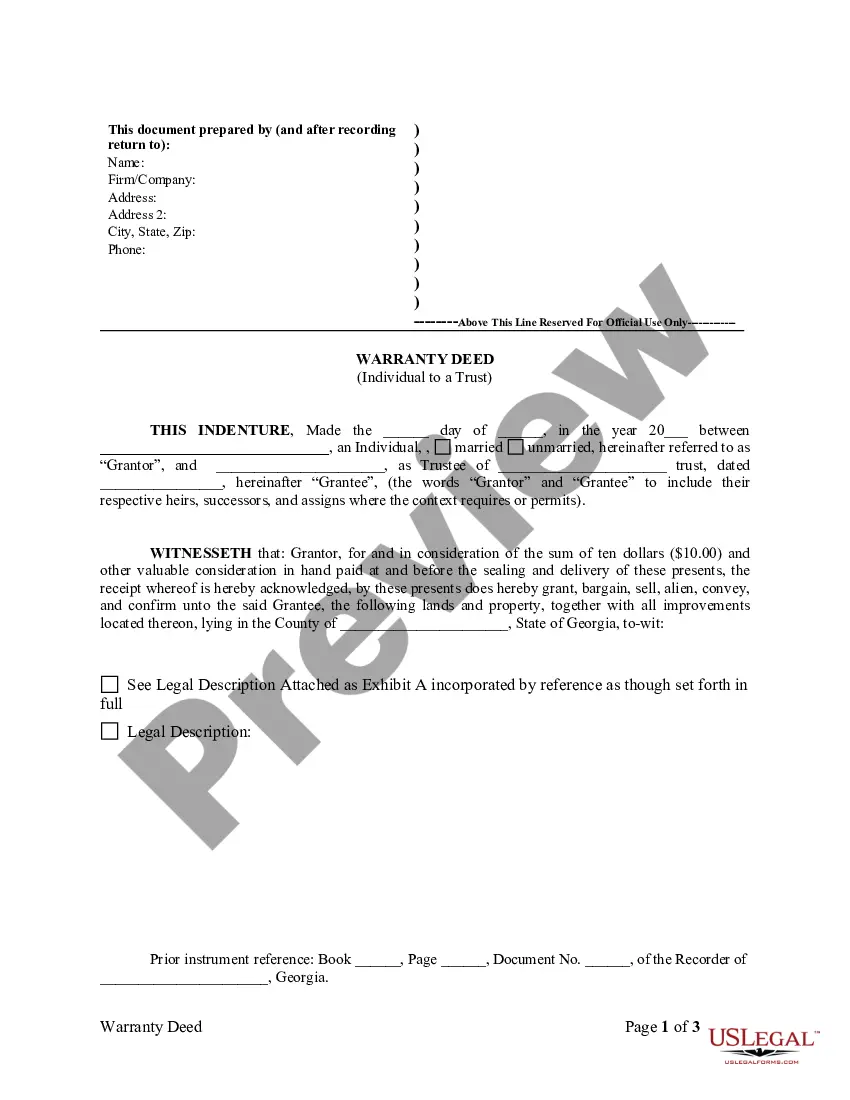
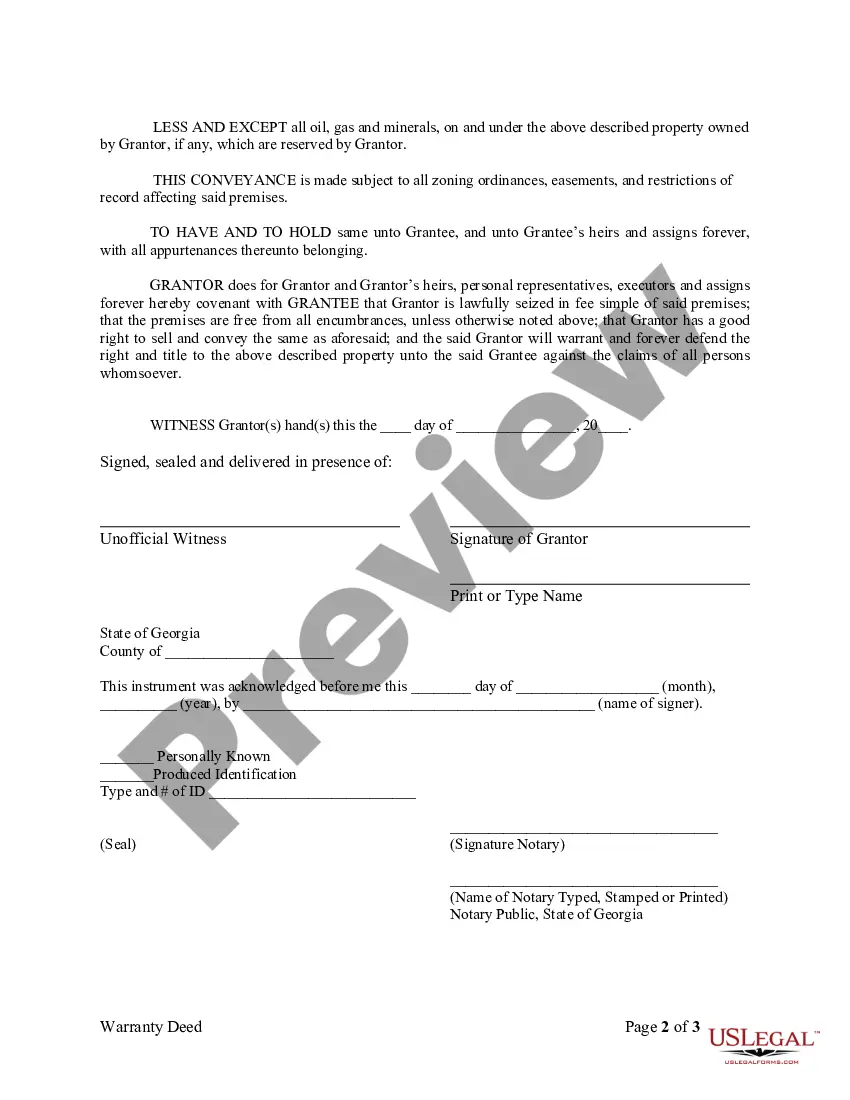
How to fill out Georgia Warranty Deed From Individual To A Trust?
- Access your account on US Legal Forms if you're a returning user. Ensure your subscription is active before downloading the required template.
- For first-time users, start by browsing the trusted library and previewing necessary forms to find the appropriate trust deed that fits your temple's requirements.
- If the desired template doesn’t match your needs, utilize the search feature to find alternative forms that comply with local regulations.
- Proceed to purchase the document by clicking on the Buy Now button. Choose a subscription plan that suits your budget and create an account to unlock full access.
- Complete your transaction by entering your payment information using a credit card or PayPal.
- Once the purchase is confirmed, download your trust deed onto your device. Access the document later through the My Forms section of your profile.
By following these steps, you can effortlessly secure a legally sound trust deed for your temple. US Legal Forms not only provides a vast collection of legal documents but also ensures that users have access to premium experts for personalized assistance.
Start your journey towards effortless document management today and explore the extensive resources available at US Legal Forms.
Form popularity
FAQ
A deed of trust provides security for lenders, allowing them to manage risk when extending loans. It creates a clear legal framework for the borrowers and protects the lender's interests in property. For those interested in a trust deed for temple, this option offers a structured way to finance property acquisitions while safeguarding your investment. USLegalForms can help you understand the benefits and outline its significance.
The deed of appointment of a trust refers to a legal document that designates a trustee to manage the trust assets. In the context of a trust deed for a temple, this document allows the appointed trustee to act on behalf of the temple in legal matters related to the trust. This appointment is vital for transparent management and continuity of trust functions. Properly executed, this deed reinforces the temple's governance and operational stability.
Typically, a deed of trust for a temple is provided by a financial institution or lender. This could also include legal professionals who specialize in such documents within the religious or nonprofit sector. These parties understand the specific requirements and obligations that must be fulfilled. Collaborating with experienced lenders ensures that your temple's financial needs are properly addressed.
A deed of trust for temple typically includes the names of the trustor, trustee, and beneficiaries, along with a detailed description of the property in question. It also outlines the duties and powers of the trustee, the duration of the trust, and how distributions will be handled. Ensuring these elements are included will help safeguard the temple's interests and promote effective management.
An example of a trust deed for temple might include a document that names a trustee responsible for overseeing the temple’s property. It would specify how the temple assets are to be used for the benefit of the community and detail the process for distributing any income generated. Using a clear example can help you understand the structure needed for your own trust deed.
While you can write your own trust deed for temple, it requires careful attention to legal requirements and proper language. You should ensure the deed clearly states the intentions of the trustor, describes the property, and outlines the responsibilities of the trustee. For peace of mind, using a reputable platform like US Legal Forms can provide you with templates and guidance.
Writing a trust deed for temple involves several key steps, starting with identifying the parties involved: the trustor, trustee, and beneficiaries. Next, you need to describe the property being placed in trust and outline the terms governing its use and management. Finally, it’s advisable to have the deed reviewed by a legal professional to ensure it meets all necessary legal standards.
Temple trust information refers to the specific details regarding the management and operation of trusts associated with religious institutions. This includes the legal framework governing such trusts, the responsibilities of trustees, and the intended use of the temple's assets. Understanding this information is vital for anyone looking to establish a trust deed for temple purposes.
A deed of trust template is a pre-designed document that provides a basic structure for creating a trust deed for temple. This template typically includes sections on the parties involved, property description, and the terms of the trust. Using a template streamlines the process, ensuring you include all necessary information while maintaining legal compliance.
Yes, you can write your own trust deed for temple, but it's important to understand the legal requirements involved. Drafting a trust deed requires a clear understanding of trust laws and the specific needs of your temple. For accuracy and compliance, using a professional service or a legal template can be beneficial.