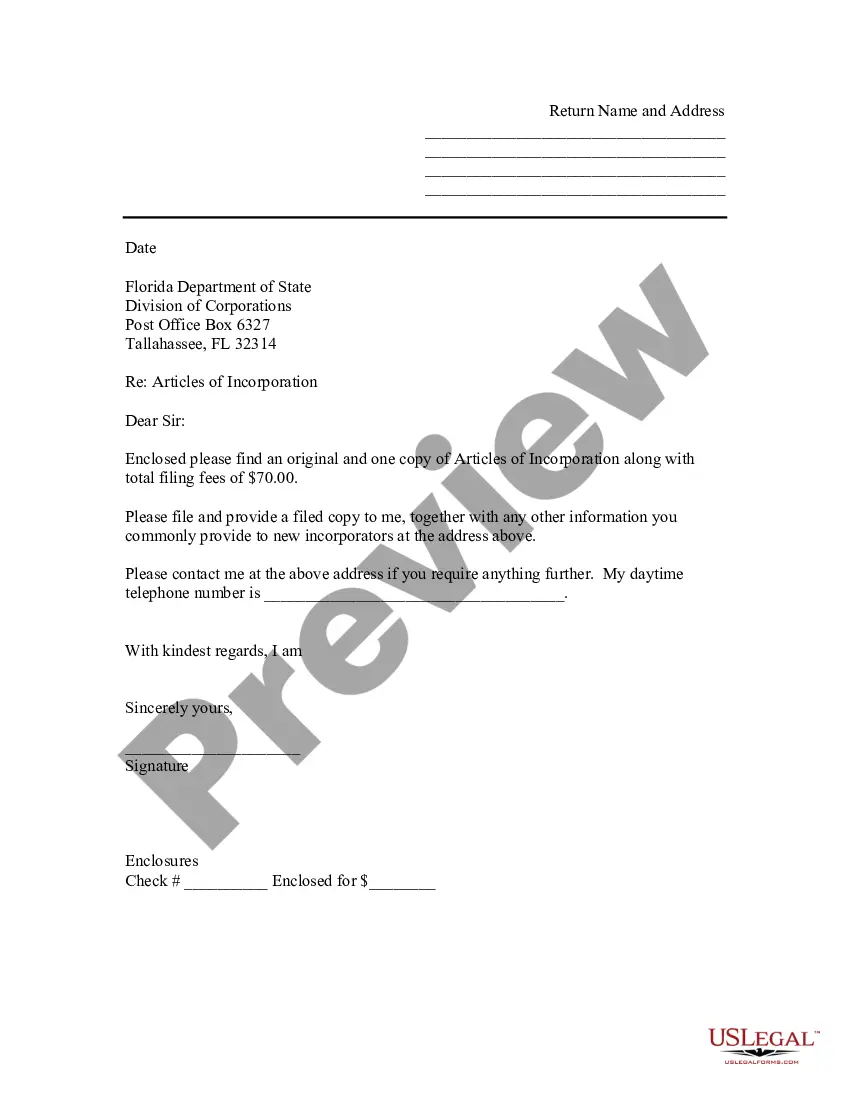
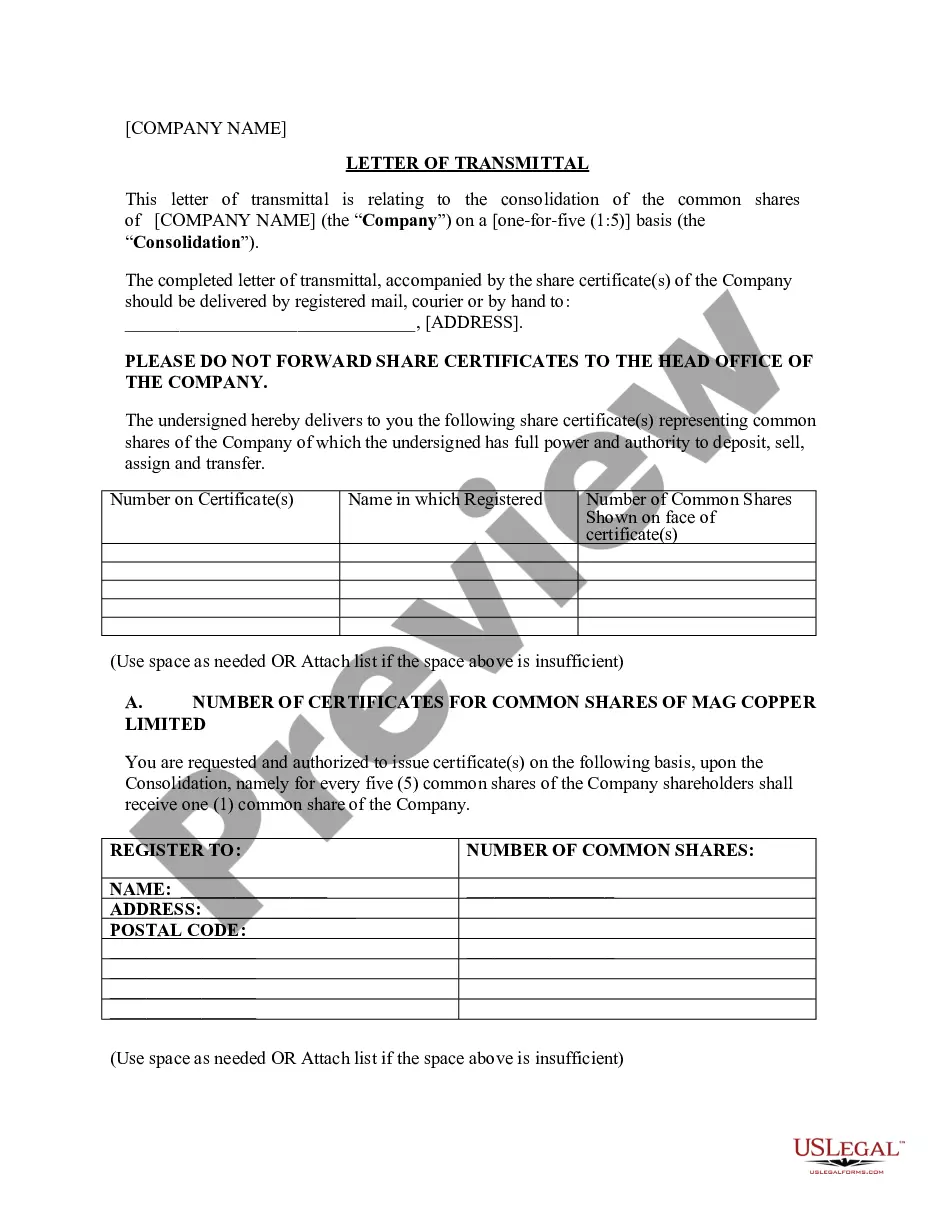
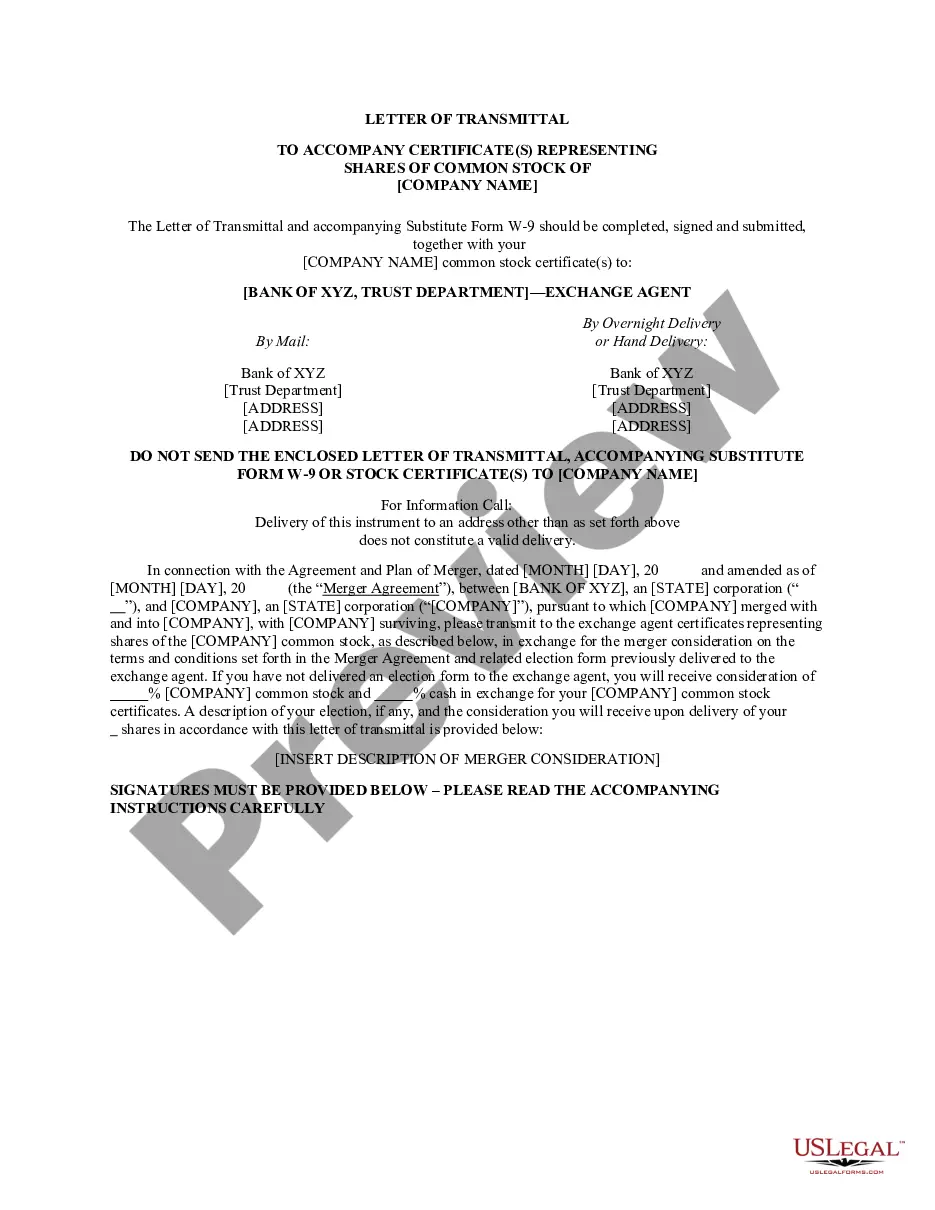
Transmittal Letter Format
Description
Get your form ready online
Our built-in tools help you complete, sign, share, and store your documents in one place.
Make edits, fill in missing information, and update formatting in US Legal Forms—just like you would in MS Word.
Download a copy, print it, send it by email, or mail it via USPS—whatever works best for your next step.
Sign and collect signatures with our SignNow integration. Send to multiple recipients, set reminders, and more. Go Premium to unlock E-Sign.
If this form requires notarization, complete it online through a secure video call—no need to meet a notary in person or wait for an appointment.
We protect your documents and personal data by following strict security and privacy standards.

Make edits, fill in missing information, and update formatting in US Legal Forms—just like you would in MS Word.

Download a copy, print it, send it by email, or mail it via USPS—whatever works best for your next step.

Sign and collect signatures with our SignNow integration. Send to multiple recipients, set reminders, and more. Go Premium to unlock E-Sign.

If this form requires notarization, complete it online through a secure video call—no need to meet a notary in person or wait for an appointment.

We protect your documents and personal data by following strict security and privacy standards.
Looking for another form?
How to fill out Florida Sample Transmittal Letter To Secretary Of State's Office To File Articles Of Incorporation?
It’s clear that you cannot transform into a legal expert in a day, nor can you swiftly understand how to draft a Transmittal Letter Format without a specialized education.
Assembling legal documents is a lengthy process that demands specific knowledge and abilities. So why not entrust the creation of the Transmittal Letter Format to the experts.
With US Legal Forms, which boasts one of the largest libraries of legal documents, you can discover everything from court forms to templates for internal business communications. We recognize the significance of compliance and adherence to federal and state regulations.
Create a free account and choose a subscription plan to acquire the template.
Select Buy now. Once the payment is processed, you can download the Transmittal Letter Format, complete it, print it, and send or forward it to the appropriate individuals or organizations.
- That’s why, on our platform, all forms are region-specific and current.
- Here’s how you can initiate your journey with our platform and obtain the form you need in just a few minutes.
- Locate the document you require by utilizing the search bar at the top of the page.
- Preview it (if this feature is available) and review the accompanying description to determine if the Transmittal Letter Format is what you’re looking for.
- If you need another template, start your search again.
Form popularity
FAQ
A letter of transmittal typically includes the sender's and recipient's information, the date, and a brief description of the documents being sent. Additionally, it may contain instructions or notes regarding the documents. By following a clear transmittal letter format, you ensure that the recipient understands the context and purpose of the enclosed materials. For customizable templates, consider using uslegalforms to streamline your process.
To write a simple transmittal letter, keep your language straightforward and concise. Start with a brief introduction, state the documents being transmitted, and include any necessary instructions or comments. Make sure to adhere to a clean transmittal letter format, which helps convey your message clearly without unnecessary complexity.
A good opening for a transmittal letter should clearly state the intent of the communication. You might start with a phrase like, 'I am pleased to submit the following documents for your review.' This sets a positive tone and informs the recipient of what to expect. A direct and engaging opening enhances the effectiveness of your transmittal letter format.
Writing a transmittal letter involves a few key steps. Begin with your contact information, followed by the date, recipient's information, and a subject line. In the body, briefly explain the documents you are sending and their importance. By following a standard transmittal letter format, you can ensure clarity and professionalism in your communication.
To start a transmittal letter, include your name, address, and the date at the top. Next, address the recipient formally, using their title and last name. After this, clearly state the purpose of the letter, which is to transmit specific documents. A well-structured transmittal letter format makes it easier for the recipient to grasp the document's intention right from the beginning.
Common examples of transmittals include cover letters that accompany reports, proposals, or contracts. They serve to introduce the enclosed documents and provide context. In business, transmittal letters are essential in ensuring that the recipient understands the purpose of the documents being sent. Utilizing a clear transmittal letter format can enhance communication and professionalism.
A letter that accompanies some object and serves as a record of that object being delivered. The object being delivered is often a paper document (e.g., a pleading), but may also be a larger physical object (e.g., goods).
Transmittal letters are usually brief. The first paragraph describes what is being sent and the purpose for sending it. A longer transmittal letter may summarize key elements of the proposal in one or two sentences and provide the recipient with other useful information.
How to Create a Transmittal Template The Recipients Information (Company, Name, Contact Info) The Sender's Information (Company Branding, Name, Title, Contact Info, Address) Transmittal Information (Transmittal Number, Date, Purpose) Document List and Information (Filename/Description, Rev #, Rev Status)
A Transmittal Letter is a business letter and is formatted ingly, it should include the recipient's address, sender's address, distribution list, a salutation and closing. It typically includes why it should receive the reader's consideration, and what the reader should do with it.