Florida Condo Law For Reserves
Description
Get your form ready online
Our built-in tools help you complete, sign, share, and store your documents in one place.
Make edits, fill in missing information, and update formatting in US Legal Forms—just like you would in MS Word.
Download a copy, print it, send it by email, or mail it via USPS—whatever works best for your next step.
Sign and collect signatures with our SignNow integration. Send to multiple recipients, set reminders, and more. Go Premium to unlock E-Sign.
If this form requires notarization, complete it online through a secure video call—no need to meet a notary in person or wait for an appointment.
We protect your documents and personal data by following strict security and privacy standards.

Make edits, fill in missing information, and update formatting in US Legal Forms—just like you would in MS Word.

Download a copy, print it, send it by email, or mail it via USPS—whatever works best for your next step.

Sign and collect signatures with our SignNow integration. Send to multiple recipients, set reminders, and more. Go Premium to unlock E-Sign.

If this form requires notarization, complete it online through a secure video call—no need to meet a notary in person or wait for an appointment.

We protect your documents and personal data by following strict security and privacy standards.
Looking for another form?






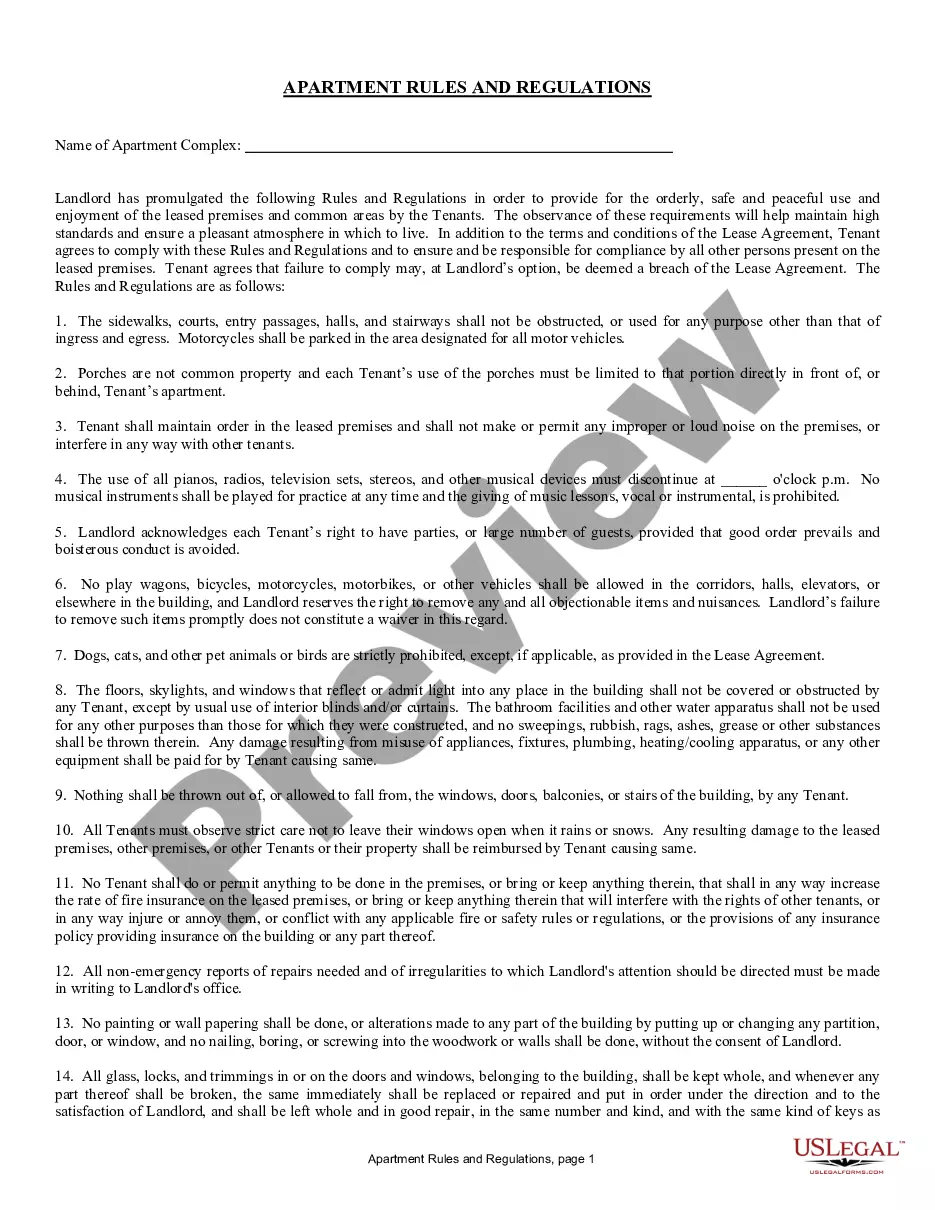
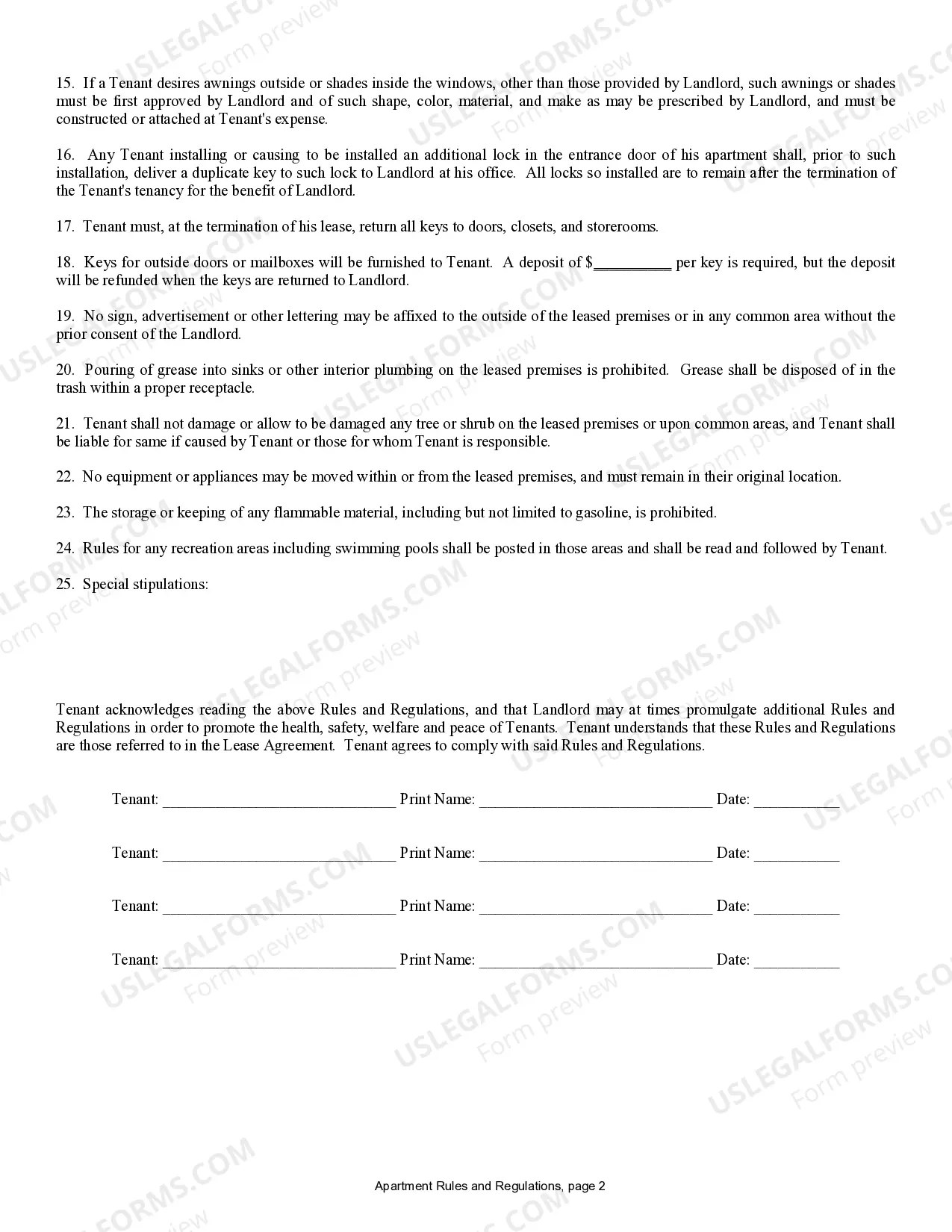
How to fill out Florida Apartment Rules And Regulations?
Managing legal paperwork can be overwhelming, even for experienced experts.
When you are searching for a Florida Condo Law For Reserves and lack the time to seek out the correct and current version, the process can be challenging.
US Legal Forms meets all your requirements, from personal to business documentation, all in one platform.
Employ sophisticated tools to complete and manage your Florida Condo Law For Reserves.
Here are the steps to take after acquiring the form you require: Verify it is the correct document by previewing it and reviewing its details. Ensure that the template is valid in your state or county. Click Buy Now when you are ready. Choose a monthly subscription plan. Select the format you need, and Download, fill out, eSign, print, and deliver your documents. Enjoy the US Legal Forms online library, supported by 25 years of expertise and dependability. Transform your routine paperwork management into a streamlined and user-friendly process today.
- Access a valuable repository of articles, guides, and resources pertinent to your situation and requirements.
- Save time and effort searching for the documents you need and utilize US Legal Forms’ advanced search and Review feature to find Florida Condo Law For Reserves and obtain it.
- If you hold a monthly subscription, Log In to your US Legal Forms account, search for the form, and obtain it.
- Check your My documents tab to see the documents you have previously saved and manage your folders as desired.
- If this is your first experience with US Legal Forms, create an account for unlimited access to all the benefits of the library.
- A comprehensive online form library could transform the way individuals handle these situations.
- US Legal Forms is a leading provider of online legal forms, offering over 85,000 state-specific legal documents available at your convenience.
- With US Legal Forms, you can access legal and business forms that are specific to your state or county.
Form popularity
FAQ
As noted above, Condominium Associations managing older condominiums are now legally required to budget for and maintain reserve funds as a long-term planning tool to discharge future expenses. Historically, Associations could elect to reduce or totally waive reserves, and it was legally permissible to do so.
Florida Senate Bill 154 has been signed into law and brings significant changes to Structural Integrity Reserves (SIRS) studies, a crucial element in ensuring the safety and long-term maintenance of condominium buildings across the state.
The Condominium Act (Chapter 718, Florida Statutes) requires a condominium Association to budget separate reserves for any item for which the deferred maintenance or replacement cost exceeds $10,000.00.
Title XL, Chapter 718, Condominium Associations, describes the responsibilities of the Board of Directors to budget for and determine reserve accounts for capital expenditures and deferred maintenance for which the association is responsible.
As noted above, Condominium Associations managing older condominiums are now legally required to budget for and maintain reserve funds as a long-term planning tool to discharge future expenses. Historically, Associations could elect to reduce or totally waive reserves, and it was legally permissible to do so.