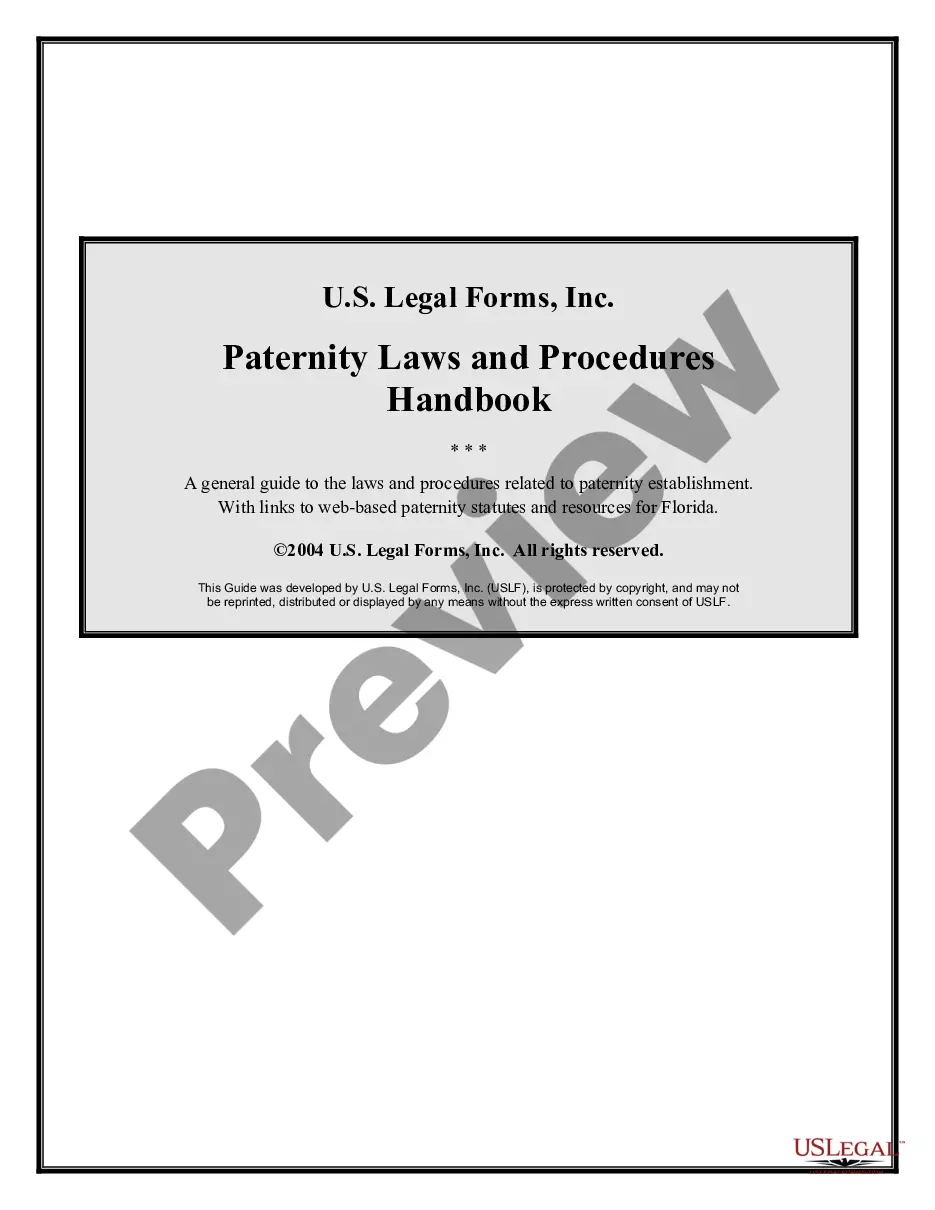
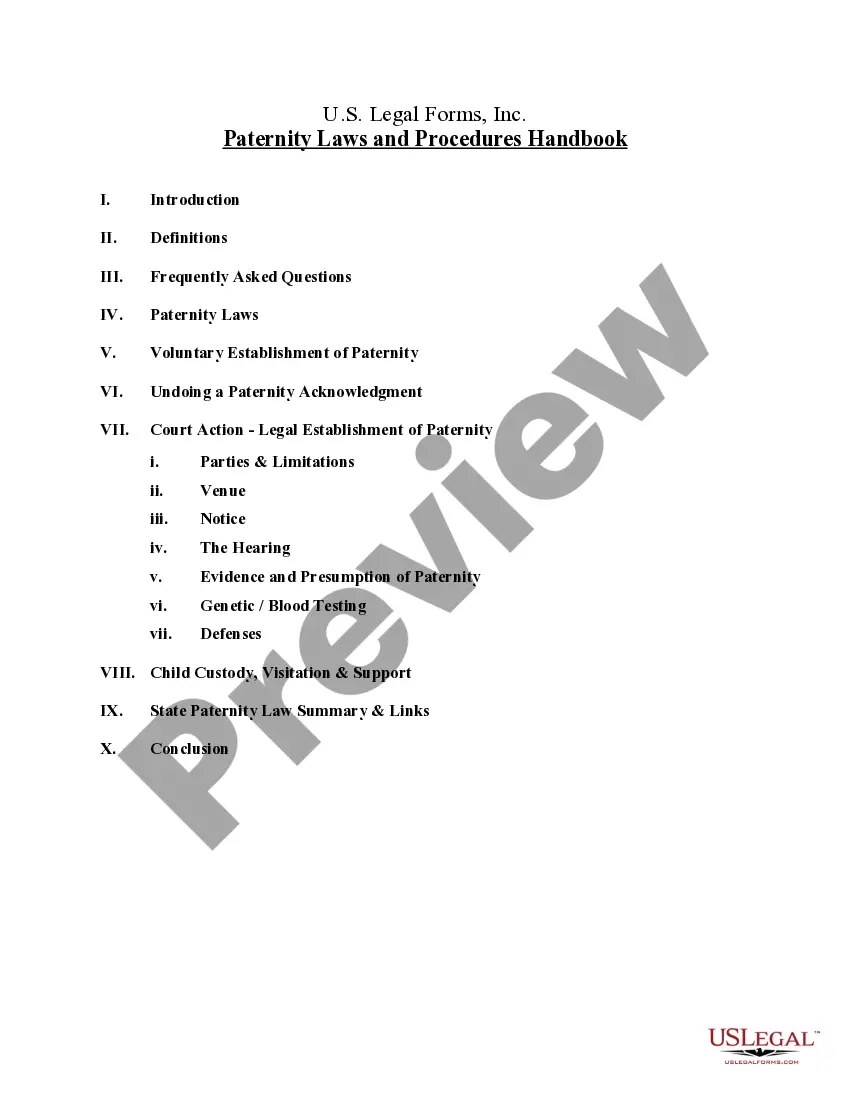
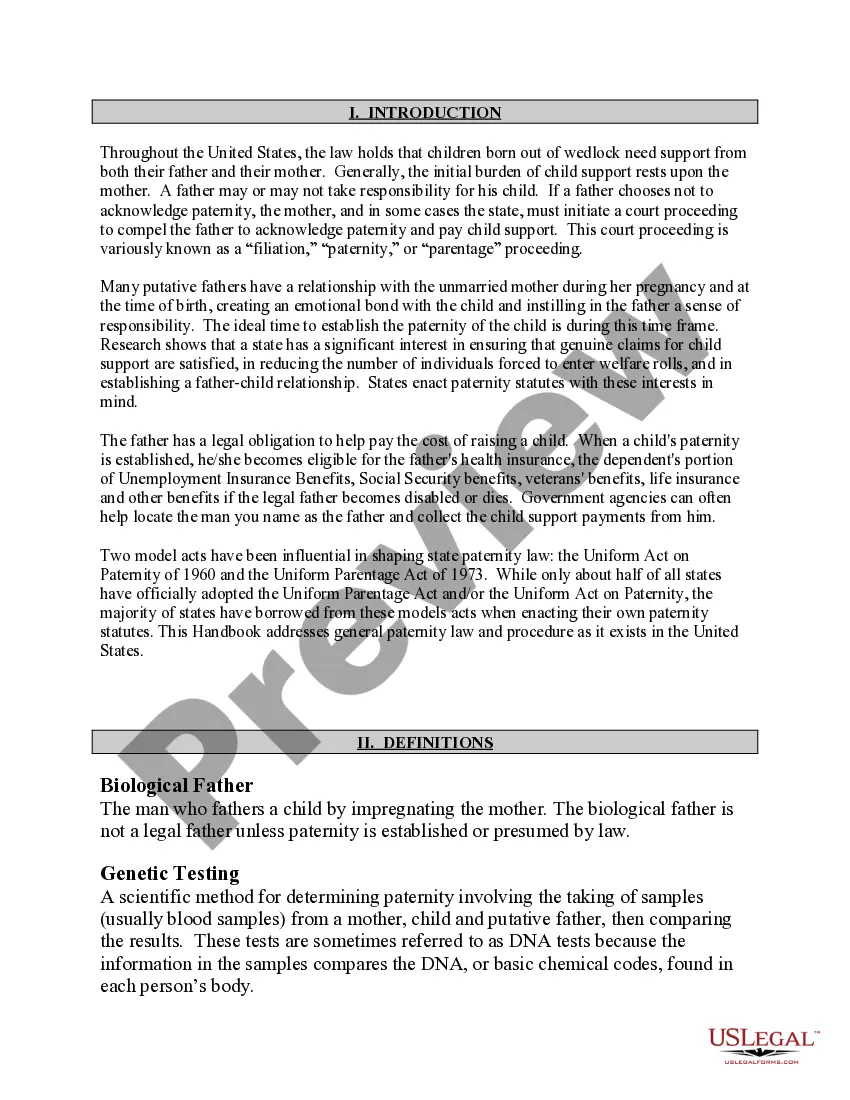
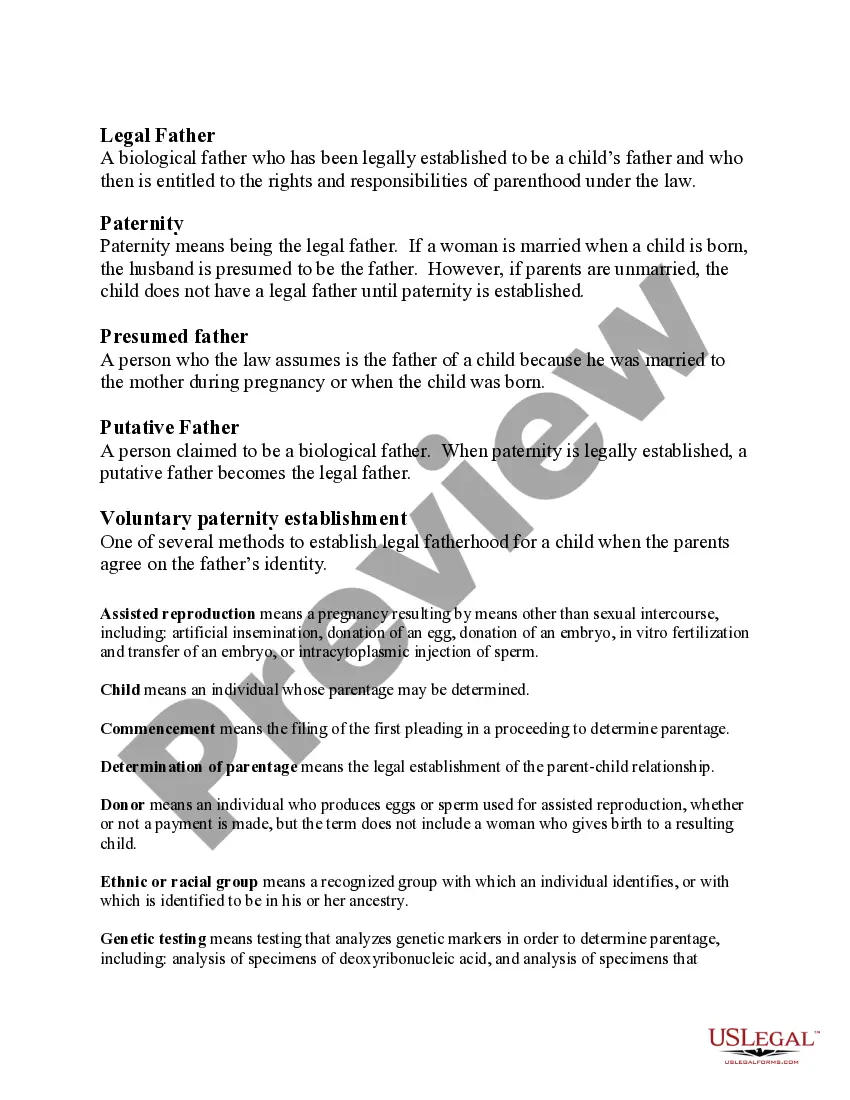
Florida Paternity Law With Child Custody
Description

Get your form ready online
Our built-in tools help you complete, sign, share, and store your documents in one place.
Make edits, fill in missing information, and update formatting in US Legal Forms—just like you would in MS Word.
Download a copy, print it, send it by email, or mail it via USPS—whatever works best for your next step.
Sign and collect signatures with our SignNow integration. Send to multiple recipients, set reminders, and more. Go Premium to unlock E-Sign.
If this form requires notarization, complete it online through a secure video call—no need to meet a notary in person or wait for an appointment.
We protect your documents and personal data by following strict security and privacy standards.

Make edits, fill in missing information, and update formatting in US Legal Forms—just like you would in MS Word.

Download a copy, print it, send it by email, or mail it via USPS—whatever works best for your next step.

Sign and collect signatures with our SignNow integration. Send to multiple recipients, set reminders, and more. Go Premium to unlock E-Sign.

If this form requires notarization, complete it online through a secure video call—no need to meet a notary in person or wait for an appointment.

We protect your documents and personal data by following strict security and privacy standards.
Looking for another form?



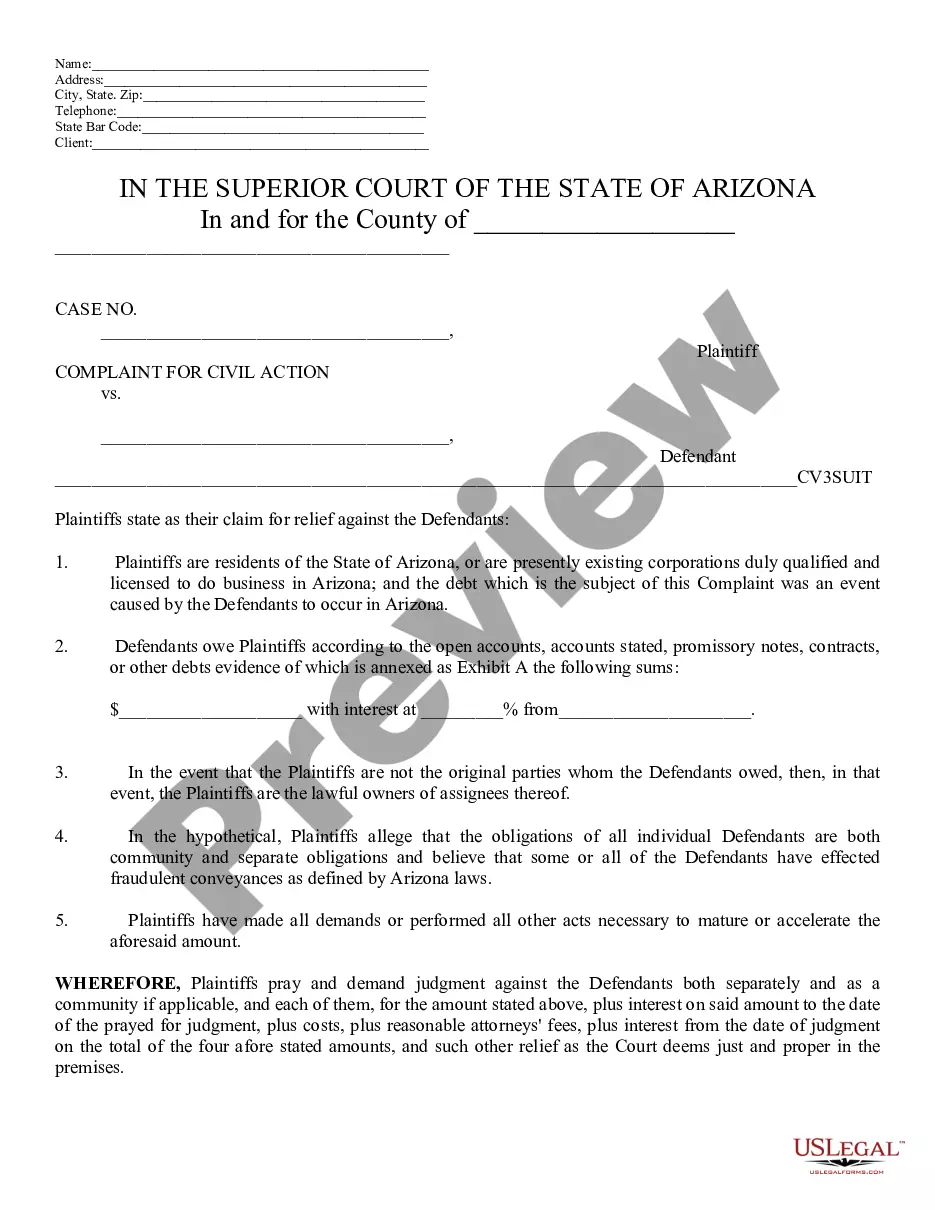






How to fill out Florida Paternity Law And Procedure Handbook?
Finding a go-to place to take the most recent and appropriate legal samples is half the struggle of handling bureaucracy. Finding the right legal files demands precision and attention to detail, which is the reason it is very important to take samples of Florida Paternity Law With Child Custody only from trustworthy sources, like US Legal Forms. An improper template will waste your time and hold off the situation you are in. With US Legal Forms, you have very little to worry about. You can access and see all the details regarding the document’s use and relevance for the circumstances and in your state or county.
Take the listed steps to complete your Florida Paternity Law With Child Custody:
- Utilize the catalog navigation or search field to locate your template.
- View the form’s information to see if it fits the requirements of your state and region.
- View the form preview, if there is one, to make sure the template is the one you are looking for.
- Resume the search and look for the appropriate document if the Florida Paternity Law With Child Custody does not match your requirements.
- When you are positive regarding the form’s relevance, download it.
- When you are a registered user, click Log in to authenticate and gain access to your selected templates in My Forms.
- If you do not have a profile yet, click Buy now to obtain the template.
- Pick the pricing plan that suits your needs.
- Go on to the registration to complete your purchase.
- Finalize your purchase by selecting a payment method (credit card or PayPal).
- Pick the file format for downloading Florida Paternity Law With Child Custody.
- When you have the form on your device, you may alter it using the editor or print it and finish it manually.
Eliminate the hassle that accompanies your legal documentation. Explore the comprehensive US Legal Forms collection to find legal samples, examine their relevance to your circumstances, and download them on the spot.
Form popularity
FAQ
Ing to Florida paternity law, the statute of limitations for establishing paternity is when the child reaches 22 years of age, which is four years after the child in question reaches the age of majority (in Florida, that's 18 years old).
Even if a father signs a child's birth certificate, he will still need to file a Petition to Establish Paternity with the court if he and the child's mother are unmarried. Furthermore, a person cannot file this type of petition until he or she has lived in the state for at least six months.
New Florida Law Grants Equal Parental Rights to Unwed Fathers Effective July 1st. A new Florida law effective as of July 1 gives fathers whose children were born out of wedlock equal parental rights in the Sunshine State.
Is there a statute of limitations on filing for paternity actions? Yes. In Florida, the time limit to determine a child's paternity is four years after the child reaches the age of majority. The age of majority in Florida is 18 years old.
Paternity can be established by filing a civil action in circuit court. A judge can establish paternity by court order. We will ask the court to hear the case and then a judge decides whether or not paternity is established.